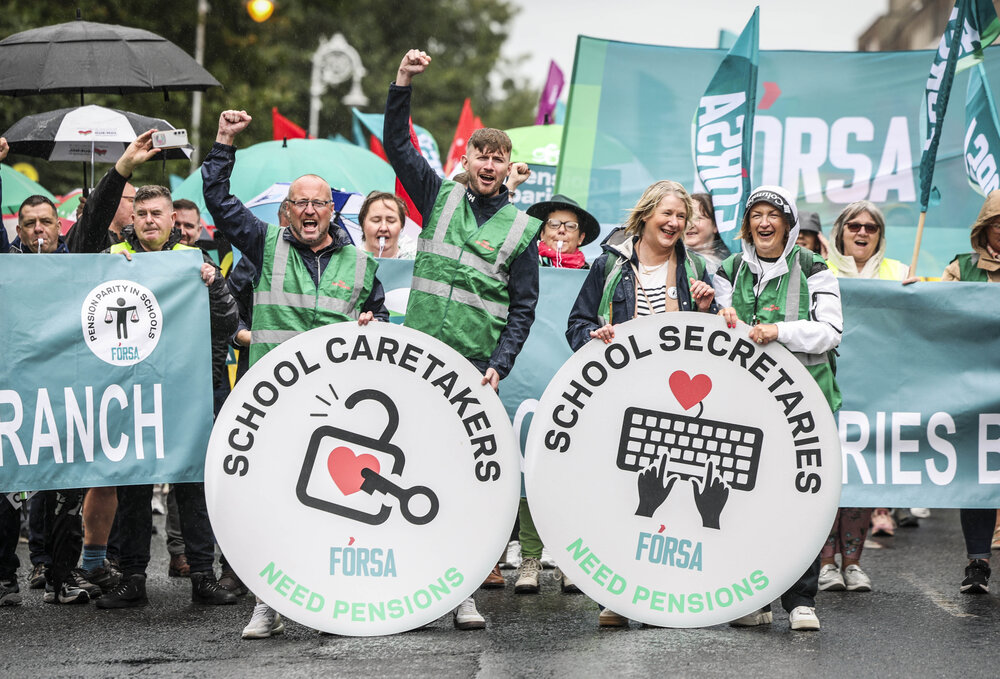
Pensions dispute will be heard in Labour Court on Monday 12th January 2026. The move follows the break down of WRC talks in November due to no progress being made on providing comparable pension benefits or recognising prior service.
Fórsa has confirmed that the Labour Court will hear the dispute over pensions for school secretaries and caretakers on Monday, 12th January 2026. Talks at the Workplace Relations Commission (WRC) broke down in November after no progress was made on providing comparable pension benefits or recognising prior service.
Fórsa’s head of education, Andy Pike, commended members’ persistence: “Our school secretaries and caretakers have shown extraordinary determination throughout this process. They have waited patiently for a fair resolution and remain committed to securing the recognition they rightly deserve.”
The union said it will now work with the Labour Court to achieve a just outcome, ensuring members’ service is properly credited and a long-overdue pension arrangement is secured.
The public consultation on remote working closes next Tuesday 9 December. If this issue matters to you, don’t miss your chance to take part and fight for a real right to remote working and not just a right to request.
Submissions for the public consultation on the right to request remote working will close on Tuesday 9 December. The consultation is being held by the Department of Enterprise, Tourism and Employment (DETE) ahead of planned changes to the existing framework. This is part of a two-year statutory review included in the original legislation.
As submissions are open to both workers and employers, Fórsa is encouraging members to take part.
To support members making submissions, Fórsa held a webinar on Tuesday 2 December. During the session Fórsa’s policy officer Aisling Cusack gave a presentation to explain the current right to request remote working legislation and what exactly is under review.
Aisling said: “The consultation is looking for very specific things. If we want our submissions to be effective, we need to make sure we’re talking about the legislation, how it’s failing workers, and how it needs to change.”
“Up to now, the legislation has been unfairly weighted toward the employer. This is an opportunity to rebalance that power and make it a real right to remote working and not just a weak right to request,” she continued.
For members making a submission to the consultation, the union has provided six key points you can consider including in your responses:
The legislation is unfairly balanced towards the employer because it allows refusals for remote working requests based on vague reasons such as “business needs”.
Employers are not required to show that their reason for refusal is evidence-based, reasonable, or related to specific impacts on the operation of the business.
Employers should be required to describe specific business needs that are impacted by remote work and provide proof of impact (for refusing or terminating an arrangement).
The Workplace Relations Commission (WRC) should have powers to examine whether the request was objectively and fairly considered by the employer and whether the refusal was reasonable and justified.
Without expanding the scope of the legislation and the WRC’s decision-making authority to adjudicate on the merits of the refusal, the legislation will remain useless for employees and reinforce the imbalance of power on the employer side.
The WRC should be able to evaluate whether the reason(s) for refusal from the employer are justified on objective grounds that relate to the real needs of the business and are proportionate to the business needs and the employee’s circumstances.
She said, “We’re urging all members to take part in this consultation. You can use the suggested points we’ve provided or use your own experience and perspective. Members have consistently told us that this issue is of huge importance, so let’s make the most of this opportunity to get that message across.”
“Employers and their representative groups have made their stance clear on remote working, and they will be making submissions. If remote working matters to you make sure your voice is heard. Together our voice is louder than theirs,” she concluded.
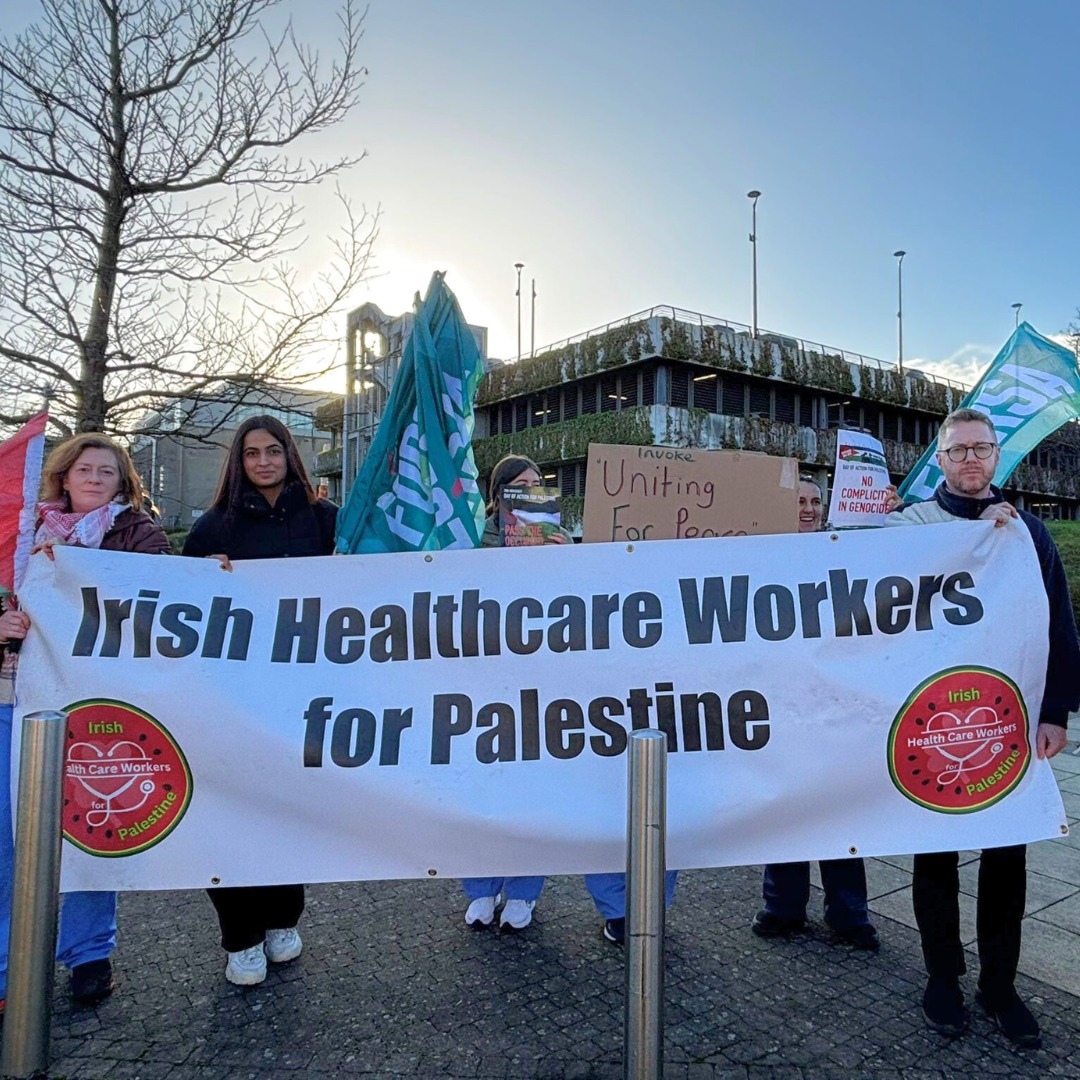
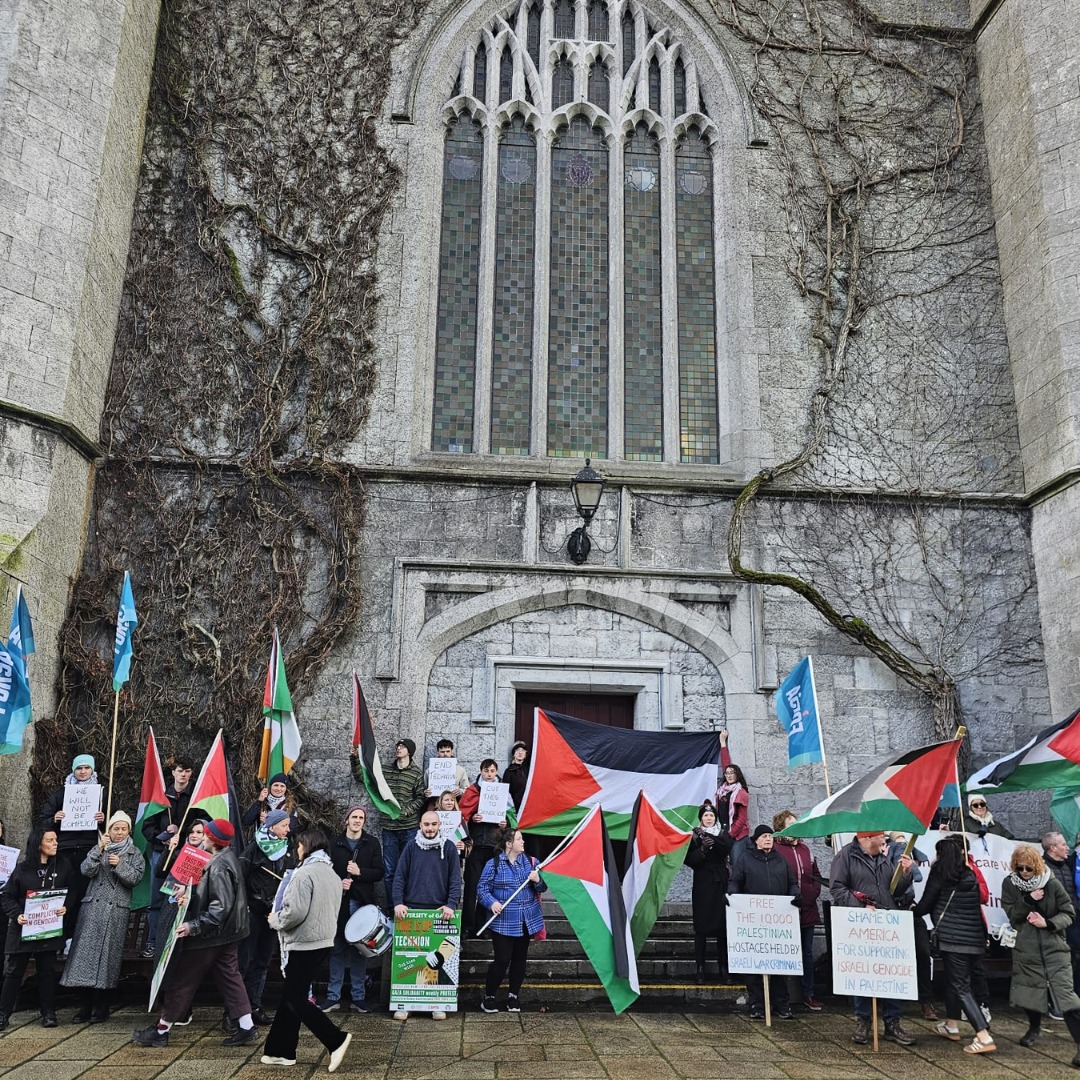
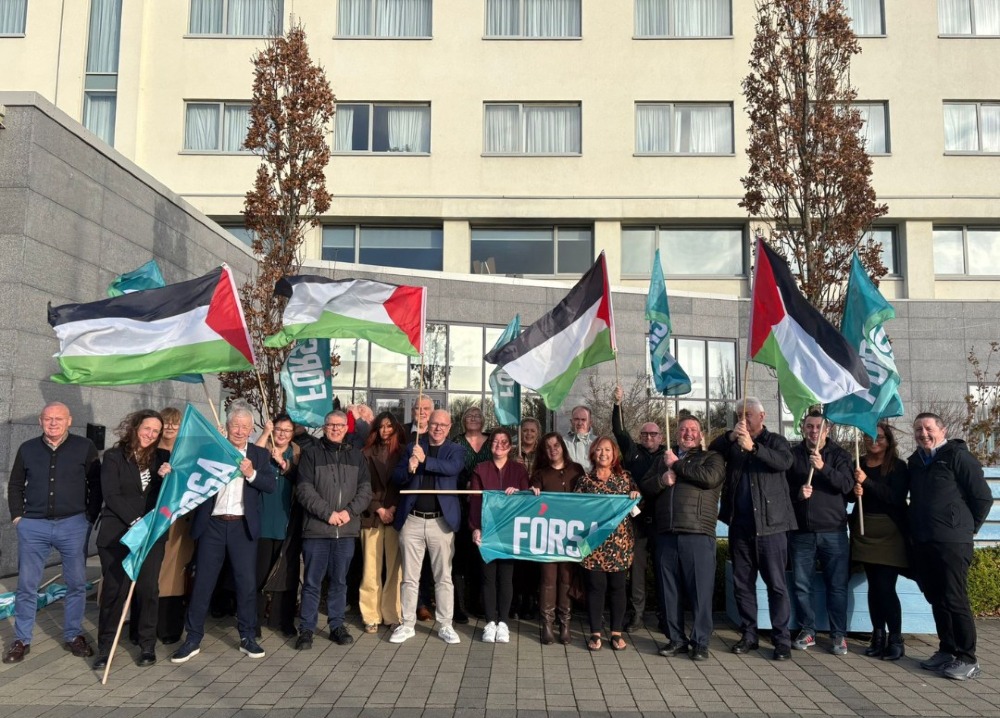
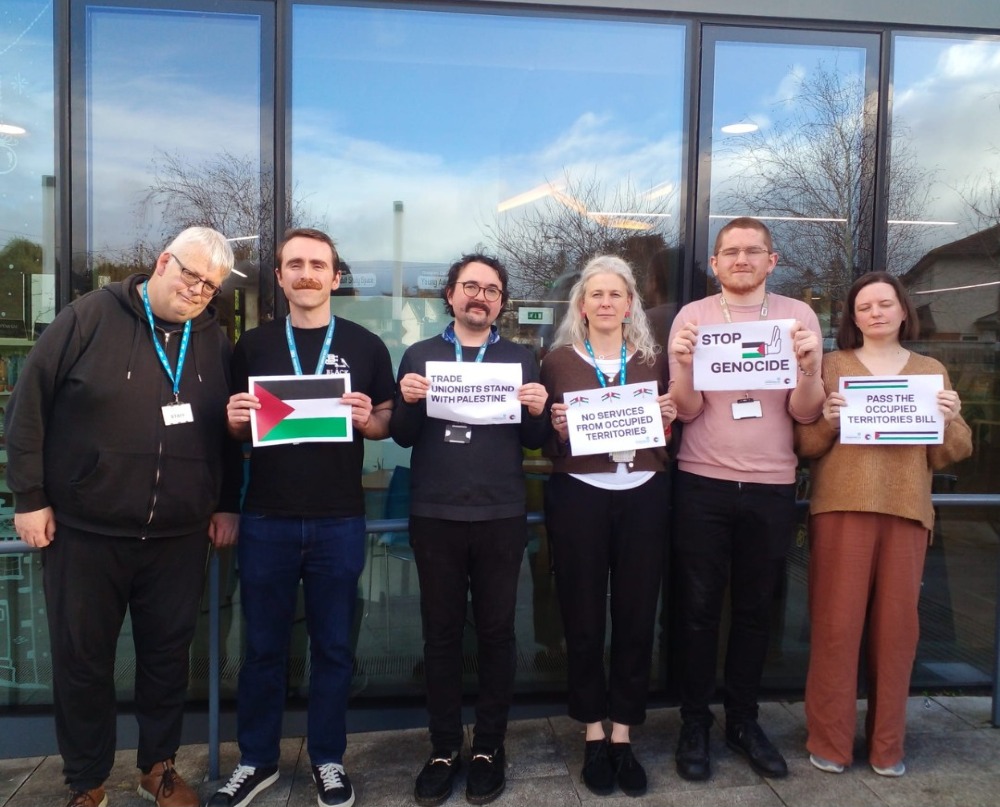
Across Ireland, workers mobilised last Friday for the ICTU Workplace Day of Action for Palestine. Watch our latest video report to see how it went down.
Fórsa members took the call for workplace visibility seriously, turning the day into a rolling display of humanity and collective conviction. The buzz on the ground helped build awareness of the large Ireland Palestine Solidarity Campaign (IPSC) demonstration the following day, linking workplace action directly to national mobilisation.
The day was a coordinated response to a recent vicious raid by Israeli army and intelligence forces on the offices of the Palestinian General Federation of Trade Unions.
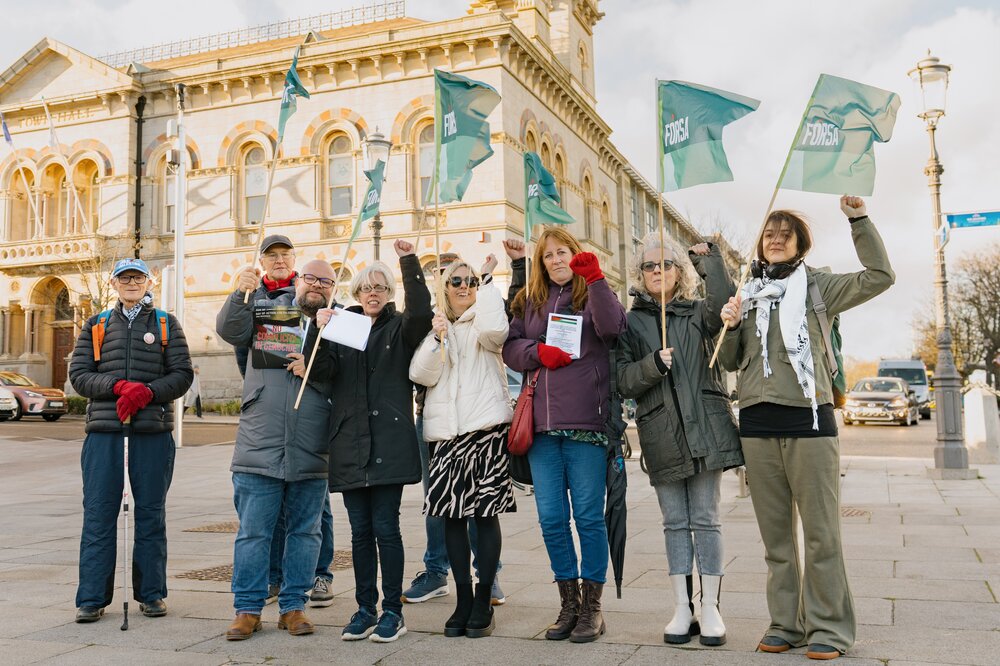
From bake sales to informal distribution networks of Palestine and Gaza Cola to encourage boycotts, Fórsa workers have been keeping Gaza in daily conversation for months. But last Friday gave those efforts a sharper, more organised edge. In Dún Laoghaire, Ballyogan, and libraries across Dún Laoghaire–Rathdown, members stepped out - even briefly - to show that solidarity lives not in slogans, but in people choosing to act.
Out in Dun Laoghaire, Fórsa activist Roisín Cronin summed up why she and her workmates felt compelled to take part:
“We wanted to answer the call of trade unions in Palestine who continue to experience oppression and apartheid on a daily basis. It's so important for us to keep talking about Palestine because despite the declared ceasefire, we know from listening to the voices of Palestinian people that they continue to face death, destruction and hunger.”
Their group pushed further still in putting pressure on their employer to take solidarity boycotts seriously.
“We also marked the day of action by submitting a letter to our Chief Executive asking that our employer take steps to ensure it does not engage in the purchase of Israeli goods and services and asking that they source alternative products outside the scope of the global boycott campaign.”
Across the city, in the National Museum of Ireland at Collins Barracks, Fórsa members staged their own lunchtime walk-out. Organiser Simon Ó Donnabháin described the atmosphere:
“We're all members of Fórsa here in the National Museum of Ireland, and we came out as part of the walk out for Palestine Day. We've had a great turnout with people here from different departments, different sections in the museum, all showing their solidarity and support.”
For Simon, the walk out was a great way to hype the National Demo taking place the next day and functioned as much as a community-building exercise as a public protest, prompting reflections on what it means to speak up.
“Sometimes people are afraid to put their head above the parapet, even though there is a great groundswell of support amongst the Irish people for the cause of Palestine. This type of day, this type of action, really nails it home and gives people that confidence to stand up and speak out,” said Simon.
Helen Beaumont, another Fórsa member, spoke to both the emotion and the responsibility felt by many workers:
“What's going on in Palestine and Gaza is appalling, and this is just one way to stand up and say that what is going on there is wrong. We need to try and speak up as much as we can where we can, and try and make our voices heard, I think a lot of people, if asked about it, feel very strongly, that what's going on is wrong, deeply, deeply wrong.”
Her colleague Joyce Delaney noted that the museum’s role added a further layer to their action. As she put it, the responsibility of holding Ireland’s cultural memory shapes how staff think about solidarity:
“It's very important to us as the keepers of Ireland's historical collections, that we are on the right side of history. In our department, in the education department, we are hosting a bake sale in aid of UNRWA to support Palestinian aid.”
For Joyce, these conversations aren’t happening in a vacuum - they’re part of the daily life of the institution:
“It's definitely something that we're not afraid to talk about in the museum.”
And she went on to draw a direct line between Ireland’s own past and the moral clarity many workers feel today:
“I feel that Ireland's history of occupation and colonisation really mirrors the struggle of the Palestinian people.”
At Collins Barracks, members came in and out according to staggered lunch breaks - small gatherings that accumulated into a steady, visible presence. Sometimes solidarity isn’t a single mass moment; it’s dozens of small ones that refuse to fade.
For Donna, also from the National Museum, something as simple as what’s in the fridge can drive solidarity. She explained how a small, everyday choice has become a quiet catalyst for conversation:
“In our office, we have a few crates of Palestine Cola. It's this amazing company, I think it's set up by two lads, who are raising money for different causes in Palestine."
Donna pointed out that even the simplest choices inside a workplace can carry political weight:
“Sometimes, like, for example, in the cafe, the options we have would generally be the kind of bigger ones like Coke and Fanta and things like that, all owned by the same companies, of course.
And for colleagues trying to boycott those brands, this small gesture offers both an alternative and an opening: “If you're boycotting, that can make it difficult to, especially if you need a little sugar at some point in the day. So, it's just a nice thing to have, for people as an alternative. Just keep it going. And you always feel like I can be doing more - it's great to just be here and to be visible, in that together.”
Taken together, the day felt like a real effort to pull more and more workers into collectively figuring out possible practical actions to keep the Palestinian solidarity movement going.
The seasonal event, held in collaboration with Ukrainian community organisations, will feature short contributions from invited speakers and performances of traditional Ukrainian Christmas carols.
Fórsa members are invited to join a special solidarity gathering outside the Russian embassy on Sunday 14 December at 3pm, organised by a group of activists – including several retired Fórsa members – who have maintained a daily peaceful protest at the embassy since Russia’s full-scale invasion of Ukraine in February 2022.
The seasonal event, held in collaboration with Ukrainian community organisations, will feature short contributions from invited speakers including Dublin MEP Barry Andrews, broadcaster and author Joe Duffy, archivist and broadcaster Catriona Crowe, and Michael Baskin of the Ukrainian Crisis Centre in Ireland. Their reflections will be interspersed with performances by UA Sunrise, who will sing traditional Ukrainian Christmas carols and seasonal songs.
The organisers, including retired member John Farrelly, say the event is intended as an act of solidarity and remembrance as the war continues to inflict devastating harm on Ukrainian civilians. John explained that the long-running protest group is “a diverse community united by a fierce determination to oppose the criminal invasion of Ukraine and to support its people.”
Members, families and supporters are warmly encouraged to attend and show their support for Ukraine at this time of year.
The introduction of the pension auto-enrolment retirement savings scheme, called My Future Fund, will start from 1st January 2026. Fórsa is holding an online information session for members concerned on Tuesday 9th December.
From 1st January 2026 workers in Ireland without a pension will join the new auto-enrolment scheme. The scheme was initially due to be rolled out in 2025 however successive delays have pushed the start date to next year.
To ensure our members are informed and prepared for these changes, Fórsa is hosting an exclusive member-focused online event on the upcoming auto-enrolment pension system, which will take place online on Tuesday 9th December at 11.30am.
Auto-enrolment is a new scheme designed to increase retirement savings among Irish workers. The goal is to ensure that all employees have access to a pension, particularly those who are not already enrolled in a workplace scheme. Under the scheme, the employee, employer, and Government all pay a certain amount into the employee’s pension fund.
The scheme aims to ensure that workers will not have to rely on the state pension alone. Supplementary pension coverage in Ireland is low, especially in the private sector where two thirds of workers are not paying into a pension scheme.
Chaired by the Irish Congress of Trade Unions (ICTU) head of Social Policy & Employment Affairs, Dr Laura Bambrick, this event will provide an essential briefing, expert insights, and a space to ask questions.
Quick Guide
Fórsa previously put together a short guide on the auto-enrolment pension system, developed by asking officials from the Department of Social Protection directly to explain what auto-enrolment pensions would mean for workers and answer questions on more specific circumstances. You can find our simple explainer for it here.
Citing an alarming increase in targeted hostility toward migrant and minority ethnic workers, ICTU has asked the Minister for Justice to act without delay.
Fórsa has backed Irish Congress of Trade Unions’ (ICTU) call on Minister for Justice Jim O’Callaghan to take immediate action in response to the growing number of violent incidents and hostile behaviour directed at minority communities and migrant workers.
In a letter to the minister this week, ICTU president Phil Ní Sheaghdha highlighted what she described as a “deeply troubling rise” in assaults, harassment and hate-motivated aggression. She said the unions’ overriding concern “is to keep members safe and to ensure they are not intimidated or subjected to any form of aggression while attending or departing from work.”
Many of the incidents have involved workers travelling to and from their workplaces, often late in the evening, and have disproportionately affected internationally educated workers, including nurses and health staff. Examples shared with ICTU reveal a pattern of verbal abuse, intimidation and physical threats occurring on public transport and in public spaces.
In its correspondence, ICTU noted that many migrant workers who have lived and worked in Ireland for decades report that this level of hostility is new and escalating. The situation is especially acute in the health sector, where shift patterns frequently require staff to travel at night, heightening their vulnerability to anti-social behaviour and targeted hostility.
Phil urged the Minister to consider in full the measures advanced through the SIPTU-led Respect Transport Workers campaign. These include establishing a Public Transport Charter outlining unacceptable behaviours and penalties, a Transport Forum with trade union representation, and a dedicated Transport Policing Service with the appropriate enforcement powers across all modes of transport.
She said: “This is an issue of public safety, but also of workers' rights. It’s clear the Government is looking to project a tough line on migration, but without action, it risks being a soft touch when it comes to worker safety. We are urging the Minister to seriously examine proposals, including assessing the penalties that apply to convictions under hate crime legislation, to ensure that everyone is safe on public transport.”
Fórsa general secretary Kevin Callinan said the growing number of incidents demanded effective action: “ICTU’s proposals provide a clear and credible path forward. We urge the Minister to act swiftly so that every worker, in every community, can travel without fear. All workers must be safe on their way to work, on their way home, and in every public space.
“No worker should face intimidation, hostility or hate simply for travelling to do their job. The surge in targeted aggression towards workers from a migrant or minority ethnic is intolerable, and Government intervention is now essential,” he said.
Come along to Cornmarket’s health insurance webinar with expert Dermot Goode.
Fórsa members can tune in to an exclusive free health insurance webinar, hosted by Cornmarket on Wednesday 14 January from 12pm to 1pm.
With over 320 health insurance plans on the market, comparing your cover can be a stressful and time-consuming process. That's where Cornmarket comes in and offers insights to help you navigate this complex market and ensure your health and financial needs are prioritised.
Hosted by leading health insurance expert Dermot Goode, the online information session will offer guidance on all aspects of private health insurance, both for those who have existing cover and those who are new to health insurance. It will run for one hour.
Dermot, who has worked with a range of top insurance providers including VHI, Irish Life Health, Bupa Ireland, Mercer and IPT Healthcare Practices, will advise participants on plans, benefits and how to save money on their health insurance.
The webinar will also allow attendees to ask questions and will facilitate conversation to ensure members’ health insurance questions are heard and addressed.
If you are new to health insurance, the event will also help find the right plan for you and advise on the best benefits and points of focus while selecting a plan.
Appeal launches ho-ho-ho-hoping to be bigger and brighter than ever!
It just wouldn’t be Christmas in Fórsa without our annual Toy Appeal for Temple Street Children’s Hospital, and this year, we’re back, and ho-ho-ho-hoping to make it bigger and brighter than ever!
Thanks to Fórsa members’ incredible generosity, last year’s appeal was a huge success. We collected dozens and dozens of toys and raised thousands of euros to bring some Christmas magic to children in hospital.
This year, our appeal will once again support the Children’s Health Foundation (CHF) which includes Temple Street, Crumlin, Tallaght, and Connolly hospitals, to help bring smiles and comfort to children spending the holidays in hospital care.
Many of our own members work in Temple Street, our neighbours at Nerney’s Court in Dublin, so this appeal is especially close to our hearts.
Toys must be new and unwrapped (the hospital checks all gifts before they are given to patients).
No food items, homemade toys, used toys, or small toys that could be a choking hazard.
No replica weapons (e.g., toy guns or knives).
Vouchers (Smyths Toys, All-4-One, Penney’s, book vouchers, etc.) are especially welcome and were very popular last year!
Art materials and multisensory toys (like lights or Play-Doh) are also greatly appreciated.
As usual, the organisers have also asked us to please remember teenagers too as they’re often overlooked in holiday toy drives.
We have many members working in hospitals, and we know donating toys or vouchers is a simple way to make a difference in the lives of sick children at this special time of year.
You can donate to the Fórsa collection by posting a suitable unwrapped new toy to the following address: Fórsa Toy Appeal, Fórsa Trade Union, Nerney’s Court, Dublin 1.
The deadline for the delivery of the gifts or vouchers is close of business on Wednesday, December 17th.
Alternatively, if you happen to be in our Nerney’s Court office between now and that date, you can drop off your donations at our collection point in the print room (behind reception).
You can also download the official poster for this year’s toy appeal here. It includes a QR code that allows people to scan and donate directly to the Children’s Health Foundation (CHF) for their Christmas Toy appeal, making it easier than ever for the Fórsa community to support children this holiday season.
Please feel free to:
Print the poster and pop them up in your workplace, staff rooms, etc
Share it digitally with colleagues
Encourage others to scan, donate, and help make a real difference this Christmas.
Every share and every donation can help bring a little more joy where it’s needed most.
As always, we greatly appreciate the support of everyone who participates in the appeal.
If you have any questions, please feel free to contact us at campaigns@forsa.ie.
Thank you all for helping us keep this wonderful Fórsa tradition alive. Every toy, voucher, and bit of kindness adds up to real smiles and Christmas magic for children who need it most. ️
As we enter the festive season, many members will be mulling over their New Year’s resolutions, the Skills Academy asks that you consider adding union training to the list – and with so many courses available they’re making it as easy as can be.
The new year will begin with a bang, with a wide array of fantastic courses for members to choose from. The unmissable Communications Training will be coming to Galway, Workplaces Reps Level 1 will be in Sligo, and WRT Level 2 will come to Cork.
Be sure to register quickly to avoid disappointment! Courses fill up quickly, and time is needed to secure release for participating members.
To register please contact your branch training officer or branch secretary if the position is vacant. Participation requires sign-off from branch officers and the relevant official. The Skills Academy cannot accept registrations directly from members.
Workplace Representatives Training Level 2 - Cork - Wednesday 7th & Thursday 8th January
A not-to-miss opportunity for reps in Munster who have already completed the Level 1 training. The Organising and Individual Representation modules of the Level 2 Workplace Reps training will be held in Cork on Wednesday 7th January and Thursday 8th January.
The organising module will give you an in-depth understanding of organising, the practical application of mapping techniques, and teach you how to identify local leaders. The Individual Representation module will take you through the journey of processing a case, from initially meeting the member to representing their issue to a management team.
Workplace Representatives Training Level 2 takes place over four full-day sessions which can be completed by reps in any order. The Cork sessions for the remaining two modules, Equality and Diversity, and Health, Safety and Welfare in the workplace, will be held on Thursday 19th March and on Tuesday 14th April respectively.
Fórsa Induction for new members - Online - Wednesday 14th January
New member? New year? New you? Kick off the new year by taking your first step towards becoming a more active Fórsa member!
The induction will give you a firm handle on the basic structures of Fórsa, how we operate, and how members can become more engaged, have their voices heard locally, and raise issues at divisional and national levels. With AGM season on the horizon this is the perfect opportunity to learn how to get involved in the union’s democratic processes and put that knowledge into practice.
With morning and evening sessions available, this session is the perfect way to start off the new year!
Annual Branch Returns - Dublin - Thursday 15th January
This is a crucial session for treasurers, vice-chairs, or any committee member taking on their branch’s annual returns. Annual branch returns are no easy matter, but by learning the dos and don’ts you can avoid mistakes and make the experience as painless as possible.
This will be the last session on annual branch returns training before AGM season kicks off. Make sure you know the responsibilities of branch treasurers, and the financial and accountancy obligations on branches before submitting your returns for approval.
Communications Training - Galway - Tuesday 20th January
Having solid communication between the branch and its members is crucial for building engagement and power in the workplace. Learn the most effective tools for keeping your members informed, engaged, and active. Build your branch’s profile and craft compelling messages that drives member participation and commitment.
This will be the only chance to catch this exciting training in Galway this year. An opportunity not to be missed for Connaught and Ulster based members.
Resilience Building Workshop - Dublin - Thursday 29th January
With the new year comes new challenges, make sure you and your branch are able to weather anything the new year throws at you. This session will teach you how to enhance emotional intelligence and awareness of others. It will also provide tools and templates to effectively build personal resilience and reduce stress, so you can stay on top when things get tough.
Workplace Representatives Training Level 1 - Sligo - Tuesday 24th to Thursday 26th February
A fantastic opportunity for workplace reps in the north-west of the country. The Workplace Representatives Training Level 1 will be held in Sligo in late January.
This is a three-day course for reps with no previous experience or training. Learn all the basic skills that a representative will need in their first year: the role and function of the workplace rep, improving interpersonal skills and building good working relations, organising your union work, recruiting members and handling problems, an introduction to equality and diversity, and health and safety.
How Fórsa’s support ensures trade union solidarity is a vital force against repression and for a fragile peace.
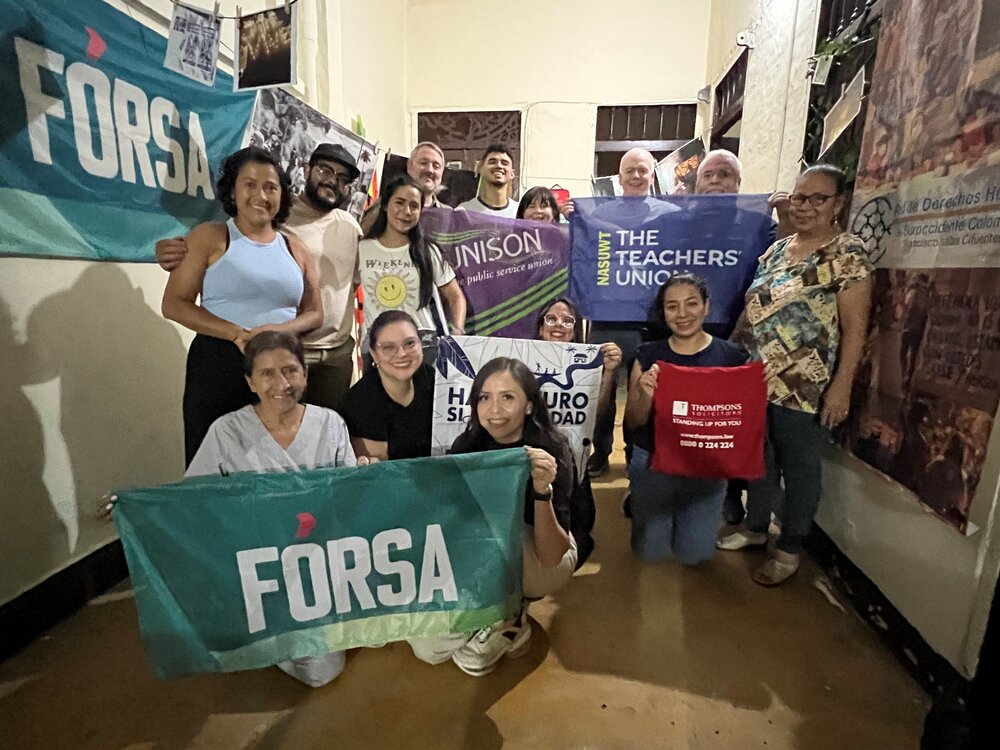
From Ireland to Colombia: Fórsa stands proudly with Colombia’s fight for peace, justice, and dignity. Our union’s flag flies high at Casa Pazcífico in Cali, a beacon of hope for families torn by conflict, and proof that solidarity knows no borders.
A journey of solidarity
In November 2025, Fórsa joined a Justice for Colombia (JFC) delegation to assess the progress of the 2016 peace agreement. JFC is an organisation that connects Irish and British unions with Colombian civil society and ensures that the voices of workers, activists, and communities are heard internationally in the struggle for peace and justice, reflecting Fórsa’s own commitment to defending trade union rights and supporting global movements for reconciliation.
The 2016 peace agreement was designed to end more than five decades of armed conflict between the Colombian government and the FARC guerrilla movement, laying the foundation for peace, justice, and reconciliation.
While it marked the first steps toward peace, Colombia’s journey remains complex and uncertain, with armed group violence, social unrest, including persistent threats against trade unionists, and unresolved land disputes continuing to challenge the path to lasting stability.
On the ground, Fórsa delegates met with government officials, the Irish Ambassador to Colombia, ex-combatants, trade unionists, human rights defenders, and grassroots leaders from social movements and local communities. Each conversation carried the weight of lived experience, giving the delegation powerful insights into Colombia’s fragile journey toward peace and highlighting Fórsa’s solidarity as a vital force in that struggle.
“The peace agreement brought hope, but the struggle continues.”
Casa Pazcífico: A beacon of hope
In Cali, capital of Valle del Cauca, the delegation visited the Pazcífico Human Rights Centre known locally as Casa Pazcífico. Founded in 2018 by activists including Darnelly Rodríguez, it protects those under threat: displaced families, activists falsely labelled insurgents, and protesters unjustly imprisoned during the 2021 estallido social (social outbreak), a nationwide wave of protests sparked by inequality, state violence, and a proposed tax reform that grew into a broader demand for justice and dignity.
Casa Pazcífico receives financial support from Fórsa's Developing World Fund, while Justice for Colombia funds psychological workshops for victims and their families. It stands as a temporary refuge for those whose lives are in danger, or for individuals facing direct violations of their human rights, until the government can provide a long term solution.
In 2024, 54 people found shelter there. This year, 18 have already been hosted and they expect a lot of people in December. Darnelly explained that they always try to accommodate as many people as possible: “One time we received 28 people at once. We had to get air mattresses to accommodate them on the floors. But we managed, all as part of one big family.”
Walking into Casa Pazcífico, visitors are greeted by a large Fórsa flag and photographs of the estallido social, a tribute to those whose rights were violated, and a reminder that the struggle continues. Fórsa’s solidarity is not symbolic; it is visible, tangible, and deeply felt.
Voices of pain and resistance
Isabel, Lucy and Carlos
During our visit to Casa Pazcifico, Isabel* told us how her son Carlos*, a student at Universidad del Valle, was arrested and charged with serious crimes simply for exercising his right to protest against injustice, violence, and social inequality during the social outbreak. “My son’s rights were violated the moment they put him unfairly in jail. Inside, prison mafias demanded money at every turn. First, they told me that if I wanted him to have a place to sleep or even food to eat, I had to pay. Later they called again, saying his meals were served raw, and if I wanted him to eat cooked food, I would have to pay extra.”
Carlos’s sister, Lucy*, who has been deeply involved in supporting her brother and continuously sought legal advice on his behalf, recalled: "When I read the charges, it felt like I was reading Pablo Escobar’s indictment. I knew instantly this wasn’t my brother, the accusations were fabricated, every word made up."
Eventually, the justice system had to release him due to lack of evidence. But Carlos*, once a vibrant football coach and community leader, left prison broken: introverted, fearful, and relentlessly harassed by police. No longer feeling safe in his own home, he fled to Uruguay, where he is now seeking political asylum. This situation tore his family apart, leaving them separated and struggling to rebuild their lives. Volunteers at Casa Pazcífico have been advising and supporting the family through this painful journey.
Carmen’s fight for justice
Carmen’s* son was accused of “attacking police” during protests, though he was simply going back home from work. Carmen worked extra hours to support her family and her son in prison, while trying to clear his name. She explained: “I searched tirelessly for CCTV footage until I found proof that my son was elsewhere at the time.”
It was the only case out of hundreds where the government admitted they had accused wrongly. Yet she still waits for compensation for all the damage. With tears in her eyes, she added: “My son was a healthy young man before prison. Now he struggles with a severe drug addiction.” She explained that the family dynamic has been completely shattered, and although she is receiving psychological support through Casa Pazcífico, the damage inflicted can never truly be undone.
Why Fórsa’s support matters
Casa Pazcífico not only provides shelter to those in urgent need, but it also continues to support families like Isabel’s and Carmen’s with legal guidance, assistance, and psychological support made possible through Fórsa’s contributions and dedicated volunteers. It stands as a true lifeline for those abandoned by the system in Colombia.
The stories heard were heartbreaking, but they also revealed extraordinary resilience. Casa Pazcífico is a symbol of hope, and Fórsa’s support is part of that hope.
Reflecting on the project Fórsa general secretary Kevin Callinan said: “Fórsa’s presence in Colombia is more than international solidarity, it is a proud statement that our union stands shoulder to shoulder with those fighting for justice, dignity, and peace all around the world.”
*Names of some individuals have been changed to protect their identity.