IMPACT members' benefits: feel safer and save cash
IMPACT members get strong workplace protections and can save on life assurance, salary protection, pensions, and insurance for home, travel and your car. Members are also eligible for €4,000 critical illness or death benefit and free legal help with bodily injury claims.
|
 | |
Shortage of social workers in midlands ‘critical’ - IMPACT
IMPACT has described the ongoing shortage of social workers in the midlands region as critical, as concerns mount nationally about growing waiting lists of children and families requiring services.
IMPACT has described the ongoing shortage of social workers in the midlands region as critical, as concerns mount nationally about growing waiting lists of children and families requiring services.
The union has found that only 70 per cent of the required complement of staff is employed in the region, despite the fact that social work posts are not subject to the government recruitment IMPACT has also criticised the employment of agency staff in the region which it says is an expensive and unnecessary solution.
IMPACT official Denis Rohan explained, “We have a situation in the midland region where the provision of sufficient budget resources for child and family protection services is essentially being stalled. This, added to the refusal by senior management to fill posts, is creating a very unsafe situation. Despite the fact the public service recruitment moratorium does not apply to social workers, and despite the fact that we have a national panel of 300 social workers qualified for placement, absolutely nothing is happening.
“Various excuses have been offered, including delays in the issuing of Garda clearance. It seems far more likely that there is a deliberate strategy to normalise the current employment deficit in social work services” he said.
Mr Rohan added, “We’ve seen some areas fall back on employing agency staff. This is an unnecessary and expensive solution to a problem which could be solved by ensuring the normal recruitment of staff.”
He gave an example of the employment of at least five agency workers across the midlands. “These appointments took place without any prior consultation with staff representatives, contrary to the requirements of national agreements, including the Haddington Road agreement. The government embargo on recruitment does not extend to the employment of social workers, so there should be no need to employ expensive agency staff where social workers can be deployed from the national panel. The cost of employing agency staff is more than 20% above the cost of recruiting staff directly into the organisation. This is a dreadful waste of money particularly in the current economic climate" he said.
IMPACT official Christina Carney, who represents social workers at national level, said “We have to provide the necessary resources to ensure the service is delivered. What is it going to take to achieve the deployment of the full resources? Will it take a major crisis? We simply can’t allow that to happen.”
| |
Cregg House transfer agreed for October
Cregg House, which provides residential care and day/community care programmes to people with intellectual disabilities in Sligo, will see responsibility for its services transfer from the Daughters of Wisdom religious order to the HSE from October 1st.
Cregg House, which provides residential care and day/community care programmes to people with intellectual disabilities in Sligo, will see responsibility for its services transfer from the Daughters of Wisdom religious order to the HSE from October 1st.
IMPACT had supported the case taken to the High Court by the HSE. In a July ballot, staff at Cregg House backed a motion of no confidence in the appointed board, and the Daughters of Wisdom, by a margin of 90%.
IMPACT official Richy Carrothers explained, “We supported the efforts by the HSE to prevent the Daughters of Wisdom order from walking away from its obligations at Cregg House. IMPACT members employed at Cregg House simply wished to protect these vital services.”
Richy said that consultation on the TUPE (Transfer of undertakings) legislation was now due to take place ahead of the October transfer.
IMPACT seeks LRC conciliation on Ballinasloe bed closures
IMPACT has sought the assistance of the Labour Relations Commission (LRC) following a statement by the HSE that 22 beds in St. Brigid’s Hospital, Ballinasloe would be closed in the next two to four months. The HSE made the announcement to members of the Oireachtas in July.
IMPACT has sought the assistance of the Labour Relations Commission (LRC) following a statement by the HSE that 22 beds in St. Brigid’s Hospital, Ballinasloe would be closed in the next two to four months. The HSE made the announcement to members of the Oireachtas in July.
In a letter to the LRC, IMPACT official Sophia O’Reilly explained that there had been no consultation with IMPACT or any other union under the Employee (Provision of Information and Consultation) Act, 2006.
At a recent meeting between IMPACT and HSE management, Sophia said that they were not in a position to comment on the closure when IMPACT raised the issue. IMPACT informed management that the matter would have to be referred to the LRC for determination.
IMPACT has about 50 members in St Brigid’s. Staff at the hospital are also represented by SIPTU and the INMO.
Hungarian mayor’s actions underline importance of protecting access to water as a human right
Last Friday (August 2nd), as Hungary was in the grip of a near-40 degree heatwave, the mayor of the Hungarian town of Ózd issued an order to reduce or cease water pressure to more than eighty roadside pumps. Mayor Pál Fürjes claimed it was too expensive to continue to supply water to the pumps.
His decision affected several hundred families and, in particular, a number of poor neighbourhoods with a large population of Roma people. Hundreds of people were forced to queue in extremely hot conditions to collect water from pumps that were still delivering a trickle of water.
Last Friday (August 2nd), as Hungary was in the grip of a near-40 degree heatwave, the mayor of the Hungarian town of Ózd issued an order to reduce or cease water pressure to more than eighty roadside pumps. Mayor Pál Fürjes claimed it was too expensive to continue to supply water to the pumps.
His decision affected several hundred families and, in particular, a number of poor neighbourhoods with a large population of Roma people. Hundreds of people were forced to queue in extremely hot conditions to collect water from pumps that were still delivering barely a trickle of water.
European and international pressure followed as the mayor’s decision was picked up by media organisations. Facing the prospect of large demonstrations, the government ordered the city to restore water supplies. The European Public Services Union (EPSU) said “Having access to safe and clean drinking water and sanitation services should not depend on how much money you have or in which neighbourhood you live.”
Mayor Fürjes actions raises all manner of other questions about attitudes to race, immigration and the treatment of poor and displaced minorities all across Europe, as attitudes harden while EU economies continue to struggle. It also exposes how vulnerable communities are when access to water is restricted or denied. Water and sanitation are essential to the maintenance of health and well being. Creating safe and sustainable sources of water is one of the primary challenges for communities in the developing world. European countries have, for the most part, excellent water infrastructure. Some, including Ireland's, need investment in order to upgrade and meet the demands of a growing population. But we need to ensure that ownership of water systems are retained by the people, and not be allowed to drift into private hands.
EPSU has highlighted the recent situation in Hungary to emphasise the importance of the European Citizens Initiative Right to Water (ECI) and its demand that the European Commission take steps to guarantee citizens safe and clean drinking water in accordance with UN obligations.
The right to water campaign has been successful in getting its message across as more than 1.5 million people have supported the call to sign the petition.
IMPACT is appealing to members, their friends and families to add their name to this important human rights initiative. The signatures will be submitted on September 9th, so there are just a couple of weeks remaining. Please sign the petition (just click the ‘Support’ button in top left hand corner and follow the steps) if you haven’t already done so.
For more information on the campaign please go to: www.right2water.eu
The demands of the European Citizens Initiative ‘Right to Water’:
- The EU institutions and Member States be obliged to ensure that all inhabitants enjoy the right to water and sanitation.
- Water supply and management of water resources not be subject to ‘internal market rules’ and that water services are excluded from liberalisation.
- The EU increases its efforts to achieve universal access to water and sanitation.
| |
Dublin Rape Crisis Centre highlights increased violence and sexual assault in times of economic recession
The Dublin Rape Crisis Centre (DRCC) launched its annual report and statistics in July. Ellen O’Malley Dunlop, CEO of DRCC said that since the recession there had been a disturbing increase in calls to the national helpline from victims of adult sexual violence. Between 2009 and 2012 there was a 23 per cent increase in first time callers.
The Dublin Rape Crisis Centre (DRCC) launched its annual report and statistics in July. Ellen O’Malley Dunlop, CEO of DRCC said that since the recession there had been a disturbing increase in calls to the national helpline from victims of adult sexual violence. Between 2009 and 2012 there was a 23 per cent increase in first time callers.
Ms O’Malley Dunlop said that 54% of calls to the helpline related to adult sexual violence. 41% of sexual abuse incidents disclosed by 322 new clients in 2012 included other forms of violence, such as physical and psychological abuse, intimidation and threats to kill. “This reflects what we know from international research, that sexual violence and violence against women in particular, increases in times of economic recession. This is not a time to cut funding to frontline services like the DRCC” she said.
Detailing the volume of work undertaken by DRCC staff, who are represented by IMPACT, the report showed that;
- 12,040 contacts were handled by the DRCC’s National 24-Hour Helpline
- 4,046 calls were first time contacts
- There was an increase of 23% compared with first-time calls in 2010
- 54% of calls related to adult sexual violence, (including rape, sexual assault, sexual harassment, and trafficking)
- 45% of calls related to childhood sexual abuse, including suspected abuse.
Angela McCarthy, Director of Clinical Services at DRCC said that the impact of the Ryan and Murphy Reports is still being experienced as large numbers of victims continue to seek therapy. In 2012, 54% of clients of DRCC were victims of childhood sexual abuse. She said that, prior to the Ryan and Murphy reports in 2008, the percentage of clients receiving counselling for childhood sexual abuse was 46%.
This short video features a brief introduction by CEO, Ellen O'Malley Dunlop and the story of 'Cara' gives an insight into the kind of situations that clients are reporting to DRCC counsellors. The report was launched by Justice & Law Reform Minister Alan Shatter TD. More information is available HERE.
| |
Migraine – Not Just a Headache
Migraine is a complex neurological condition which is classified by the World Health Organisation within the top twenty leading causes of disability worldwide. It is ranked 12th for women. There are approximately half a million people in Ireland who suffer from migraine, yet it remains for the most part an under-recognised and under-diagnosed illness.
By Jenny Costello, Communications Officer with the Migraine Association of Ireland (MAI)
Migraine is a complex neurological condition which is classified by the World Health Organisation within the top twenty leading causes of disability worldwide. It is ranked 12th for women. There are approximately half a million people in Ireland who suffer from migraine, yet it remains for the most part an under-recognised and under-diagnosed illness.
What is migraine?
Migraine is the world’s most common neurological condition. It is a disorder in its own right and not caused by other underlying conditions or illnesses.
The exact cause is unknown but nausea, vomiting, hypersensitivity to light, noise and smells, and a severe, throbbing one-sided headache are among some of the most common symptoms.
In addition about 20% of sufferers experience a range of neurological disturbances known as aura which occur before the headache phase of an attack and can include:
- Visual disturbances such as blind spots, ziz-zag patterns or flickering lights
- A feeling of pins and needles spreading up the arm and into the face
- Slurring of speech
- Muscular weakness
- Loss of coordination
- Confusion
In severe cases of migraine (for example hemiplegic or basilar) people can experience one sided paralysis and even loss of consciousness. Attacks can last from four to seventy two hours untreated.
Migraine attacks are episodic so while some people experience only one or two attacks a year, others suffer on a weekly or even daily basis to the extent that their quality of life is substantially reduced.
Triggers
A migraine attack can be ‘triggered’ by a combination of factors which are specific to the individual but most commonly include stress, certain types of food and alcohol, dehydration, hormonal changes, an excess or lack of sleep, weather factors, changes of routine, poor posture, and flicker from televisions, computer screens and certain types of lighting.
Migraine is three times more common in women than men. This is largely due to the hormonal changes through a woman’s life from puberty to menopause.
Diagnosis
There is no test for migraine – rather an extended consultation which considers family history and pattern of symptoms. The doctor may then decide that further evaluation is necessary to rule out sinister underlying causes.
Migraine is inherited in up to 60% of all cases which suggests that there is a strong genetic component. Keeping a headache diary can be an invaluable tool in assisting diagnosis.
Migraine in the Workplace
It is estimated that migraine costs Irish businesses €252 million every year as a result of lost productivity with the average migraineur missing between 1.5 and 4.5 days from work annually.
Migraine is considered a disability in that an attack temporarily ‘disables’ the sufferer. Under Irish law employers must make reasonable accommodation to protect the migraineur’s rights e.g. adaptation of work stations, patterns of working time, and provision of training. Migraineurs cannot be disadvantaged as regards access to employment or promotion because of their condition.
The Migraine Association of Ireland is frequently invited to visit workplaces to facilitate lunchtime talks on migraine management or to set up an information stand in a public area for people to attend as they wish.
The MAI
The MAI exists to provide information, support and reassurance to migraine sufferers while seeking further research, better treatments and increased public awareness of the condition. Services provided include:
- Countrywide training events, workplace talks, information evenings and migraine management seminars
- Information leaflets on all aspects of migraine
- Specialist Health Professional training
- Confidential Helpline: 1850 200 378 or 0844 826 9323 for Northern Ireland
- Specialist nurse advice line: 01-7979848
- Five specialist migraine clinics throughout Ireland for referral in severe cases (three in Dublin, one in Cork, one in Galway)
- Quarterly newsletter and monthly online e-bulletin
- Social Media sites: MigraineIreland on Facebook and Twitter
- Services provided at no cost – contact the MAI for more information on all of the above
For more information, please visit migraine.ie
This article is for information purposes only and is not intended to replace medical advice or diagnosis.
|
|
| |
We guarantee to beat all new and existing quotes
JLT Ireland (Formerly GIS) has a long association with Impact & it members, we offer a Guarantee on Home Insurance (underwritten by Zurich Insurance) to beat ALL quotes on a like for like basis** and also an INTREST FREE DIRECT DEBIT option to all members. JLT is the authorised provider of home & car insurance for Impact members.
For a quote call JLT on 01 6609703 or log on to www.impact.jltonline.ie
Terms and conditions
JLT Ireland (Formerly GIS) has a long association with Impact & it members, we offer a Guarantee on Home Insurance (underwritten by Zurich Insurance) to beat ALL quotes on a like for like basis** and also an INTREST FREE DIRECT DEBIT option to all members. JLT is the authorised provider of home & car insurance for Impact members.
For a quote call JLT on 01 6609703 or log on to www.impact.jltonline.ie
Terms and conditions
**Subject to underwriting criteria, terms and conditions. Offer is only available to new and existing customers taking out a new home insurance policy through JLT Ireland. Home Insurance is underwritten by Zurich Insurance plc. Discount applies for one year only and is subject to a minimum premium of €270.00 inclusive of Government levy. Our guarantee is a guarantee on price based on a minimum and maximum price discount provided cover is on a like for like basis. Proof of alternative quote maybe required to avail of this offer. If, after a market analysis, we do not beat your existing renewal premium or quotation we will then discount our premium by a minimum of €25 up to a maximum of €150. Guarantee offer must be requested at quotation stage and cannot be issued retrospectively to cover already in place via JLT Ireland. Only one voucher can be used for each eligible proposer. Cover to commence between 25/06/2013 and 31/12/2013 inclusive. Zurich Insurance plc is regulated by the Central Bank of Ireland.
JLT Insurance Brokers Ireland Limited trading as JLT Ireland, JLT Financial Services, GIS Ireland, Charity Insurance, Teacherwise, Childcare Insurance, JLT Online, JLT Trade Credit Insurance is regulated by the Central Bank of Ireland
|
|
| |
IMPACT members' draw - win a car
|
Funded voluntary agencies seek to impose Haddington Road terms without agreement
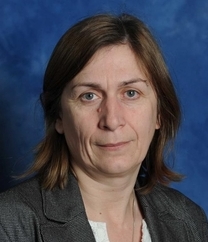 |
| Louise O'Donnell, national secretary, Health & Welfare division. |
|
IMPACT has learned that some HSE-funded voluntary agencies have sought to impose the terms of the Haddington Road agreement on their staff, despite there being no agreement to do so.
Staff working in funded or ‘Section 39’ employments are not employed directly by the state, do not have the same terms and conditions of employment, and have not been balloted on the agreement.
IMPACT has learned that some HSE-funded voluntary agencies have sought to impose the terms of the Haddington Road agreement on their staff, despite there being no agreement to do so.
Staff working in funded or ‘Section 39’ employments are not employed directly by the state, do not have the same terms and conditions of employment, and have not been balloted on the agreement.
Among the agencies who have sought to impose HRA terms are Enable Ireland and St Joseph’s Foundation in Charleville, Cork. Both provide disability services.
In a memo to IMPACT industrial staff in July, national secretary Louise O'Donnell said that there had been attempts made by some Section 39 employers to impose HRA terms on staff. Louise said this had also been attempted by some providers of agency staff to the HSE.
Louise said that an earlier Labour Court recommendation on Bon Secours hospital staff, stating that pay be cut in line with the 2009 public sector pay cut, was being cited as the reason for attempts by Section 39 bodies to automatically apply the terms of Haddington Road. Louise said that she has advised the HSE that IMPACT does not accept that there can be an automatic roll-out of Haddington Road Agreement to Section 39 bodies or to agency staff.
IMPACT officials are continuing to gather details on agencies attempting to impose the terms on staff and the union will oppose any such attempts by employers.
|
|
|
|