In recent years cashew nuts have surged in popularity due to their health benefits and protein-packed nature. Increasingly found on supermarket shelves and filling reusable lunchboxes, cashew nuts begin their journey thousands of miles away in the arid savannah landscapes of West African countries like Burkina Faso.
Cashew production is a lifeline for tens of thousands of rural families. Yet, despite its growing popularity the farmers who grow these nuts often earn very little from their labour.
That is slowly changing, thanks in part to the solidarity of Irish trade union members. Over the past decade, Fórsa has partnered with Self Help Africa to support women cashew producers in Burkina Faso.
Louise Rogan of Self Help Africa recalls how this partnership began: “A good few years ago we became aware that Fórsa had a fund that helps developing projects and since 2016 we have been in receipt of eight different grants from Fórsa, totalling just under 100k, which have supported many projects in different countries.”
For a sector where even a small investment can change many lives, that support has been transformative. Louise continued: “This has been hugely welcome and very generous support and we really do appreciate everything Fórsa has done for the organisation since 2016.”
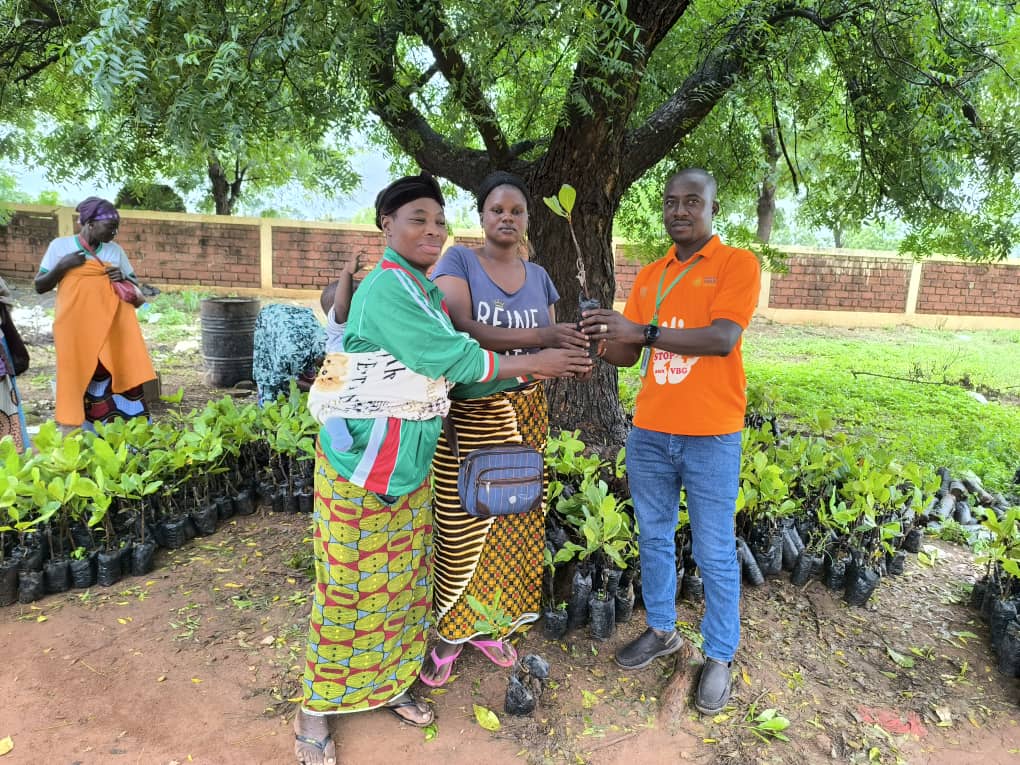
Seedlings being distributed through the project empower women farmers to expand their orchards and improve yields.
In Burkina Faso, cashew nuts are harvested once a year. For farmers working alone, this narrow window creates a dangerous bottleneck: everyone sells at the same time, flooding the market and driving down prices.
Ludovic Sawadogo, who oversees Self Help Africa’s programmes in Burkina Faso and Togo, lays out the problem plainly:
“Small-scale cashew producers who work alone can struggle to get their produce to market, and often must sell their crops locally, where they earn a lower price, thus flooding the market and driving prices down.”
This is where Fórsa’s backing has played a crucial role. The union helped fund the construction of a new storage warehouse - a simple building with enormous impact.
“The construction of a storage warehouse, with support from Fórsa, has provided women producers with a central depot where they can bring their crops for onward sale,” Sawadogo explains. It’s also a space where the nuts can be safely stored, sorted, and graded - essential steps for getting better prices.
“This opens up new markets for the farmer producers,” explains Sawadogo.
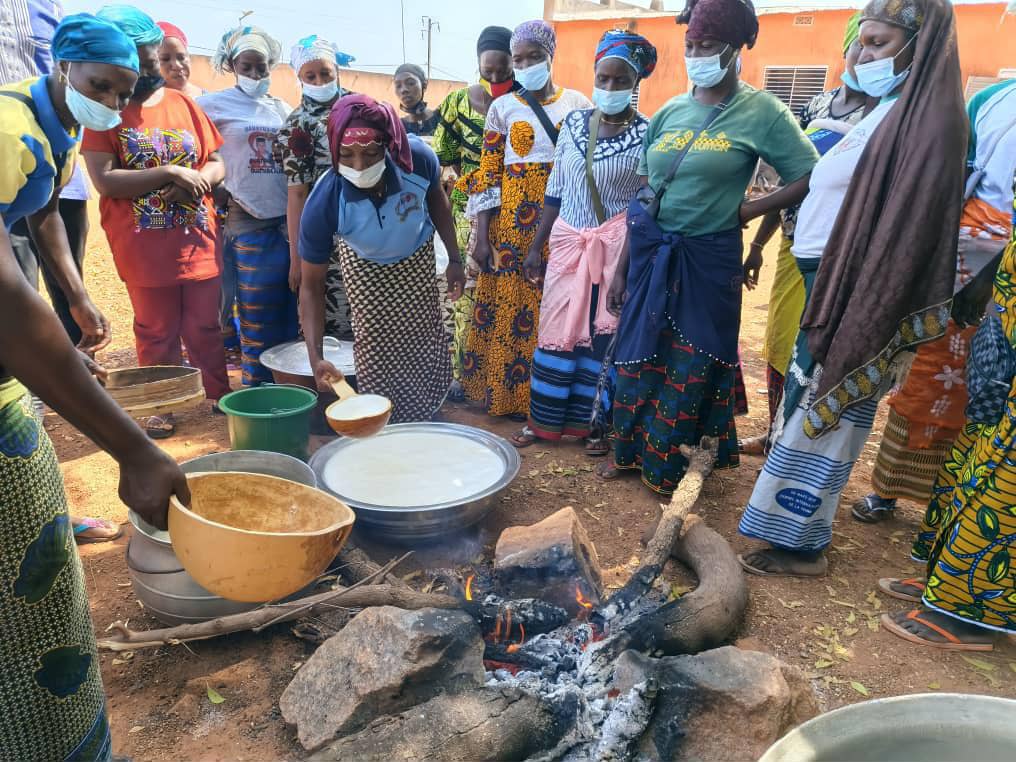
A production skills demonstration shows women farmers new techniques for managing their cashew orchards, improving nut quality and maintaining healthy trees.
Crucially, women farmers have also received hands-on training to improve their orchards and maximise their yields.
“Fórsa’s contribution also helped with the training of 1,000 women producers, and more than 12,000 grafted seedlings were purchased and distributed, improving cashew tree yields and nut quality.”
The real power of this partnership is best seen in the story of 63-year-old Fatoumata Siritie, a widow, grandmother, and member of the IYA YGO cooperative in Banfora. After fleeing political unrest in Côte d’Ivoire in 2011, she returned home with nothing.
“Returning home in 2011 after the socio-political crisis in Côte d’Ivoire, I walked back empty-handed, in total destitution; I could not even provide one meal a day for my children,” she remembers.
Today, she manages a 17-hectare orchard. Thanks to seedlings, equipment, training and beekeeping kits, she has transformed her land into a viable business. She now understands the cashew market, maintains her orchards effectively, and produces honey to supplement her income.
The turnaround is remarkable. The income she earns supports her children and grandchildren and gives her the confidence to plan for the future. She hopes to leave them a profitable enterprise - something she never imagined when she arrived home with empty hands.
If the cashew industry in Burkina Faso has a beating heart, it’s the cooperative model. Farmers there operate in groups governed by democratic rules, shared ownership and mutual support - principles that Irish trade unionists will be intimately familiar with, and which played a transformative role in agriculture in Ireland in the past.
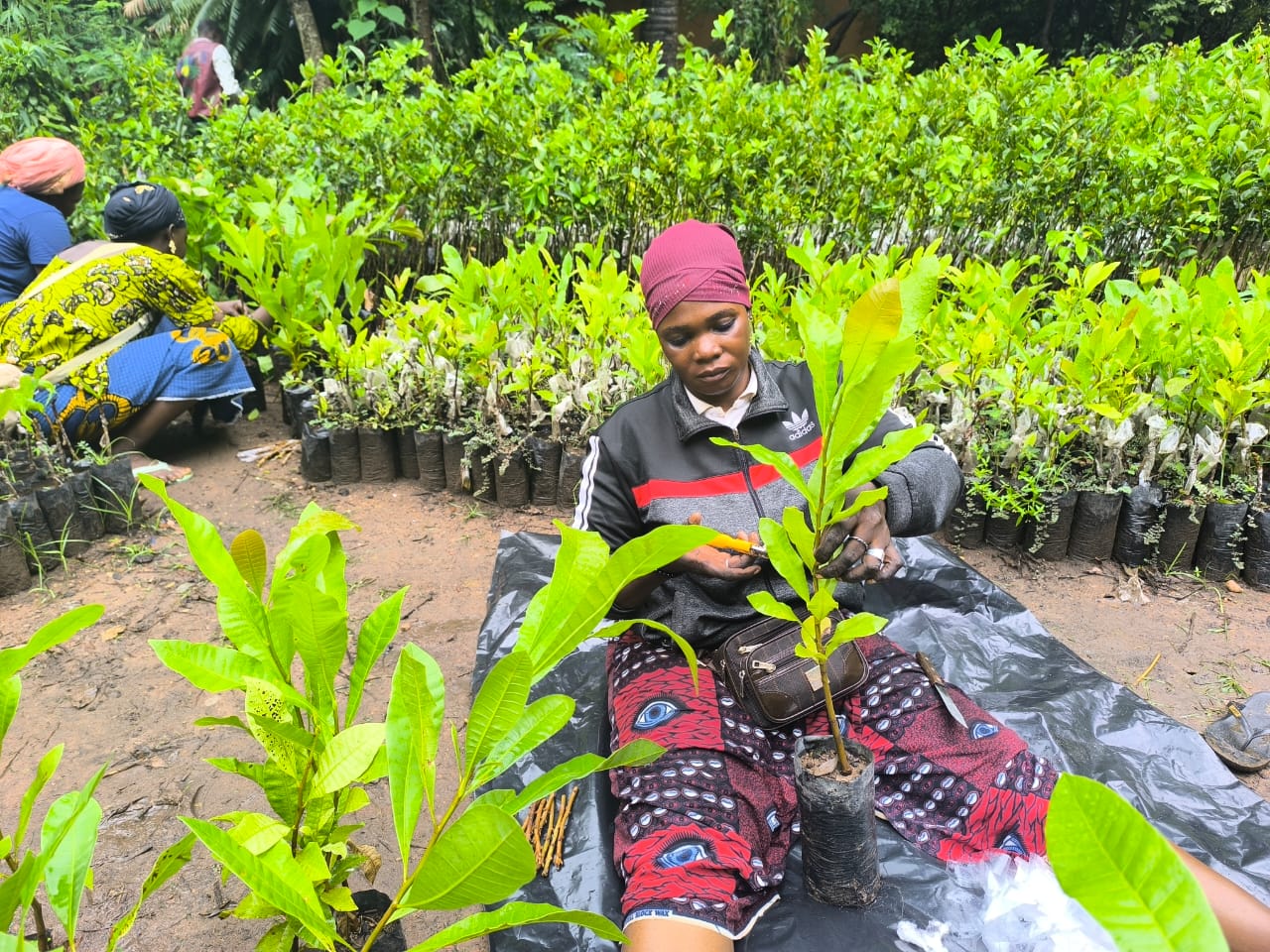
Training sessions on grafting cashew plants give women the technical knowledge needed to raise higher-yielding trees.
As Sawadogo says: “By definition, a cooperative is an autonomous association of persons who voluntarily come together through a jointly owned and democratically controlled enterprise.”
There are seven core cooperative principles, including voluntary membership, democratic control, education and training, and concern for the community - values that are at home in any union rulebook.
Self Help Africa builds on these structures by organising small farmers into producer groups, helping them scale up production and reach bigger markets. With more than 70% of Africa’s food grown on small farms, this kind of organisation is essential.
Despite their central role in cashew processing - where women make up more than 90% of the workforce - women face significant barriers. Land ownership is the biggest.
“Women’s access to land is a major challenge,” Sawadogo notes, with inheritance customs often excluding them. Even when they secure land, accessing tools, seedlings, fertiliser and market information remains difficult.
The Fórsa backed project tackles these barriers head-on through advocacy with local leaders, training, and improved equipment.
“The construction of a storage facility is also planned to improve storage capacity and nut quality,” explains Sawadogo.
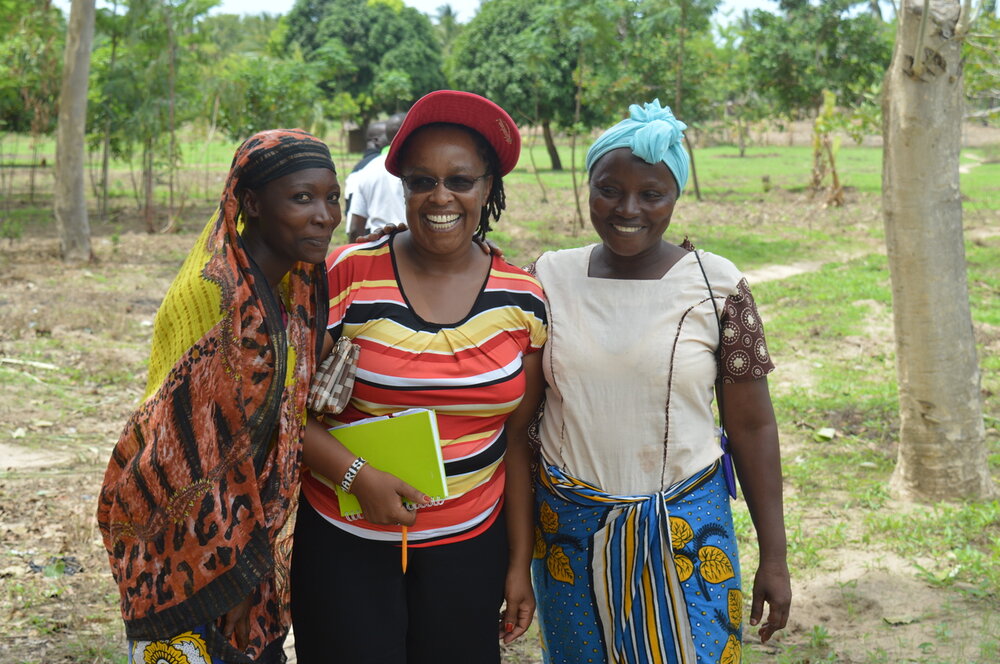
Women participating in the programme are at the heart of Burkina Faso’s cashew sector.
Processing is another challenge. Women often work with basic, labour-intensive tools that can be unsafe or unhygienic.
“Through the project, Self Help Africa works mainly with these artisanal processors. They are supported with improved equipment such as full drying ovens, shellers and peeling tables.”
Burkina Faso is on the frontline of climate change. Rising temperatures, unpredictable rainfall and frequent droughts are making farming more difficult each year. Yet the innovations being introduced like rainfall-monitoring platforms, resilient seedlings, and techniques like the experimental use of biochar offer real hope.
“When properly applied, this technology helps retain moisture in the soil, ensuring crop survival,” explains Sawadogo, who also notes that cashew trees help pull carbon from the atmosphere and restore degraded land. Cashew is also grown in agroforestry systems to combat deforestation.”
For Sawadogo, the potential for trade-union collaboration is far from exhausted: “Unions like Fórsa can play a valuable role in transforming the lives of thousands of rural poor families,” he concludes.
For more information on these projects check out the Self Help Africa page on Burkina Faso.
Join a union that wins. Join Fórsa.





 Like
Like

