Ahead of the launch of a new survey of members later this month, we look at whether the push back to the office could collapse one of the most significant innovations in modern working life.
This week we learned that an “overwhelming” number of jobs in the Irish economy offer no flexibility to work from home, prompting concern that remote and hybrid work is now largely confined to higher-paid roles.
If current patterns continue, a situation may develop where you only have access to remote or hybrid work if you are earning more than a hundred thousand a year, and not at all if you earn much below sixty grand. Harsh?
JobLeads, an online job platform based in Germany, reported this week that only 3.7% of 48,000 active Irish job postings are fully remote, with 13.4% hybrid and 83% requiring daily workplace attendance. It also found that just 5% of roles paying under €60,000 offer remote or hybrid options, while jobs paying €100,000 and above account for more than a quarter of them.
These figures suggest that the push back to the office could collapse one of the most significant innovations in modern working life. It also risks hardening inequality within the workforce if remote work becomes an exclusive perk for higher-paid staff, condemning others to longer delays and wasted time.
Revolutionary
The overnight shift to remote work during the Covid pandemic in 2020 was remarkable because it was largely unplanned, yet it mostly worked. We quickly adapted to its possibilities and learned to recognise its limitations. For the most part, it was warmly embraced and was spoken of in almost revolutionary terms.
Remote and hybrid working changed commuting patterns, easing peak-time congestion, cutting emissions and journey times, and relieving pressure on Ireland’s road infrastructure. Regional economies got a boost, and workers with caring responsibilities experienced a greater degree of flexibility, allowing for a more sustainable balance between caring and work demands.
Despite all these gains, anxieties about workplace collaboration, city centre footfall and productivity have continued to colour the debate. This is why Fórsa has challenged employers over unilateral attempts to force people back into the grind of 10 commutes a week. Most recently, this has arisen in a dispute with the Department of Social Protection over increased office attendance. Following union pushback, the matter is now due to go to a conciliation process.
Priority
In a survey of 14,000 Fórsa members last year, 55% of respondents said their main priority was to protect existing hybrid and remote working arrangements. It reflects the real concerns of Irish workers, who have already proved beyond doubt that remote and hybrid arrangements can serve the needs of workers and employers without compromise.
A drift back to the pre-Covid status quo, driven by concern over commercial property values or an old-fashioned desire for control, would constitute a real political failure by the government that facilitates it.
No government will be rewarded for forcing more people to spend more time in more traffic. Dublin is now the third-most congested city in Europe, its main arterial routes are clogged every morning, for miles in every direction. Our climate action goals take a hit too, while public transport remains overwhelmed and everybody’s journey becomes slower and longer. A recent Dáil debate on revised legislation on remote work saw one TD miss the debate because he was stuck on the M50.
Housing & Care
In this context, being herded back to the office is making life tougher than it needs to be for a lot of people, not least those with caring responsibilities at home. The same applies to those who’ve made the difficult decision to move further away to afford a home.
Taking those JobLeads figures at face value, the only exception would be higher paid, senior staff and management grades. In that scenario, higher-paid staff avoid peak commuting while junior colleagues, mandated back to the office, collaborate with them over video calls.
The Government's own remote working policy, published in 2021, envisaged 20% of public sector employees working remotely or on a blended basis, with further annual increases planned up to this year. But five years on that enthusiasm has dampened and the there is a risk that the State looks set to follow private sector employers in pushing for more office-based work.
Policy
The response from employers looks shortsighted when you consider Irish productivity has not been adversely affected by remote and hybrid working. Labour productivity, measured by the Central Statistics Office (CSO), shows an increase in total economy activity between 2022 and 2025. Insisting that workers increase their current level of exhausting and pointless hours of commuting will do little to sustain the Irish economy.
If access to remote and hybrid work is allowed to harden into a perk for higher-paid roles, then inequality will be built into the working week itself. Longer commutes, heavier congestion and increased stress will be the price paid by those with the least choice. That is not an inevitable feature of modern work. It is a policy failure, and it should not be accepted as progress.
Later this month Fórsa will launch a new survey of members to gain better insight into your working patterns. We’ll be asking how hybrid and remote work impacts your life and why it matters to you. Keep an eye out for the survey link which will be emailed to all members.
Special Needs Assistants (SNAs) and their supporters are being urged to contact their local TDs and Senators in the coming days to demand political support for long-overdue reform of the State’s leave arrangements in schools.
Special Needs Assistants (SNAs) and their supporters are being urged to contact their local TDs and Senators in the coming days to demand political support for long-overdue reform of the State’s leave arrangements in schools.
In December 2025, Laura Harmon introduced the Education (Leave for Injuries) Bill 2025 in the Seanad. The Bill seeks to amend the Department of Education’s existing Leave of Absence Following Assault circular, which has been widely criticised by unions and frontline staff as being totally out of step with the realities of school workplaces.
The Bill will be debated in the Seanad on Wednesday 18th February, and Fórsa is calling on members to email both Senators and TDs to ensure their party supports its passage.
The current ‘assault’ leave scheme was introduced in 2017 to provide additional leave for teachers and SNAs injured in the workplace. However, unions have consistently highlighted serious flaws. Leave is capped, the terminology around ‘assault’ is stigmatising, and the scheme fails to account for delayed, recurring, or non-physical injuries such as trauma and stress.
Fórsa’s head of education Andy Pike said “Our members have kept pushing this issue for some time now, steadily building pressure and refusing to let it slip off the agenda. Our approach has always been shaped by the lived experience and input of workers on the ground - the people dealing with the inadequacies of the current system every day. Now the Bill is at a critical juncture.”
Assistant general secretary Shane Lambert underlined the need for legislative change as previous attempts to advance this issue industrially were not been successful. He said: “Despite the union lodging several claims to seek improvements and specifying how that could be achieved, they have not been agreed by the Department and ended up in lengthy processes, failing to deliver any meaningful change.”
The urgency of reform was underlined by figures published in February 2025 obtained under Freedom of Information legislation and reported by 7 Lá on TG4. The data revealed a 64% increase in assault-related leave among teachers and SNAs since 2022. In 2023 alone, 412 staff took leave following assaults, with SNAs in primary schools accounting for the majority of cases.
Following the programme, Fórsa launched its own large-scale survey of education workers to gather detailed evidence on assaults, injuries, stress, and burnout across the education sector. The figures that came back confirmed the stark reality reported on the ground.
More than half of respondents (55%) have experienced assault at work, rising to 69% among SNAs, with nearly half of those injured requiring medical treatment and over a third needing hospital care. Yet support structures are weak: only 9% were offered counselling, just a third even knew about assault leave policies, and half receive no regular safety training. The human cost is clear, with 89% reporting workplace stress and 47% of participants citing they considered leaving due to burnout.
Fórsa has argued that, crucially, this new Bill also moves away from language that deters staff from using the scheme out of concern for stigmatising children, while still ensuring incidents are properly recorded and addressed.
“The current setup frames children as perpetrators rather than students needing support. That’s not right. The Education (Leave for Injuries) Bill 2025 would fundamentally reform the current system. We developed it in consultation with the INTO and campaigner and teacher Sophie Cole. The Bill would guarantee paid leave for the full duration of a medically certified injury, cover immediate medical and related costs, and provide access to psychological and specialist supports. It would also allow for early retirement in cases of permanent incapacity and ensure equal treatment for teachers and SNAs.”
Fórsa representatives will attend the first reading of the Bill on Wednesday 18th February. In advance of that the Education division is calling for members to pour on the political pressure in the background.
“We’re asking members to email Senators seeking support for the Bill, and to contact their TDs to ensure party backing as the legislation progresses. SNAs and school secretaries are being explicitly encouraged to get involved so we can reform a system totally out of step with workplace realities,” appealed Andy.
The pay scales page for the Education division has been updated to reflect the recent 1% pay increase.
Pay scales for grades, groups, and categories in the education division have been updated on our website.
The update reflects the second-last pay increase agreed under the terms of the Public Service Agreement 2024-2026, which came into effect on Monday 1st February.
This pay increase will see workers receive an increase of 1% of gross pay, with a minimum increase of a flat rate of €500 for workers earning under €50k.
The updated pay scales were released by the Departments of Education and Youth, and Further and Higher Education, Research, Innovation and Science at the end of January and uploaded to our website shortly after.
The last remaining increase of an additional 1% of gross pay will come into effect on 1st June of this year.
To view your division's pay scales, you can follow this link to the education salary scales page on our website.
Union members and activists will be packing out one of the largest multi-purpose venues on the island to tackle the issues that matter most to workers at national conference.
The union’s biennial conference will take place in the INEC in Killarney this May, running from Wednesday 13th May to Friday 15th May.
In line with the union rule book, official notice issued to branches in January, along with all relevant deadlines for submitting motions and nominations.
Conference is a crucial part of the union calendar, as it provides members with a unique opportunity to shape union policy, and to elect the union’s officers. It takes place every second year, with divisional conferences taking place in the intervening period.
National secretary with responsibility for union conferences Catherine Keogh said: “We’ll be back in the INEC in Killarney this May, as it’s the only venue big enough to accommodate Fórsa’s national conference. That’s a testament to the continued growth of our union.”
“Conference is a very special moment as it brings members together, from all six divisions of the union, to debate motions and set our priorities. With so many pressing national and international crises impacting workers today, form the cost-of-living crisis to protecting hybrid work, there will be a packed agenda.”
The next Live Lunch & Learn information session will take place on Friday 27th February and will be on the topic of the four-day working week.
The next Live Lunch & Learn information session will take place online on Friday 27th February at 1pm and will be on the topic of the four-day working week.
As usual, the session will be hosted by Skills Academy. It will take the format of a conversation between Fórsa national secretary Linda Kelly, and Joe O’Connor, CEO and cofounder of Work Time Revolution, a global consulting and research firm that specialises in innovative work models, and the co-author of a new book 'Do More in Four’.
The book is an impassioned and data driven case for a four-day workweek. Joe O’Connor has designed and led four-day-workweek pilots around the globe, and this session will be an opportunity for Fórsa members to explore ways to get involved with the movement in their own branches and workplaces.
This session will provide an insightful deep dive into this topic, exploring what it means for workers, the trade union movement, and wider society. It will also provide an excellent opportunity for you to raise your own questions and contribute to the discussion.
Applications are open on a whole range of training opportunities from chances to polish your presentation skills to tooling up on conflict resolution and being a workplace rep.
There is plenty on offer from the Skills Academy over the next few months, details of all courses open for registration are below. You can email your branch training officer or the Skills Academy for more information.
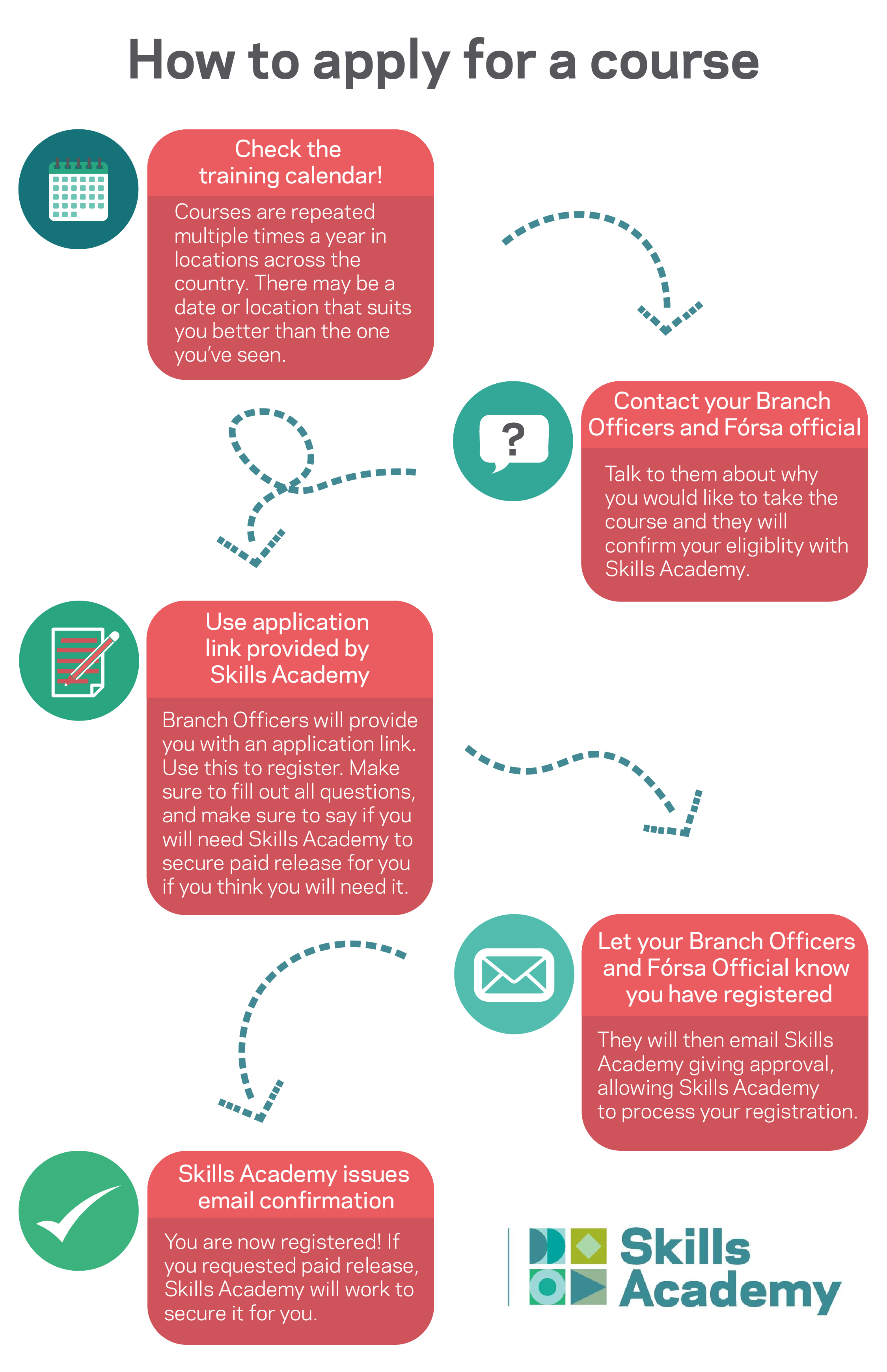
To register for a course:
Aside from Live: Lunch & Learn and Fórsa inductions, participation on all courses requires sign off from your branch and official. To apply, get in contact with your branch training officer or secretary, if your branch does not yet have a training officer.
Intensive Presentation Skills - Tuesday 17th February and Tuesday 3rd March - Nerney’s Court
Natural presenters are few and far between, if you lack confidence in your presenting skills or feel they could do with a bit of a polish, then this course is for you.
Intended for branch training officers, this course will teach you to inspire confidence and maintain a crowd’s attention while giving a presentation. This course will take place in Nerney’s Court, Dublin, over two days in February and March.
While intended for branch training officers, other branch executive committee officers can apply if places are left unfilled by training officers. Places will be offered on a first-come first-served basis.
Industrial Conflict Resolution (Level 2) Civil Service – Thursday 19th February – Nerney’s Court
This is the follow-on course to the Building effective local IR practices for members in the Civil Service division course with Brendan Cunningham. In this next step, you will learn how to handle IR issues when they come to conflict, how to maintain positive working relationships without shying away from conflict, and how to use conflict as an opportunity for positive change.
Live: Lunch & Learn – Working towards the four-day week - Online - 1-2pm Today Friday 27th February
This month, the Skills Academy will be hosting a discussion on the four-day week. They will be joined by Fórsa national secretary Linda Kelly, and Joe O'Connor, CEO and co-founder of Work Time Revolution, a global consulting and research firm that specialises in innovative work models.
As a co-author of the new book 'Do More in Four’, Joe is well placed to share what can be learned from four-day workweek pilots around the globe and advise on what you can do to start moving your workplace towards a four-day working week.
Level 1, WRT – Tuesday 24th – Thursday 26th March – Wexford Union Office
This is a three-day course for workplace representatives with no previous experience or training. The only prerequisite for taking this course is that you are a workplace rep and have previously taken the Fórsa Induction module.
This is a fantastic opportunity for workplace reps in the south-east of the country. The Workplace Representatives Training Level 1 will be held in Wexford in late March.
In this course you will learn all the basic skills that a representative will need in their first year, including:
the role and function of the workplace rep
improving interpersonal skills and building good working relationships
organising your union work
recruiting members and handling problems
an introduction to equality and diversity
health and safety.
Communications Training – Tuesday 31st March – Woodford Office, Santry, Dublin
This will be the last chance to catch this crucial training this academic year. An opportunity not to be missed for branch officers in the east of the country and those further afield who can travel for the day.
Learn the most effective tools for keeping your members informed, engaged, and active. Build your branch’s profile and craft compelling messages that drive member participation and commitment.
Workplace representatives training will come to Dublin in late April. The training will be held in our Woodford office, near Dublin Airport. If you’re a new workplace rep in the east of the country, then make sure you register for this essential course.
Marking more than two years of impunity for Israel’s assault on Gaza - in which over 72,000 Palestinians have been killed - the Ireland–Palestine Solidarity Campaign (IPSC) has called a National Demonstration for Saturday 21 February.
On Saturday 21st February Fórsa will once again be at the National Demonstration for Palestine, organised by the Irish Palestine Solidarity Committee (IPSC).
Across Palestine, workers, families, and entire communities are enduring the unbearable. As trade unionists, we have always known that our struggles are bound together. An injury to one is an injury to all.
All members who wish to take part in the demonstration are encouraged to join us on 21st February to march as part of the trade union bloc.
The delegation will depart Nerney’s Court at 12.30pm to join the trade union bloc gathering outside Mandate’s offices, directly across the road from the Gate Theatre on Cavendish Row. Members are welcome to join the delegation at Nerney’s Court or meet directly outside Mandate.
The march will begin at the Garden of Remembrance at 1pm and finish outside the Dáil on Molesworth Street/Kildare Street.
The demonstration will call for immediate sanctions, the enactment of the Occupied Territories Bill including a ban on services, and the end of the transport of arms through Irish airspace.
We’ll provide the union flags — you simply bring your enthusiasm and solidarity!
Join us on 21st February to strengthen our movement for solidarity and to demand an immediate and sustainable ceasefire in Gaza.
Trade Union Week is back again this year, merch order form for branches now open.
The now traditional Trade Union Week run up to Mayday is back again this year, and we’re excited to share that the merch order form for branches is now open.
As a key element of the all-island ‘Better in a Trade Union’ campaign, the week is designed to ensure every worker understands the practical benefits of union membership.
Kevin Donoghue from Fórsa’s campaigns unit says the week is deliberately focused on participation rather than spectacle. Kevin urges branches to submit their merchandise orders early this year.
“Trade Union Week is about visibility and confidence,” he says. “When members organise something in their own workplace - even something simple like a coffee morning - it sends a clear message that the union is active, present and rooted in the day-to-day reality of working life. Distributing some of the ‘Better in a Trade Union’ merch also keeps that presence going beyond the pop-up stall.”
Partnering with other unions in the workplace can also amplify impact. Joint events in schools, healthcare settings and state agencies have proven effective in showing colleagues that unity extends beyond a single organisation.
Kevin emphasises that it’s up to members on the ground where they want to take it.
“Trade Union Week is, ultimately, what members make of it. It is not a top-down initiative. It is an opportunity for reps and activists to demonstrate ownership of their union and to invite others into it. Promotion should be straightforward and visible, with posters in high-traffic areas like noticeboards, corridors and canteens helping to build awareness, but direct conversation remains the most effective recruitment tool - personally inviting colleagues and encouraging existing members to bring others creates real momentum.”
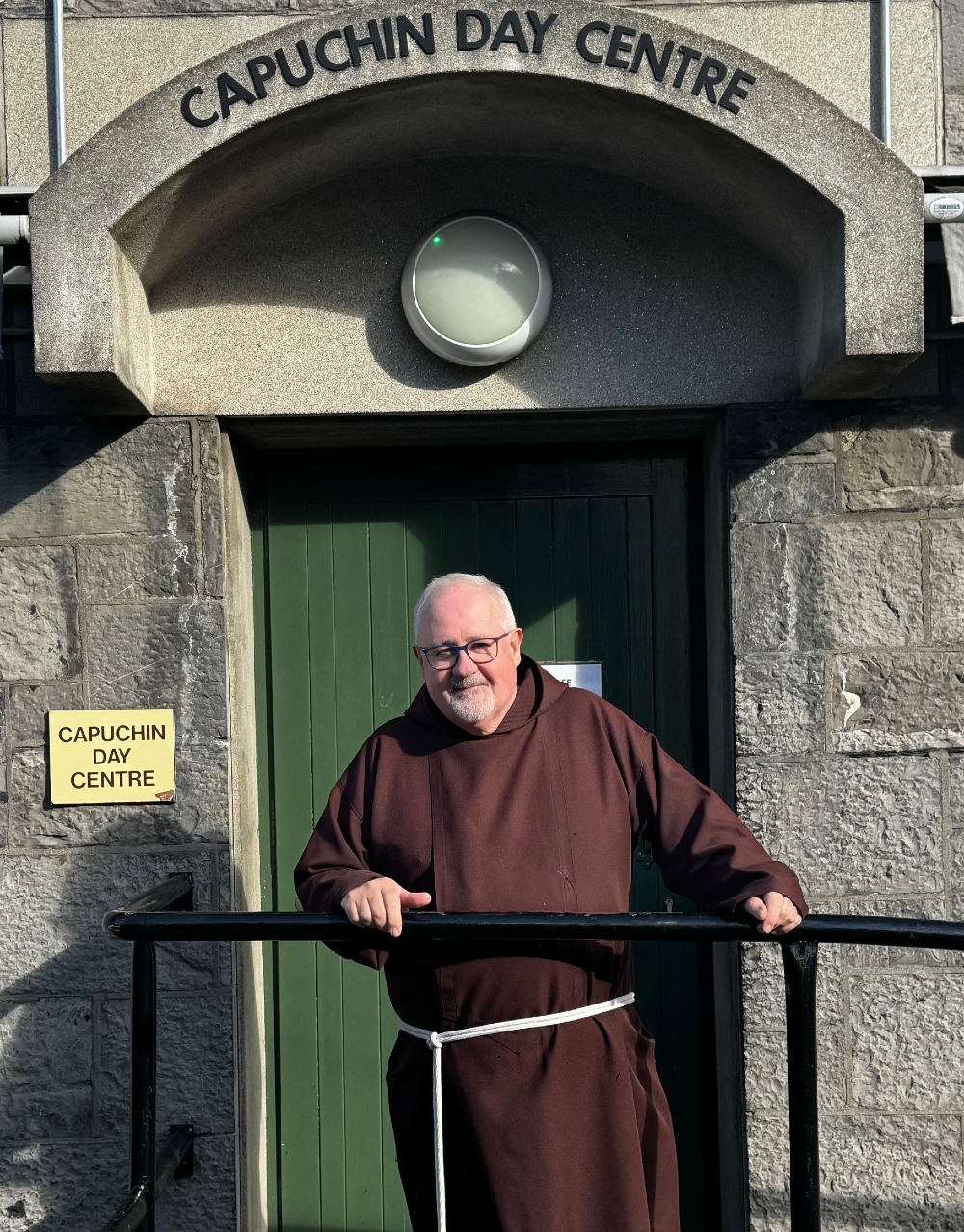
€10,000 donation will help vital work at the Capuchin Day Centre.
Residents of the north inner city might be familiar with the occasional early morning sight of Capuchin Friars wearing their traditional brown habits making their way past rows of red brick cottages, offering pastoral care to the local community, including the practical supports provided through the Capuchin Day Centre.
When it started back in 1969, the centre catered to 50 males on daily basis – and later started to also see families coming through its door. They provide on average 350 hot breakfasts and 550 lunches each day. The mission is simple - no one goes hungry - but there’s a suite of other services on site, with everything from haircuts and showers to clinical services available.
A recent €10,000 donation from Fórsa will directly support these essential services, helping the Capuchin Day Centre continue its mission of care, compassion and practical support for some of the most vulnerable people in our communities.
Founded by Capuchin Friar Brother Kevin Crowley and inspired by the spirit and values of St Francis of Assisi, the Day Centre was established to relieve the hardship faced by people who were homeless or struggling to meet their basic needs. Over more than five decades, it has grown into one of Ireland’s most respected and trusted frontline services for those in need.
A core principle of the Capuchin Day Centre is dignity and respect. Everyone who comes through its doors is treated as a guest and welcomed without judgement. Support is offered on a “no questions asked” basis, ensuring that no one goes hungry or is turned away.
Fr. Kevin Kiernan, Order of Friars Minor Capuchin (OFM Cap), current Capuchin Director of the Day Centre is passionate about the work, saying: “Core to the Day Centre’s mission is the absolute unconditionality of access to the majority of services irrespective of age, race, gender, nationality and religious or political beliefs.”
The Centre continues to be guided by the Irish Capuchin Friars, who remain actively involved in its daily life, helping ensure that the Centre’s services reflect both its charitable mission and high standards of care. In August 2022, Fr. Kevin Kiernan became Capuchin Director, taking over from Brother Kevin Crowley following his retirement. Alongside a skilled team of professional staff and a large group of dedicated volunteers, the Day Centre relies in no small part on public support in the form of financial contributions to meet the high demand for its services.
Fr. Kevin expressed his gratitude for the recent donation received from Fórsa : “We rely on the public for the vast majority of the funds needed to run these services. We are very grateful for the generous donation from Fórsa last December– it is thanks to the generosity and compassion of supporters like you that we can continue to open our doors to anyone seeking support and a warm welcome. It means we can offer a hot meal, along with many other essential practical supports and hopefully our guests, adults and families from all walks of life, also feel a sense of belonging and community.”
The scale of the Centre’s work is significant. In 2025 alone, it provided 331,300 hot meals to adults and families and distributed more than 77,300 food parcels. Its family services provided 6,545 infant packs containing basic care essentials like nappies and formula milk to families. The Day Centre also provided over 7,500 showers for people sleeping rough and 189 onsite haircuts with the voluntary support of Haircuts for the Homeless. In partnership with SafetyNet, the Day Centre supported 3,434 people through clinics, including GP, nursing, chiropody and dentistry.
Speaking about the donation, Fórsa general secretary Kevin Callinan said: “As a union we advocate for a fairer, more equal and inclusive society. We are proud to support organisations that care for vulnerable members of our communities at times of great need. The Capuchin Day Centre is a remarkable organisation without which many people would suffer greatly."
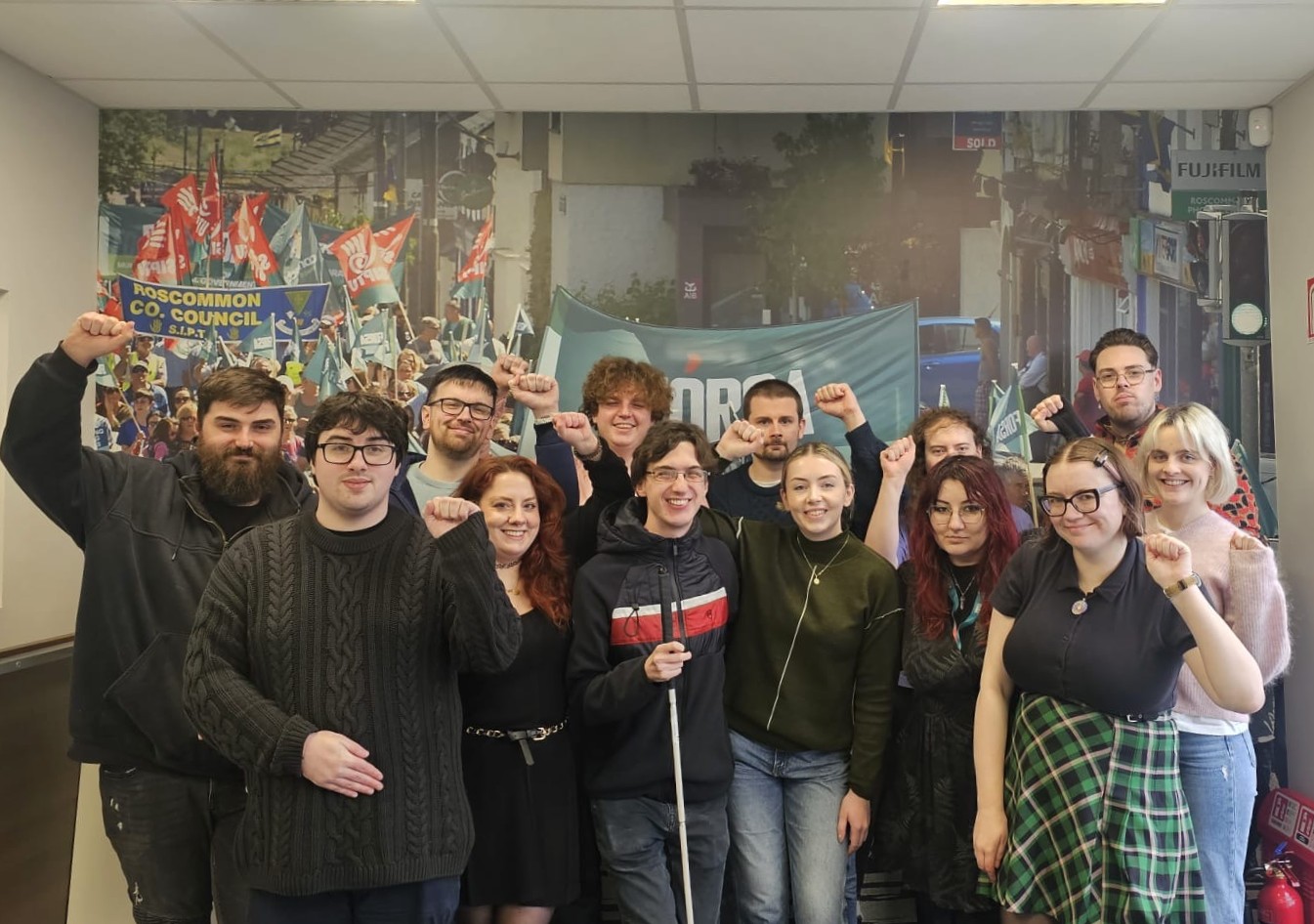
Fórsa Youth look ahead to next even after productive working meeting in Galway.
All roads led to Galway for the first Fórsa Youth meeting of 2026. As Fórsa Youth continues to advocate for young workers, this meeting marked an important step in the ongoing effort to address the challenges that young people face in today's rapidly changing world.
This year, a central priority for the committee is housing, which has become an increasingly pressing concern for young workers. In an effort to better understand and tackle this issue, Fórsa Youth has been working on a comprehensive policy paper on housing, researched and written by Chair Hugh McInerney, with comments and suggestions from the executive committee.
The committee was thrilled to welcome Professor Padraic Kenna, an academic in the fields of land/property law and housing law at the University of Galway. Professor Kenna provided invaluable feedback on the policy paper, sparking a lively and thought-provoking discussion among the group.
His insights have proven essential as Fórsa Youth fine-tunes its approach to housing policy, and the committee is hopeful that the policy paper will be ready for presentation at the upcoming biennial conference in May.
Following the discussion on housing, director of training Fiona Dunne outlined various training options available to Fórsa Youth reps, while national secretary Catherine Keogh shared her expertise on motions and the union conference process. Her contribution was instrumental in helping the committee prepare for the biennial conference, offering practical advice on how to best navigate the motions. Fórsa Youth look forward to putting forward motions that will both strengthen the role of the committee and build on our housing priority.
The next Fórsa Youth event is planned for Tuesday 10 March with Symmetry Financial and will focus on navigating the often-difficult process of buying a home. A hybrid event, it will take place in the Oireachtas AV room in Leinster House at 4:30 p.m. Attendees must register, and can do so here.