Led by the Dublin Hospitals Branch, with the support of the project team - Industrial officer Siobhán Curran and assistant industrial officers Aaron Downey and Sylvia Power, the project has one central aim: to build a more confident and self-organised union presence across the hospitals in Dublin. And the results can already be seen – as the Dublin Hospitals Branch was the highest recruiting branch in the union in 2025.
The 8 large priority hospitals are Beaumont, St James’s, Tallaght University Hospital, the National Maternity Hospital, the Rotunda, the Mater, the Coombe, and St Vincent’s University Hospital. Since October, the project team has already completed over 90 onsite visits, focusing on visibility, conversations, and laying the building blocks for member-led organising.
A major feature of the campaign has been a series of ‘hospital blitzes’ designed to help workers organise around shared workplace issues. The team has been out across all eight hospitals running major recruitment drives, taking the time to listen to staff, answer questions, and meet workers where they are.
Chair of the Dublin Hospitals Branch Michelle Kenny explained the importance of the project: “In 2025 the Branch Executive worked with Fórsa membership department to do in-person stalls in our hospitals. The project team are following that with all-day blitzes. This is a great opportunity for members to meet their union colleagues and work collaboratively on issues. Each blitz focused on the issues staff are raising most - especially the 5/7 extended working week.”
Industrial officer Siobhán Curran says “During the blitzes, we held talks, where members were walked through exactly what the 5/7 Framework means for them. These sessions gave people the information they need to start organising together within their own departments around something they all face”.
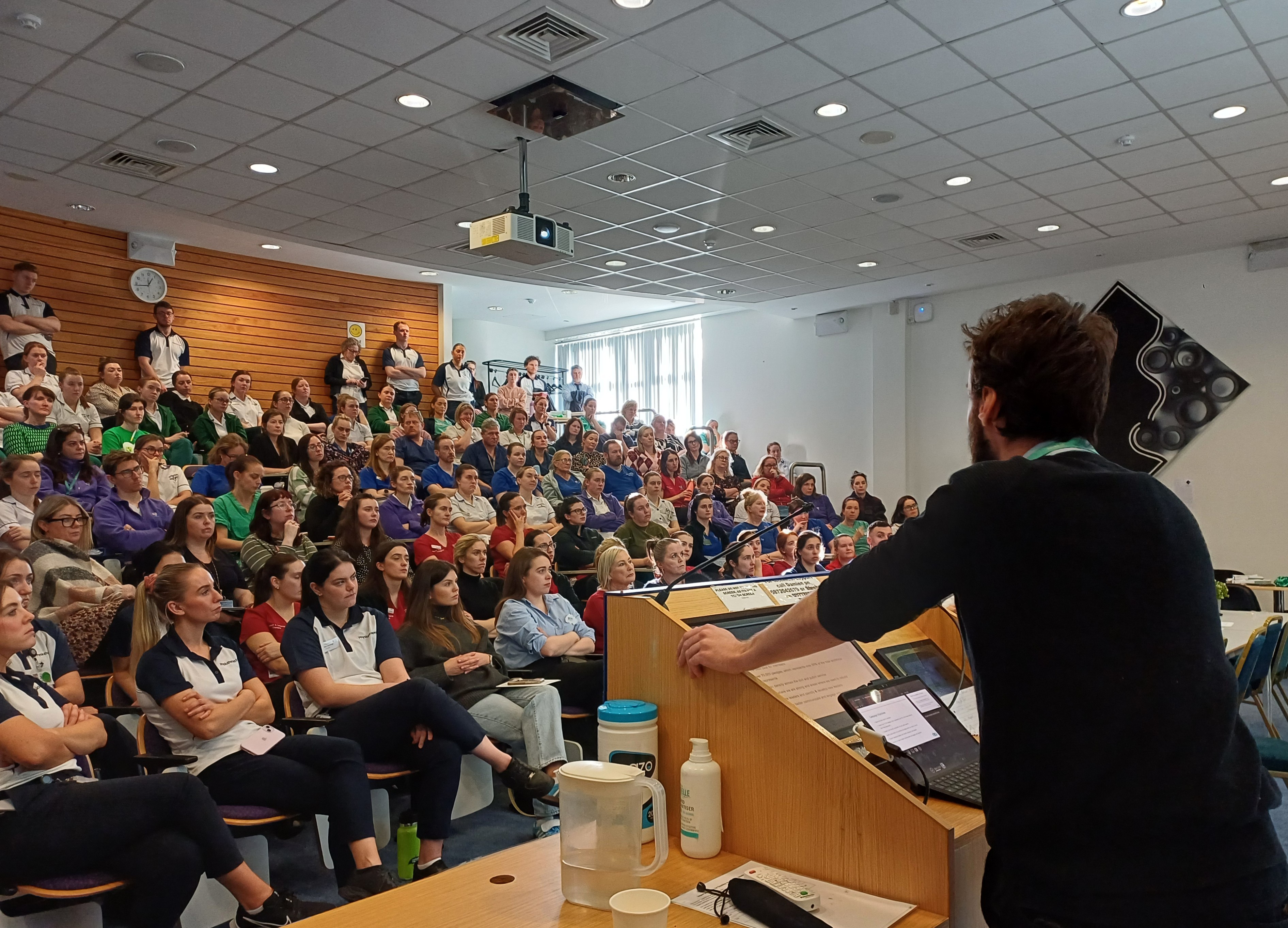
Each blitz was kicked off with a two-hour recruitment and visibility push in busy hospital areas, followed by large all-member meetings. Hundreds of workers have attended these meetings.
These meetings have also introduced members to Fórsa’s new ‘A Better Deal Pledge.’ The pledge functions as a way for workers to demonstrate their readiness to stand together and will be built out of one-to-one conversations led by workplace reps.
“Workplace reps are at the heart of the project,” says Michelle Kenny, who credits them with the success of the project so far.
“There’s no union without the reps, they’ve played a crucial role in the success of the blitz meetings - spreading the word, turning out colleagues, and beginning to use structured organising conversations connected to the ‘A Better Deal campaign.’ We’re also working with the reps to improve communication systems within the hospitals, ensuring that collective issues can be identified early and raised faster than before.”
Beyond formal reps, the team is identifying members willing to act as points of contact. These are workers within key departments and professional groups who can link their colleagues with organisers and reps. This creates a deeper, more resilient network across complex hospital environments.
Engagement is also being built with large professional blocs, both those already organised and those eager to join collectively. These include national groups of Clinical Measurement Physiologists, Optometrists, and Pharmacists across the Dublin hospitals.
A major part of the Dublin Hospitals Project involves detailed data mapping of each hospital site.
This means analysing union density, identifying gaps, and understanding where recruitment and engagement can be strengthened. The impact of the project is already visible with a huge surge in membership.
Siobhán shared some of the stats: “All of these actions are having an extremely positive effect on recruitment across the Dublin hospitals, where we are seeing an average of 30 new members per week – meaning that the Dublin Hospitals Branch is leading all recruitment stats across the union.
“Workers respond when unions tackle issues that affect them collectively. It’s up to us to provide clear pathways for their participation, empowering staff to tackle things themselves. There are no heroes in capes coming to rescue people. It’s about building a confident and visible union presence across the hospital system. Our members are doing just that.”
From blitzes to rep development, mapping to pledge building, the Dublin Hospitals Project reflects a strategic shift toward deep organising, where workers themselves make decisions, lead conversations, and move collective campaigns. Watch this space.
Join a union that wins. Join Fórsa.




 Like
Like

