Delegates debate as union hits 100,000 members by Hannah Deasy
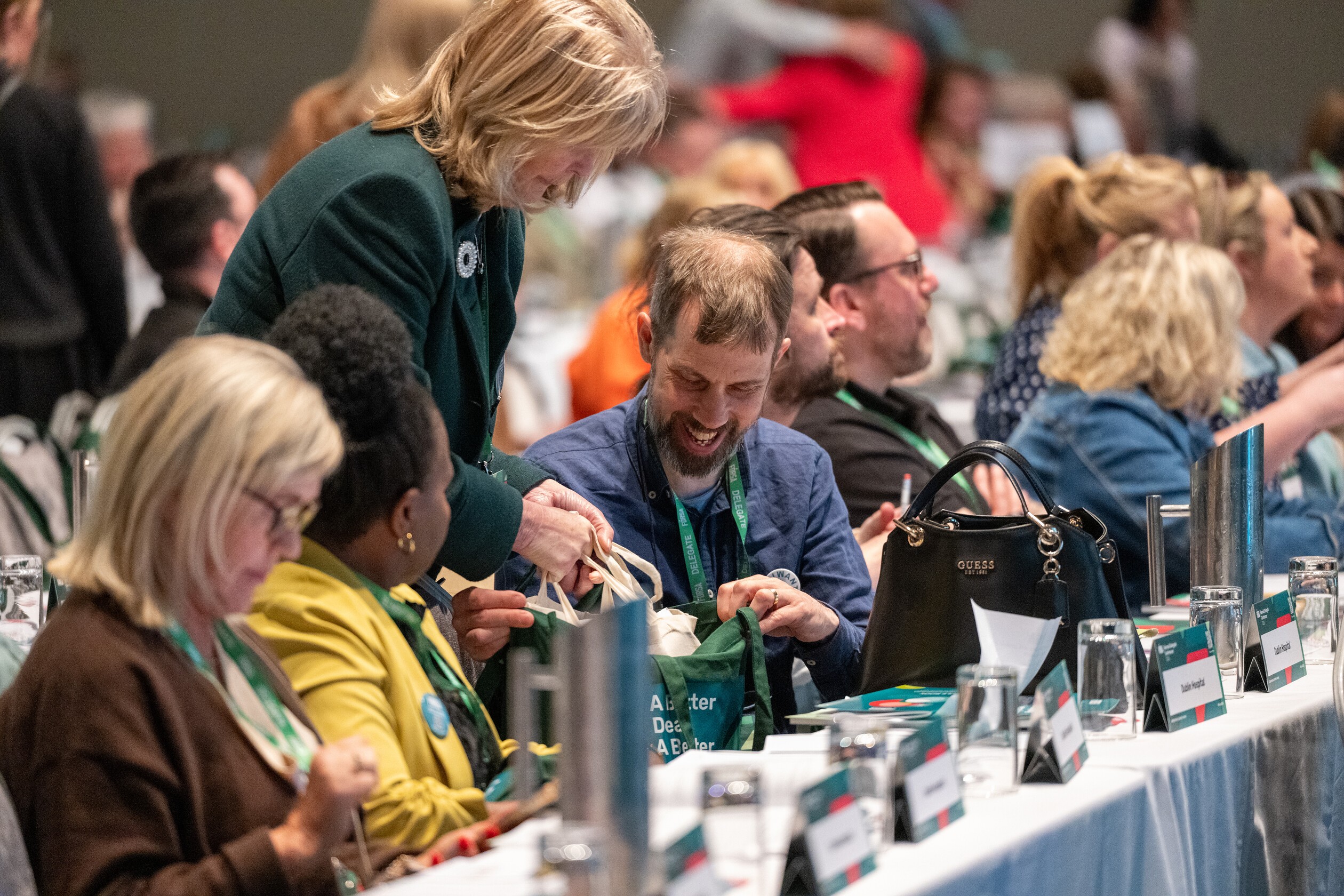
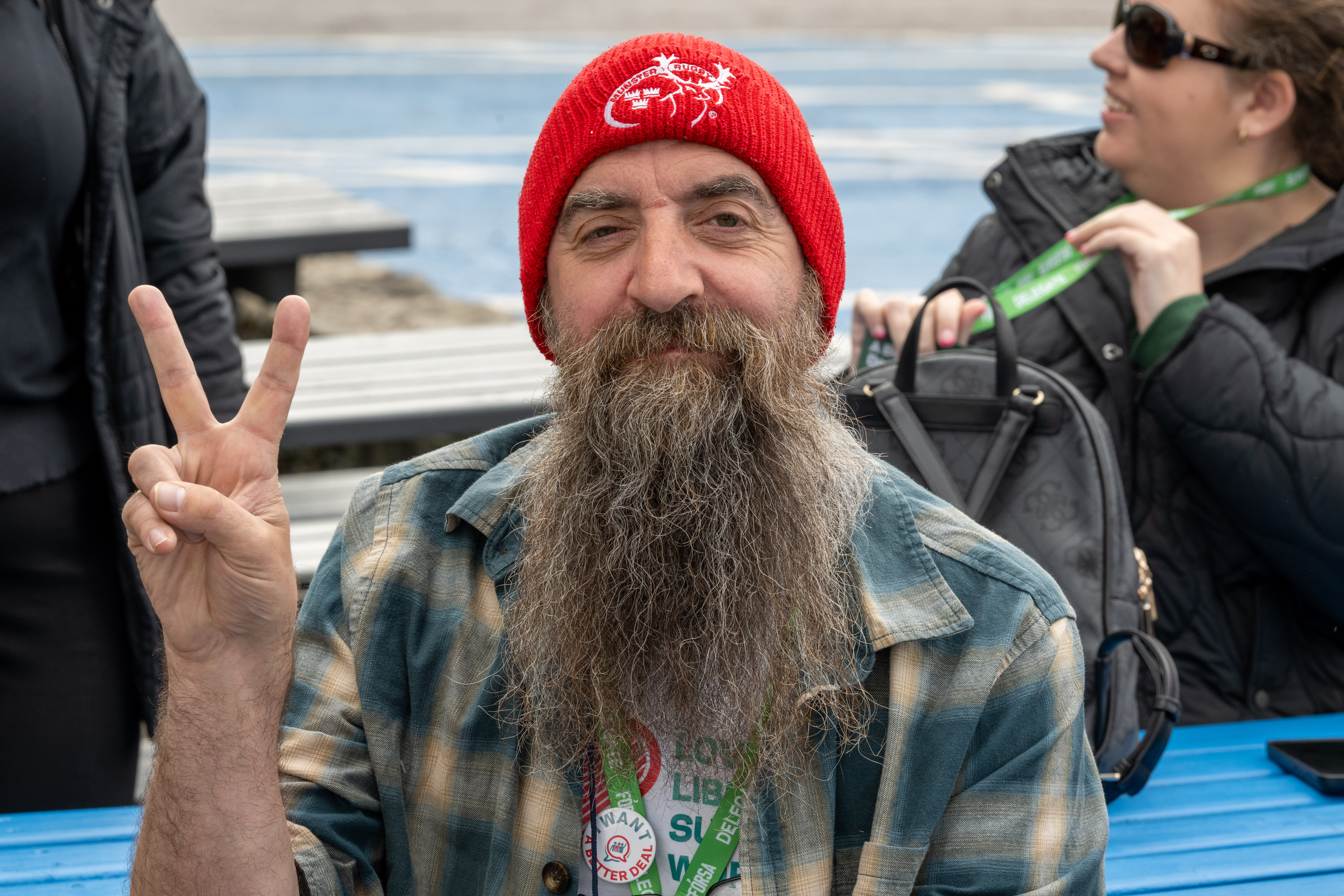
Fórsa’s Biennial Conference took place last week in Killarney. Convened every two years, delegates from all branches of the union vote at conference to elect union officers and set policy.
This year was a landmark Biennial Conference, as it coincided with the exciting news that our union has hit, and surpassed, the recruitment goal of 100,000 members. A great achievement only made possible by the hard work of organising, mobilising and building that members have undertaken over the past two years.
Running from Wednesday 13th May to Friday 15th May, Conference brought over 850 delegates from all corners of the country to the INEC in Killarney.
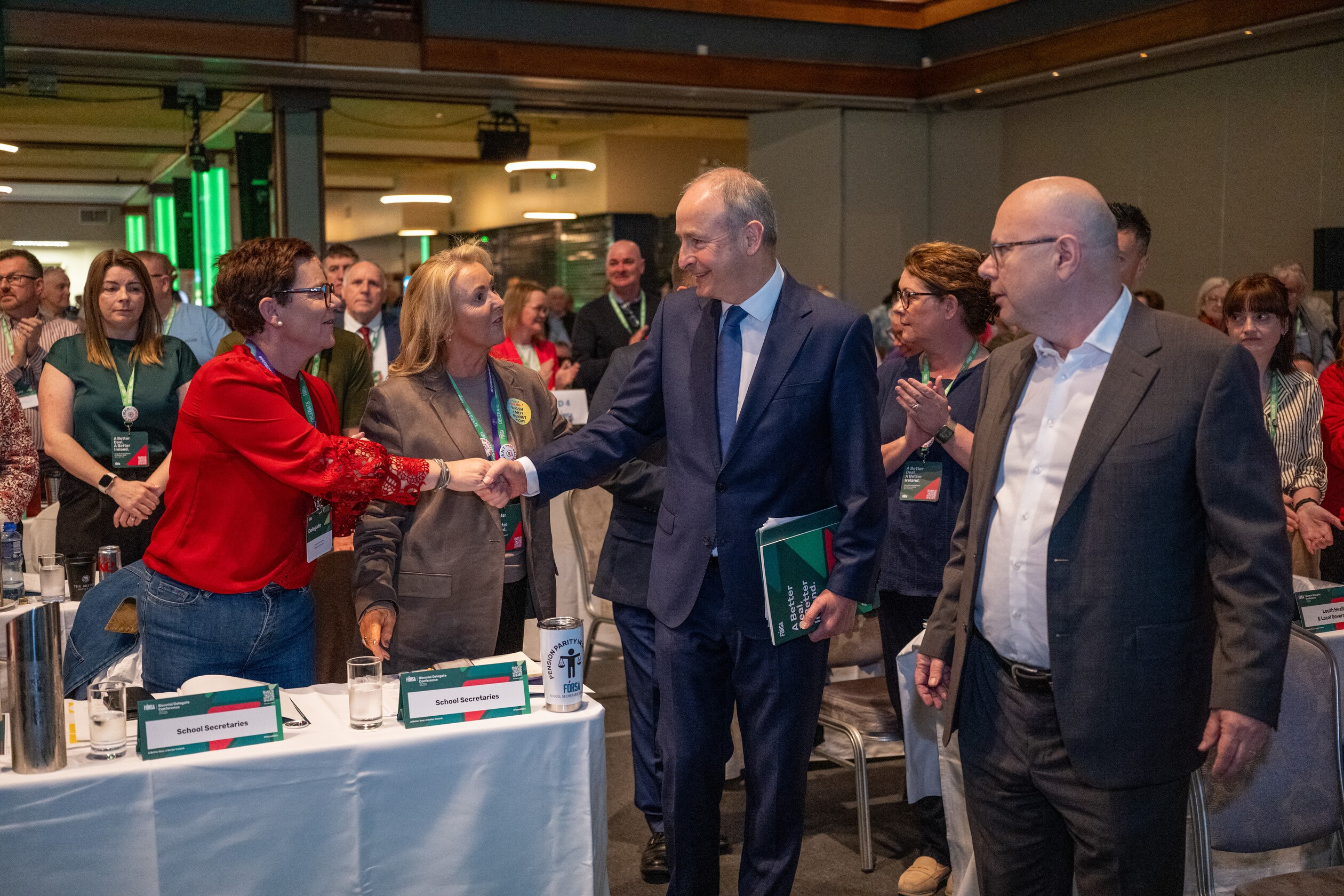
Delegates faced a jam-packed schedule over the three days with over 150 motions to debate, elections, panel discussions on remote work and the common good, and an appearance from An Taoiseach, to name but a small amount on the agenda.
Fórsa President Martin Walsh opened Conference with a wide-ranging speech that covered key issues facing all divisions and considered the broader challenges facing union members.
Martin reminded members that while “Almost everything can be negotiated with an employer, respect, fairness, and dignity at work are non-negotiable, and together that’s what we stand for.”
Motions on pensions were taken first and covered a wide range of aspects, including gender proofing, and enhancing fairness within the public sector pension scheme. Later in the debate, motions on climate and the environment were brought forward.
NEC member Keivan Jackson proposed Motion 44 calling for robust legislation to protect workers’ rights in the face of climate change, including maximum and minimum workplace temperatures. He said: “Climate change is no longer some distant environmental concern. It is already affecting our workplaces, our public services and the lives of our members.”
General secretary Kevin Callinan then addressed conference, outlining the urgent need to win a better deal for workers in the next pay talks, and telling delegates that the days ahead will define our success.
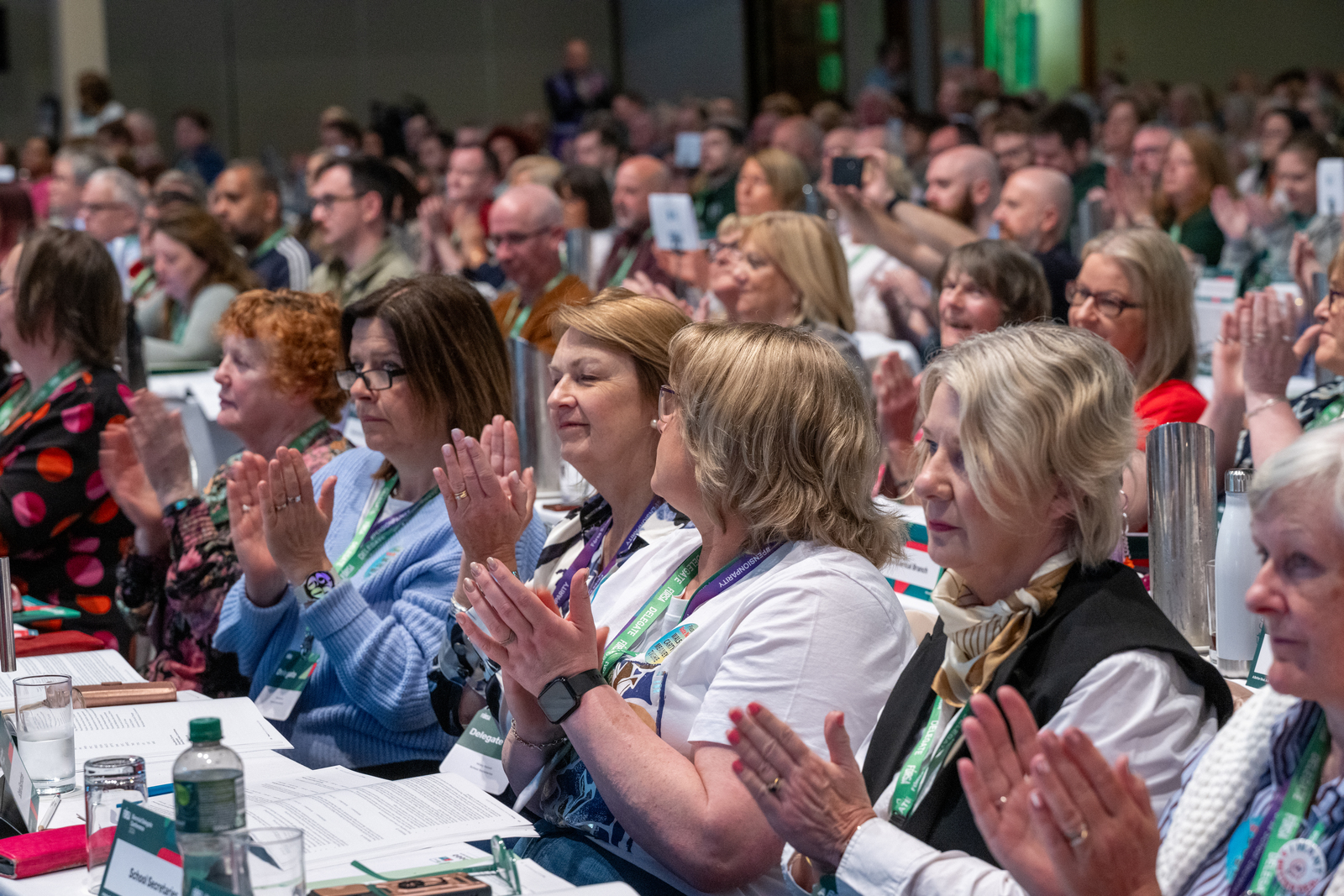
Kevin received a rousing applause from delegates upon his announcement that Fórsa has hit the 100,000 membership target.
He went on to note that collective strength will be needed during pay talks, saying: “Winning a better deal will take all of us. We will go into these talks not hoping to be heard, but impossible to ignore.”
On Thursday Kevin reiterated this sentiment in his response to An Taoiseach’s address on Thursday, when he threw down the gauntlet for Micheál Martin’s government, ahead of the expiry of the current Public Service Agreement, in June.
An NEC motion on pay, proposed by Tara Horigan, set out the union’s position ahead of possible negotiations.
Proposing the motion, Tara told delegates that the debate on pay comes against a backdrop of growing economic uncertainty internationally, which has increased the significant financial pressures faced by members arising from rising grocery and energy bills, fuel and commuting expenses, and wider cost-of-living challenges, as headline inflation has increased in recent months.
The motion outlined the union’s strategy for the pay talks noting that if a negotiated multi-annual agreement cannot be achieved, the union should seek an immediate pay round, pursue local bargaining claims independently, and ballot members for industrial action where necessary.
Tara said Fórsa’s objective remained serious engagement aimed at delivering a deal that members can vote for: “That’s the single most important objective for the union, while maintaining stability during a period of significant economic uncertainty.”
She also said the next agreement would need to engage with wider “common-good issues” affecting workers and public services, including housing affordability, commuting costs, remote and flexible working arrangements, and the long-term sustainability of public services.
She added: “The housing crisis threatens to undermine decades of social and economic progress. It is now directly affecting recruitment and retention right across the public service. We need to confront that and negotiate solutions that will work.
“Rising living costs, childcare costs and the daily cost of getting to and from work are placing real pressure on working households. If we are serious about maintaining strong public services, then those realities must form part of the conversation,” she said.
The motion underscores Fórsa’s “A Better Deal” campaign, which has attracted more than 45,000 member pledges, calling for pay improvements alongside progress on housing, healthcare investment, local bargaining claims and flexible working arrangements.
In a range of motions proposed by delegates throughout the day it was abundantly clear that improvement in working conditions are to the fore of members' concerns.
Jennifer Doyle from the Marine New branch spoke on Motion 17 which called for templates and a toolbox to develop more equality among how public sector employers implement flexible working policies. She said: “Organisations have vastly different policies for flexible working, why should access depend on what employer you work on? It’s unfair, destabilising and completely unnecessary."
Motion 73 was put forward by the Higher Education branch and called for the NEC to campaign for changes to be made to circulars on bereavement leave, which it contended, unfairly discriminate on grounds of marital status.
Caitriona McElhinny from the Donegal Local Government branch proposed Motion 76 seeking enhanced employer- funded mental health supports, saying “Mental health isn’t a side issue, it affects attendance, morale and the quality of public services we all rely on. Staffing levels are tight and workloads keep growing. The expectation is always there to do more with less.”
A range of motions called for the union to intensify its work for a shorter working week, while the risks of excessive workplace surveillance were also highlighted.
Speaking on this issue Amy Hibbets, from the Probation Officers branch said: “Technology should support workers and not be used for micro-management. Quality of outcome cannot always be measured in output metrics. Workers perform best when they are respected and supported, excessive monitoring creates fear and anxiety.”
Thanks to the substantial efforts of delegates and the Standing Orders Committee, all slated motions were debated and voted upon. Implementation of the motions which were passed by Conference will now be considered by the National Executive Committee (NEC).






 Like
Like


