Feature Article
Take a stand: National ballot dates announced
by Hannah Deasy
 

As rising costs erode pay and standards of living, Fórsa members working in the civil and public service are being urged to vote yes in a national ballot on industrial action. Opening on Tuesday 4th August, this ballot is a critical opportunity to send government a message that you won’t be taken for granted.  


With no public service pay agreement in place, and no talks underway, a ballot of all Fórsa members working in the civil and public service will take place over the coming weeks. The ballot will open on Tuesday 4th August and close on Tuesday 1st September. 

 
Visit our ballot hub here

Read the Frequently Asked Questions (FAQ) guide to the issues related to the ballot here.


The dates were announced yesterday in an email to members sent by general secretary Kevin Callinan.  


In the email, Kevin explained that a ballot is now needed because union negotiators did not get satisfactory commitments on a pay increase to cover the second half of this year, or on a formula to protect living standards against inflation next year and for the duration of any agreement. There was also no commitment to address the gap that developed between pay and inflation from 2021 to 2025, which is close to 5%. 


Kevin said: “Rising costs are eroding pay and standards of living, but at a time of record surpluses government won’t commit to addressing your pay this year.” 


“By voting yes for industrial action, you can show the government how much this matters to you and that you won’t be taken for granted.” 


“You need an agreement that will protect your pay and living standards. If industrial action is what it takes to achieve that, and members vote for it, we will be ready.” 


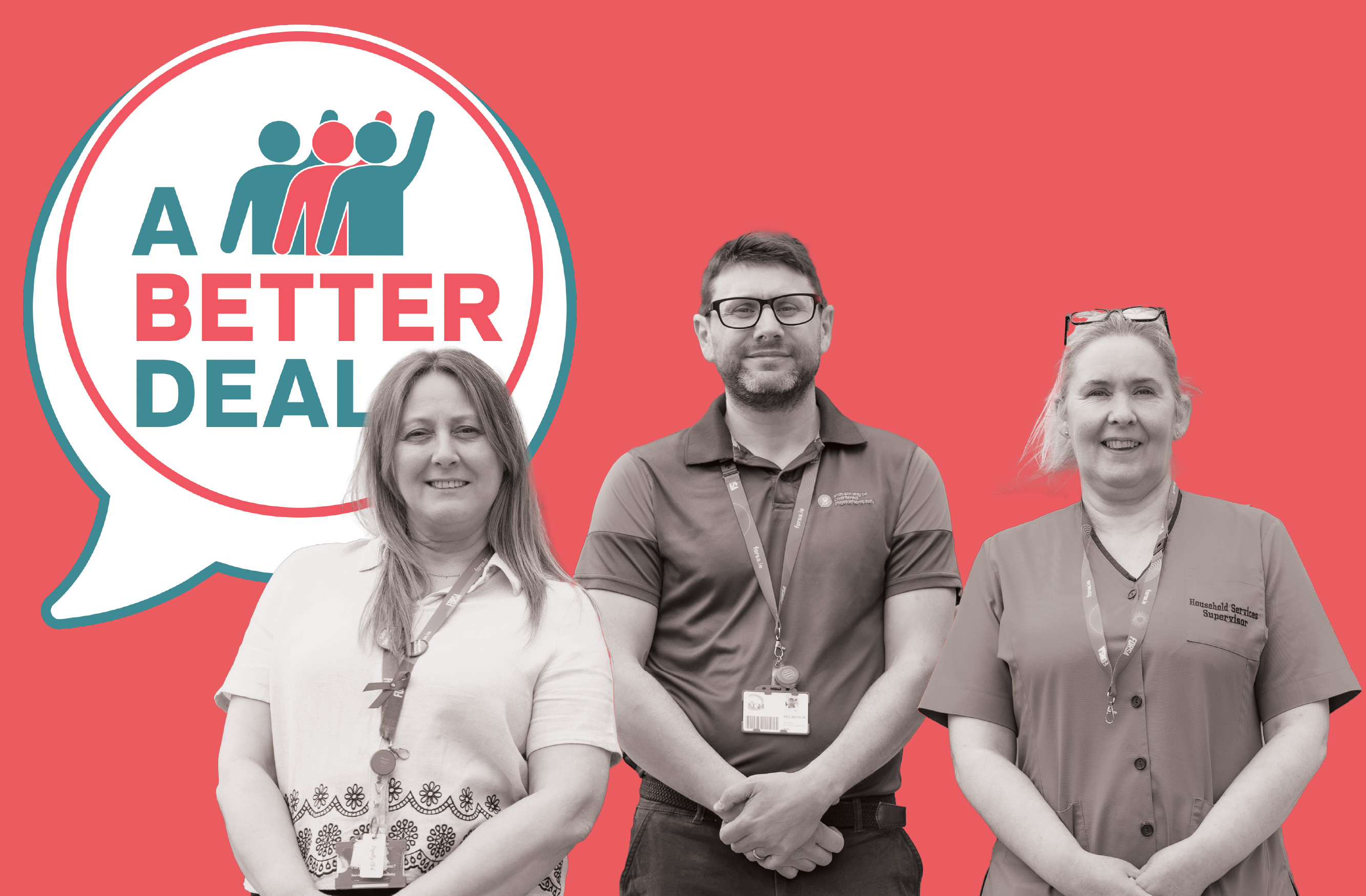
Watch members explain why they need A Better Deal


The ballot will take place online. Members will get an email from Mi-Voice, our secure, third-party ballot provider, on Tuesday 4th August which will contain a Unique Voting Code (UVC).   


In the ballot members will be asked if they will take industrial action to: 

  • secure an acceptable pay increase to cover July to December 2026, as well as increases to cover 2027 and/or the duration of any proposed agreement. 
  • for the resolution and implementation of Local Bargaining claims. 
  • to resist changes to work practices, organisation of work, or organisational structures without the agreement of the union.

Encouraging members to get involved in the ballot Kevin said: “We need high turnout in this ballot to send the strongest possible message. So, get involved, talk to your colleagues, consult the resources, display and distribute posters. This is about taking a stand for your pay and for communities everywhere.” 


Fórsa has produced a series of resources for members which you can access on our ballot hub.


Join a union that wins. Join Fórsa. 

Also in this issue
Skills to try this July
by Brendan Kinsella
 

Don't miss out! Courses coming up in July and applications open for September.


The Skills Academy have some exciting offers for members this July. In addition to the ever-popular Fórsa Induction and a fantastic Live: Lunch and Learn, applications for September courses have opened. 


At the end of the month, Live: Lunch and Learn will be hosting an extra special session. An introduction to Lámh, the Irish sign language system for children and adults with intellectual disabilities. A wonderful opportunity to learn about the language system and get your cúpla focal of Lámh. 


Fórsa Induction - Wednesday 12th August - Online - Open to all new members


Our welcome session for new members. Learn all about Fórsa and how to get involved in your trade union. Morning and evening sessions available to fit your schedule.  


You can register for Fórsa Induction here


Live: Lunch and Learn – Learn Lámh, the Irish sign system for communication - Friday 31st July - Online 


This month the Skills Academy are joined by guest speaker Ciara Ni Raghallaigh, for an introduction to Lámh, the Irish sign language for children and adults with intellectual disabilities. 


Ciara is a certified Lámh Tutor with Lámh Signs Ireland. She has been delivering Lámh courses since 2012 with families of Lámh users, professionals in the education and health sectors, and people in the community who want to learn Lámh signs.  


In this introductory session to Lámh signs, Ciara will explain all the basics, including the benefits of using Lámh, and ten Lámh signs so you can get started building your Lámh vocabulary! 


You can register for this month’s Live: Lunch and Learn here


Effective IR Practises (Level 1) - Thursday 17th September - Nerney’s Court, Dublin 1 - Civil Service members only   


For branch reps who participate in local industrial relations, along with their branch and union official, meeting local management and representing members within the branch. Learn how to stay calm under pressure, be prepared and get the best outcome for your members.  


Please note: this course is for Civil Service reps only. 


Communications Training – Tuesday 22nd September - Nerney’s Court, Dublin 1 


Learn the most effective tools for keeping your members informed, engaged, and active. Build your branch’s profile and craft compelling messages that drive member participation. This session is available to members based in Dublin and surrounding counties. 


Digital and Social Media (Level 1) – Tuesday 22nd September - Nerney’s Court, Dublin 1 and Tuesday 29th September - Limerick Regional Office 


Learn about the social media tools you can use to drive member participation. Ideal for novice and casual social media users. Get a firm grasp of the basics, then take on the Level 2 and learn how to use social media intentionally as an activist.  

These two will be the only dates available for the level 1 training this year. Move fast to ensure your place! 


Level 1, WRT – Tuesday 22nd to Thursday 24th September – Galway Regional Office   


This is a three-day course for reps with no previous experience or training. Learn all the basic skills that a representative will need in their first year: the role and function of the workplace rep, improving interpersonal skills and building good working relations, organising your union work, recruiting members and handling problems, an introduction to equality and diversity, and health and safety.  


To register for a course:    


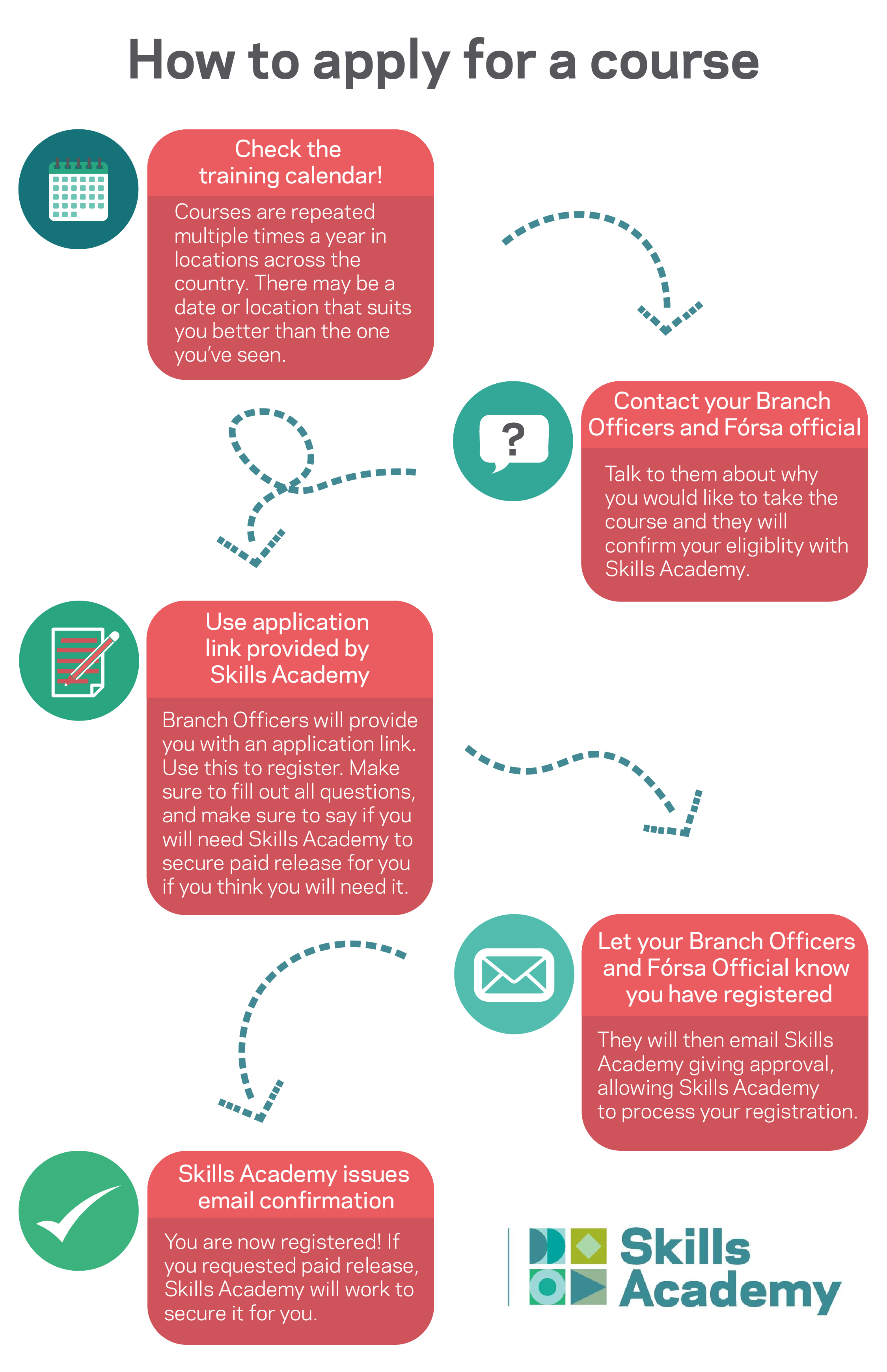
Aside from Live: Lunch and Learn, and Fórsa Induction, participation on all courses requires sign off from your branch and official. To apply, contact your branch training officer or secretary if your branch does not yet have a training officer.  


Join a union that wins. Join Fórsa. 

Third level grant scheme is open now
by Brendan Kinsella
 

The scheme supports reps to pursue further education. Applications are open until 10th September. 


The Fórsa third-level grant support scheme for union representatives has returned for the 2026/27 academic year. Applications opened on Tuesday 14th July 2026. 


The scheme is part of Fórsa’s commitment to supporting our union reps in building their confidence and competencies so they can better carry out their union roles and better represent members. 


Grants of up to €3,000 are available to assist reps to undertake a certified educational course at third level. The course must provide qualifications and skills which will benefit a member in their work, union, and personal life. It must be a third level course, at either post-leaving cert or undergraduate level. Postgraduate qualifications are not covered.


While a course may be beneficial to a rep’s professional development or career, this should only be a secondary concern. Only courses that benefit a representative in carrying out their role as a union rep will be considered.  


The scheme is open to all reps, which includes any member performing a role on behalf of their union colleagues at workplace, branch, vocational group or other representative level.  


To qualify for the scheme a member must:  

  • Be a current paid-up member of Fórsa in good standing.  
  • Be able to provide details of their role, current or past, as a union rep.  
  • Have the support of their own union branch (an authorised branch officer will need to sign the form before submission.)  
  • Explain how the course content will assist them to better carry out their role as a union representative.  
  • Be able to provide details of the course and verification of course fees from the course provider.
  • Be able to provide evidence of having applied to their employer seeking funding for their course.  

Grants are based on the gross cost of undertaking the course up to a maximum of €3,000 per year. The amount awarded to successful applicants will be decided by the Membership Services Committee.   


Applications must be submitted via email to bursaries@forsa.ie by 5.30pm Thursday 10th September 2026.  


Further details are available here.  

The application form is available here


Join a union that wins. Join Fórsa. 

Articles A
Members built this campaign. Now they’re preparing to ballot for action
by James Redmond

Members speak out and explain why they need a pay agreement that delivers a better deal. 


"Staff are struggling to fill their cars with petrol just to get to work and deliver services. They're feeling helpless. But when I talked to them about the pledge and about what they could do, it turned union members into union activists. We're not onlookers anymore. We're active participants. It's bringing everyone together. It's given us a purpose.  


- Brenda, Nenagh Hospital 


That transformation didn't happen overnight. Over the past eight months, thousands of public service workers have been building towards this moment, talking to one another, workplace by workplace, about what it would take to win 'A Better Deal'


Now, the campaign enters a new phase. After months of workers organising and clearly setting out their demands, government has yet to establish a credible basis for negotiations. 19 public service unions are now preparing for industrial action ballots while the government stalls. 


Extensive listening exercises 


The first conversations began long before pay talks stalled. They started with one of the union's largest member listening exercises, as thousands of public servants completed surveys late last year. The message was remarkably consistent. 


Workers spoke about wages that continue to lag behind the cost of living. They spoke about housing costs that are forcing colleagues to leave their communities and, in some cases, the country altogether. They spoke about overstretched public services, recruitment and retention problems, the importance of protecting remote working, and the feeling that public servants were being asked to do more while falling further behind. 


For Neil Mathlin in Naas Hospital, those pressures are impossible to separate from everyday life. 


"Work is very important to us all, but it's also very important that we're remunerated fairly so we can enjoy our lives and not feel the stresses associated with the cost-of-living crisis." 


With a young family, every weekly shop, every tank of diesel and every activity come with another financial calculation. He's also watched colleagues leave. 


“Colleagues that I work with here that have left their positions within this hospital because it's getting too expensive to rent or to buy in this area, or indeed that if they have to travel any form of a distance, that that is an expense on them, they're not able to come to the place that they work because it's costing them too much money. Our services are constantly being stretched.” 


Those weren't assumptions made by union officials. They emerged from extensive member surveys and shaped the 'A Better Deal' campaign from the outset.


Workplace organising 


Thousands of organising conversations were then carried out by workplace representatives across the civil and public service. 


And from those conversations came a simple pledge: no agreement without 'A Better Deal'


More than 7,000 workers signed the pledge during the campaign's pilot phase alone. 


Once the campaign moved into workplaces, representatives across more than 500 workplaces and 95 Fórsa branches put the union through a large-scale structure test. 


They identified gaps in organisation, strengthened workplace networks and built a clearer picture of member support across the civil and public service, ensuring the campaign was ready for the challenges ahead. 


New life in the union 


For Mick, a workplace representative in An Coimisiún Pleanála, the campaign became a way of bringing new members into union life. 


“I got involved in the Better Deal campaign because of all the benefits it offers, and it has helped me bring along new members within the union and encourage them and see how the collective bargaining process can work.” 


He says protecting remote working is one example of what members want to defend. 


“Remote working. It's a benefit to all young and old. I think it keeps a community alive and while people will still go into work, they can choose their days to stay at home. They can meet people for lunch. They can go for walks early within an area. It keeps movement within the area.” 


A movement of workers 


Across the country, members repeatedly connected their own working lives to the wider problems facing society. In Galway, Liam points to housing, congestion and commuting as issues that can't be separated from public service pay. He says the Better Deal campaign is like a “movement across the public and civil sector.” 


“I want a better deal for investment in housing. There are people in their 30s and 40s still living in rented accommodation, living with their family. There's no accommodation available for them. You know, it's delaying aspects of their lives, trying to start a family and has huge, huge negative effects on people's mental health. People are really struggling at the moment with the cost-of-living crisis, and my colleagues and I deserve fair pay for a fair day's work.”


It’s personal 


For Gwen Byrne in Naas Hospital, the housing crisis isn't an abstract political issue. It's personal. 


“I lost my daughter because she couldn't get a house. She left this hospital, so she did. She had a permanent job, and she went to Australia with my three grandchildren and her husband. So that's why I'm very passionate about this. I want 'A Better Deal'. So the young people of Ireland can buy a home that they don't have to leave our country to go set up in another country, that they can stay in their own home.” 


In Dublin, a local authority worker is currently living in emergency accommodation. He says the cost-of-living crisis has left him unable to secure a home of his own. 


"I'm living in a hostel at the moment, and I can't afford the rent. I'm struggling. Inflation has gone up but our wages haven't kept pace. I just can't afford it anymore and it's affecting every part of my life." 


Again and again, workplace conversations returned to the same themes. Members wanted fair pay that kept pace with the cost of living, investment in housing, properly staffed public services and protection for flexible and remote working. 


They cannot ignore us 


As Brenda, who works in Nenagh Hospital, said: “It's not just putting your name on a page, it's sending a powerful message to government that they cannot ignore us.” 


Above all, members want a meaningful say in the decisions affecting their working lives. As Maria Collery, who works in local government, put it: “The Better Deal campaign is showing members that there is strength in numbers.” 


The widening gap 


The decision to ballot does not mark the beginning or end of the campaign. It marks the point where months of workplace organising begin to carry industrial weight. Workers have consistently argued that any new agreement must address the widening gap between pay and the real cost of living. 


While public service pay increased by 15.75% under recent agreements, prices increased by more than 20% over the same period, leaving many workers worse off in real terms. For lower-paid workers, significant gains were made, but these still lagged behind the 34% increase in the National Minimum Wage. 


Now the question returns to the workplaces where this campaign began. 


As Sharon, a workplace representative in Naas Hospital, puts it: "The more united we are, the stronger we are as a union." 


Members decide what’s next 


The members who built this campaign through thousands of conversations, workplace meetings and pledges will now decide its next steps. 


Because strong negotiations don't begin around a negotiating table. They begin in organised workplaces at the ballot box. And they are won by workers who no longer see themselves as onlookers, but as participants. 


The national ballot of Fórsa members working in the public service opens on Tuesday 4th August and closes on Tuesday 1st September. For more information visit our ballot hub here.


Join a union that wins. Join Fórsa. 

Workers’ budget needed to combat cost of living spiral
by Niall Shanahan

The Irish Congress of Trade Unions (ICTU) this week called on Government to deliver a “workers’ budget” in Budget 2027, warning that costly short-term gimmicks and giveaways have failed to ease the pressure on working people and their families. 


The Irish Congress of Trade Unions (ICTU) this week called on Government to deliver a “workers’ budget” in Budget 2027, warning that costly short-term gimmicks and giveaways have failed to ease the pressure on working people and their families. 


The call is contained in Congress’s Pre-Budget submission, which says the Government must prioritise workers’ living standards, protect public services and invest in the infrastructure that working families rely on every day. 


Fórsa deputy general secretary and ICTU vice president Katie Morgan said the submission was a timely reminder that Budget 2027 must respond to the real pressures facing workers, particularly as inflation has remained elevated in recent months. 


“The cost-of-living crisis is very real for working people. Recent inflation figures show that prices are still rising, with housing, energy, education and other essential costs continuing to put pressure on household budgets. Workers need a Budget that protects their incomes, strengthens public services and delivers practical supports that make a difference week to week,” she said. 


The latest Consumer Price Index figures from the Central Statistics Office show that consumer prices rose by 3.4% in the 12 months to June 2026, with housing, water, electricity, gas and other fuels up 7.3% over the year. Congress says those pressures underline the need for a Budget focused on workers rather than once-off measures that do little to improve living standards. 


Congress is calling for Budget 2027 to be a “workers' budget” that includes: 

  • Double indexation of the income tax system in Budget 2027 to compensate workers for the absence of a tax package for PAYE workers in Budget 2026; 
  • A €1 increase in the National Minimum Wage from January 2027 to deliver the promised Living Wage for low-paid workers; 
  • Reductions in the cost of using essential public services, including significant progress on delivering the promised €200-a-month childcare; 
  • An end to the payment cap freeze on pay-related jobseeker’s benefit and a timeline for introducing the promised pay-related parent’s benefit; 
  • A second tier of child benefit for low-income families, in and out of work; and 
  • Increased investment in public transport and green energy infrastructure, including targeted supports during winter where necessary. 

Congress says recent Budgets have been marked by expensive interventions that delivered little for workers or average working families, while also weakening the State’s capacity to invest in public services and infrastructure. 


The submission also calls for a more sustainable approach to public finances, including broadening the tax base in line with recommendations from the Commission on Taxation and Welfare. ICTU has argued that proposals such as VAT cuts for hospitality business owners, or cuts to inheritance tax and capital gains tax, are short-sighted at a time when public services require long-term investment. 


Congress general secretary Owen Reidy said Government must end “gimmicks and giveaways” and invest in workers and the services they depend on. 


“This Budget is a chance for Government to choose a different path. That means a Budget that broadens the tax base, invests in the ordinary PAYE worker and public services, and ensures Government is doing what it can to support workers’ standard of living,” he said. 


Katie Morgan said Fórsa members would be looking to Budget 2027 for practical measures that reduce everyday costs and protect household incomes. 


“Public service workers, low-paid workers and families across the country need to see a clear shift away from short-term giveaways and towards sustained investment in the services that shape daily life. Affordable childcare, reliable public transport, secure income supports and action on energy costs are all part of protecting living standards,” she said. 


Download Congress’s full pre-Budget submission here.


Join a union that wins. Join Fórsa. 

Aer Lingus cuts: Fórsa calls for urgent engagement to protect jobs

Fórsa has said yesterday’s announcement by Aer Lingus of proposed job losses will come as a profound shock to workers across the airline, including pilots, cabin crew and staff in head office functions. 


Fórsa has said yesterday’s announcement by Aer Lingus of proposed job losses will come as a profound shock to workers across the airline, including pilots, cabin crew and staff in head office functions. 


Fórsa said it will never accept compulsory redundancies in a company that is profit making and that the union's immediate priority is to engage constructively with the company, alongside fellow unions, to ensure that every possible step is taken to protect members' jobs and conditions. 


Fórsa has over 3000 members in Aer Lingus, working as pilots, cabin crew and professional, technical and management staff, organised as IALPA representing pilots, Cabin Crew and IAESA.


Fórsa national secretary Hazel Nolan said the scale of the proposed reductions is deeply concerning and said the union would challenge the company’s case for job losses in light of its profitability: “We are extremely disappointed by the announcement that has been made. We would push back against the claim that there need to be job losses, given the profitability of the company.”


In a letter to the members issued yesterday, IALPA President Captain Daniel Langan, said: “It is important to remember that we are employed by a highly profitable airline. The annual accounts show that Aer Lingus is the ninth most profitable airline in Europe and has the fifth highest operating margin among European airlines. These facts, together with the long-term interests of the airline and its employees, will remain firmly at the forefront of IALPA’s engagement with the company throughout this process.”


Chair of the Cabin Crew branch, Angel Garcia said: “We are shocked and disappointed by these proposed redundancies. Our crew are the heart of this airline, delivering exceptional service and ensuring passengers arrive safely to their destinations every day. We do not believe job cuts are justified, and we will stand together to protect the jobs of our dedicated members.”


Speaking on RTÉ yesterday, Hazel Nolan added that the announcement would be devastating for workers who supported the airline through the Covid crisis: “The company is doing incredibly well, and that is why this is so devastating for many of our members and their families, especially workers who stood by the airline during Covid. To now be rewarded with job cuts at a point when the company is in a very healthy profit margin is simply devastating for people.” she said.


Hazel said Aer Lingus’ first quarter performance should be understood in context: “The airline almost always makes a loss in Q1. This year’s Q1 loss was exacerbated by Aer Lingus management’s decision to close its Manchester base, which had been a profit-making resource and asset for the airline. The operating margin in the Manchester base was 17%, and that is factored into its Q1 losses. Given the overall performance of the airline, we do not believe there should be cuts at all, and certainly, if there are going to be any, we want to ensure that none of those fall under compulsory redundancy,” she said.


The union confirmed it will participate fully in the collective consultation process, which is expected to begin shortly. Hazel added: “Consultation must be genuine and solution focused. Workers and their representatives need full transparency from the company, and sufficient time and scope to examine all viable alternatives to job losses.”


Fórsa emphasised the importance of protecting the long-term sustainability of the airline without undermining its workforce. Hazel concluded: “Aer Lingus has a highly skilled and experienced workforce which has been central to its success. Any restructuring must recognise that reality and avoid measures that would weaken the airline’s capacity into the future.”


Fórsa said it will keep members updated as discussions progress."


Join a union that wins. Join Fórsa.