Fórsa general secretary Kevin Callinan, who chairs the Public Services Committee of the Irish Congress of Trade Unions, has written to affiliated public service unions to advise there is currently no basis for formal negotiations on a new public service agreement.
Fórsa general secretary Kevin Callinan, who chairs the Public Services Committee of the Irish Congress of Trade Unions, has written to affiliated public service unions to advise there is currently no basis for formal negotiations on a new public service agreement.
Unions are now preparing for the possibility that no deal will be in place when the existing agreement expires at the end of June, while warning that this could remain the case indefinitely once the current deal expires.
These developments follow initial engagements with Government officials this week, which unions say have not yet established a framework capable of supporting meaningful negotiations.
Kevin, who leads the trade union side in negotiations, said contact with Government officials would be maintained, but warned that preparations are now underway for a range of contingencies, including the potential for ballots: “We made the case for a different type of agreement designed to provide as much stability and certainty as possible in uncertain times.
“We argued that it was essential to address pay and living standards at the outset to see if a formula could be agreed before investing time and effort in other matters. At the conclusion of Thursday morning’s meeting, we advised officials that we would be reporting to affiliate unions that our assessment was that there was not a basis for formal negotiations to begin at this time.
“Accordingly, we need to prepare for the likelihood that there will be no agreement in place from 1st July, and the possibility that this will be the case for an indefinite period,” he said, adding that unions must now prepare for ballots.
He has previously said that any multi-year agreement must provide certainty for workers, and that this is not confined to pay, with an urgent need to address the wider issues shaping working life: “The volatility of the times demands something stronger, so an agreement capable of seeing workers through it is essential.
“That means comprehensive and unambiguous policies to properly manage remote working, strong protections against outsourcing, and measures to protect jobs and workers as AI (artificial intelligence) is further integrated into the workplace.
“Any negotiations must address these issues in a meaningful way. We can’t rely on the types of agreements we’ve forged since 2010. What happens in 2026 needs to be different. It needs to reflect the times we are in.
“The country has the resources to create a secure path to the future for working people, and all parties to these talks must look seriously at how we can achieve that,” he said.
Talks had been expected to begin this week, with Government indicating it would issue a formal invitation to unions. Minister for Public Expenditure Jack Chambers has said he wants “constructive dialogue with trade unions to ensure that we can have a sustainable pay agreement.”
Unions say the discussions are taking place at a point of significant uncertainty for workers, shaped not only by cost-of-living pressures but by wider considerations including the impact of AI and the future of remote work.
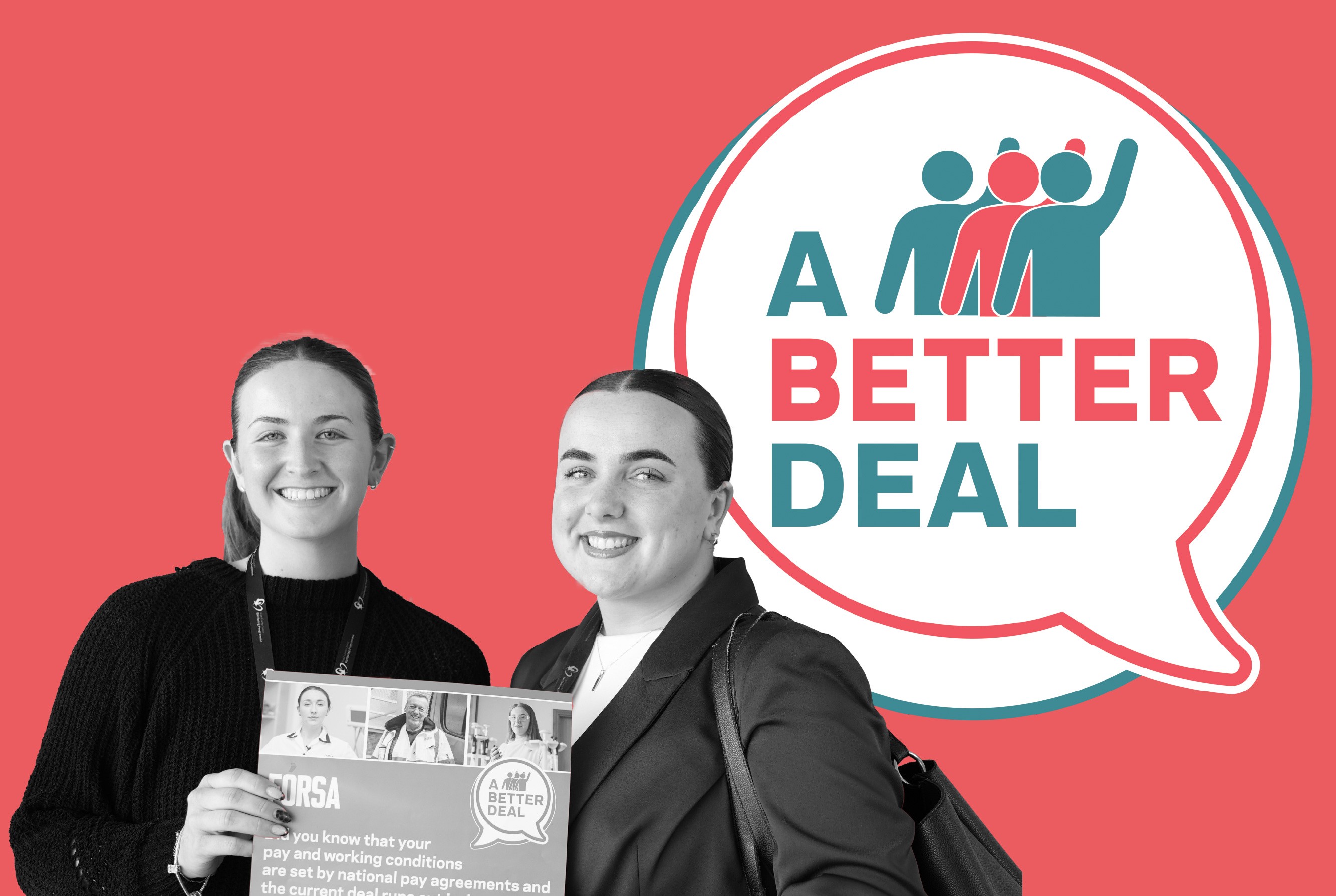
Fórsa’s ‘A Better Deal’ campaign has already seen almost 49,000 public service workers signal that they will only support an agreement that addresses the cost of living and related priorities. Workers who have not already signed the pledge are encouraged to do so, as a strong mandate will be central to the union’s approach in the talks.
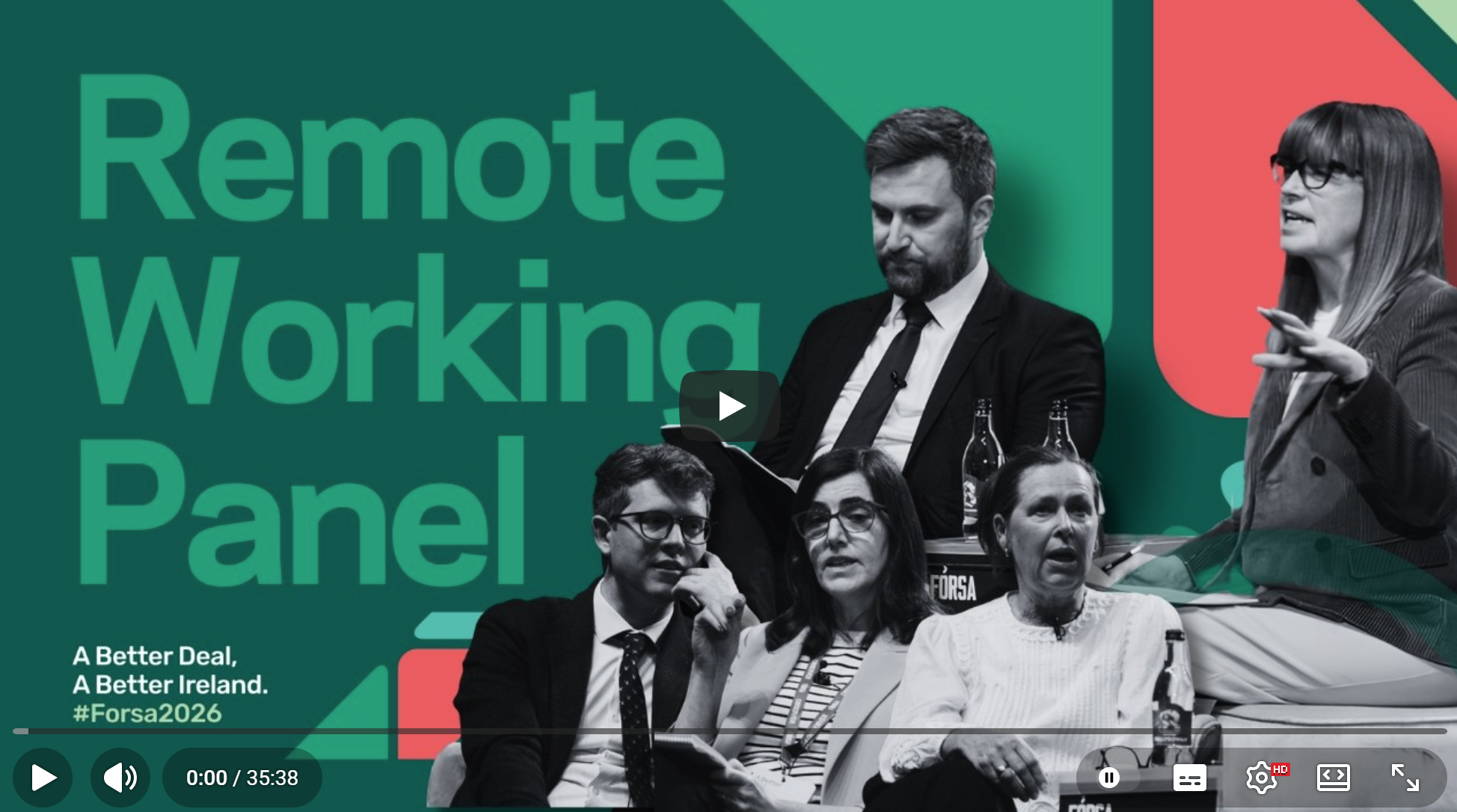
Watch our latest video, looking at the evidence underpinning the case for remote work.
Recorded at the Fórsa Biennial Conference in Killarney in May 2026, this panel explores new independent research commissioned by Fórsa, combining detailed surveys, interviews and economic analysis to examine the real impact of remote and hybrid working.
Moderated by Laura Bambrick of the Irish Congress of Trade Unions (ICTU), the discussion features contributions from Margaret Heffernan of the National Economic and Social Council (NESC), Sinéad O'Sullivan of Amárach Research, Kevin Cunningham of Ireland Thinks, and Kevin Donoghue, director of campaigns at Fórsa.
Drawing on extensive quantitative and qualitative research, the panel examines the realities of remote and hybrid work, from productivity and work-life balance to career progression, labour market participation, and the wider social and economic impacts on communities across Ireland.
The findings challenge many of the assumptions underpinning return-to-office mandates, revealing strong evidence that flexible working arrangements can benefit workers, employers and society alike.
At the same time, the discussion explores the challenges that remain, including management culture, equality of access, career development and the need for clear, evidence-based workplace policies. But evidence alone does not shift workplace power.
As the panel argues, the future of remote work will be determined by how effectively workers organise, bargain collectively and build the strength needed to defend and expand the gains they have already won.
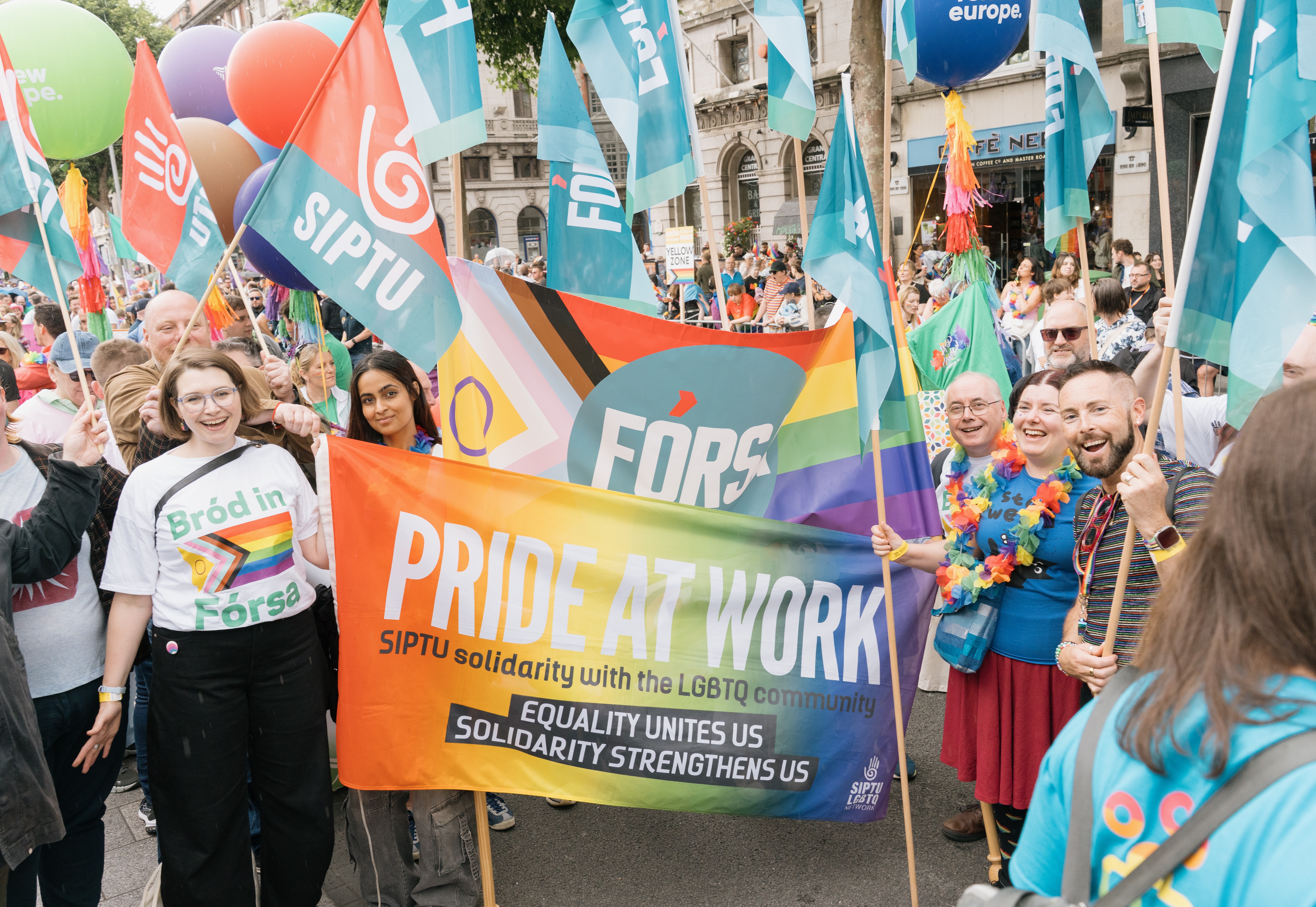
Join the trade union bloc at Pride on Saturday 27th June.
Next Saturday, join us for Dublin Pride, as we celebrate our LGBTQIA+ members, support our communities, and demonstrate the strength of collective action.
As trade unionists, we know that progress is won when people stand together, organise together, and refuse to leave anyone behind. An injury to one is an injury to all.
Equality is, and always will be, at the heart of Fórsa. That's why we're proud to join fellow trade unionists in the Irish Congress of Trade Unions (ICTU) coordinated trade union bloc at Dublin Pride on Saturday, 27th June.
To march in the parade, participants will need a wristband, so registration is essential. If you would like to join Fórsa at Dublin Pride, please register here.
Before we march, members are invited to join us for a Pride breakfast at our Nerney's Court office in Dublin. It's an opportunity to come together and connect with fellow members before marching together.
We’ll be gathering from 11:00am for food and tea/coffee, and wristbands to enter the parade will be distributed.
We will then join our trade union colleagues and assemble at our designated location (Green Zone, O’Connell Street) at 12:30pm for a parade start time of 1pm.
Together let's send a powerful message that solidarity has no exceptions and together we stand for dignity, inclusion, and equality for all.
The highlight of the Skills Academy’s summer calendar is almost upon us. Taking place next week, the summer awards ceremony is a fantastic afternoon celebrating the hard work of members who completed Skills Academy training throughout the year.
Skills Academy Summer Certificate Ceremony – 2.30pm Tuesday 23rd June – Nerney’s Court, Dublin
In the afternoon, following next week’s consultative council, the short ceremony will celebrate reps who have completed the Workplace Representatives Training Level 1 and the Level 2 courses, branch chairs’ and secretaries' trainings, and the Leadership Programme.
Director of membership training and development, Fiona Dunne, invited branch officers and reps to stick around after the consultative council to support their fellow branch members.
She said: “We would be delighted if you could join us to celebrate the achievements of some of our newest workplace representatives and branch officers, especially if they are from your branch. They’ve been very generous with their time and efforts, all to do the best job they can for their fellow members.”
Fórsa Induction - Wednesday 8th July - Online - Open to all new members
Get to know more about Fórsa with our welcome session open to all new members. You will learn all the need-to-knows of Fórsa, how we work, how you fit into it all, what we do for you, and what you can do to become more engaged, have your voice heard locally, and raise issues at divisional and national levels.
There are morning and evening sessions available to fit your schedule. So, if you’re a new member, or looking to become a union activist, make sure you don’t miss it.
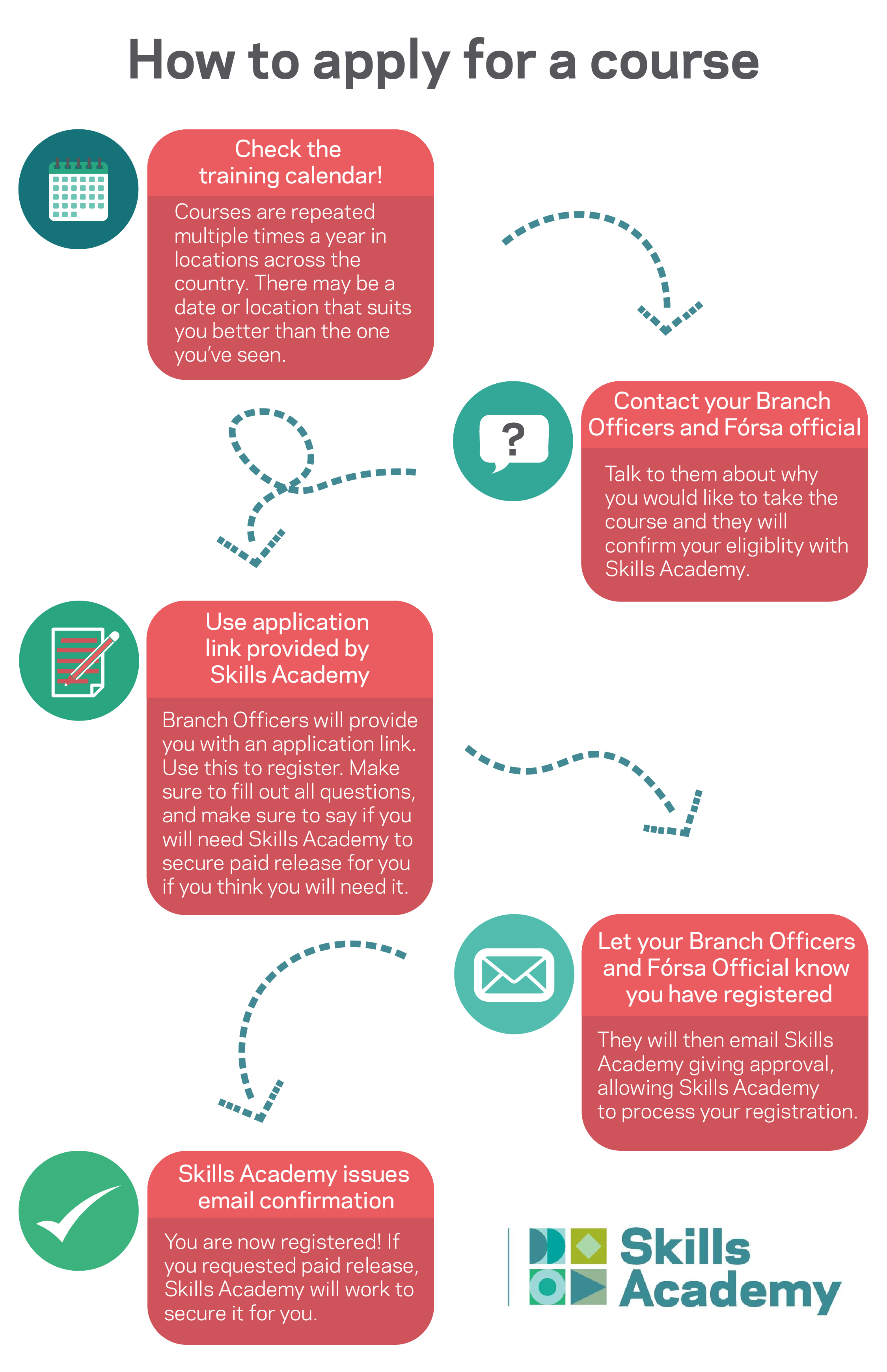
Aside from Live: Lunch and Learn and Fórsa Inductions, participation on all courses requires sign-off from your branch official. To apply, contact your branch training officer or secretary if your branch does not yet have a training officer.
Fórsa members at Oberstown Children’s Detention Campus have this week served notice of industrial action, following inconclusive talks at the Workplace Relations Commission (WRC) and the continued failure to resolve long-standing staffing and capacity concerns at the facility.
Fórsa members at Oberstown Children’s Detention Campus have this week served notice of industrial action, following inconclusive talks at the Workplace Relations Commission (WRC) and the continued failure to resolve long-standing staffing and capacity concerns at the facility.
The action follows a ballot of members, which closed in May, in which 91% voted in favour of industrial action up to and including strike action in pursuit of a resolution to the ongoing resourcing and safe staffing dispute.
Following two recent conciliation conferences at the WRC in June, Fórsa says that management proposals did not provide a viable or operationally safe response to the issues raised. The union said proposals put forward “were not grounded in operational reality” and did not adequately address the ongoing impact of staffing pressures on employees or the safe delivery of services.
From next Thursday (25th June), Fórsa members will implement work-to-rule measures, including a refusal to work beyond rostered or contracted hours and a refusal to work overtime. The union has reserved its position in relation to further escalation in line with the ballot mandate.
Fórsa official Deirdre O’Connell Hopkins said the dispute arises from persistent and unresolved concerns regarding safe staffing levels and the operation of the campus at or beyond safe capacity: “Members have repeatedly raised concerns that staffing shortfalls are placing unsustainable pressure on services and increasing risks in a challenging custodial environment for children and staff alike. If it isn’t safe for staff, it cannot be safe for the young people in their care,” she said.
The union also notes ongoing pressure on management from the Department of Children, Disability and Equality, to operate at increased capacity levels despite repeated warnings from staff and their representatives regarding safety implications.
Deirdre added: “Fórsa has emphasised that the issue is essentially about safety and sustainability in the workplace. Members have previously reported serious incidents at the facility, including assaults on staff and injuries requiring hospital treatment, in circumstances where staffing levels were stretched and operational demands intensified.
“Staff at Oberstown are committed to providing a safe, structured and supportive environment for the young people in their care. However, that cannot be achieved where staffing levels are insufficient to ensure basic safety standards are maintained,” she said.
Despite extensive engagement, including recent talks at the WRC, the union said there has been no meaningful resolution to the issue of safe staffing and capacity pressures. Fórsa has said continued expectation that staff operate beyond safe limits is neither sustainable nor acceptable.
Following complaints of sick leave being treated as misconduct, Aer Lingus members have launched a major survey to investigate company management of sick leave absences.
Following complaints of sick leave being treated as misconduct, Aer Lingus members have launched a major survey to investigate company management of sick leave absences.
The issue is already a top priority for the branch, with 130 members responding within the first 30 minutes of the survey going live.
The survey launch has been supported by new assistant general secretary, Nicola Coleman, who has taken over responsibility for Cabin Crew members across Aer Lingus, Ryanair, and Emerald. Nicola brings extensive industrial experience to the role, having previously served as an advocate in SIPTU’s Workers’ Rights Centre and spent a decade as national organiser with the NUJ.
Nicola criticised the airline's current approach, stating that: “Automatically triggering formal disciplinary procedures for illness is fundamentally flawed.”
She emphasised that being sick should never be treated as misconduct. She said: “By completely bypassing the required informal stages, the company is failing to adhere to its own established disciplinary procedures.”
The rapid surge in survey responses proves that fair treatment regarding sick leave remains a critical concern for our Cabin Crew members.
Over 18,000 Fórsa members who are special needs assistants will be asked to vote on the new SNA Workforce Development Plan (SNAWDP) in a ballot that opens next week.
Over 18,000 Fórsa members who are special needs assistants will be asked to vote on the new SNA Workforce Development plan (SNAWDP) in a ballot that opens next week.
The plan follows two years of extensive engagement and detailed negotiations. It sets out a range of changes to the role, working conditions and professional development of SNAs, and was announced by the Minister for Education Hildegarde Naughton on Wednesday 3rd June, following approval by Cabinet.
The proposals include a formal redeployment scheme, protection for single-post SNAs, and a limit of one job loss per school per year linked to NCSE allocation changes. This is reinforced by a recent Department of Education circular on SNA allocations, which confirms the position on future posts.
The plan also marks the beginning of the professionalisation of the role, with the introduction of a minimum qualification at QQI Level 6. This recognises the skills and contribution of SNAs and places the role on a stronger professional footing.
Changes to conditions of service are another key feature. The long-standing requirement for 72 additional hours is to be replaced with dedicated time for learning and development, ending the practice of SNAs being assigned inappropriate or non-core duties.
Fórsa head of education Andy Pike said the proposals provide greater clarity and protection for members: “This plan follows two years of long and detailed negotiations. It strengthens job security, sets clearer boundaries around the role, and recognises the professionalism of SNAs. It also puts in place proper structures for training and development.”
New research presented by Fórsa to the National Economic and Social Council (NESC) confirms that workers are performing better in remote and hybrid environments, while also benefiting from improved work-life balance and reduced cost pressures.
New research presented by Fórsa to the National Economic and Social Council (NESC) confirms that workers are performing better in remote and hybrid environments, while also benefiting from improved work-life balance and reduced cost pressures.
The findings are based on Ireland’s largest study of remote and hybrid work, combining survey data from almost 20,000 public service workers, including more than 5,000 managers, with additional research by Ireland Thinks. The findings were first presented at the union’s conference in May.
Key Findings
Drivers of preference: Reduced commuting time (78%), greater productivity (69%) and lower work-related expenses (68%).
Performance: Only 6% of managers report deadline challenges in remote settings, compared with 23% in fully on site environments. Managers also report higher satisfaction with communication, collaboration and meetings among remote/hybrid teams.
Time dividend: Almost half (45%) of respondents said reduced commuting time gains them three or more hours per week, while 15% gain over six hours. Of that time, 48% of respondents said it goes on household responsibilities, with 30% reporting more time spent with children, while 28% use the time to do more work.
Cost-of-living: Almost half say flexible work reduces overall care costs, most notably on childcare, while many report lower fuel and transport costs.
Talent: flexibility is seen as critical to recruitment and retention across the public service.
Flexible work is also giving members valuable time back. Almost half (45%) say they gain three hours or more each week from reduced commuting, while 15% gain over six hours. That time is being put to good use, with 48% spending it on household responsibilities, 30% with their children, and 28% on additional work.
Fórsa campaigns director Kevin Donoghue said the findings show a clear and lasting shift in how work is organised: “Six years on from the move to remote working, the evidence is clear. People are getting more done and working in ways that are more sustainable.
“Hybrid work, in particular, offers the best balance. Even one day of remote work per week makes a meaningful difference to people’s lives, while allowing organisations to maintain performance and collaboration,” he said.
The research also highlights the challenges faced by members who are fully on-site, including longer commutes, higher costs, and less time outside of work. Almost half of respondents said flexible work reduces care costs, particularly childcare.
Overall, the findings underline the importance of protecting and expanding access to flexible work, which members see as critical to quality of life, recruitment and retention, and the future of public services.
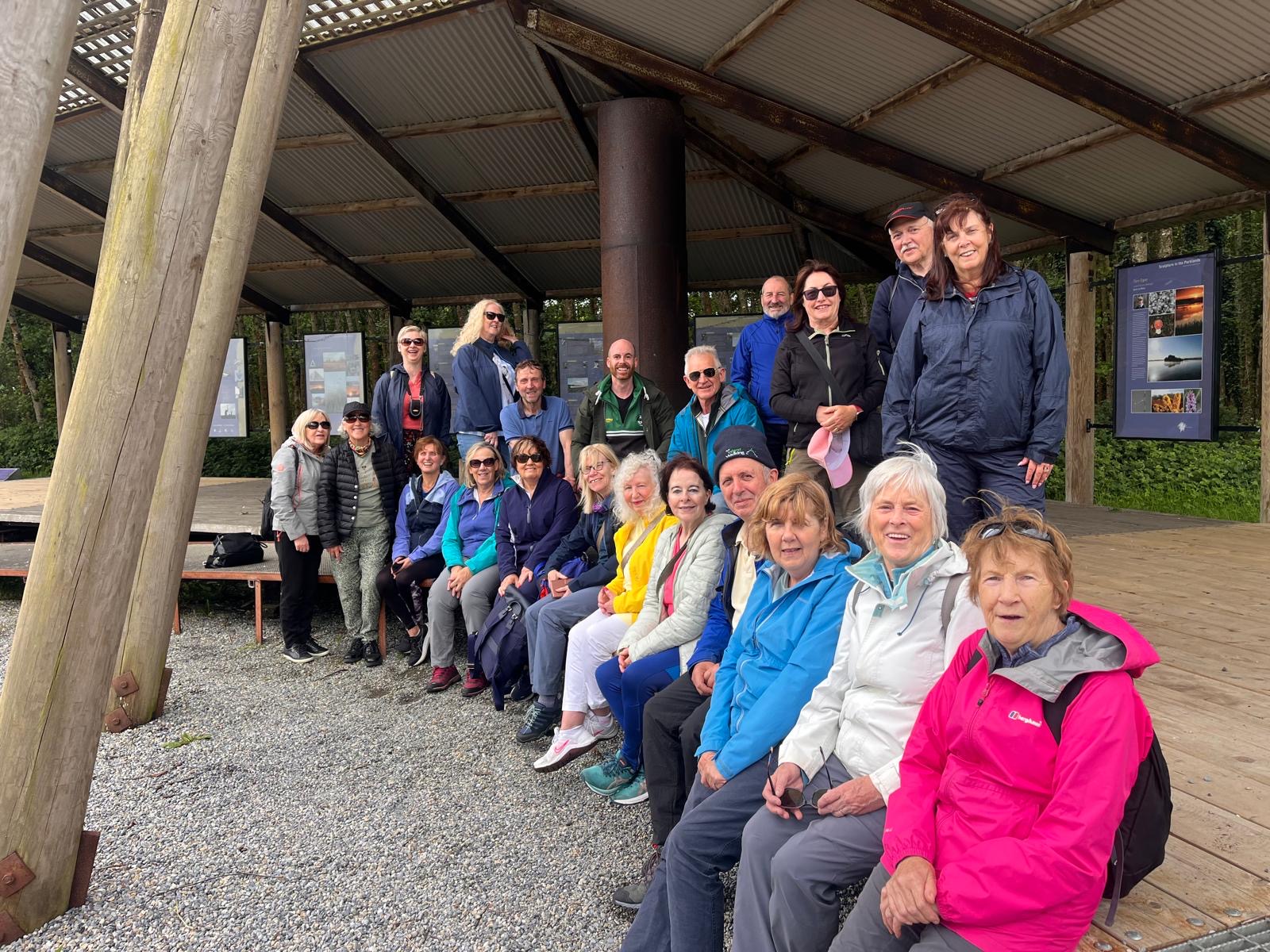
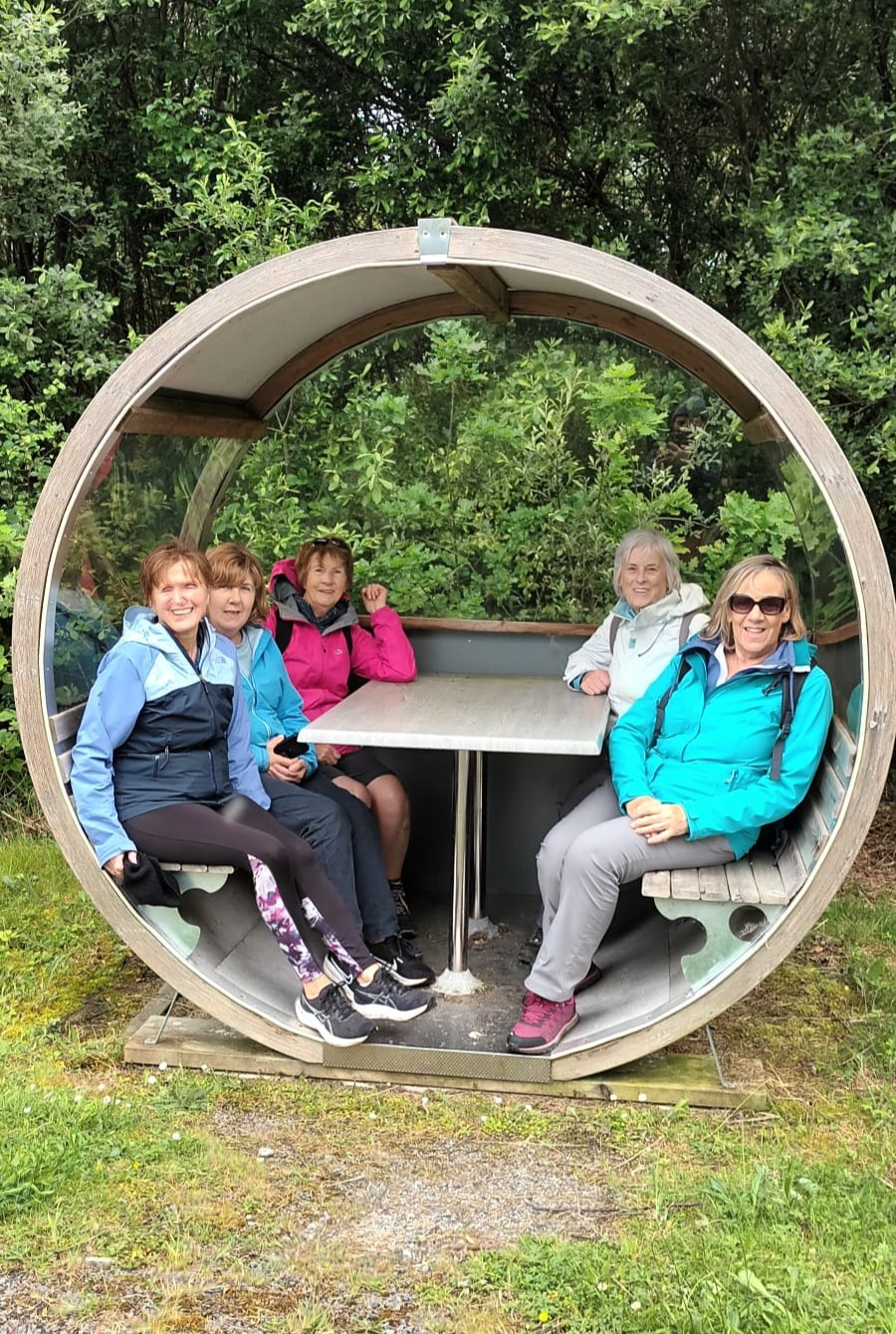
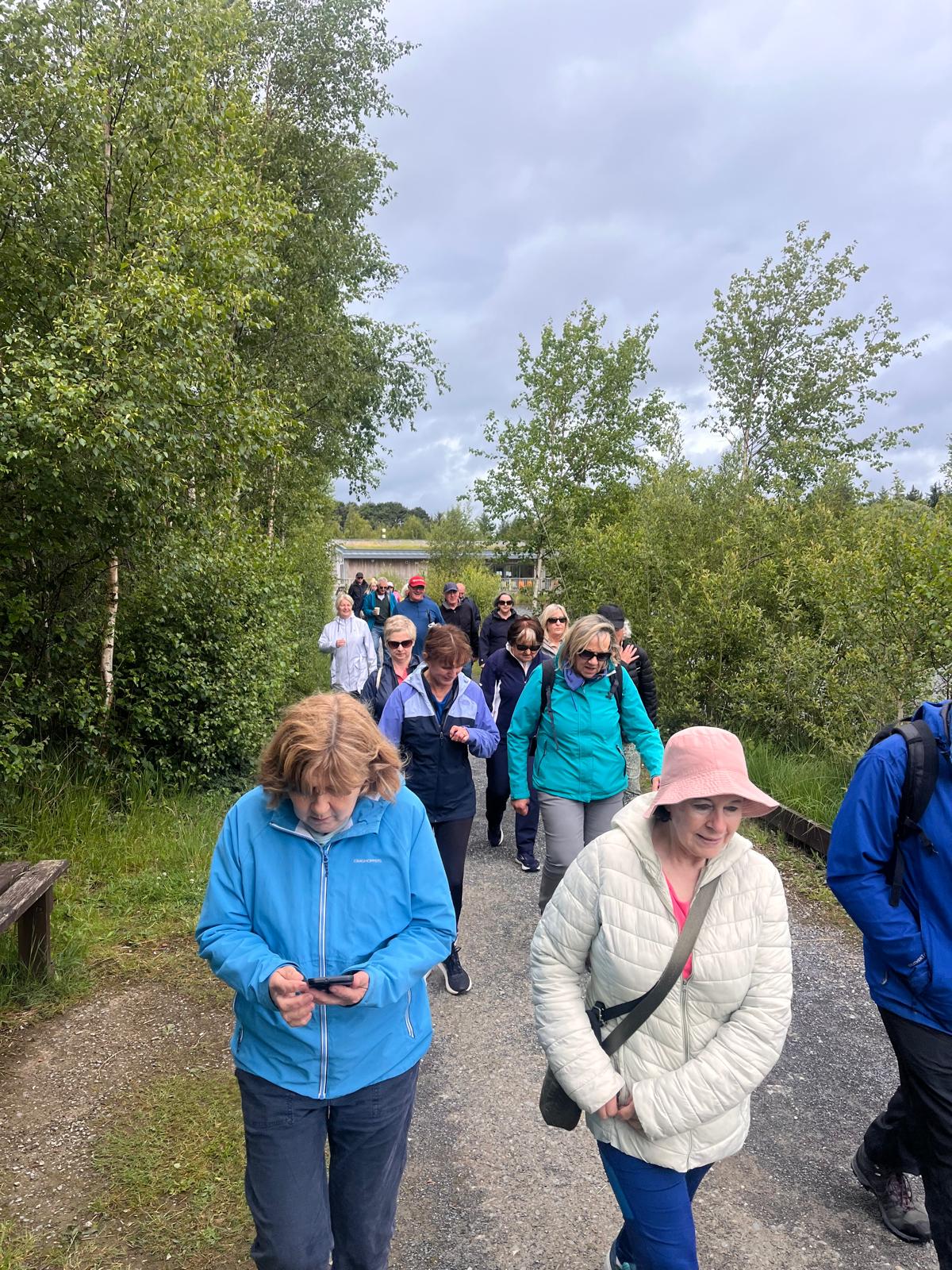
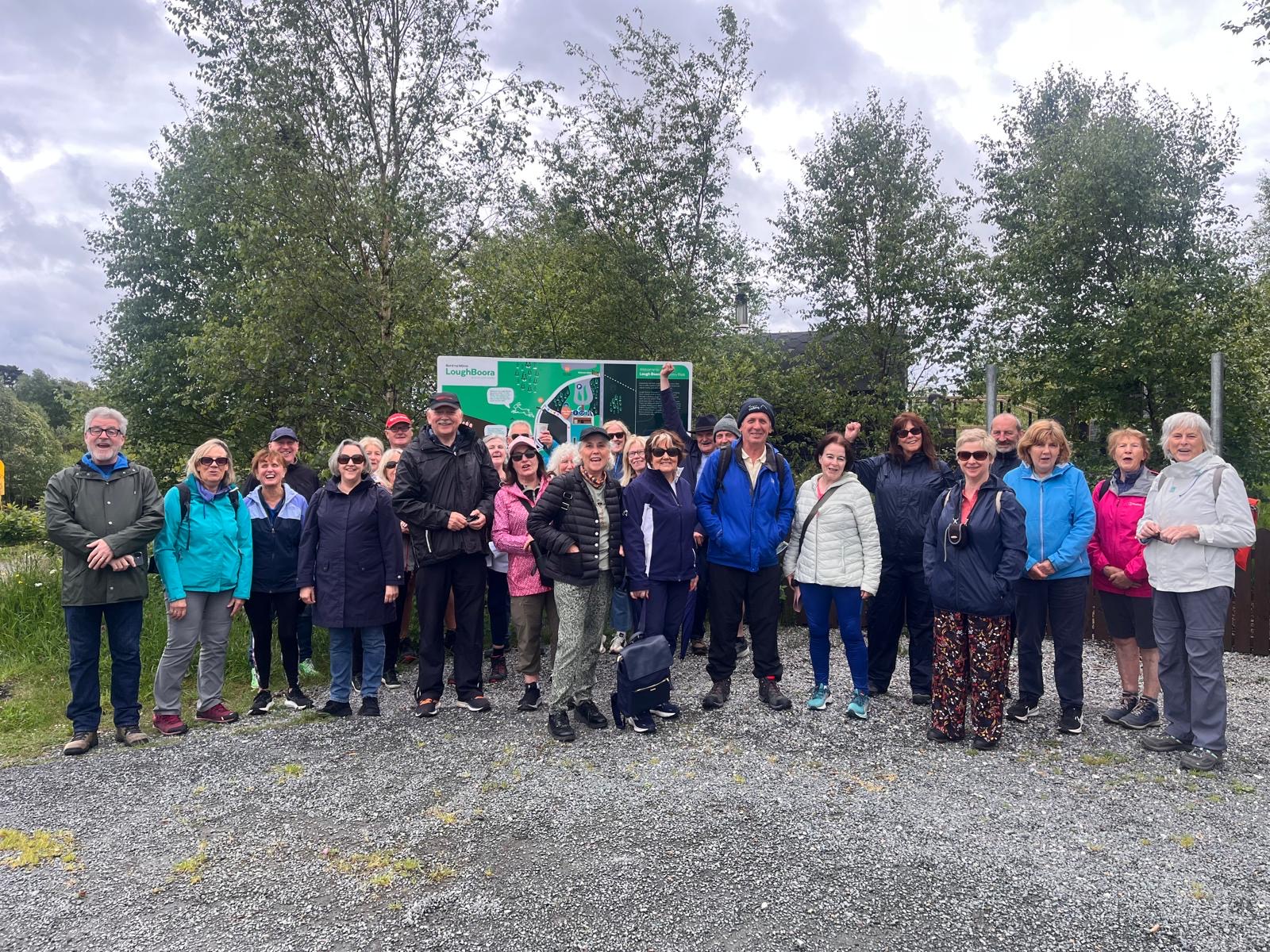
Members from around the country gathered for an enjoyable afternoon of walking through the park’s beautiful scenery, all under the watchful eye and knowledgeable guidance of RMA ambassadors Larry Lyons and James Gerard Monahan.
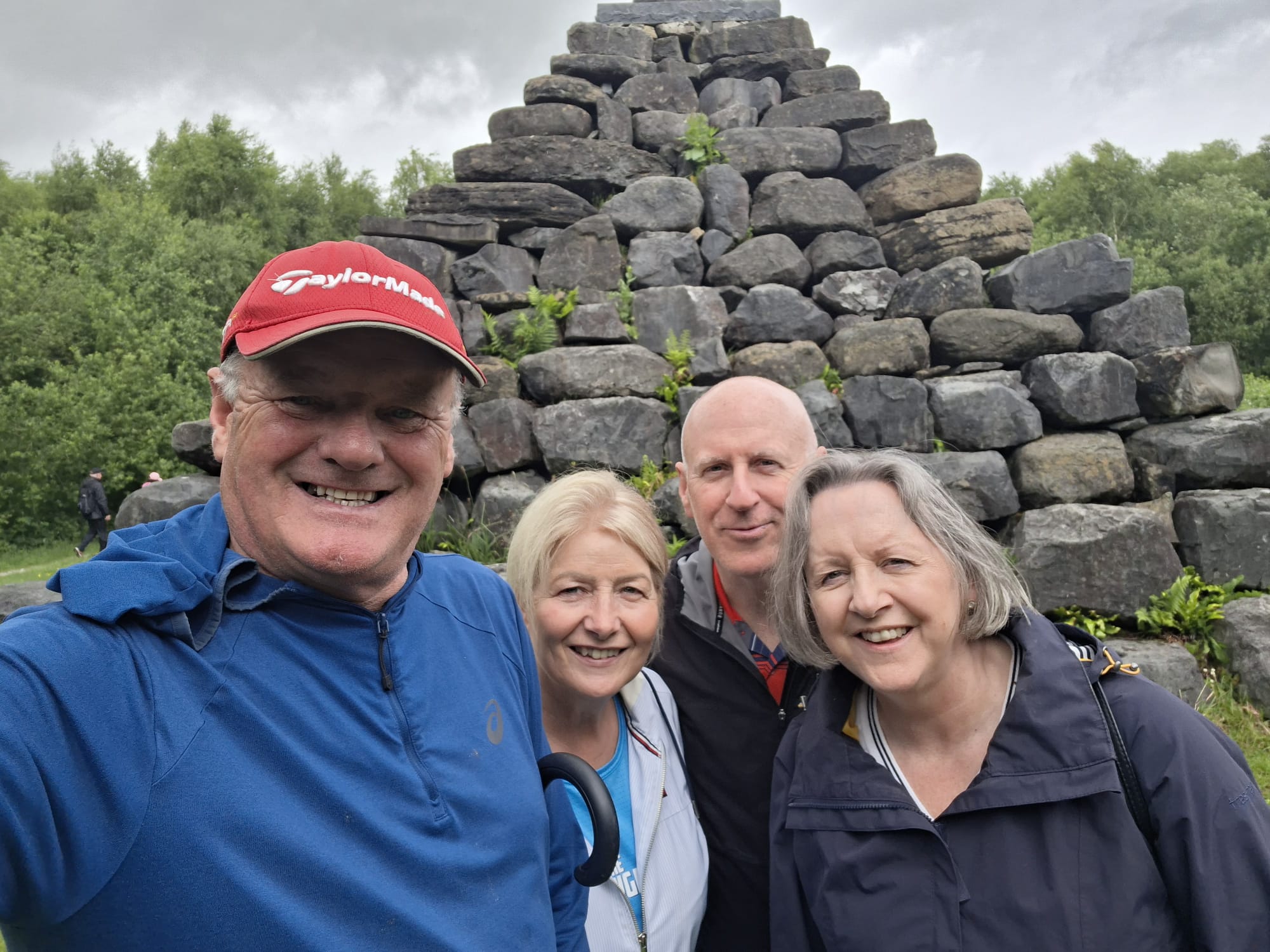
It was all sunshine and smiles for the Retired Members’ Association’s first ambassador-led outing at Lough Boora Discovery Park, County Offaly, on Sunday 7th June.
Members from around the country gathered for an enjoyable afternoon of walking through the park’s beautiful scenery, all under the watchful eye and knowledgeable guidance of RMA ambassadors Larry Lyons and James Gerard Monahan.
Larry Lyons, who suggested the location, describes Lough Boora as a “hidden gem”. With its extensive walking trails, impressive sculpture collection, lakes and beautiful natural surroundings, few would argue against him.
The low, undulating terrain of the park provided the ideal environment for more casual and older walkers.
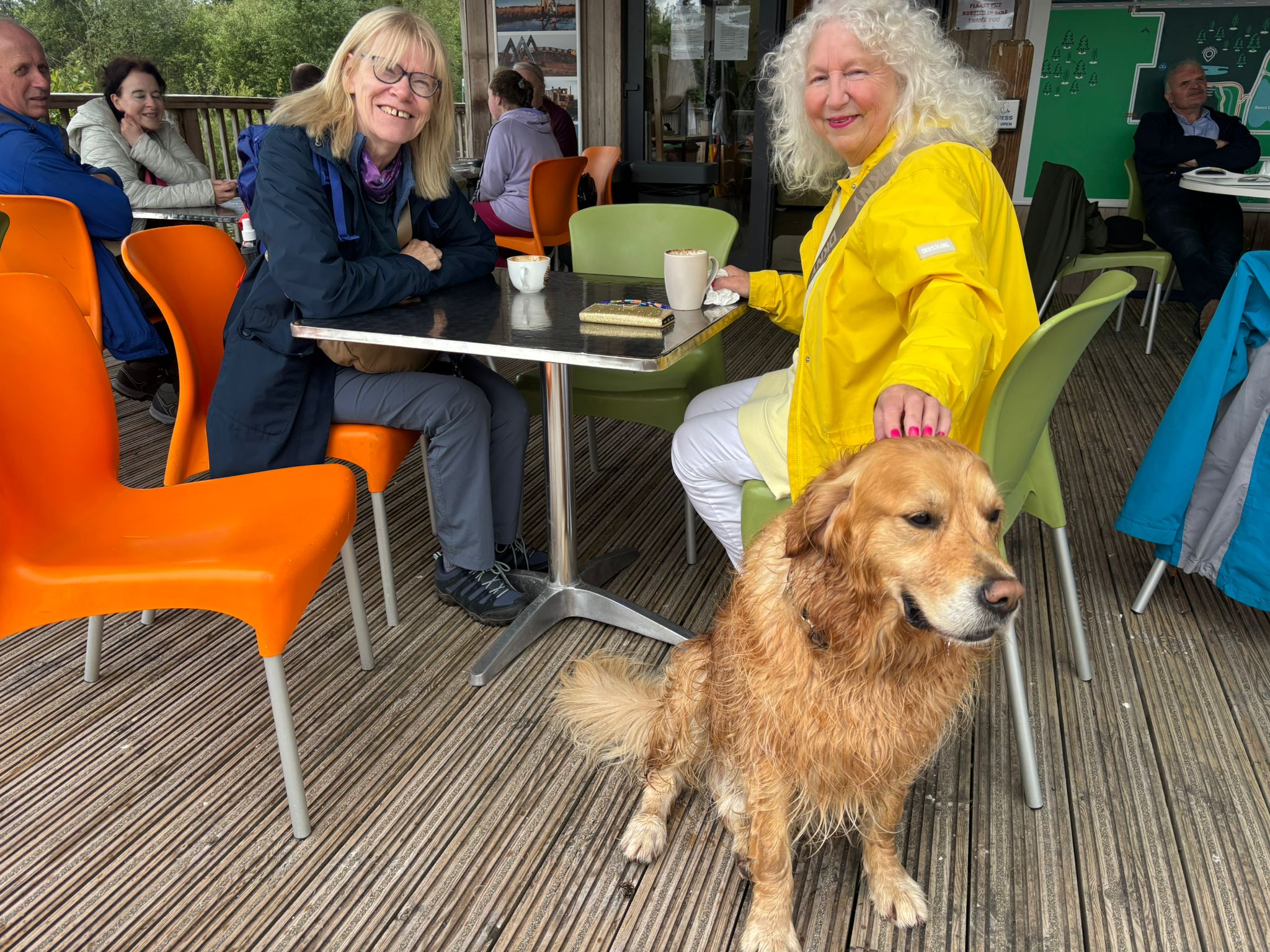
Members gathered at the park’s café before heading out on their adventure shortly after 12.30pm.
Larry said: “We had a great turnout on the day, from the very young to the not so young. Some decided to go along at their own pace while others joined in the group walk. After exploring this magical outdoor wonderland, we ended up back in the café for more food and chats.”
Larry was happy to see how much his fellow retired members enjoyed the day out, and he encouraged anyone who missed it to take part in the next. He said, “Friendships were forged, and the feeling afterwards was when and where will the next event take place?”
The walk is part of a wider effort to increase the social side of the RMA and build a friendly, supportive culture among retired members.
Membership officer Claudia Jennings has confirmed that more outings are in the works. She said: “We are already putting our thinking caps on and exploring ideas for future ambassador-led events and activities. If you have a suggestion for activities, outings or initiatives you would like to see organised for retired members, we would be delighted to hear from you.”