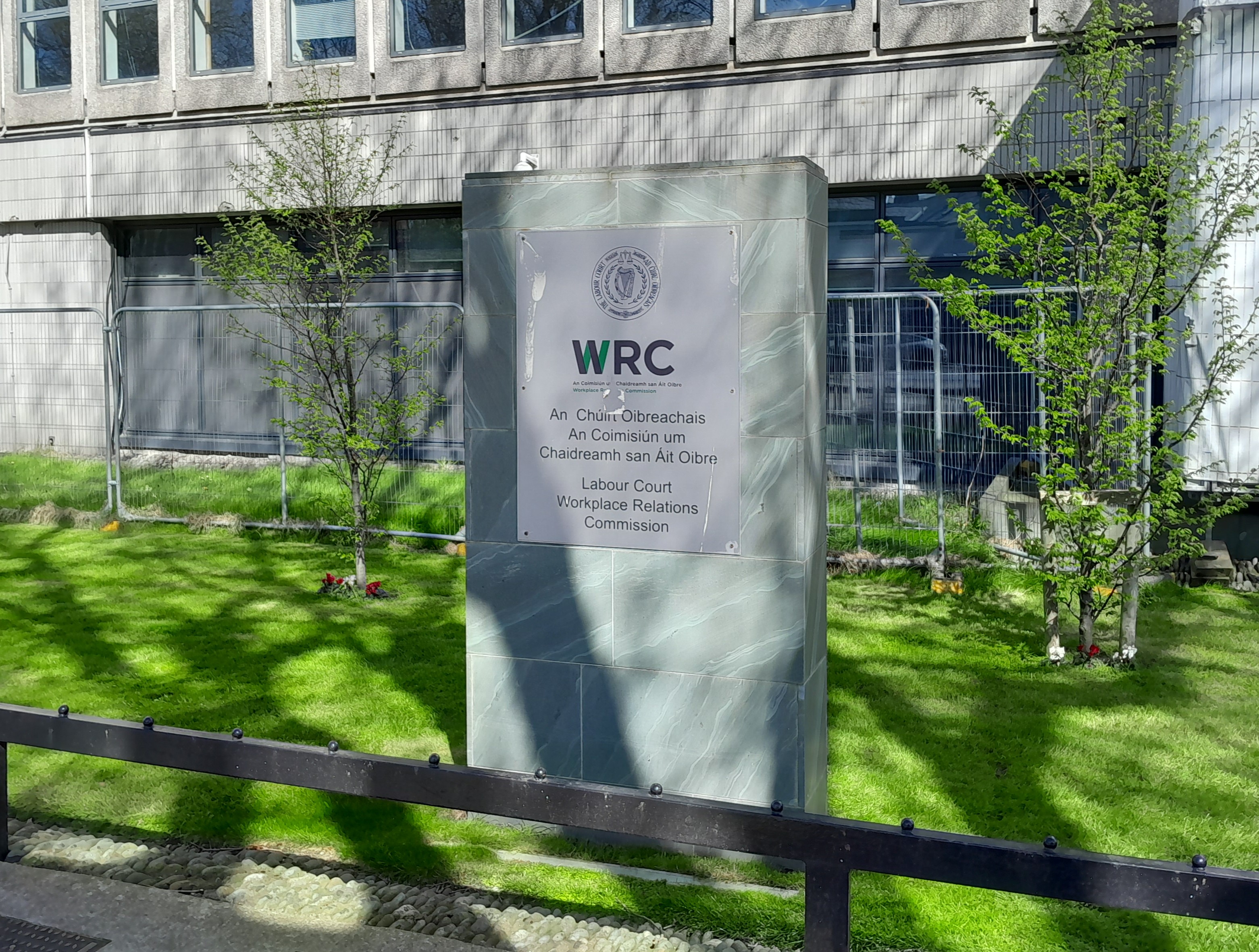
The work of developing a proper job evaluation for local authority workers has continued, with further momentum and progression following a conciliation meeting with the WRC on Tuesday 14th July.
Bilateral engagement has led to the creation a framework that all stakeholders can buy into.
The work mainly consists of translating the factors from the Higher Education sector to the Local Authority sector, with an approach informed by indicators which support the EU pay transparency directive. Once the factors have been agreed, an electronic application form for the job evaluation scheme will be devised.
The union has long fought for a structured job evaluation process that would provide an objective assessment of the demands of an individual posts. That includes the knowledge, skills, responsibilities and complexity actually required rather than basing it off the person currently occupying them.
Chair of the division Mick Whyms said: “These discussions are taking a long time, but they are fruitful. A set of FAQs will be created to accompany the application form. We hope to have a document ready by the end of September which can then be presented.”
Three pilot sites have been selected where the job evaluation scheme will commence on a trial basis towards the end of this year. The test sites will require suitable technology to support the electronic application form.
In order to ensure that the job evaluation scheme is fair and transparent, and to avoid the perception of bias, it is a principle of the scheme that no Local Authority will be conducting its own evaluations.
Last year, delegates attending Fórsa's Local Government and Local Services divisional conference in Letterkenny were told that discussions under the auspices of the WRC had produced broad agreement on the foundations of a future scheme.
Fórsa has long argued that staff in local authorities should have access to the same type of independent job evaluation systems that already operate in other sectors. The absence of such a scheme has contributed to inconsistencies in pay and grading, with employees carrying out comparable work sometimes receiving different levels of remuneration.
The dispute had originally been referred to the Labour Court in 2020, where Fórsa was directed to prepare a detailed business case supporting its claim. Although the union completed that work, the process stalled when the employer side declined to return to the Labour Court. The issue has remained a central priority for Fórsa's Local Government and Local Services Division ever since.
Head of division Richy Carrothers said: "Since the staffing cuts after the financial crash, people have continually stepped up, taking on extra duties and responsibilities to keep services running. That's left many members doing work well beyond the grade they're paid for. The overwhelming support our members gave for industrial action in 2023 showed just how strongly they feel that this needs to be put right. A fair, independent job evaluation scheme is about finally recognising the work people are already doing,” he said.
Richy concluded by pointing out that Ireland is increasingly out of step with international practice.
“Job evaluation schemes are well established across local government in Northern Ireland and in many other European countries, while comparable schemes also operate in the HSE and the higher education sector. Local government workers, who hold so many of our communities together, should not be denied similar fairness and equality.”
“It’s been a long road, but we will get there. Recent progress is promising and points towards further positive developments in the autumn” he concluded.
Join a union that wins. Join Fórsa.





 Like
Like


