“Just Keep It Going” | Fórsa workers bring ICTU Day of Action on Palestine to life by James Redmond
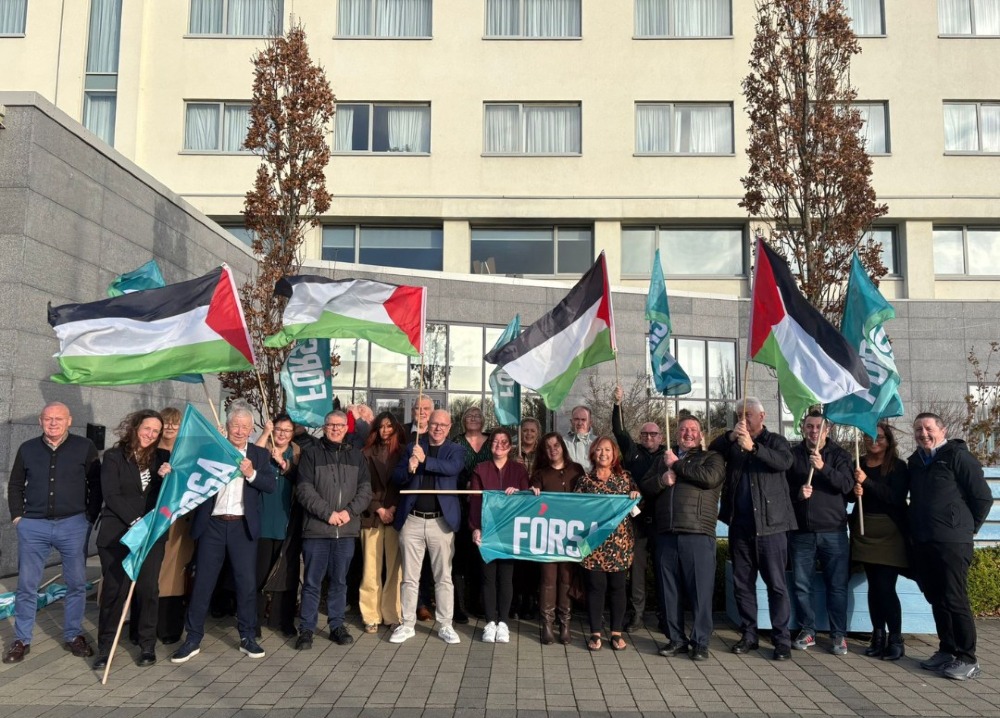
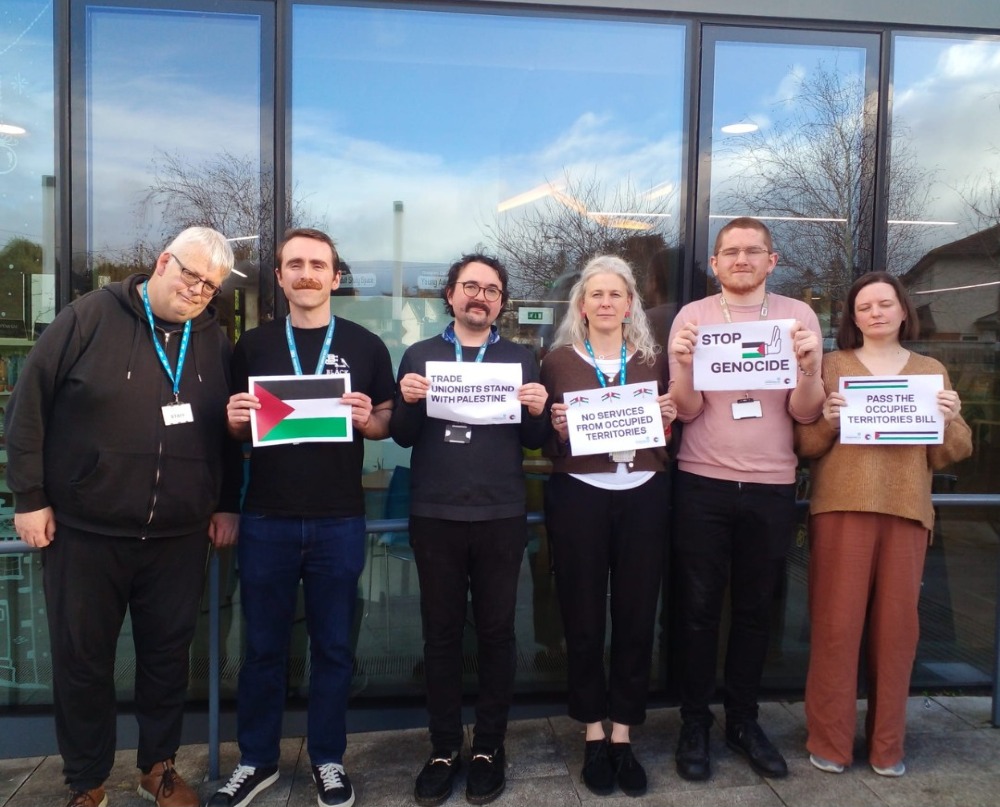
Fórsa members took the call for workplace visibility seriously, turning the day into a rolling display of humanity and collective conviction. The buzz on the ground helped build awareness of the large Ireland Palestine Solidarity Campaign (IPSC) demonstration the following day, linking workplace action directly to national mobilisation.
The day was a coordinated response to a recent vicious raid by Israeli army and intelligence forces on the offices of the Palestinian General Federation of Trade Unions.
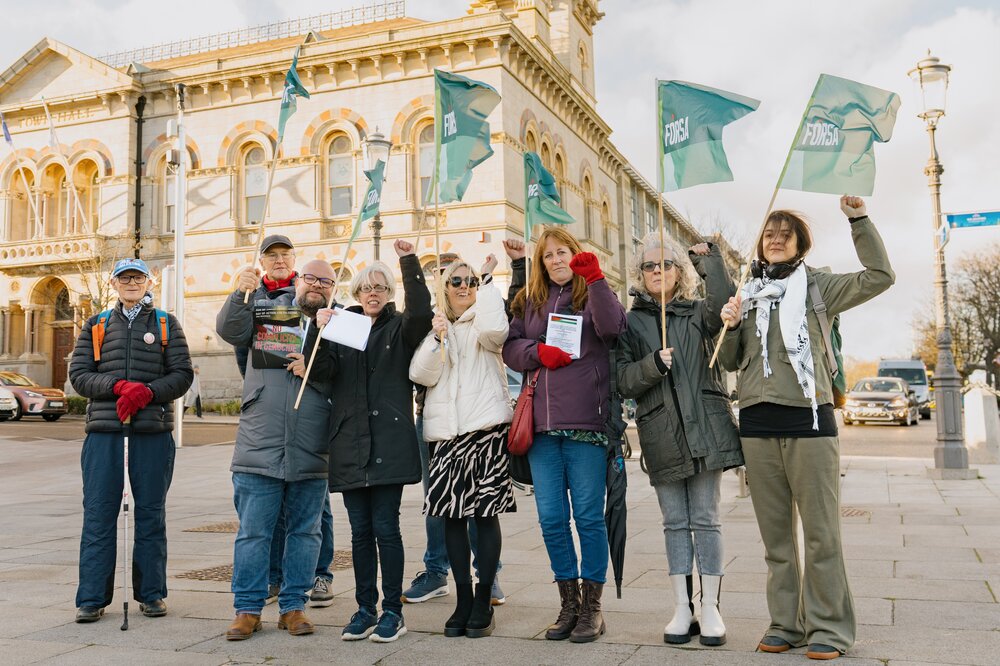
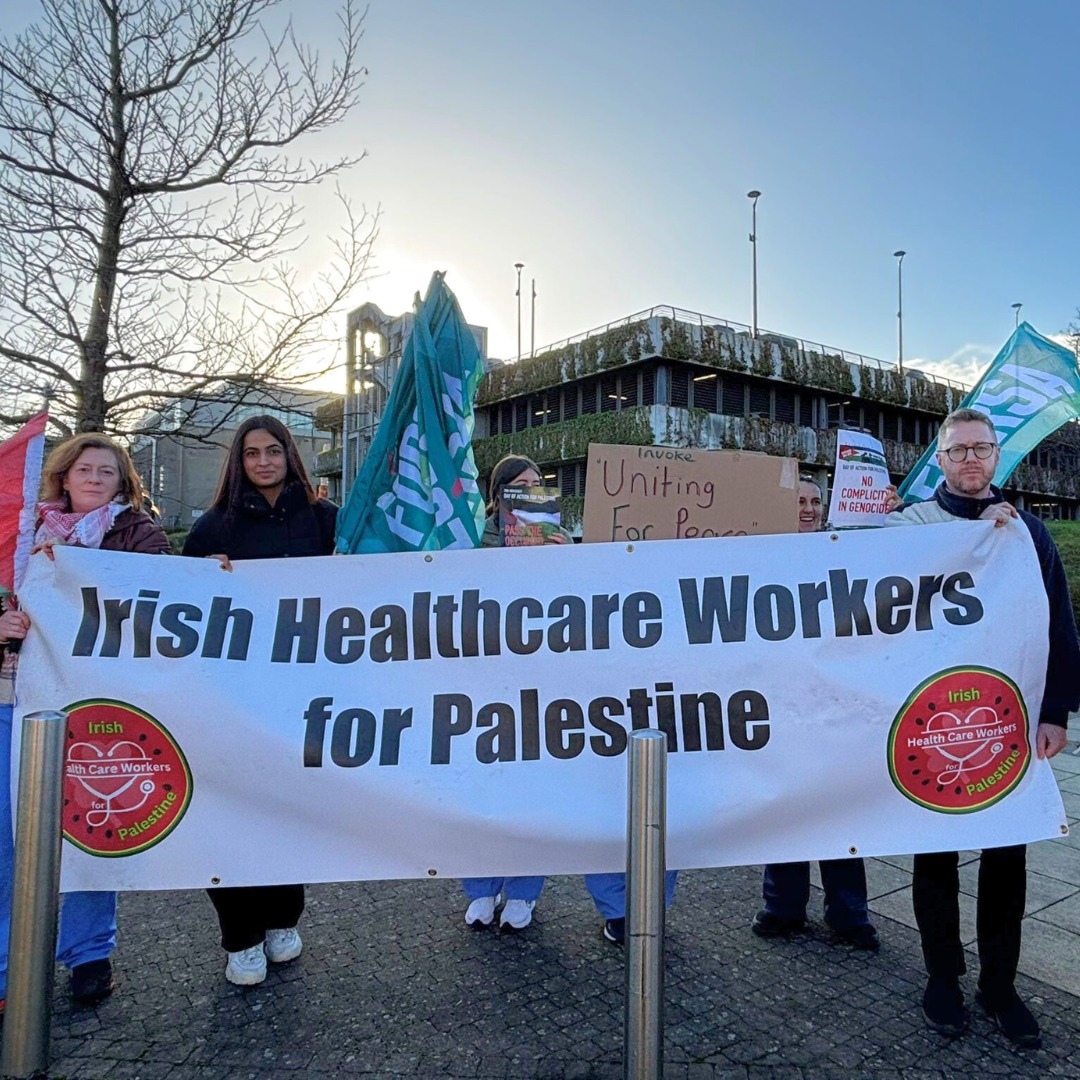
From bake sales to informal distribution networks of Palestine and Gaza Cola to encourage boycotts, Fórsa workers have been keeping Gaza in daily conversation for months. But last Friday gave those efforts a sharper, more organised edge. In Dún Laoghaire, Ballyogan, and libraries across Dún Laoghaire–Rathdown, members stepped out - even briefly - to show that solidarity lives not in slogans, but in people choosing to act.
Out in Dun Laoghaire, Fórsa activist Roisín Cronin summed up why she and her workmates felt compelled to take part:
“We wanted to answer the call of trade unions in Palestine who continue to experience oppression and apartheid on a daily basis. It's so important for us to keep talking about Palestine because despite the declared ceasefire, we know from listening to the voices of Palestinian people that they continue to face death, destruction and hunger.”
Their group pushed further still in putting pressure on their employer to take solidarity boycotts seriously.
“We also marked the day of action by submitting a letter to our Chief Executive asking that our employer take steps to ensure it does not engage in the purchase of Israeli goods and services and asking that they source alternative products outside the scope of the global boycott campaign.”
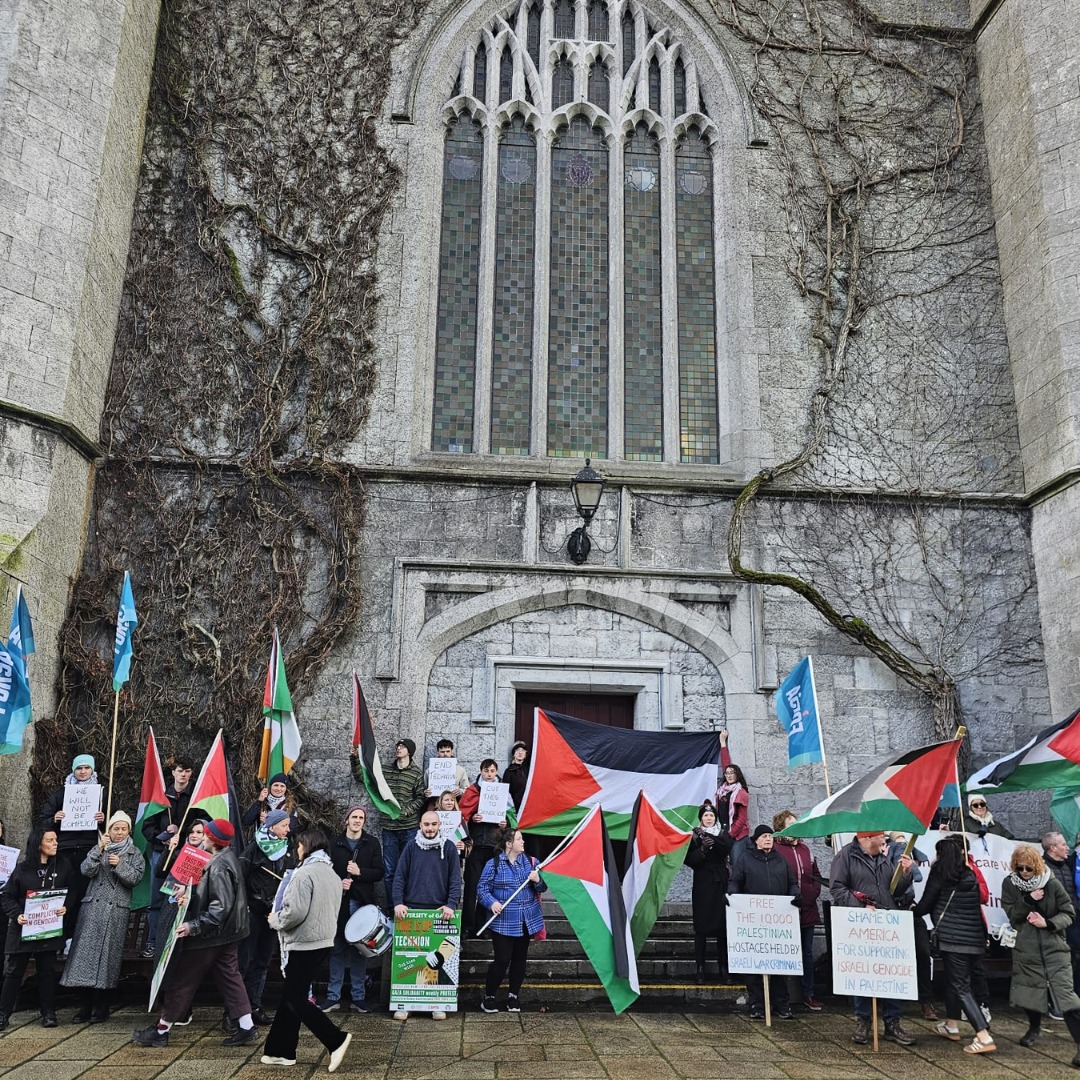
Across the city, in the National Museum of Ireland at Collins Barracks, Fórsa members staged their own lunchtime walk-out. Organiser Simon Ó Donnabháin described the atmosphere:
“We're all members of Fórsa here in the National Museum of Ireland, and we came out as part of the walk out for Palestine Day. We've had a great turnout with people here from different departments, different sections in the museum, all showing their solidarity and support.”
For Simon, the walk out was a great way to hype the National Demo taking place the next day and functioned as much as a community-building exercise as a public protest, prompting reflections on what it means to speak up.
“Sometimes people are afraid to put their head above the parapet, even though there is a great groundswell of support amongst the Irish people for the cause of Palestine. This type of day, this type of action, really nails it home and gives people that confidence to stand up and speak out,” said Simon.
Helen Beaumont, another Fórsa member, spoke to both the emotion and the responsibility felt by many workers:
“What's going on in Palestine and Gaza is appalling, and this is just one way to stand up and say that what is going on there is wrong. We need to try and speak up as much as we can where we can, and try and make our voices heard, I think a lot of people, if asked about it, feel very strongly, that what's going on is wrong, deeply, deeply wrong.”
Her colleague Joyce Delaney noted that the museum’s role added a further layer to their action. As she put it, the responsibility of holding Ireland’s cultural memory shapes how staff think about solidarity:
“It's very important to us as the keepers of Ireland's historical collections, that we are on the right side of history. In our department, in the education department, we are hosting a bake sale in aid of UNRWA to support Palestinian aid.”
For Joyce, these conversations aren’t happening in a vacuum - they’re part of the daily life of the institution:
“It's definitely something that we're not afraid to talk about in the museum.”
And she went on to draw a direct line between Ireland’s own past and the moral clarity many workers feel today:
“I feel that Ireland's history of occupation and colonisation really mirrors the struggle of the Palestinian people.”
At Collins Barracks, members came in and out according to staggered lunch breaks - small gatherings that accumulated into a steady, visible presence. Sometimes solidarity isn’t a single mass moment; it’s dozens of small ones that refuse to fade.
For Donna, also from the National Museum, something as simple as what’s in the fridge can drive solidarity. She explained how a small, everyday choice has become a quiet catalyst for conversation:
“In our office, we have a few crates of Palestine Cola. It's this amazing company, I think it's set up by two lads, who are raising money for different causes in Palestine."
Donna pointed out that even the simplest choices inside a workplace can carry political weight:
“Sometimes, like, for example, in the cafe, the options we have would generally be the kind of bigger ones like Coke and Fanta and things like that, all owned by the same companies, of course.
And for colleagues trying to boycott those brands, this small gesture offers both an alternative and an opening: “If you're boycotting, that can make it difficult to, especially if you need a little sugar at some point in the day. So, it's just a nice thing to have, for people as an alternative. Just keep it going. And you always feel like I can be doing more - it's great to just be here and to be visible, in that together.”
Taken together, the day felt like a real effort to pull more and more workers into collectively figuring out possible practical actions to keep the Palestinian solidarity movement going.





 Like
Like

