Survey results show workers must organise to set the agenda
by James Redmond
Fórsa’s 2025 member survey makes one thing crystal clear: workers want control - over their pay, their time, and their working lives. From defending hybrid and remote work to demanding a shorter week with no loss of pay, members are drawing new battle lines for balance and dignity at work.
The results of the 2025 Fórsa member survey paint a vivid picture of a workforce feeling the squeeze, but also ready to stand together and fight for change. More than 14,000 members working in public service employments, across all divisions, took part in the survey.
This is the third year running Fórsa have surveyed members to gain a clearer understanding of their concerns. Policy officer Aisling Cusack emphasised that although surveys might appear to be routine, they’re not about “ticking a box or collecting numbers for a report.”
"Every response helps us understand where members stand. When members take the time to fill the surveys out, they’re not just giving opinions, they’re shaping the next steps in our collective fight for fair pay, better conditions, and a stronger voice at work,” she said.
The results were outlined by general secretary Kevin Callinan at a packed consultative council in Nerney’s Court on Tuesday 4th November.
Under Pressure
The first set of findings deliver a stark warning on the strains facing society. Nearly three out of four members (73%) say their standard of living has worsened over the past two years, with 37% reporting that it has worsened significantly. Members earning under €50,000, especially those working in the Health and Welfare and Education divisions, feel the hardest hit.
The cost-of-living crisis, rising housing costs, and pressures on public services have left many struggling to make ends meet. It’s no surprise then that 84% of members say it’s extremely important that the next public service pay agreement delivers real pay increases, and raises that beat inflation.
Hybrid and Flexibility
Beyond pay, members want control over their time- something that is fundamental to leading a balanced life.
The top-ranked priorities are protecting hybrid and remote working (55%), a shorter working week without loss of pay (54%), and protecting flexible hours (53%).
“Most members feel as strongly about these priorities as they do about pay itself . And that is telling us something that we have to respond to,” says Kevin Callinan. “Particularly when you factor in that lots of our members, in particular sectors, for instance, could never work from home, such as those who work in schools or healthcare settings, so that amplifies those figures even more.”
“There’s a major battle now to protect remote and hybrid work, and not just in the public service but across the economy. We have to be proactive and protect the only positive to come out of the pandemic.”
The Four-Day Week
The survey also revealed that a four-day week is no longer a fringe idea. It’s gaining serious traction among union members. Over half of Fórsa members want a shorter working week without loss of pay, and most feel just as strongly about winning that as they do about higher wages.
Kevin tied this to the deeper pressures members face. “We have 2.9 million people at work, and we have more women participating in the labour market than ever before, but there is huge pressure on people. People are really struggling to balance all sorts of things, like long commutes and caring responsibilities. People want time back to live.”
The Common Good
Beyond the workplace, Fórsa members are thinking about how they can shape wider society. Asked which ‘common good’ issue Fórsa should campaign for more public investment in, members named healthcare (32%) as their top priority, followed by housing (19%), with care for older people, education, and childcare close behind.
These results reflect not just personal experience but shared frustration with underfunded public systems. And while the government hasn’t engaged with ‘common good’ issues in national pay talks for over 17 years, three-quarters (74%) of members want that commitment brought back.
Up for Action
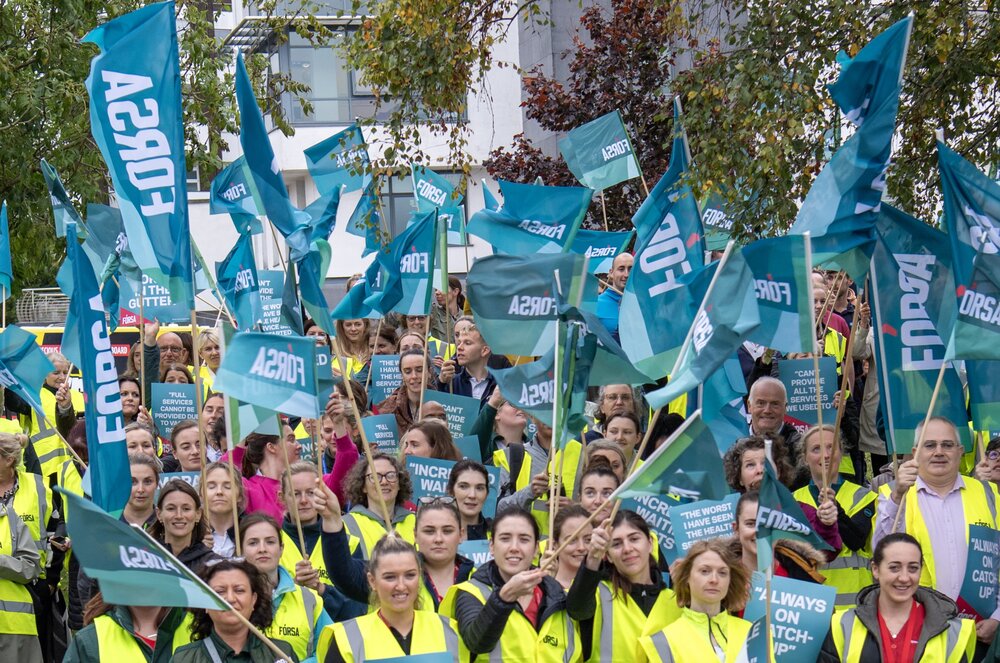
The data also shows a strong collective spirit emerging. More than eight in ten members say they’re willing to take action with colleagues, to sign a pledge, attend a rally, or engage in collective action to win a better deal.
Kevin connected the results to the upcoming public service agreement negotiations, expected to kick off towards the middle of next year.
“We have to set the agenda now. It’s time to organise and build our power. Through this survey members have clearly told us what matters most to them. Fórsa’s greatest strength lies not only in numbers but in the solidarity that connects those members.”
“Unless we’re prepared, we’re not going to be able to secure our priorities in the next public service agreement. The prospects for the next talks are going to depend on how we prepare and how we build our power in the workplace. In the weeks and months ahead, we will roll out a national campaign that places these issues front and central, and every member of our union will have a role to play in that campaign to build our strength ahead of those negotiations.”
Join a union that wins. Join Fórsa.
 |
|
ICT workers: Update your details!
by Brendan Kinsella
Preparations continue for ballot of ICT workers in local authorities. Fórsa has been seeking a sector-wide review of ICT grading and pay, benchmarked against other professional cohorts and public sector bodies, the establishment of the National ICT CPD committee, and a formal, nationally agreed framework for out-of-hours work and compensation.
As preparations for the upcoming ballot of Information and Communication Technology (ICT) workers in local authorities continue, the Local Government and Local Services Division’s ICT Committee has prepared an information leaflet for members, and are urging members to make sure the union has their up to date contact details.
The leaflet will be distributed in the coming weeks with the intention of informing ICT members of the specifics of the dispute and encouraging members to take the time to vote and have their say in the ballot.
Head of division Richy Carrothers said: “We want to make sure our ICT members are fully informed and have their say in the upcoming ballot."
“From retention to morale, there are serious issues facing ICT staff in local authorities. It is important that members have their say to shape the next steps. The management response is entirely unreasonable and unsustainable" he continued.
In recent years, the roles of ICT staff have expanded in scale and complexity, evident not just by increasing workload but also from the introduction of mandatory third-level qualifications across all ICT grades.
In recognition of the change in qualifications required and workload, Fórsa has been seeking a sector-wide review of ICT grading and pay, benchmarked against other professional cohorts and public sector bodies, the establishment of the National ICT CPD committee, and a formal, nationally agreed framework for out-of-hours work and compensation.
While Fórsa has engaged with management for a number of years, management have shown a lack of meaningful engagement and used deferral tactics to avoid resolving these issues.
Richy said: “Our members want to work in the local authorities, but increased workloads without commensurate pay increases and persistent undervaluing of their work is driving workers into the private sector and other parts of the public sector.”
Chair of the ICT Committee Paul Barker called on members to talk to their colleagues about how important it is to join the union now, before any potential industrial action.
He said: “The more of us that are in the union, the louder our voices will be. Our work is mission critical to local authorities and it is high time that is recognised. We need to stand together now to show we won’t continue to settle for less than we deserve.”
Join a union that wins. Join Fórsa.
Fórsa win secures greater flexibility for Clare County Council workers
by Brendan Kinsella
Campaign of sustained engagement wins council workers an enhanced flexi-time scheme and greater support in achieving a healthy work-life balance.
Clare County Council workers will now be able to avail of an enhanced flexi-time scheme, granting them greater flexibility in their working hours. The win follows a campaign of sustained engagement and detailed representations made to management by Fórsa on behalf of workers.
Under the previous flexi time scheme, workers were not permitted to carry a negative flexi balance. Staff could only avail of flexi-time or take flexi-leave when their clock was in credit (up to a maximum of seven hours).
Fórsa assistant general secretary, Eddie Walsh said “Previously, staff would often have to use annual leave for appointments, caring duties, or unforeseen circumstances. This restrictive approach undermined the core purpose of flexible working arrangements and created unnecessary challenges for staff seeking to balance work and personal commitments.”
Following negotiations, management agreed to amend the scheme to allow employees to carry forward a balance of up to seven hours positive or seven hours negative at the end of each flexi period.
Eddie hailed the decision as “a really positive and practical outcome for our members.”
He said: “It brings Clare County Council’s flexi-time policy into line with best practice across the local government sector and gives staff the flexibility they need to manage work and life commitments effectively. It’s a clear example of what can be achieved through sustained engagement and collective representation.”
Join a union that wins. Join Fórsa.
Local bargaining offer received
by Hannah Deasy
Following extensive talks in recent weeks and months an offer has been made in relation to Forsa’s first cross sectoral local bargaining claim, which applies to clerical officers and grade 3 equivalent roles in the public service.
Following extensive talks in recent weeks and months an offer in principle has been made in relation to Fórsa’s first cross sectoral local bargaining claim, which applies to clerical officers and grade 3 equivalent roles in the public service.
Deputy general secretary and head of the civil service division Éamonn Donnelly said: “We have received an offer in principle which is subject to finalisation and formalisation. While there remain details that must be clarified, we are encouraged that the offer begins to address the priorities set by members.”
“In conference motions, at equivalent grades committees and in surveys, members were very clear: they want local bargaining to shorten the pay scale journey and for long service to be rewarded. This has been a lengthy negotiation but if we get it right, it will really be worth it.”
While 1% of payroll quantum is available in this phase of local bargaining, by negotiating offers related directly to specific grades, members stand to benefit far more.
Éamonn explained: “If you take a point off a scale, it reduces the time it takes for a person’s income to increase incrementally. In effect, the benefits last longer.”
An offer in principle has been made in the civil service for executive officers, administrative officers and higher executive officers. These grades are in the same cross sectoral bargaining unit as grade 4-7 roles in the public sector, however as the pay scales are of an entirely different construct, a separate offer will be made across the other sectors in respects to grades 4-7.
In relation to sectoral claims specific to the Local Government and Local Services division, national secretary Richy Carrothers said: “We have kicked off discussions with the LGMA and the Department of Housing, Local Government and Heritage regarding claims in the Local Authority sector. Management now needs to focus attention on formally responding to all of our claims and we will keep up the pressure to ensure that offers are progressed in a reasonable time frame”.
Local bargaining is a type of collective bargaining featured in the Public Service Agreement 2024-2026. It allows grades, groups or categories to negotiate claims up to 3% of overall payroll costs. The first phase is effective from 1st September 2025, with a further second phase to be agreed as part of a new agreement.
Fórsa has lodged three cross sectoral ‘core’ claims and numerous sector specific claims on behalf of members across all divisions of the union.
Join a union that wins. Join Fórsa.
Government plan on collective bargaining includes tax relief on union subscriptions
by Niall Shanahan
Years of union led pushing has finally seen the government bend and introduce an action plan to strengthen collective bargaining in accordance with the EU Directive on Adequate Minimum Wages.
The Government has published a new Action Plan on Collective Bargaining, outlining measures to boost workers’ access to collective representation and strengthen the role of trade unions.
The Action Plan delivers a key Programme for Government commitment and was developed with the Irish Congress of Trade Unions (ICTU) and the employer body, Ibec.
The document says collective bargaining practices have proven effective in tackling inequalities and improving welfare and wellbeing outcomes for wage earners, and that it fosters “stable labour relations and industrial peace.”
The proposal to reintroduce tax relief on trade union subscriptions is a key feature of the Action Plan, acknowledging the role of unions in promoting fair and productive workplaces.
Tax relief on union subscriptions was originally introduced in 2001, following a long campaign by IMPACT, one of Fórsa’s founding trade unions. The relief was abolished by the Government as an austerity measure following the financial crash. Fórsa has since actively campaigned to restore it.
Fórsa general secretary Kevin Callinan said the proposal “is an overdue but very welcome step that acknowledges the essential role of trade unions in achieving balanced and sustainable economic progress.
“Fórsa has consistently called for the restoration of tax relief on union subscriptions since it was abolished in 2011. Its reintroduction is a practical and symbolic recognition of the value of collective representation and social dialogue. It also signals that the State intends to enable, rather than obstruct, the right to bargain collectively,” he said.
The Action Plan commits to improving union access to workplaces, linking public procurement to good employment standards, and promoting collective bargaining coverage in line with EU requirements.
The plan builds on recommendations from the High-Level Group on Collective Bargaining and the EU Directive on Adequate Minimum Wages, which requires member states to strengthen collective bargaining structures.
Kevin said Fórsa would continue to engage with Government and employers to ensure delivery on the plan’s commitments: “We will work to make sure these measures are implemented in full so that more workers can benefit from the protection, fairness, and voice that collective bargaining brings.”
Join a union that wins. Join Fórsa.
ICTU meets with Minister for EU Affairs ahead of Ireland’s EU Presidency
by Hannah Deasy
Ireland will hold the EU Presidency from July – December 2026. Last week representatives from the Irish Congress of Trade Unions met with Minister Thomas Byrne to stress the importance of social dialogue and raise issues of critical importance to the trade union movement.
In July 2026 Ireland will assume the rotating Presidency of the European Council for the eighth time since joining the EU in 1972.
In a speech earlier this year Minister for EU Affairs Thomas Byrne TD underlined the political significance of the Presidency and the scale of the work involved for Ministers, and for public servants. There will be over 230 events in Ireland during the six month period, while Irish officials will chair over 170 preparatory bodies, committees and working groups in Brussels.
Between July and December 2026 Irish Ministers will chair formal meetings of the Council, in Brussels and in Luxembourg, and host informal meetings of EU Ministers in Ireland.
Stakeholder engagement to prepare this large-scale undertaking is already underway, and as part of that engagement, Minister Byrne met with ICTU representatives last week.
ICTU general secretary Owen Reidy was joined by Fórsa general secretary Kevin Callinan, as well as Ethel Buckley from SIPTU, and Jack O’Connor, former SIPTU general secretary and one of Ireland’s representatives at the European Economic and Social Committee (EESC).
The agenda of the meeting focused on issues the trade union movement in Ireland and Europe want to see prioritised by the Irish EU Presidency. These include further initiatives to promote and support collective bargaining, an EU directive on a just transition, reform of public procurement rules to guarantee that public money goes to organisations that respect workers’ rights and trade union, a new directive on remote work and the right to disconnect, and the protection of funding for social objectives, which should not be redirected to increase defence spending.
At the meeting Fórsa general secretary Kevin Callinan stressed how important it is that this Presidency helps to rebuild confidence in the EU, saying that in the midst of global turmoil, rapid technological change, the rising cost of living crisis and the acute housing crisis, Europe risks becoming increasingly removed from people’s lives.
He said: “Record number of people are at work in Ireland and Europe, but it is harder and harder for people to make ends meet. Without meaningful action on the issues that impact daily life the EU risks becoming dangerously disconnected from citizens.”
“During our next EU Presidency Ireland has the opportunity to tackle these major challenges and have a real impact. Right now, the European Commission is developing Europe’s first ever Affordable Housing Plan, with a public consultation ongoing, and Ireland’s EU Presidency will have a key role in follow up discussions and implementation.
“We need to do everything we can to ensure that the plan is a transformational document, not just a list of empty promises. We are calling for full involvement of social partners in the development of the plan to ensure that we move away from an approach that prioritises private profit over public investment, at a time when so many people in Ireland and across Europe are struggling to put a roof over their heads.”
Join a union that wins. Join Fórsa.
Labhraíonn Fórsa os comhair choiste Gaeilge an Oireachtais
Fórsa calls for a fair and inclusive path to meeting Irish language targets for public service recruitment, as assistant general secretary Paul MacSweeney addressed the Oireachtas Irish language committee. As Gaeilge agus i mBéarla.
Ar an Máirt an 14 Meán Fómhair, labhair ard-rúnaí cúnta Paul MacSweeney os comhair Chomhchoiste na Gaeilge, na Gaeltachta agus Phobal Labhartha na Gaeilge san Oireachtas.
Tugadh cuireadh don aontas, cur i láthair a dhéanamh maidir le tuairimí an-eagraíochta Fórsa ar earcaíocht sa tseirbhís phoiblí maidir leis an bhforáil in Acht na dTeangacha Oifigiúla (arna Leasú) a éilíonn go mbeidh 20% d’earcaigh sa tseirbhís phoiblí inniúil sa Ghaeilge faoi 2030.
Is í an aidhm leis an bhforáil sin a chinntiú go bhfuil teacht ag an bpobal ar sheirbhísí dátheangacha i nGaeilge agus i mBéarla agus go mbeidh an Stát in ann a chuid seirbhísí a chur ar fáil go héifeachtach sa dá theanga.
Thug Paul le fios, agus é ag caint, go dtacaíonn Fórsa go hiomlán le tionscnaimh a chumasóidh oibrithe úsáid a bhaint as an nGaeilge, go gairmiúil agus go sóisialta araon, ag tagairt do scéim na Gaeltachta do pháistí agus garpháistí na mball agus do na feachtais atá ar siúl maidir le cúrsaí Gaeltachta le haghaidh státseirbhíseach.
D’iarr sé ar an rialtas plé le haontais ar an mbealach is fearr chun an sprioc earcaíochta 20% a bhaint amach, agus ag tabhairt le fios gur údar imní é nach ndearnadh aon chomhairliúchán le Fórsa agus an Plean Náisiúnta um Sheirbhísí Poiblí Gaeilge á ullmhú, ná an Plean Gníomhaíochta do 2025-2027 ar bhfuiltear ag feithimh air.
Dúirt sé: “Ba mhaith linn a chinntiú go mbeidh rochtain chothrom agus leordhóthanach ag ár mbaill ar oiliúint. D’fhéadtaí soláthar chúrsaí Gaeilge a bheith san áireamh anseo agus am saor íoctha ó ghnáthdhualgais chun foghlaim agus uasoiliúint sa teanga a éascú chun an inniúlacht riachtanach a bhaint amach.”
“Tacaíonn ár mbaill le cur chuige dearfach, dírithe ar réitigh chun úsáid na Gaeilge a mhéadú agus cáilíocht sheirbhísí poiblí as Gaeilge a fheabhsú. Ní cheart go mbainfí an sprioc tábhachtach seo amach agus ár lucht oibre díograiseach tiomanta reatha atá san earnáil phoiblí a bheith thíos leis."
Chuir sé in iúl gur cheart go mbeadh cleachtais earcaíochta bunaithe ar fhianaise agus ceangailte le héileamh ar sheirbhísí agus nár cheart d’aon bheart eachaíochta srian a chur ar shoghluaisteacht san earnáil phoiblí.
Mar fhocal scoir, chuir Paul béim ar an ról tábhachtach atá ag earcaíocht san earnáil phoiblí chun troid i gcoinne an chiníochais agus chun éagsúlacht a chur chun cinn, agus é ag rá: “Is timpeallacht a chruthú go réamhghníomhach ina bhféadfaidh gach duine a bheith páirteach inti, atá i gceist le fíorionchuimsitheacht. Tá sé de dhualgas ag an Stát a chinntiú go gcruthófar comhdheiseanna do gach fostaí reatha sa tseirbhís phoiblí agus iad siúd a bheidh ag feidhmiú sa todhchaí chun seirbhísí an stáit a sholáthar go dátheangach, dóibh siúd nach bhfuil taithí ar bith acu ar an teanga san áireamh.
Is féidir leat aighneacht Fhórsa a léamh ina hiomláine anseo. As Gaeilge. As Béarla.
Fórsa calls for positive and proactive Irish language targets in public service
Fórsa has called for a fair and inclusive path to meeting Irish language targets, as assistant general secretary Paul MacSweeney addressed the Oireachtas Irish language committee.
On Tuesday 14th October 2025, Fórsa assistant general secretary Paul MacSweeney addressed the Joint Oireachtas Committee on the Irish language, the Gaeltacht and the Irish-speaking community.
The union was invited to present Fórsa’s observations on recruitment in the public service in consideration of the provision in the Official Languages (Amendment) Act which requires 20% of recruits in the public service to have competence in the Irish language by 2030.
This provision aims to ensure that the public have access to services bilingually through Irish and English and that the State can effectively deliver its services bilingually.
In his address, Paul outlined that Fórsa fully supports initiatives that will empower workers to use the Irish language, both professionally and socially, highlighting the Gaeltacht scheme for members’ children, and campaigns for Gaeltacht courses for civil and public servants.
He then called for the government to engage with unions on how best to meet the 20% recruitment target, noting with concern that there was no consultation with Fórsa on either the preparation of the National Plan for Irish Language Public Services, or the awaited Action Plan for 2025-2027.
He said: “We want to ensure our members have fair and sufficient access to training. This may include the provision of Irish language courses and paid time off from regular duties to facilitate their learning and upskilling in the language to achieve the required competency.”
“Our members support a positive, solutions-focused approach to increasing the use of Irish and the quality of Irish language public services. However, achieving this important objective must not come at the expense of our existing, hard-working, committed public sector workforce.”
He noted that recruitment practices must be evidenced-based and linked to service demand and that any recruitment measures should not limit mobility within the public sector.
Concluding, Paul underlined the important role public sector recruitment has in combating racism and promoting diversity, saying: “Genuine inclusion is about proactively creating an environment in which everyone can participate. The State has a responsibility to ensure that it creates equal opportunities for all current and future public servants to deliver the services of the State bilingually, including those with no previous experience of the language.
You can read Fórsa’s full submission here. In Irish. In English.
Join a union that wins. Join Fórsa.
Fórsa Youth pass new charter and elect committee at AGM
by Fórsa Youth
A successful Fórsa Youth AGM sees the adoption of a new charter, new policies, and new faces joining the committee.
On Friday 17th October, Fórsa Youth held its Annual General Meeting (AGM). Young delegates from branches nationwide gathered at Nerney’s Court to commence the new committee term.
The AGM focused on reviewing the past year’s progress, debating motions, and setting priorities for the year ahead. The meeting also saw the election of a new committee, representing young workers across Fórsa’s diverse membership. Among the main outcomes of the meeting was the agreement of a new Fórsa Youth Charter, which sets out the network’s guiding principles, goals, and commitments for the coming years.
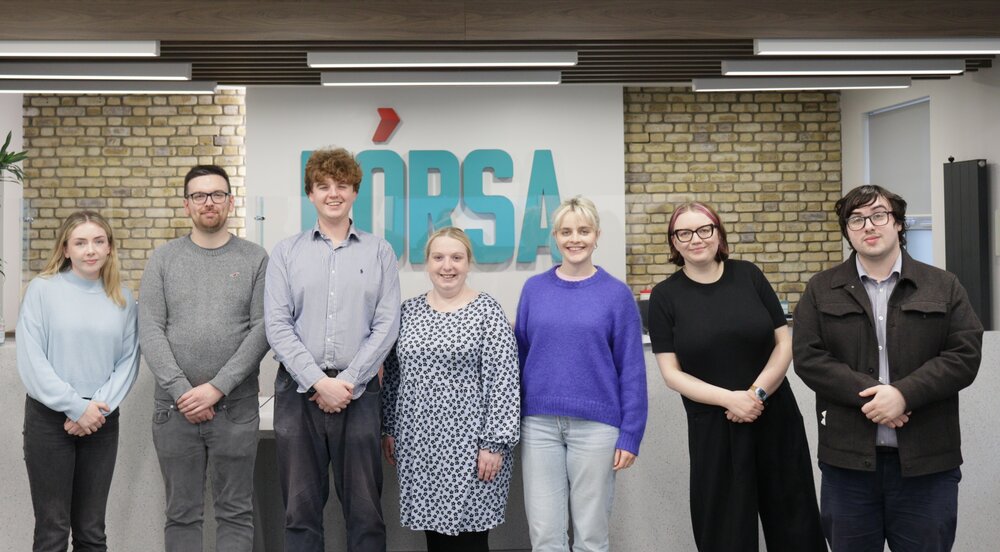
Newly elected Fórsa Youth Committee: (L-R) Niamh Cronin (Social Media officer), Brian Dooley (Vice-Chair), Hugh McInerney (Chair), Rachel Fennelly (Secretary), Áine Bullock (Recruitment officer), Bridget Moylan (PRO) and Fergal Twomey (Campaigns officer).
The election saw Hugh McInerney, Rachel Fennelly, Áine Bullock, and Fergal Twomey re-elected as chair, secretary, recruitment officer, and campaigns officer respectively. A motion was passed which saw the communications officer split into two roles: public relations officer (PRO), which will focus on internal communications and improving Fórsa Youth’s search engine optimisation (SEO), and social media officer, which will increase the network’s social media presence and output. Bridget Moylan was elected PRO, and Niamh Cronin was elected social media officer. Brian Dooley was elected vice-chair.
The Youth Charter adopted at the AGM reaffirms Fórsa Youth’s role in empowering young workers, focusing on youth participation across Fórsa’s six divisions, building links with other trade unions, lobbying for better housing for young workers, and promoting fairness in the workplace.
A number of motions were also proposed and debated. The motions passed included establishing Campaigns and Recruitment Working Groups, the establishment of an accessibility passport for disabled, chronically ill and neurodivergent civil servants, and a motion mandating Fórsa Youth to lobby for more resources to ensure as many young voices are heard in as many places as possible.
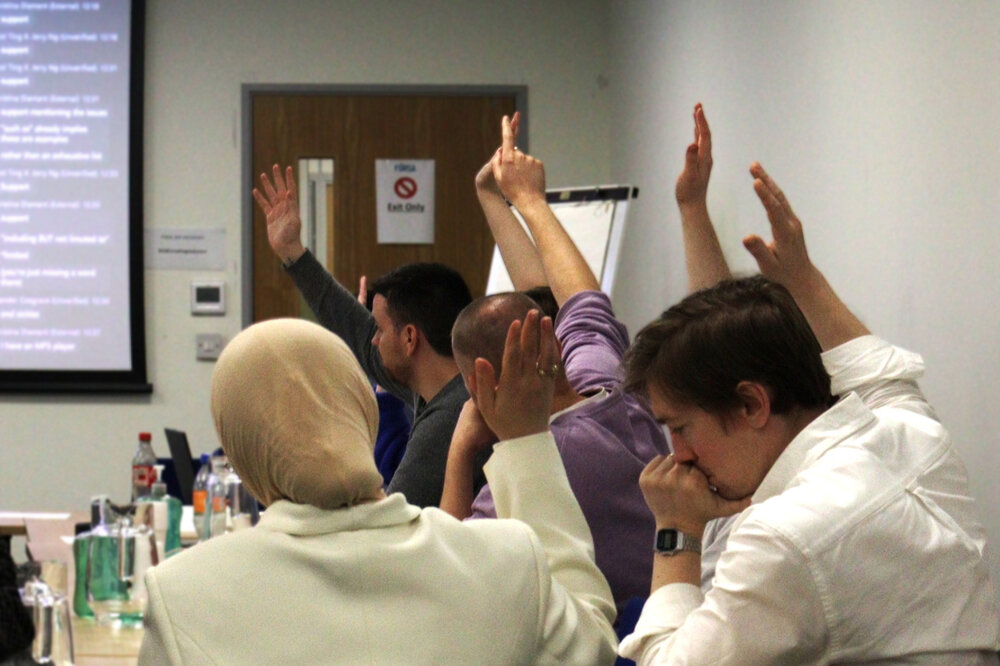
All in agreement, all motions passed on the day.
Fórsa Youth chair Hugh McInerney said: “We were absolutely delighted to see the level of engagement and enthusiasm from our members at the AGM. The unanimous passing of all motions proposed followed lengthy debate and discussion on each one. Likewise, the agreed Youth Charter underwent numerous edits before it passed. This is exactly what the committee wants; lively and informed discussion that leads to meaningful and purposeful action. This will be the cornerstone on which everything Fórsa Youth does this year will be built.”
The newly elected committee pledged to continue strengthening youth participation within the union. Bridget Moylan, PRO, said “It was great to have so many engaged members join us in Nerney’s Court for the AGM. We are hoping to build on the momentum from last term and increase engagement. The new charter gives us a clear direction, and I’m excited for the year ahead!”
The AGM closed with a renewed sense of energy and solidarity. The committee is determined to build on recent successes and ensure that Fórsa remains a union for all ages - active, inclusive, and forward-looking.
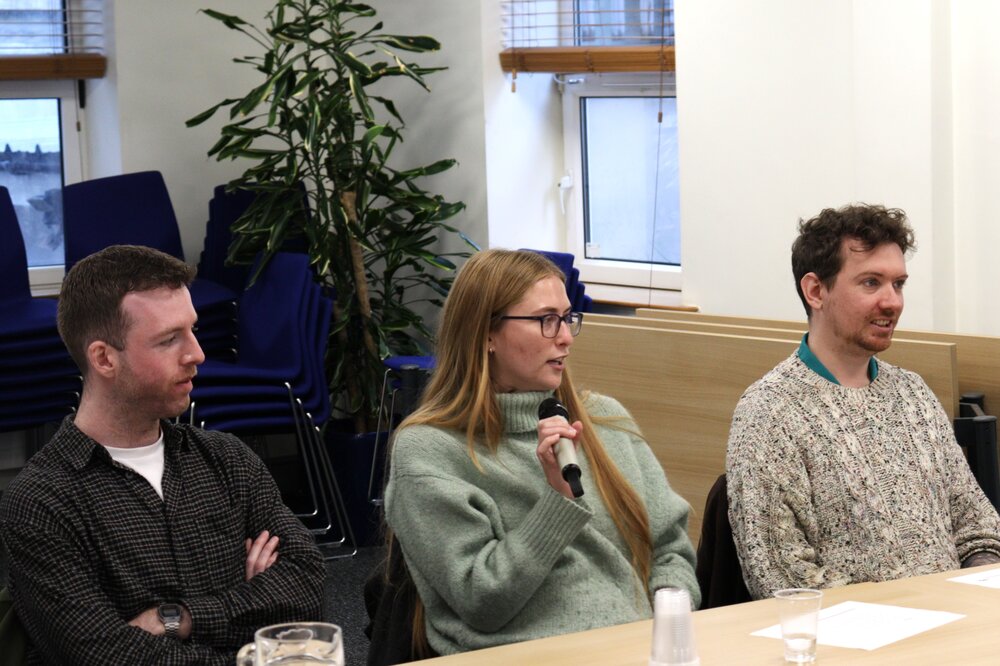
Healthy debate as members discussed motions.
The next Fórsa Youth event is set for Thursday 4 December in Dublin, with more details to follow. Our first event of 2026 is due to take place in Galway on Thursday 22 January, followed by a meeting on Friday 23 January.
Fórsa Youth will continue to provide opportunities for young members to become more active and engaged with the union’s mission. If you are interested in getting involved, email youthsec@forsa-rep.ie and follow @forsa.youth on Instagram.
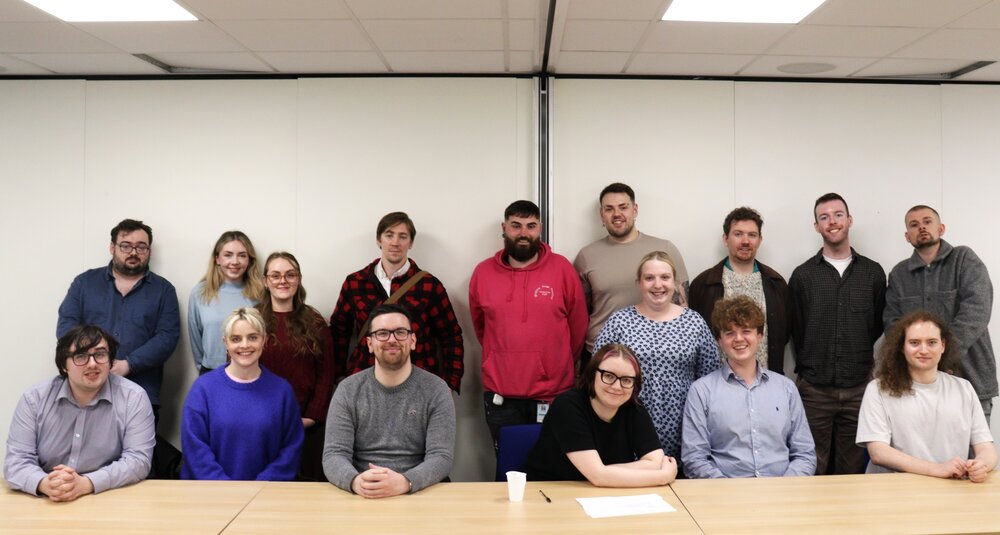
Fórsa Youth reps in attendance at the AGM
Join a union that wins. Join Fórsa.
|
|
Rolling events step up solidarity for Palestine
by Mehak Dugal
Fórsa seminar, workplace day of action, and national demonstration all ahead in November.
Fórsa is hosting a series of solidarity events this November, including a seminar on economic action, workplace walkout initiatives, and encouraging members to participate in the national demonstration for Palestine solidarity.
Saturday 22nd November - Fórsa Seminar
Across Palestine, workers, families, and entire communities are enduring the unbearable. As trade unionists, we have always known that our struggles are bound together. An injury to one is an injury to all. Now, more than ever, we must let that principle guide us.
On Saturday 22nd November Fórsa is hosting a seminar on actions of economic solidarity with Palestine. It will be a day to build members’ skills, deepen our knowledge and understanding on issues affecting Palestinian people and workers, and strengthen our movement for solidarity.
This seminar builds on motions adopted at our 2024 national conference calling for decisive action on economic engagement with Israel and the Occupied Territories. Together, we’ll explore how we can use our collective power to challenge Irish complicity, promote equality, and stand in true solidarity with Palestinian workers and communities.
On the day, we’ll be hearing from:
- Makan: an organisation providing transformative education to strengthen the movement for Palestinian liberation.
- Workers in Palestine: An organisation representing over 30 Palestinian trade unions and professional associations, united in their call to end all complicity and stop arming Israel amid the unfolding genocide in Gaza, and
- Irish activists who have stood on the frontlines of solidarity.
This event is open to all Fórsa activists, whether you’ve long been involved, are just beginning to take action, or just want to learn more about Palestinian solidarity in practice. Come ready to share ideas, learn, and plan real, meaningful steps of solidarity with Palestine that you can implement in your workplaces and communities.
Register here to take part: Fórsa Palestine solidarity seminar - November 22nd - 10.30am - 15.00pm – Fill in form
Friday 28th November - Workplace Actions
You can also take action in your workplaces on the upcoming Day of Action with Palestine, organised by the Irish Congress of Trade Unions (ICTU). These will be voluntary, off-site actions during lunch or break time.
In response to ICTU’s call, Fórsa is urging members to join the nationwide workplace action for Palestine. Together, we’ll demand that the Irish Government implement the Occupied Territories Bill (including services) and end Ireland’s complicity in Israel’s violations of international law.
Some suggested actions for branches on the day include:
- Workplace walkouts during rest breaks or lunchtime
- Workplace photos with banners and signs in solidarity
- Lunch and learn solidarity sessions
- Contacting TDs and Senators to demand full implementation of the Occupied Territories Bill (OTB), including the provision of services
- Signing and sharing a petition in support of the full enactment of the OTB
- Awareness raising briefings focused on the BDS list and actors involved in it.
If you or your branch will be taking part in the November 28th Day of Action, and have any questions or would like to share the activities planned, please get in touch with campaigns@forsa.ie
Saturday 29th November - National Demonstration
The Ireland Palestine Solidarity Committee (IPSC) has organised a National Demonstration to mark the International Day of Solidarity with the Palestinian People on Saturday, 29th November.
Fórsa members will be participating in the next national demonstration for Palestine. All members who wish to take part in the demonstration are encouraged to join the Fórsa delegation that will be marching as part of the trade union bloc.
The delegation will leave Nerney’s Court at 12.30pm to join the trade union bloc, gathering outside Mandate’s offices across the road from the Gate theatre on Cavendish Row. Members are welcome to join the delegation at Nerney’s Court or meet directly outside Mandate.
The march will begin at the Garden of Remembrance at 1pm and finish outside the Dáil on Molesworth Street/Kildare Street.
If you would like to become more involved with Fórsa’s Palestine actions and demonstrations or would like to receive regular updates on the union’s activities in this area, please get in touch at campaigns@forsa.ie.
Join a union that wins. Join Fórsa.
Fórsa members shine at Skills Academy awards ceremony
by Brendan Kinsella
An afternoon of smiles and applause as members were celebrated for their hard work.
It was all smiles, applause and laughter for the Skills Academy awards ceremony, in Nerney’s Court this Tuesday 4th November. Members from across the country representing each division and a vast array of branches gathered to receive their awards and celebrate the achievements of their union colleagues.
Proceedings opened with a few words from Fórsa president Martin Walsh, who reflected on the power training has had in his own life as a trade unionist. He said: “Over 18 years ago, I sat down for, what was then called ‘new rep training.’ Since then, I have seen the people I sat in that room with grow and take on various leadership positions throughout the union.”
“I’ve done pretty well myself” he quipped, concluding his short speech with a prediction: “This is just your first stepping stone to something wonderful.”
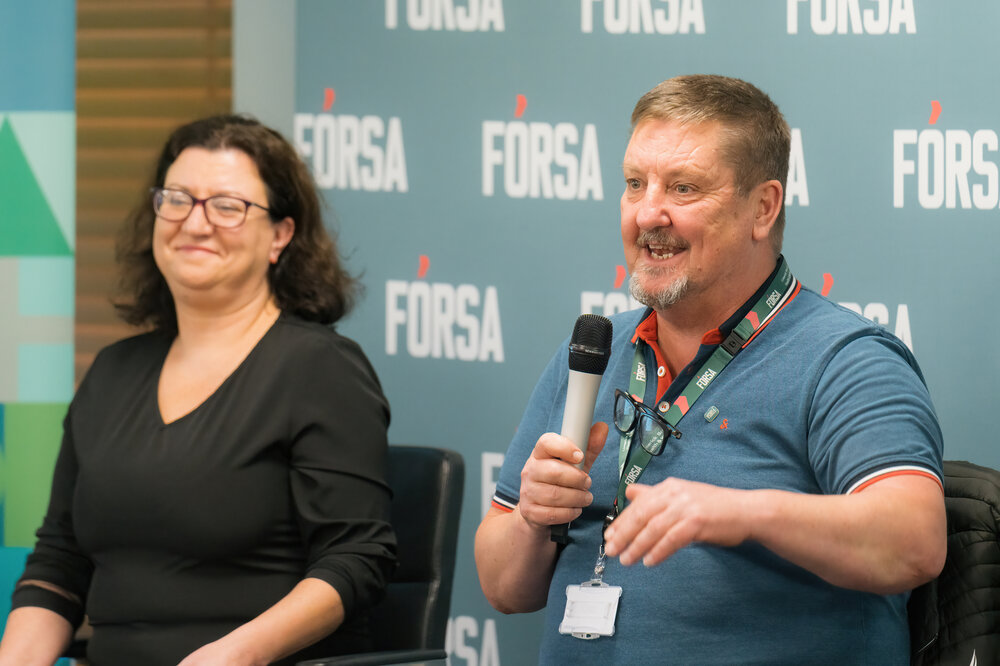
An enjoyable afternoon for Clodagh and Martin.
Chair of the NEC training committee, Clodagh Kavanagh then took a moment to thank branch training officers for their work in supporting both members and the Skills Academy. She noted that some branches had yet to fill the position and encouraged members to consider taking on the role.
NEC Training Committee member Majella Murphy praised the Skills Academy team for their “trojan work” and thanked Fiona, Judith, and Roisín for their tireless efforts.
Receiving their awards on the day were members who had completed the branch chairs and secretaries training, industrial relations practices levels 1 and 2, negotiation skills, public speaking, presentation skills, communications & digital skills for reps, and time management trainings.

All smiles for Maureen on a happy day.
Christine Fay, secretary of the Foreign Affairs & Trade clerical branch, elicited many knowing chuckles from the room when she credited the branch chairs and secretaries training with helping her to keep her sanity and to keep things going in committee meetings.
She said: “It made me a better secretary and member, and reminded me of why I got involved in the first place.
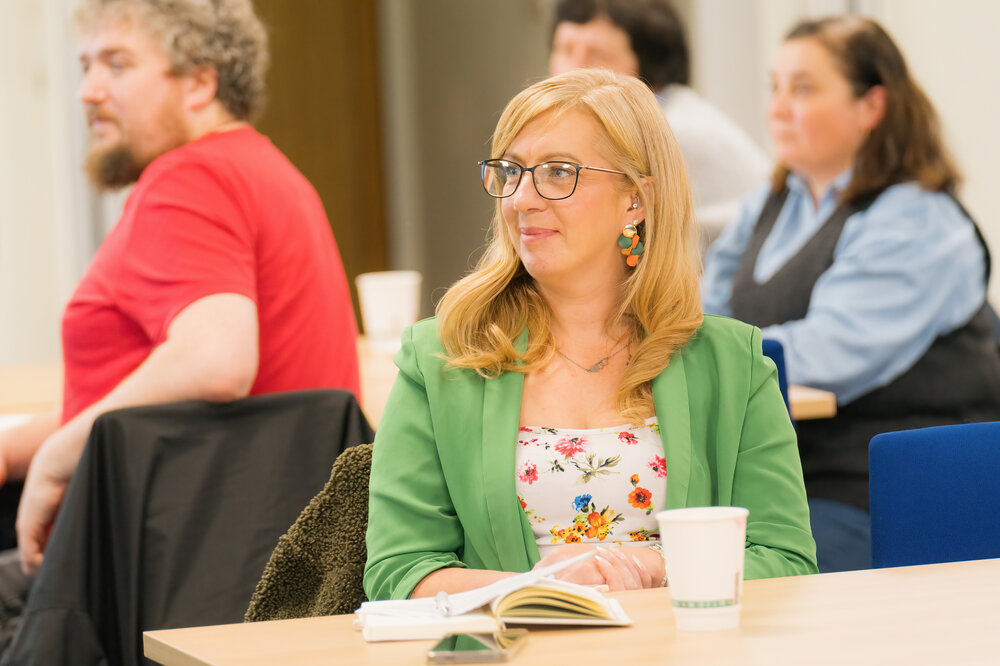
A rekindled sense of purpose for Christine.
Noreen O’Callaghan, of the school secretaries branch, encouraged others to avail of the training opportunities, saying: “It’s great to be able to learn new skills, even if you’re not going to be working Fórsa, they can benefit you in your job and in your life.”
Receiving her award for communications & digital skills for reps training, Noreen was able to boast of already being a something of a social media influencer in her own right. During the recent school secretaries and caretakers strike, the branch social media accounts were a crucial asset to the campaign. Their posts garnered a staggering amount of attention, with one viral post earning over one million views.
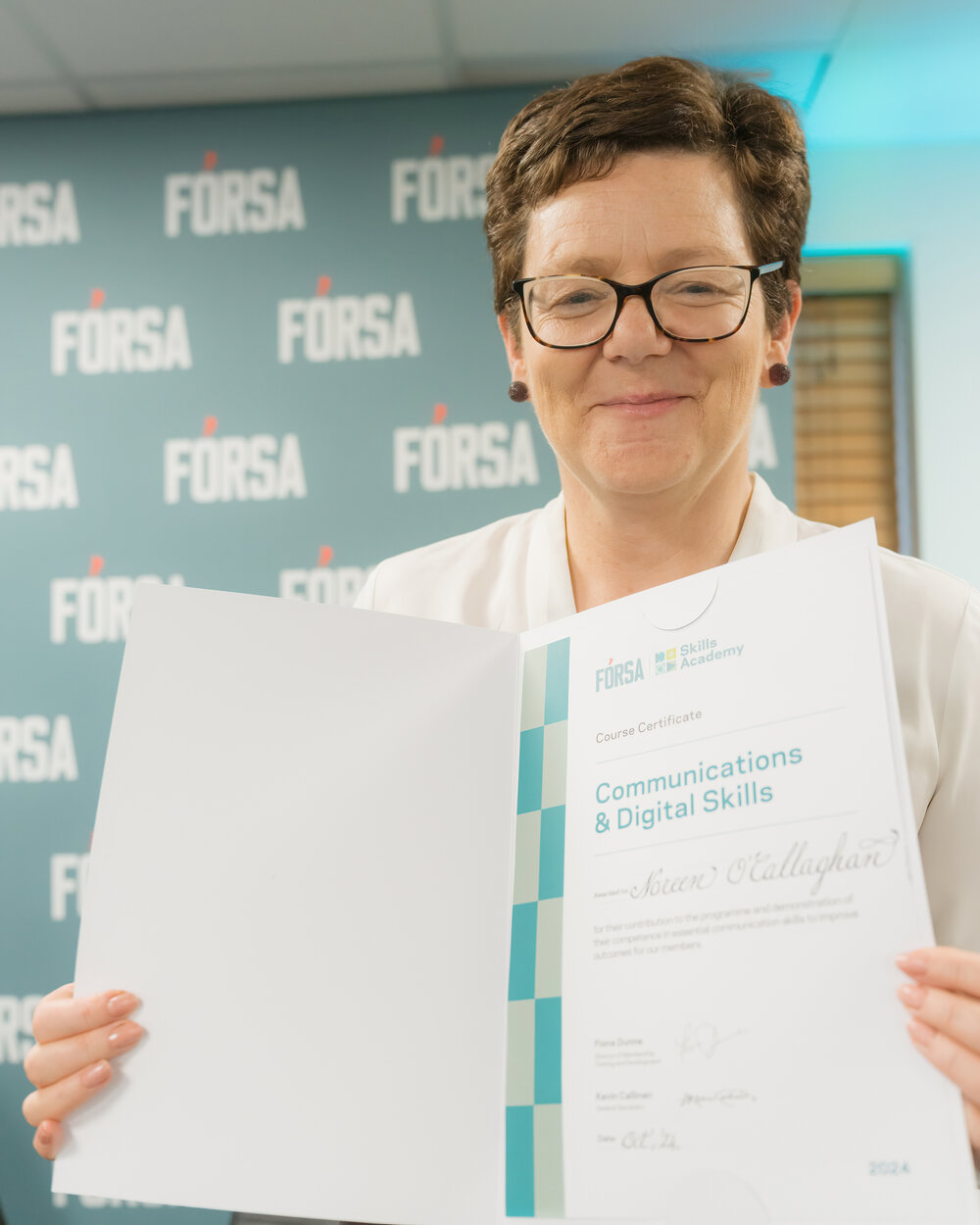
Insta-star Noreen already putting new skills to use.
Kate O’Sullivan, Fórsa’s director of digital and one of the tutors for the communications & digital skills for reps was on hand to congratulate her students. She said: “It was fantastic to watch how everyone took the tools we shared with them and used them to express their own ideas and creativity to make something wonderful.”
She continued, “I couldn’t be prouder of how Noreen used social media during the strike. She really got the message out and turned it into an asset.”
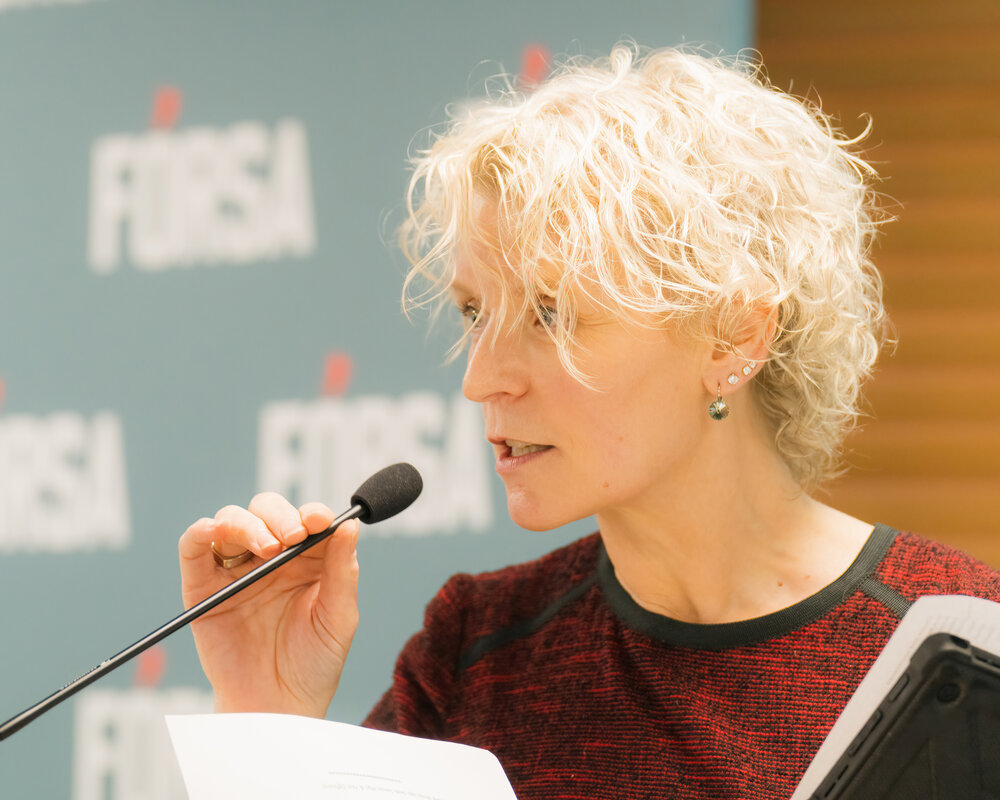
It's all about sharing skills for Fiona.
Director of membership training & development, Fiona Dunne, wrapped up the afternoon’s proceedings by thanking everyone for attending.
She said “Trade union education is about sharing the skills you have. I think once people realise what skills you can learn on these courses and how useful they can be not just in union work, but in your own life and in the workplace, they will see what an important resource they have here that they can avail of.”
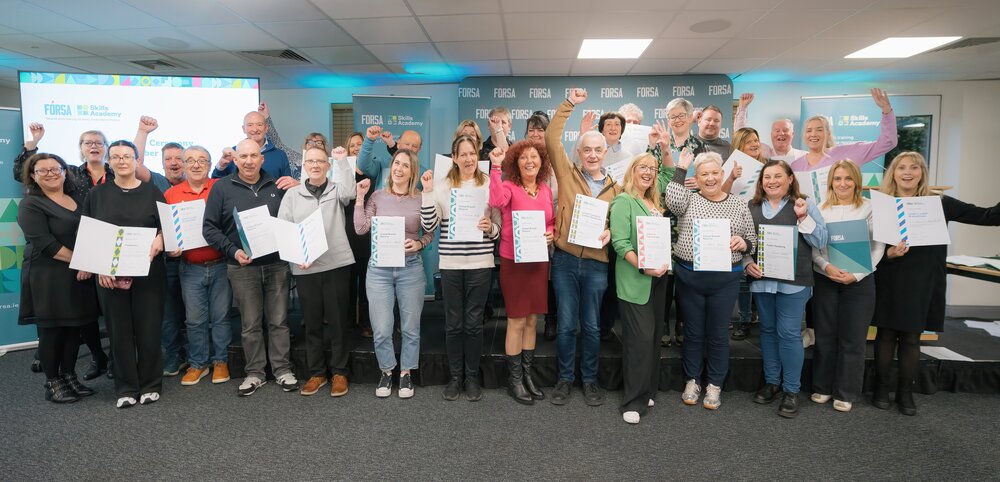
Congratulations to all the graduates!
Live: Lunch & Learn – Grants & Schemes to Buy, Retrofit & Renovate Your Home- Online - 1-2pm Friday 28th November
This month’s live Lunch and Learn session will focus on home improvement to save you money. Titled From Deposit to Dream Home: Grants & Schemes to Buy, Retrofit & Renovate Your Home, the session will feature guest speakers including Mark Solon, Managing Director of Symmetry Financial, and experts from the First Home Scheme, and SEAI. It will be a practical webinar that might just save you money or even be the key to getting that first foot on the property ladder.
To register.
Join a union that wins. Join Fórsa.
Workers marching together for climate justice
by Mehak Dugal
Trade unions and climate activists worldwide to take action on November 15th.
On Saturday 15th November workers, communities, and campaigners across Ireland and around the world, will march together to End Fossil Power. From the Amazon to Dublin, people will be taking to the streets to demand an end to the fossil fuel era and call for a just transition that delivers secure, decent, unionised jobs in a cleaner, fairer future.
Organised by the Stop Climate Chaos coalition the march will start at 1pm on Saturday 15th November from the Garden of Remembrance, Dublin 1. Click here for more details about the march and the campaign
The march is part of a global effort around the COP30 in Brazil and has been endorsed by the Irish Congress of Trade Unions (ICTU).
At the COP30 summit workers and their unions will be calling on governments to deliver climate protection and prosperity and to keep their promises on quality green jobs. Read more about the International Trade Union Confederation’s demands for COP30 here.
It has never been more crucial to take action on climate change to stop all out climate chaos. Ten years on since the Paris Agreement, our leaders have to act. Renewable energy is cleaner, cheaper, and safer than fossil fuels, yet we remain dependent on expensive fossil energy, thanks to the power and influence of the fossil fuel industry.
That’s why communities need to join together, stand up and speak out, demanding government delivers faster and fairer climate action: fast enough to do Ireland’s fair share internationally and fair enough to make life better for people here and now.
In Dublin, trade union members, students, and families will take to the streets in solidarity with frontline communities in the Global South and here at home to demand faster and fairer climate action fast enough to meet Ireland’s global responsibilities and fair enough to make life better for working people.
Together, the march will call for warmer homes, lower bills, cleaner air, and good union jobs in a renewable future, and reject a system that locks us into dirty, expensive fossil fuels while denying new housing and public transport investment.
In the heart of the Amazon, where indigenous communities are clinging on to protect one of Earth’s most vital ecosystems, the call will be clear: no more fossil-fuelled destruction. We will listen to their call and take to the streets of Dublin in our thousands to march in solidarity, and demand faster and fairer climate action from our government.
On this international day of action, people in every corner of the globe will flood the streets of capitals to demand an end to the era of fossil fuels. We must stand up to fossil power. People power is the best way to convince decision makers to act. Everyone is welcome, and everyone is needed.
Join the march on 15th November and stand for justice, peace and a sustainable future that puts people and the planet first.
Join a union that wins. Join Fórsa.
|
|
|
|