Fórsa has set out key priorities for Special Needs Assistants (SNAs) in discussions with the Department of Education on the proposed Special Needs Assistants Workforce Development Plan (SNAWDP) and a new circular governing the role.
In a letter to the department last week, Fórsa national secretary Andy Pike highlighted the need for urgent progress on several outstanding issues. A subsequent meeting took place on Monday (23rd March) between Fórsa representatives, Minister for Education and Youth Hildegarde Naughton TD, and Minister of State for Special Education and Inclusion Michael Moynihan TD.
Andy took the opportunity to warn that if tangible outcomes couldn’t be achieved by the end of the upcoming Easter break, he doubted Fórsa would be able to remain in the process of negotiating the new circular and workforce plan.
He gave a detailed account of the need to abolish the long-standing 72-hour obligation, and proposed a more proportionate framework, including limits on required CPD (continuing professional development) and school community time, comparable with similar roles across the public service. He also emphasised the need to end the abuse of June working for SNAs in post primary schools.
Andy said without the abolition of the 72-hour obligation, and the introduction of a 36-hour annual limit on school community time and significantly revised June working arrangements, the union would not be in a position to recommend to members acceptance of any proposals under the SNAWDP or the contract review process. He described the meeting as positive, with both ministers “in listening mode.”
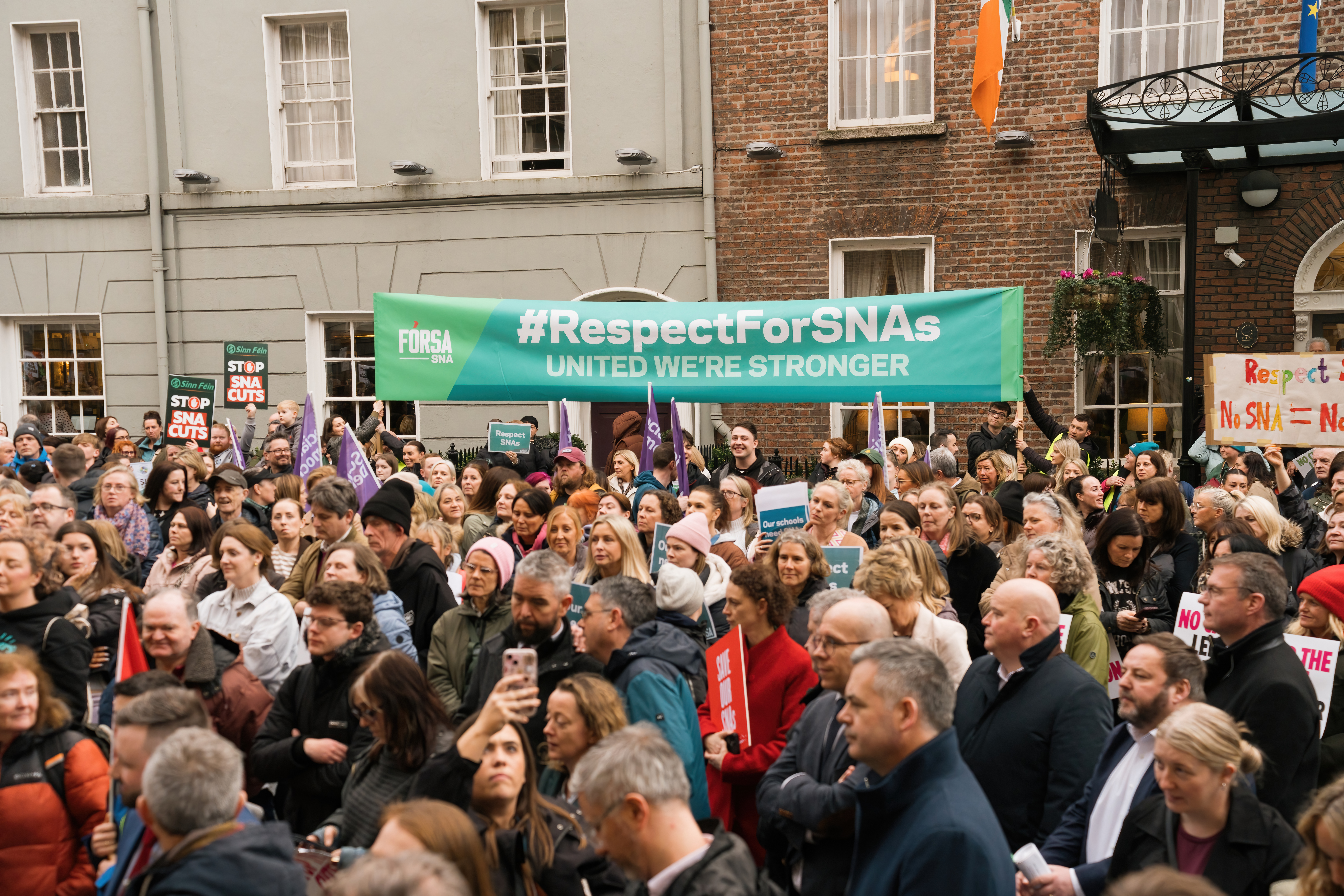
The union’s intervention follows the substantial political fallout over the recent SNA reviews, which prompted an apology from the National Council for Special Education (NCSE).
Fórsa has reiterated that the current allocation system - which links SNA support to students’ core care needs - continues to exclude many students who require support for learning, emotional regulation and wellbeing. The union argues that this distinction between “core care needs” and other significant needs is no longer sustainable and should be addressed by Government.
While the union recognises elements of the proposed reforms that could strengthen professional recognition of the SNA role, it has identified several key issues that must be resolved. These include the introduction of a promised redeployment scheme, improvements to training and development, and changes to terms and conditions that members believe are essential if the new framework is to command their support.
Join a union that wins. Join Fórsa.





 Like
Like


