Watch our video: SNAs take to the streets by James Redmond and Hannah Deasy
Watch our video recorded on the ground at Dáil Éireann during Wednesday's protest.
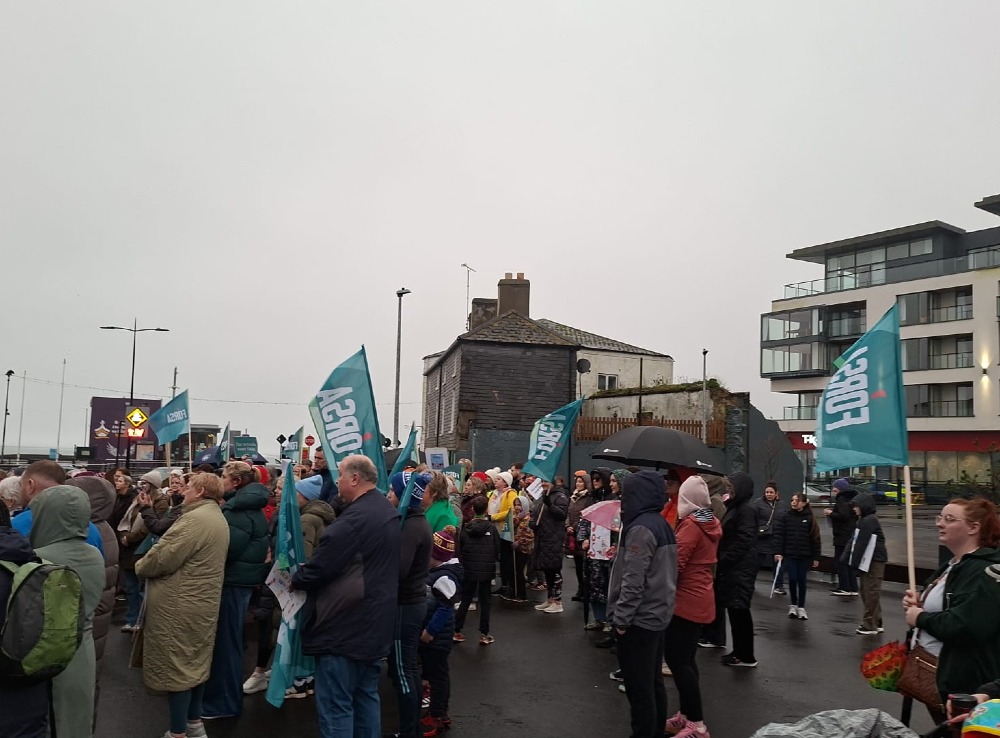
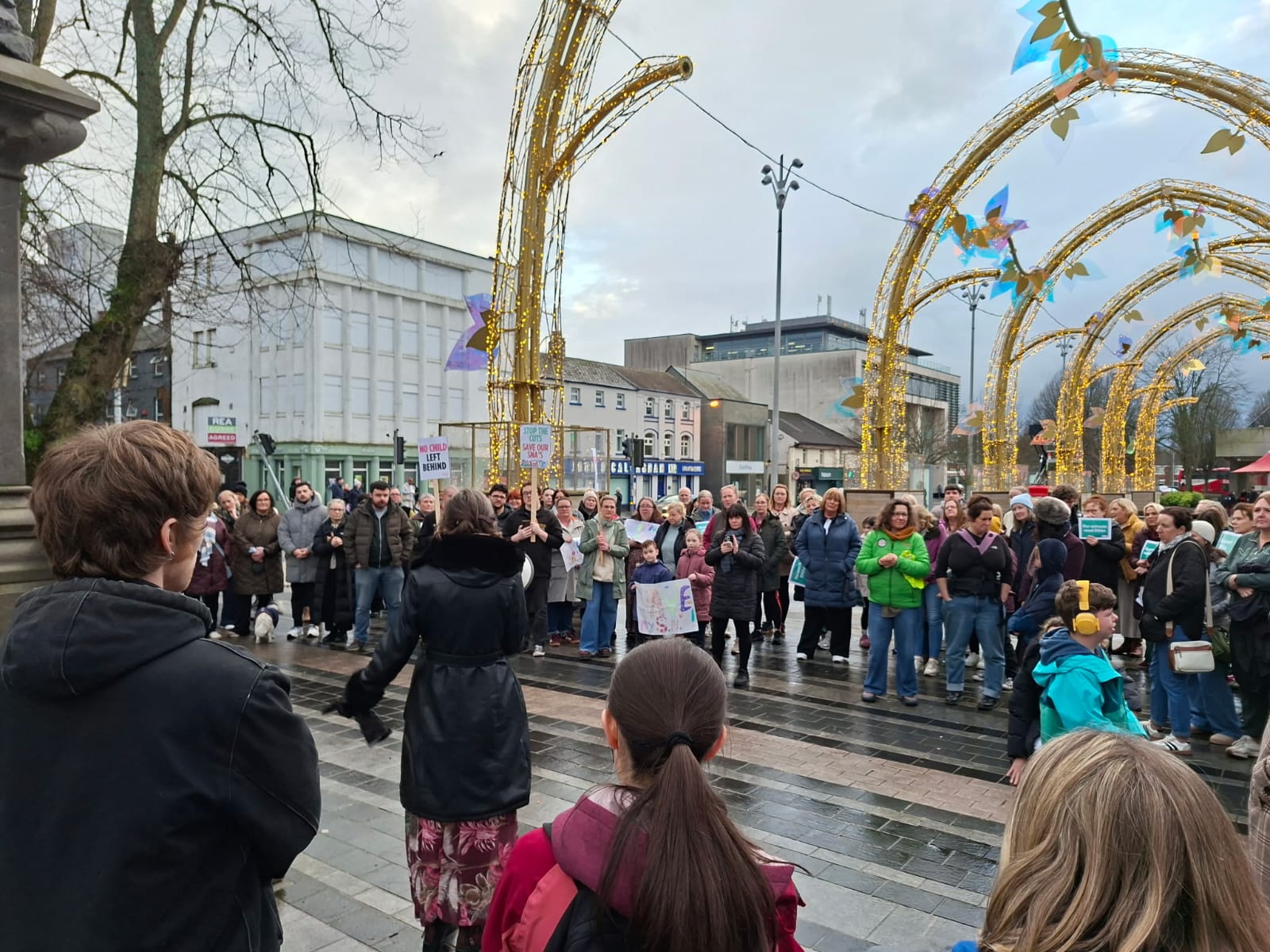
On Wednesday, from Market Square in Buncrana to Market Cross in Killarney, grassroots protests over reductions to Special Needs Assistants took place nationwide, with organisers struggling to keep an accurate tally of just how many were taking place.
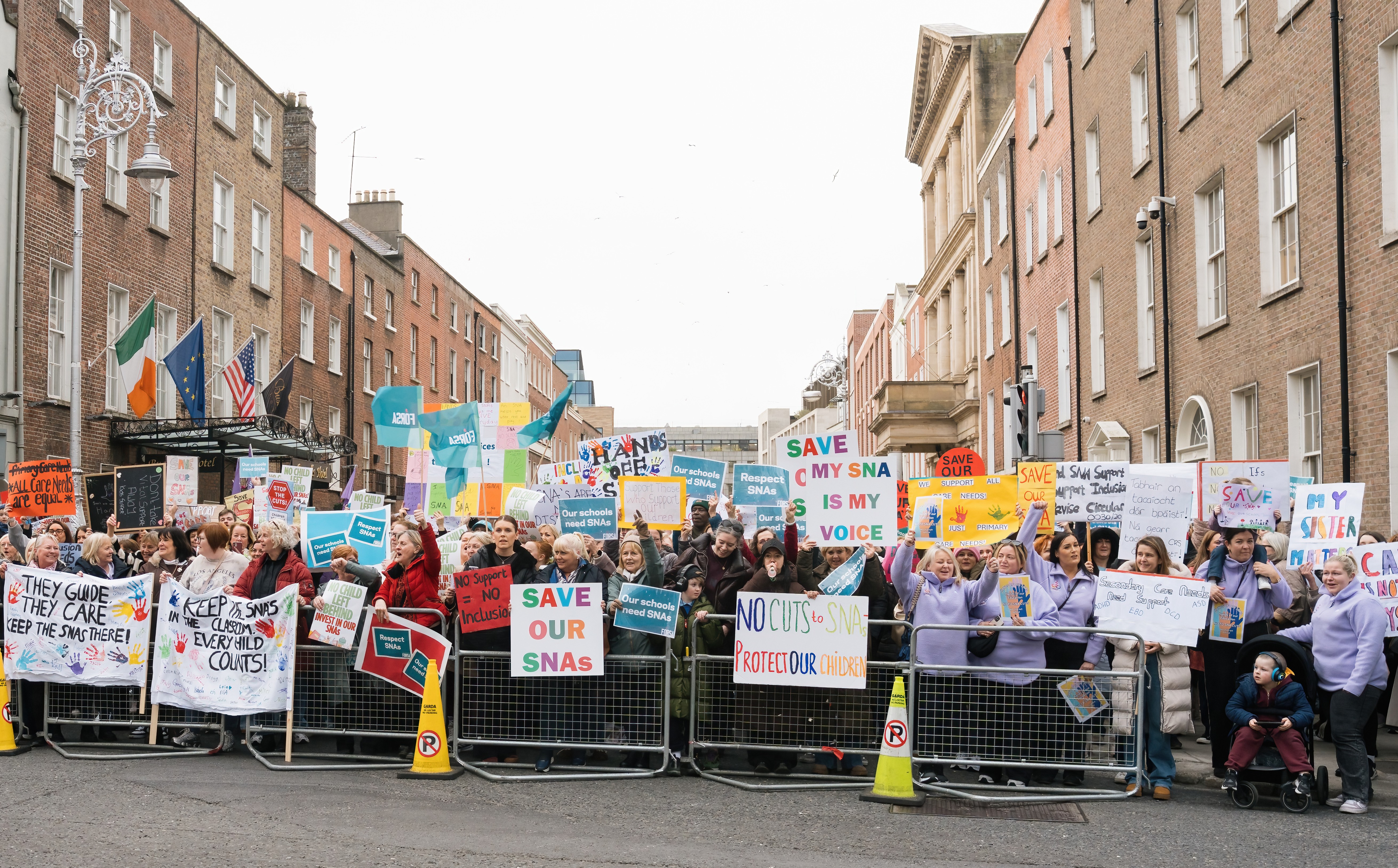
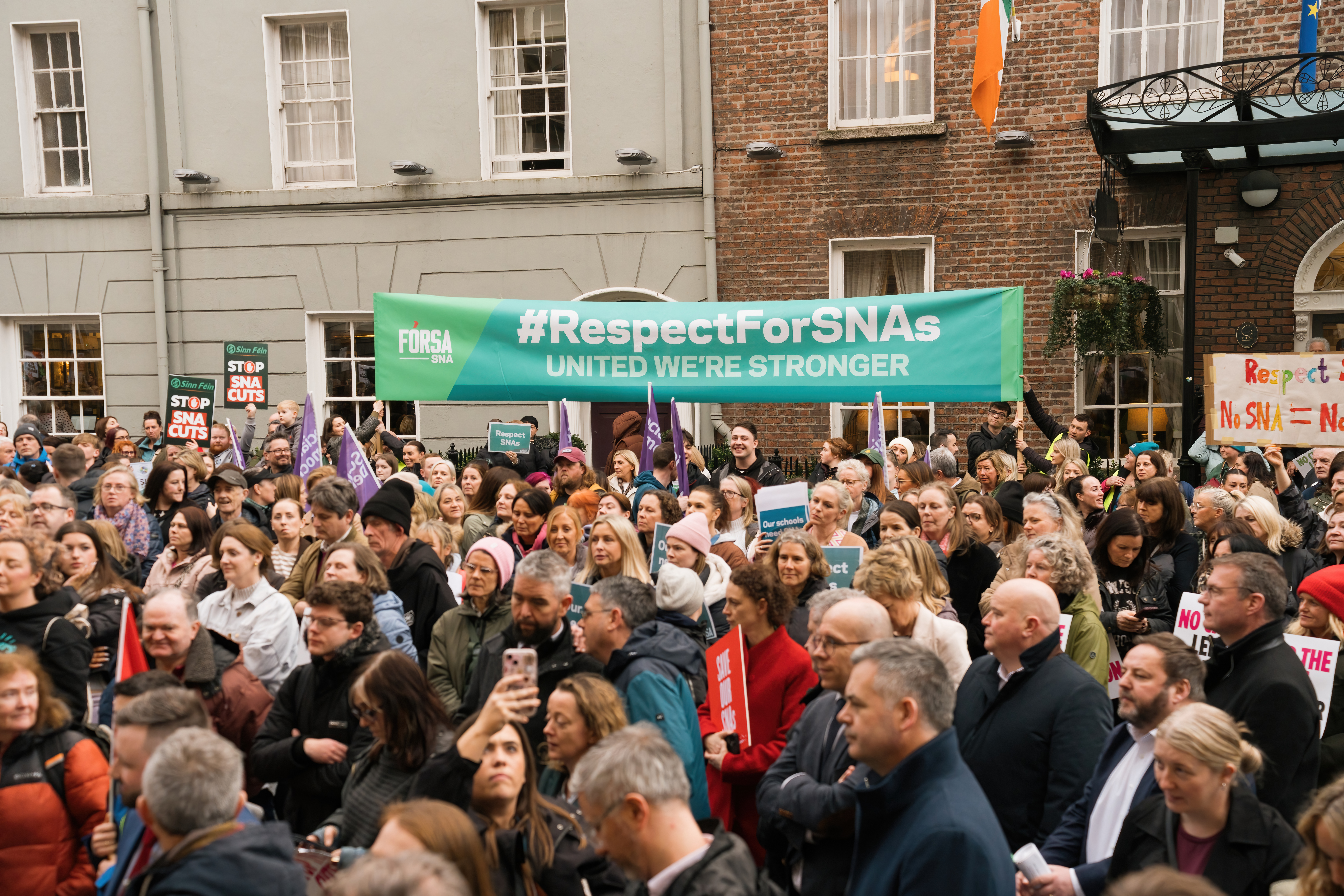
In Dublin, crowds converged outside Leinster House at 5pm during a brief golden hour that held off the threat of rain. Parents stood with SNAs. Teachers stood with families. The mood was direct, coordinated and unflinching.
Chants rolled through the crowd without pause: “When children's rights are under attack, stand up, fight back.”
School communities came together to say "no" to cuts.
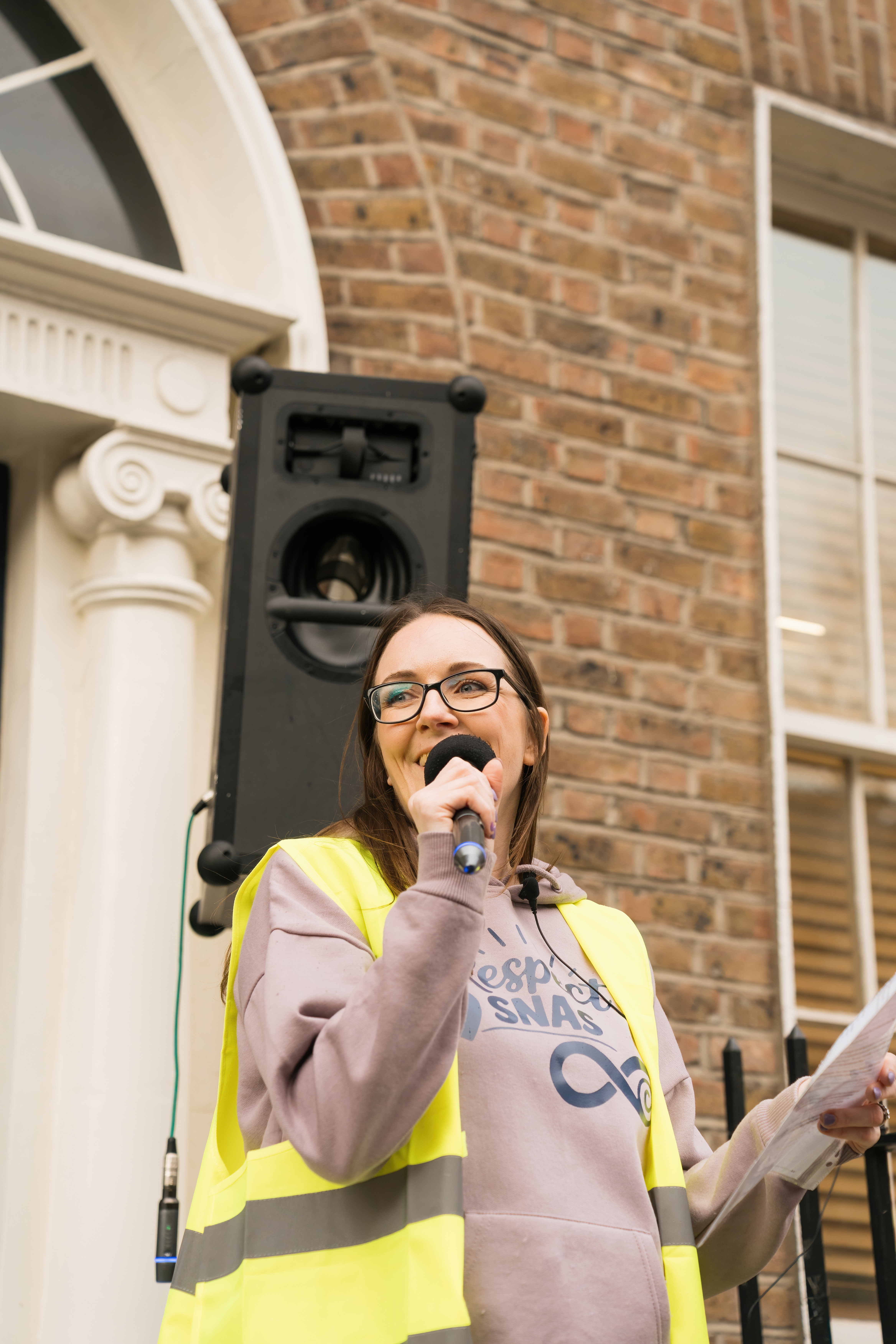
Samantha O’Flanagan, workplace rep with the North Dublin North Leinster SNA branch, was wearing many hats on the day. Not only was she one of the protest's organisers, she also addressed the crowd and even live-streamed the protest to supporters around the country.
She said: “This is one of the biggest movements that we've seen about special education at the moment. There's 30 protests happening across the country, most of them today, some of them over the next few days. Because we're not stopping here.”
Jesslyn Henry, also a workplace rep with the North Dublin North Leinster SNA branch and an organiser of the Dublin protest, admitted the scale had caught even the organisers off guard. “We absolutely weren't expecting the crowds that have come here today, and we absolutely weren't expecting another 31 protests across the country. So thank you. Every single one. Ten years I have been fighting as part of Fórsa to make sure our voices are heard.”
Samantha O'Flanagan, "Every child has a right to access an education."
For many speakers, the issue went far beyond allocations and administrative circulars. Samantha said: “Every child has a right to access an education, to feel safe in school, to participate, to communicate, to learn and to belong. But for many children with additional needs, those rights are only possible because of SNAs."
“This situation didn't happen overnight. It's years of decisions made by the government to under-resource our education system and to treat support for children with additional needs as an afterthought. This wasn't inevitable. This was allowed to happen by the people in the building over there.”
The protests followed ten days of uncertainty over the review of Special Needs Assistant (SNA) provision in mainstream schools, with the Government confirming on Monday night that there will be no reductions to SNAs for the next school year.
Earlier in February, schools began receiving notifications from the National Council for Special Education (NCSE) that their SNA allocations would be reduced. Over the course of a week, SNAs in more than 200 schools were warned their jobs could be at risk, causing widespread distress in school communities and deep concern among individual SNAs.
The notified cuts provoked widespread public outcry. A broad coalition of SNAs, parents and teachers mobilised in opposition, calling for an end to the reductions and for proper resourcing of special education.
Molesworth street filled with supporters demanding respect for SNAs.
The NCSE review strictly applied the 2014 circular governing the SNA role, which links allocation to students’ “primary physical care needs” and does not reflect the full range of learning, emotional regulation and neurodivergent needs now present in mainstream classrooms.
Fórsa has long argued that the circular is outdated and fails to capture the essential role SNAs play in supporting students’ learning and wellbeing. In mainstream schools, SNAs are central to ensuring children can participate fully and reach their potential.
The Government initially paused the review, late last week. By Monday night, it confirmed a full reversal of the notified cuts. While there was widespread relief, SNAs and school communities remain focused on what happens next.
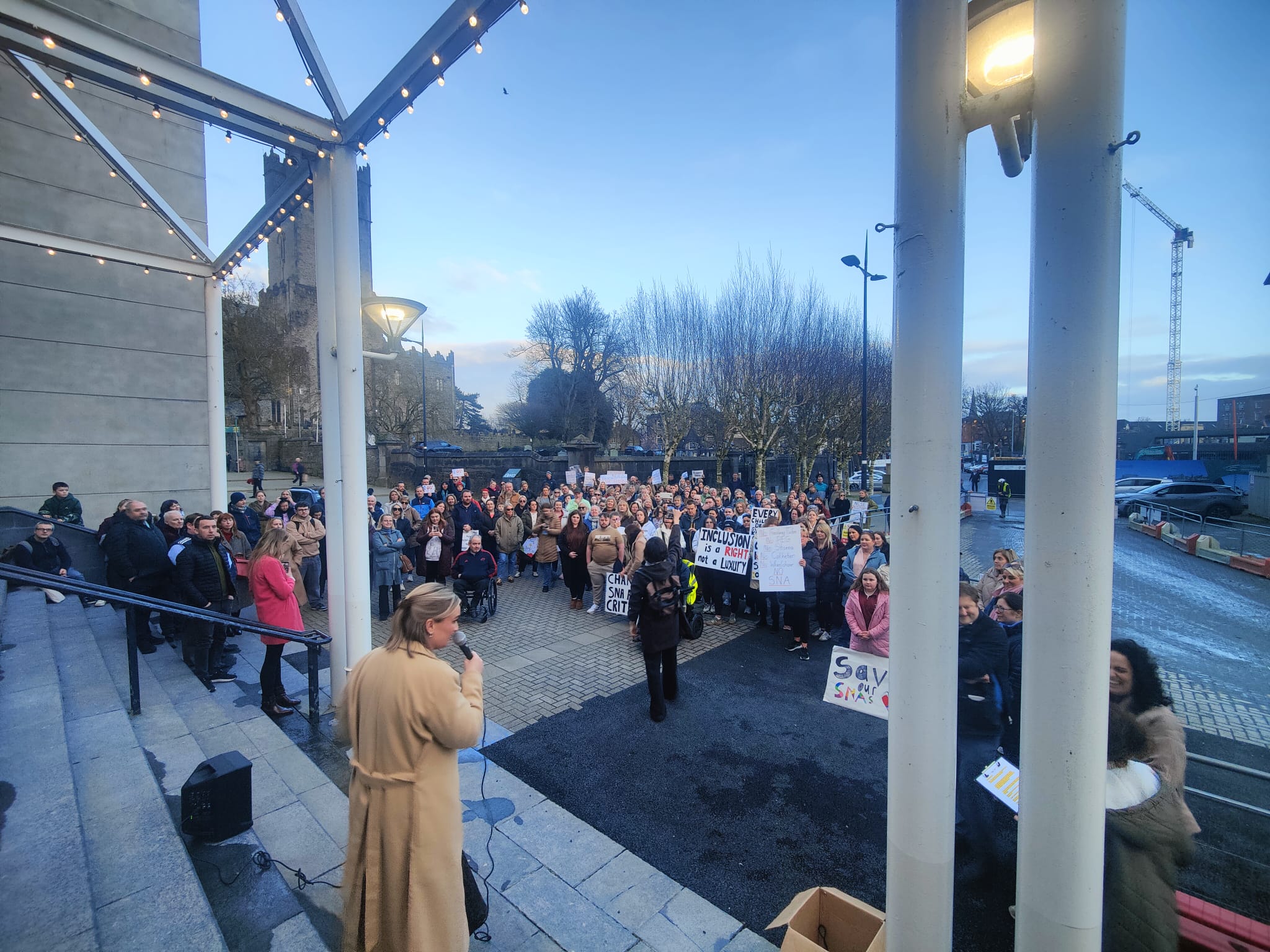
Merchants Quay, Limerick.
Market Square, Mullingar.
The Square, Dundalk.
Fórsa's head of education Andy Pike said the union had warned Ministers that implementing the review without proper redeployment arrangements in place - despite a 2025 commitment by the former education minister - would amount to a collective redundancy scheme. He said schools and SNAs must have clarity on redeployment before any future review takes place.
Andy said the episode demonstrated a failure to plan properly for special education in mainstream schools. While the emergency allocation of €19 million to resolve the crisis was welcome, he said it was only a short-term fix: “What we need now is genuine engagement, proper resourcing and long-term planning for inclusive education,” he said.
Andy added that SNAs remain clear about their priorities, which include bringing an end to 72-hour contracts and June working, as well as tackling exploitation, introducing appropriate qualifications, and improving training and professional recognition: “The coalition that came together to defend SNAs will now have to chart the next phase of action, at a time when trust between SNAs and the Department is at its weakest,” he said.





 Like
Like


