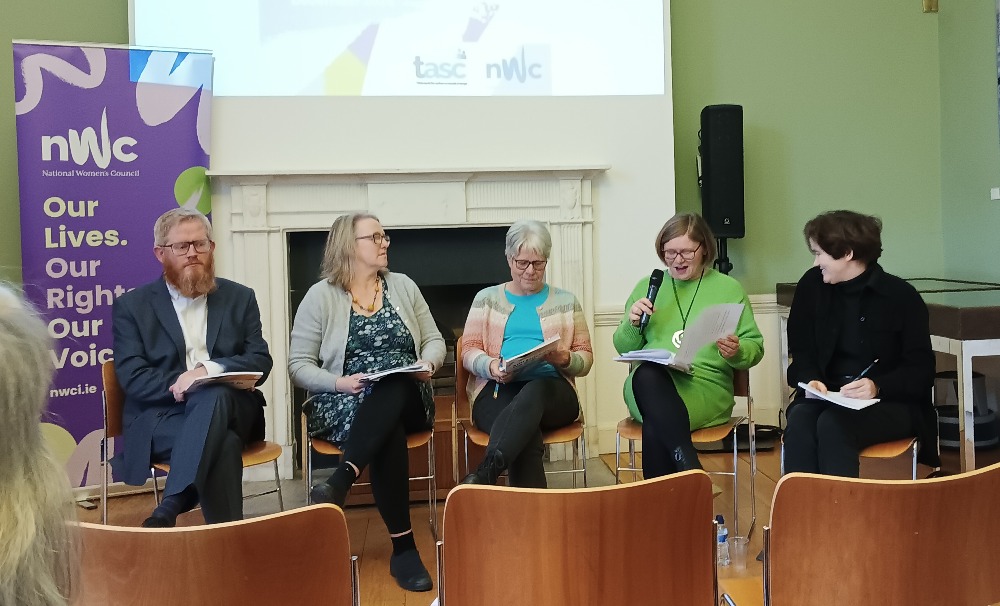
A new report released by the National Women’s Council (NWC) and TASC has raised concerns over the new auto-enrolment pension system. According to the ‘Still Stuck in the Gap’ report, the system due to be rolled out later this year, will likely extend the gender pension gap.
Orla O’Connor, Director of the NWC, has welcomed the new auto-enrolment pensions system, and has said that the report’s intention was to provide “constructive recommendations to build a better more equal system”.
Though strides have been made in the reduction of the gender pay gap when it comes to hourly pay, however, the gender pension gap is much higher. CSO figures from June 2023 show males earn on average 8.2% more than women per hour, while Jennifer Okeke, NWC Chairperson, has placed the gender pension gap figure at 35%. She warned “the pay gap becomes exacerbated in older age” which means “many women have to deal with inadequate pensions.”
The report cites a lack of valuing of care work as one of the bigger contributing factors for the gender pension gap. According to the report the burden of caring responsibilities falls more on women than on men. In section 6, the report states, “Women on average do 21.3 hours per week of care work, more than twice as much as men, who on average do 10.6 hours per week.”
Oisín Gilmore, senior economist at TASC and report author, said “Women have less lifetime income than men, largely due to unequal caring responsibilities.” He explained how unequal caring responsibilities lead to women taking more time off work to raise children, care for relatives, and for maternity leave. This leads to gaps in employment and the taking on of part-time work, which in turn leads to a lower lifetime pay.
According to Oisín, “Men and women contribute the exact same percentage of their income. The difference is men earn a significantly higher income over their lives.” He continued, “Because women work less hours on average than men, auto-enrolment is likely to exacerbate the gender pay gap.”
The report calls for a more equal system and greater value to be placed on care work in general. Oisín explained that changing the approach to care could be promoted through improved policies around caring responsibilities, saying: “Policies can improve employees’ rights so men and women can take on more care responsibilities and remain in employment.”
He gave the example of increased paternity leave as a policy which could create greater equality. Currently the entitlement to paternity leave is set at two weeks and is optional. The entitlement to maternity leave, on the other hand, is 24 weeks with an option for an additional 16 weeks, with two weeks before and four weeks after the due date being mandatory.
In addressing the pensions gap, the report recommends a universal pension system which would “provide an adequate pension for all over the age of 66 regardless of employment history.” Universal pensions would be available to anyone resident in Ireland for a minimum of ten years and would be paid at a value of 1/40 for each year of residency.
Compared to the auto-enrolment system which will improve pensions in the future, the universal system would, according to the report, “address issues of retrospective justice, such as the pension implications of the marriage bar.” The marriage bar having forced women out of the civil service and greatly affecting their lifetime income.
The report also claims the universal pension system is “neutral regarding care and does not punish those who have spent significant periods caring”.
While the report praises the aims and ambition of the auto-enrolment pension system, it sees the auto-enrolment as unlikely to address pre-existing inequalities at best and is more likely to extend the pensions gap for women in Ireland.
The report is available to download here.
Join a union that wins. Join Fórsa.





 Like
Like

