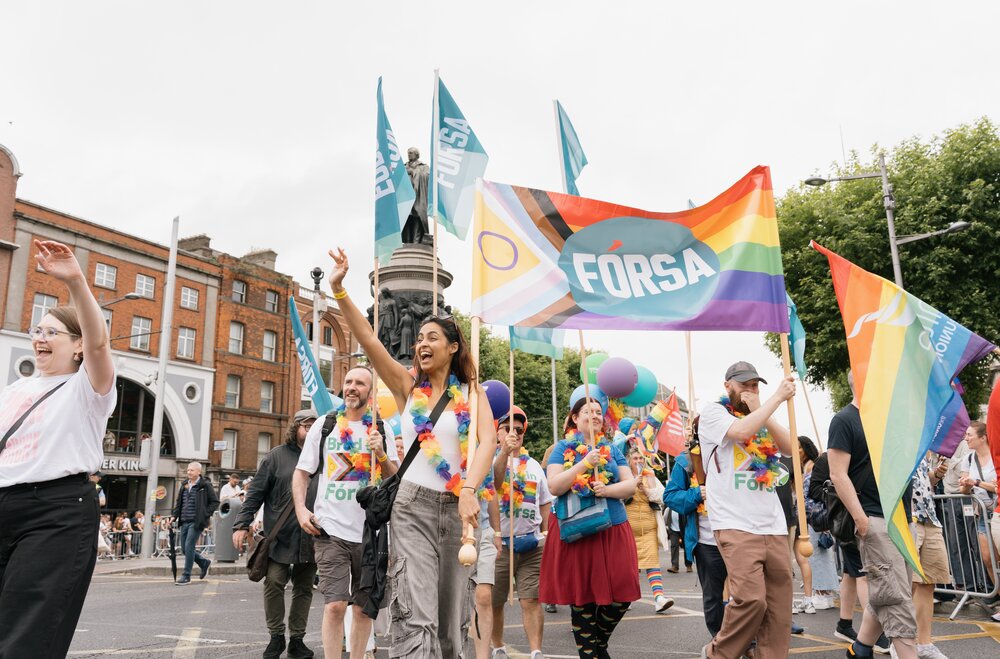
The afternoon of Saturday 28th June saw the streets of Dublin bloom in a riot of colour as revellers gathered for the annual Dublin Pride parade. A momentous occasion this year as the city celebrated ten years since Ireland became the first country in the world to legalise same-sex marriage by popular vote.
To add to the occasion, members marching under Fórsa’s banner did so for the first time under the auspices of the LGBTQIA+ Network, established in February of this year.
There were high spirits in Nerney’s Court that morning, as members met for a light breakfast before making their way to O’Connell Street.
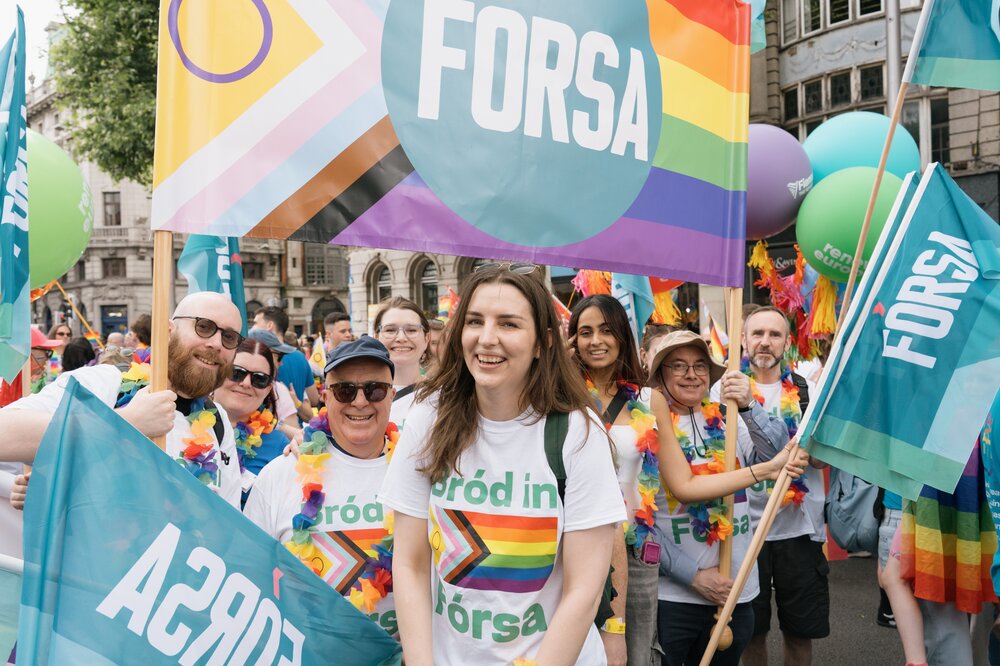
The Fórsa contingent joined over 12,000 people representing more than 280 organisations taking part in the parade, with thousands more packing the pavements from start to finish along the route from O’Connell Street to Merrion Square.
Also in attendance were leaders and representatives of parties from across the political spectrum.
Speaking at the festivities, An Taoiseach Micheál Martin rejected the rise of anti-LGBTQIA+ sentiments across the world. He said, “Our goal is to build a society in which LGBTQIA+ people can live safe, inclusive, healthy and fulfilling lives in an accepting and compassionate Ireland.”
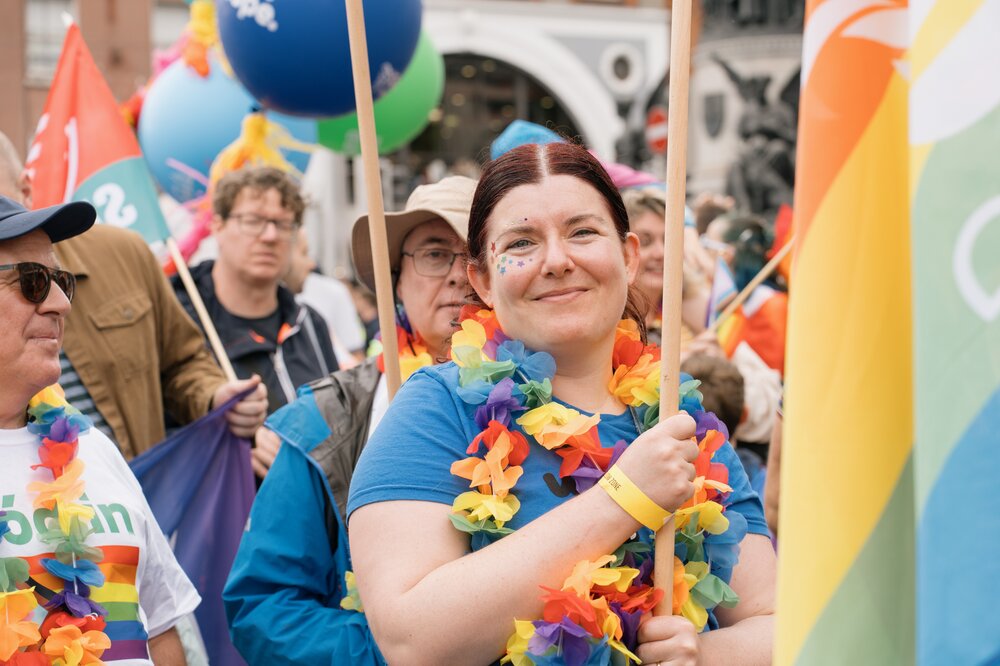
Cathal Kelly, a member in the civil service division and a former editor of Gay Community News (GCN), marched with Fórsa this year. A veteran of Dublin Pride going back to his first march in 1993, Cathal sees union participation in Pride as more than just a celebration.
He said, “Members of my community across Europe have known about and often directly felt the danger from Hungarian Prime Minister Viktor Orbán for many years. But less attention has been paid to dangers closer to home. When the Fórsa conference last year decided to set up an LGBTQIA+ network, a handful of delegates shared some shocking and brave testimonies of harassment, aggression and intrusion that LGBTQIA+ members of Fórsa still face today, in our workplaces and in broader society.”
Fórsa will be taking part in Transgender and Intersex Pride in Dublin on Saturday 12th July, Cork Pride on Sunday 3rd August, and Galway Pride on Saturday 16th August. Members can register their interest in attending any or all events here.
All members welcome to show up on the day for Transgender and Intersex Pride on Saturday 12th July. Meeting at Dublin City Hall on Dame Street at 1.45pm.
Stand up, fight back: Budapest Pride
While members were making their way into Dublin, Fórsa official Aisling Cusack was already on the streets of Budapest in defiance of the Orbán regime’s Pride parade ban.
Aisling travelled to Budapest to represent Fórsa as part of the European Public Services Union (EPSU) delegation, hosted by the Hungarian union VDSZ, marching side-by-side with trade unionists from across Europe in support of Hungarian LGBTQIA+ people facing the repression of an authoritarian state.
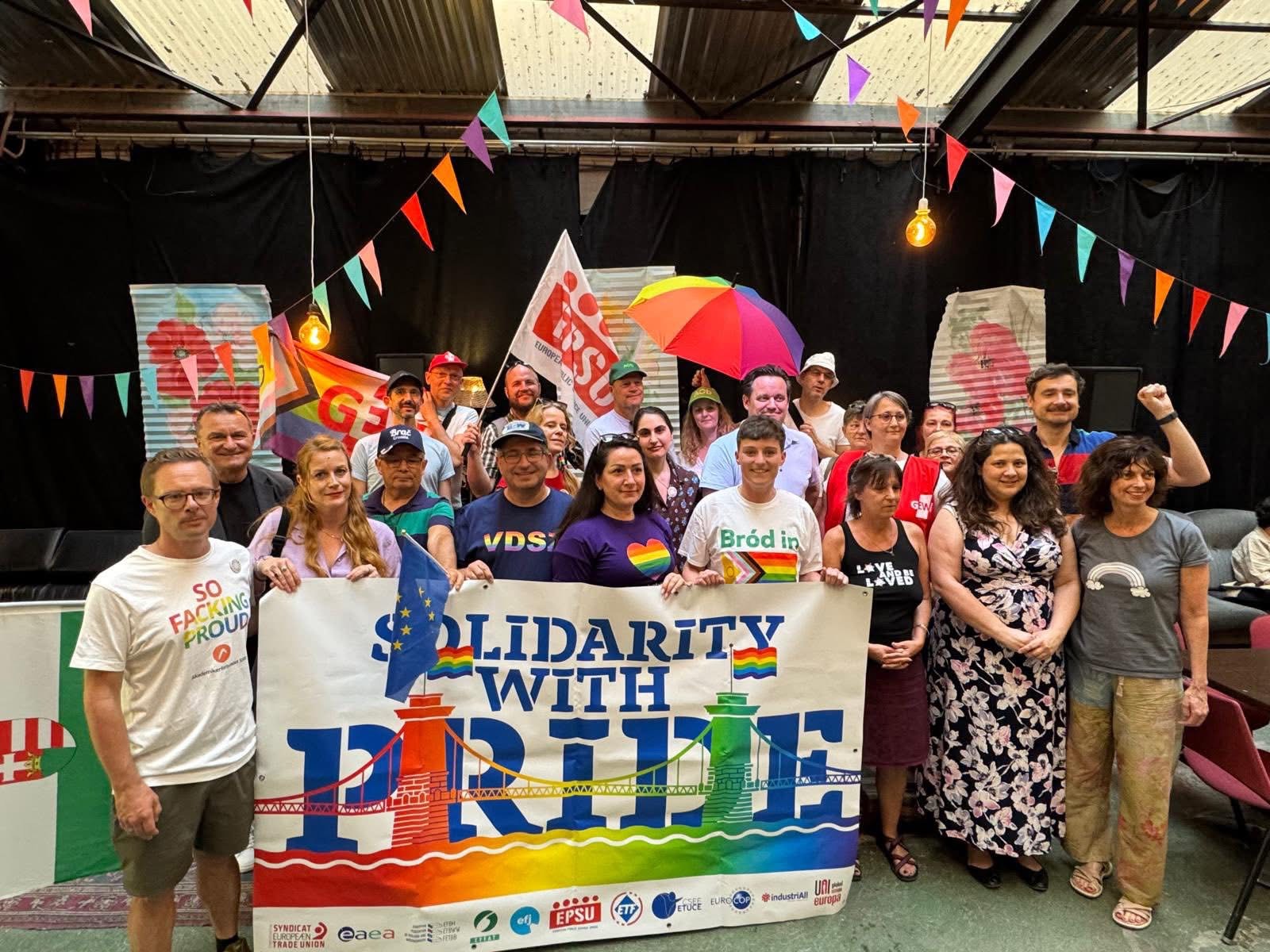
She said, “Trade unionists in Ireland have a proud history of fighting for LGBTQIA+ rights and equality both in the workplace and in society. It’s incredibly important that our solidarity does not stop at our island’s borders. Our solidarity must extend to all those facing the threat of persecution because of who they are.”
In March of this year, the Hungarian Parliament voted in favour of a bill that effectively banned Pride events in Hungary. The bill, proposed by Viktor Orbán’s Fidesz party, builds on their previous 2021 anti-LGBTQIA+ law. The law in question has been compared to the UK’s infamous “Section 28”, prohibiting the promotion or portrayal of homosexual or transgender people to minors, effectively eradicating queer lives from the public sphere.
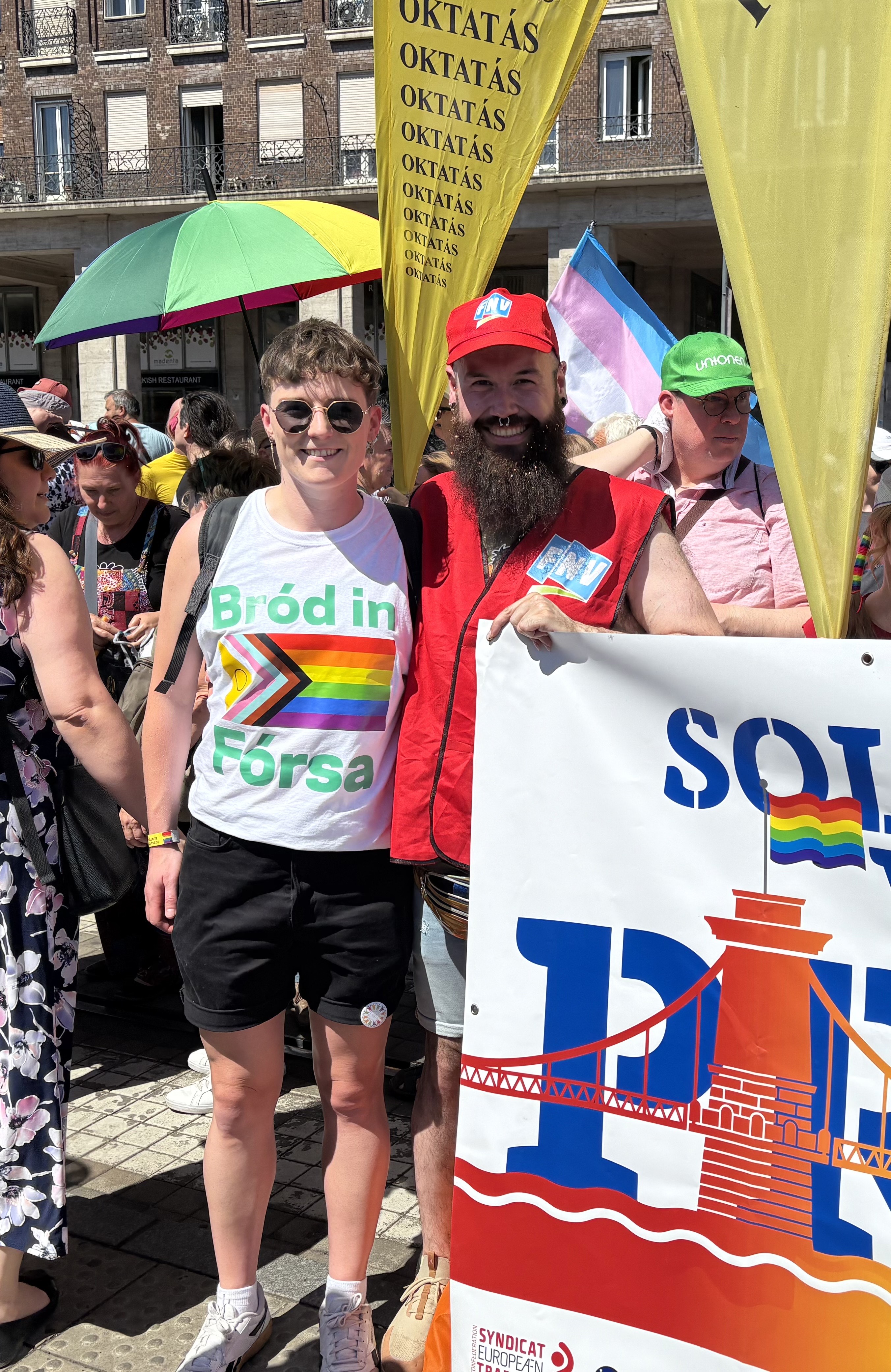
Reports estimate upwards of 200,000 people took part in Budapest Pride, in a stark rebuke of the Orbán government’s latest attack on LGBTQIA+ rights.
Aisling said, “We marched for freedom, for democracy, and for love. Orbán attempted to silence LGBTQIA+ identities and ban the pride protest, but the right to protest can never be taken away just because the government doesn’t like the message.”
There were significant concerns for the safety and wellbeing of participants prior to the parade, with fears that a large scale far-right counter protest would turn violent, or that mass arrests of parade participants would take place.
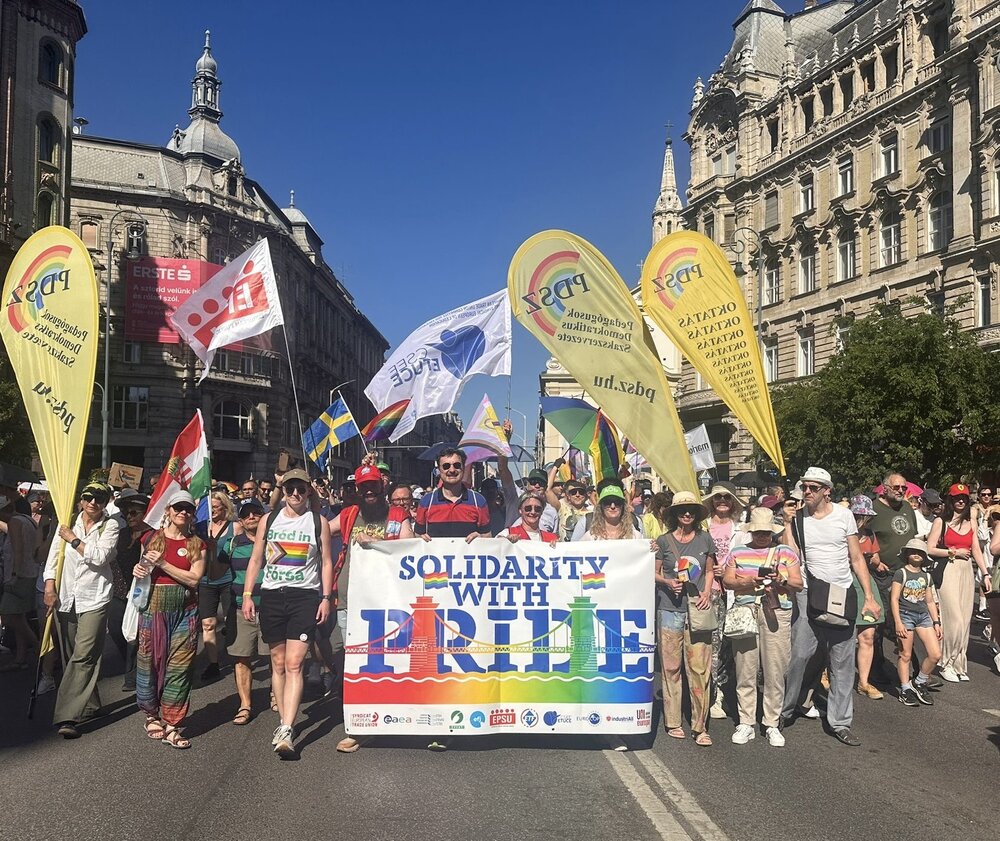
Describing the atmosphere on the day Aisling said, “That morning, I could feel a sense of tension in the air all across the city, but as the parade start time neared and thousands gathered at City Hall together, there was a huge feeling of determination and defiance among the crowds.”
She continued, “The Hungarians I spoke to were grateful for the international support. Many were also really surprised that so many Europeans showed up in solidarity. I think it was really important that we let them know, no matter what their government throws at them, ‘you are not alone.’”
Join a union that wins. Join Fórsa.





 Like
Like

