This week Fórsa has launched a nationwide survey of members on remote and hybrid working, as debates over the future of workplace flexibility continue to make headlines and become prominent across the public sector.
The survey is designed to build a detailed, evidence-based picture of how members are currently working, how those arrangements affect their lives, and what protections they want secured in future negotiations.
The new survey is open to all members, including those who do not currently have access to remote or hybrid arrangements. The union says that understanding the full range of working experiences - including barriers to flexibility - is essential if it is to negotiate effectively.
The move comes ahead of the expiry of the current Public Service Pay Agreement in June, with signals that remote and hybrid working could be a central issue in the next round of talks.
Fórsa general secretary Kevin Callinan said the experience of the pandemic had fundamentally reshaped expectations around work.
“During and after the pandemic, we all proved that alternative ways of organising the working day are not only possible, but better. Productivity held. Services ran. Communities and families reaped rewards. The question now is: who gets to decide what happens next?”
“This isn’t just about how you are working now. It’s about how you want to work in the future and what kind of society you want to live in.”
During Covid-19 restrictions, large sections of the workforce shifted rapidly to remote and hybrid models. While many of those arrangements have continued, access and implementation now vary significantly across departments, agencies and grades.
Union research conducted last year found that more than half of respondents considered remote working to be as important as pay. All of this has strengthened the union’s determination to treat flexibility as a core workplace issue rather than a peripheral or accidental benefit.
“This isn’t simply about where you work,” Kevin said. “It’s about work-life balance, equality of access, regional development, gender equality and how modern public services are organised. Things that were once seen as radical are now seen as not only practical, but obvious.”
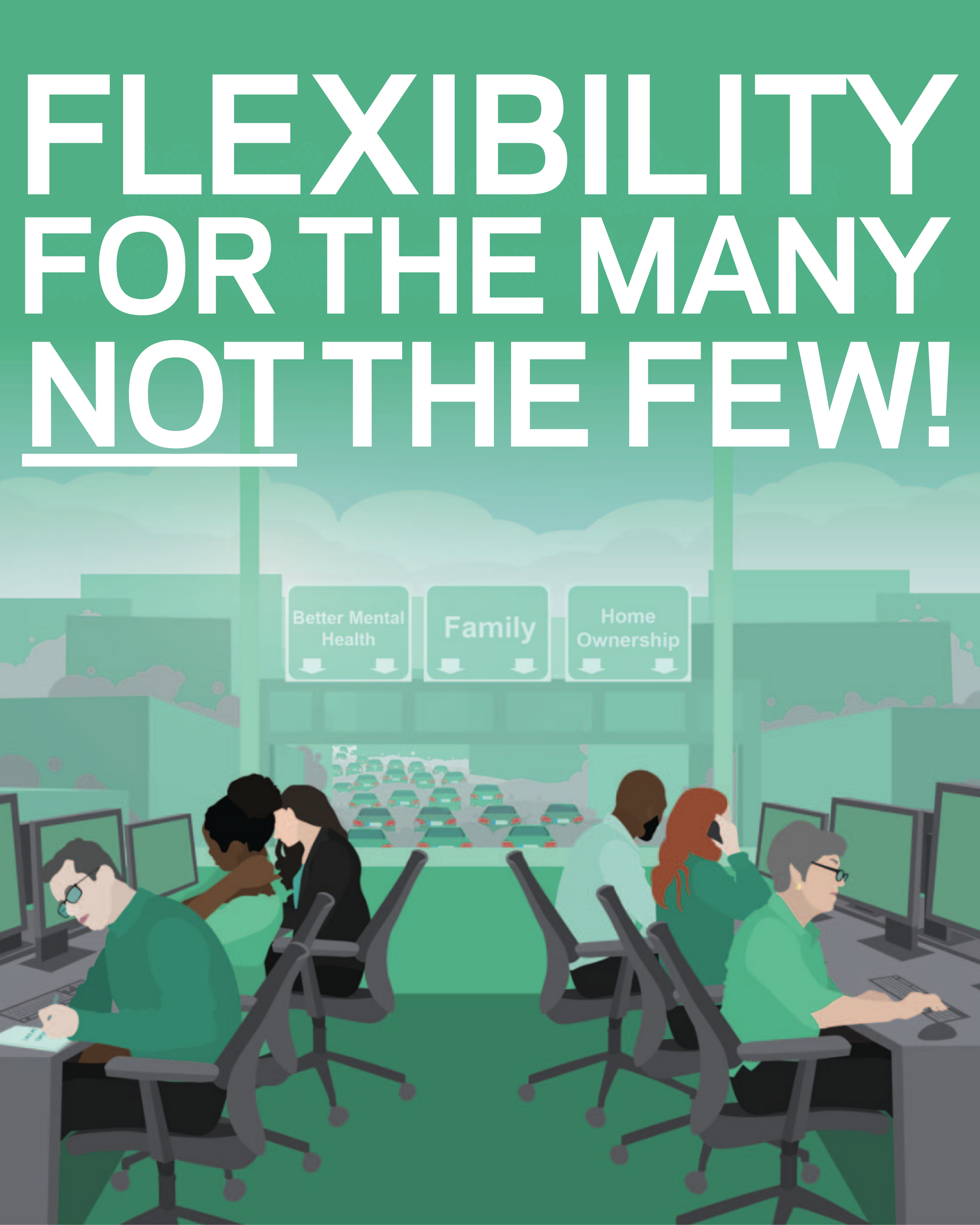
Kevin warned that without collective action, flexible arrangements could become uneven and insecure: “We can’t allow remote and hybrid working to become a privilege for a small minority. If it’s worth having, it’s worth fighting for - and securing collectively. The better we understand how our members are working today, the better we can protect and enhance remote and hybrid working for all.”
Employers across the public service have been reviewing attendance policies over the past year, with some departments tightening in-office requirements. This has led to growing concern among members about the long-term security of hybrid arrangements.
The survey, which is being conducted independently by Amárach Research on behalf of Fórsa, will gather data on current working patterns, commuting times, productivity, wellbeing, and members’ preferences for future organisation of work.
Participation is voluntary, and the union has stressed that all responses will be anonymous and confidential, with findings reported only in aggregate form.
With negotiations on the next public service agreement looming, the outcome of the survey is likely to shape how forcefully remote and hybrid working feature in the union’s demands.
As Kevin put it: “Workers’ voices need to be at the centre of the discussions on the issues that affect us. All the evidence and feedback points to the benefits of new patterns of working and how it removes unnecessary stress and friction from people’s lives. Now the battle will be who gets to decide its future.”
The survey closes on Sunday 15th March, and members are being encouraged to complete it as soon as possible. You can complete the survey here.
Join a union that wins. Join Fórsa.





 Like
Like


