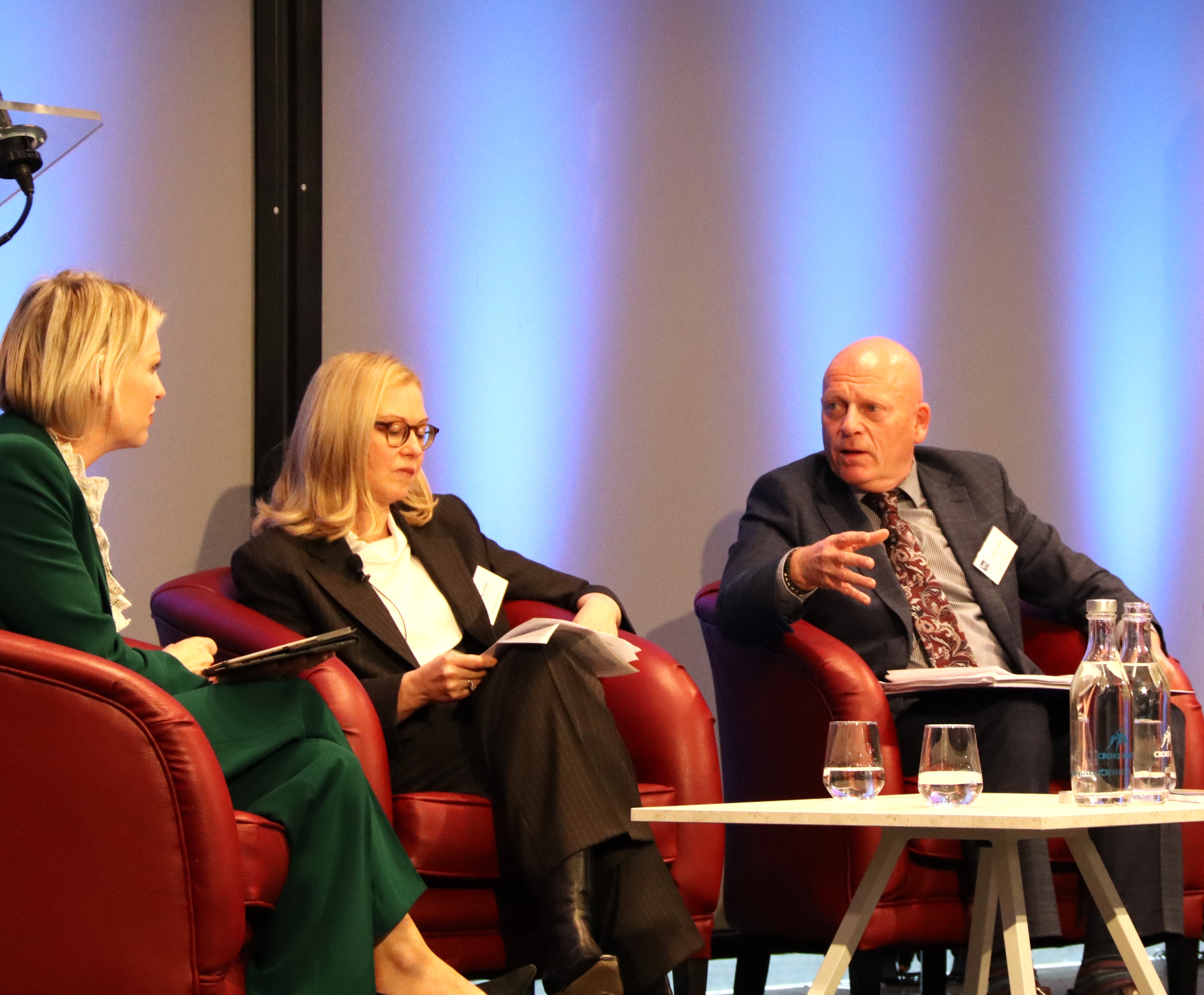
Fórsa deputy general secretary Éamonn Donnelly highlighted the importance of protecting flexible working arrangements during IRN's (Industrial Relations News) annual conference event, which took place in Croke Park yesterday (Thursday 12th March).
Speaking on a panel alongside legal and employment experts, Éamonn stressed that safeguarding hybrid and remote arrangements remains a key priority for the union in collective negotiations.
He criticised the right-to-request aspect of the Work & Life Balance Act, and rejected any proposal that the problem with the legislation is a lack of awareness among workers: "The legislation, as it is composed, is a lame duck. Those who've been through the process of appealing a decision can see that there's no teeth, everything is too reliant on procedure."
Holistic
Éamonn said a distinction was needed between relying on the legislative framework and collective bargaining coverage: "Because we're better off getting into the space where we collectively bargain to get the best working model, in a holistic sense. The contract between the employer and employee means you have to get the job done, so what are you looking for in a blended working model?
"What is the benefit, or otherwise, of blended working to the employer in terms of productivity? To the worker? To the environment? To mental health and wellbeing? What is the benefit or otherwise in terms of childcare and care of the elderly?"
He went on to highlight that infrastructural deficits in childcare and healthcare are factors that drive demand for remote and hybrid working opportunities.
He also outlined the value of utilising remote working arrangements to ease the growing problem of traffic congestion in towns and cities, and maximising the benefits for workers and employers alike: "It has got to the point where people are losing hours of their the day. Take the two hours somebody spends in a traffic jam on the M50. Zero productivity, and then you need to ask if you can you be the best version of yourself at work, if you have navigated that on the way in."
“What we need to do is break down the barriers of suspicion on remote work, connect the socio-economic factors and accept it's a systemic part of people's lives now," he said.
Also speaking at the IRN conference, Alison Hodgson of the Chartered Institute of Personnel and Development (CIPD), said the housing crisis is continuing to shape the labour market, affecting hiring and driving demand for hybrid and remote work.
A recent employer survey revealed a total of 61% of employers in the private and commercial semi-state sectors reported that the housing crisis is affecting recruitment, while 73% said it is fuelling demand for remote working.
Talks
Earlier this week Fórsa general secretary Kevin Callinan reinforced that stronger protections for remote and hybrid working will also be central to the next round of public service pay talks. With the current pay deal expiring at the end of June, Fórsa is pushing for clear commitments on flexible arrangements.
Speaking to the Irish Independent, Kevin said: “There is a clear need for certainty around hybrid and remote working. Legislative measures alone are not sufficient. Remote working must be addressed directly within a collective agreement to protect public service staff.”
He also highlighted the wider benefits of remote working, from supporting family and caring responsibilities to positive impacts on communities and the environment.
Almost one million people in Ireland now work remotely at least part of the week, making protections a key issue for the union.
Kevin added that Fórsa will continue to press for pay increases that address cost-of-living pressures, losses against inflation, and outstanding local bargaining agreements, stressing that any new deal must offer fair pay and conditions to ensure the public service remains a “beacon” for standards across the economy.
Survey
Fórsa launched a nationwide survey of members on remote and hybrid working in February, as debates over the future of workplace flexibility continue to make headlines and become prominent across the public sector.
The union says that understanding the full range of working experiences—including barriers to flexibility—is essential if it is to negotiate effectively. That's why the survey has been designed to build a detailed, evidence-based picture of how members are currently working, how those arrangements affect their lives, and what protections they want secured in future negotiations.
The survey is open to all members, including those who do not currently have access to remote or hybrid arrangements, it closes at midnight this Sunday 15th March, and can be completed here.
Join a union that wins. Join Fórsa.




 Like
Like


