There's a busy upcoming calendar offering a range of training sessions and events.
As we settle into the new year, the Fórsa Skills Academy has a busy upcoming calendar offering a range of training sessions and events designed to support members and officers in building their skills, fostering collaboration and empowering activists across the union.
The year begins with a Lunch and Learn session on Friday, 31st January, featuring Neurodiversity Ireland. This session will explore insights into neurodiversity and promises to be a valuable learning opportunity. Neurodiversity Ireland is a community-driven movement dedicated to creating inclusive spaces where everyone belongs. Keep an eye on the Fórsa website for the registration link and further details.
February opens up with a seminar for Branch Training Officers on Thursday, 6th February in Nerney’s Court from 11:00 AM to 3:30 PM. This session will focus on strengthening networks, sharing experiences, and supporting the development of training officer roles within branches.
For new members, the monthly Fórsa Induction is scheduled for Wednesday, 12th February, registration available here. It’s your one stop shop introduction to how your union works and is designed to fill new members in on your rights, benefits, and the collective power you have as a member.
Whether you’re new to the union or just looking to get more involved, this session will help you navigate everything from representation to resources, ensuring you’re equipped to make the most of your membership.
Additionally, specialized training courses for Branch, Divisional, and National Executive Officers will also be available in February:
Time Management on Tuesday, 11th February at Nerney’s Court.
Presentation Skills, a two-day course, running on Tuesday, 18th February and Tuesday, 4th March. Please note that this is not a refresher course, so repeat registrations will not be accepted.
These sessions provide a fantastic opportunity for officers and committee members to hone their skills and build capacity within their branches.
Young workers across Africa and Arab countries unite to strengthen union power.
Over 40 young workers from Public Service International (PSI) affiliated unions across the Africa and Arab Countries region came together in December to launch the Young Workers Education and Mentorship Program (YWEMP).
Sponsored by Fórsa, this initiative is a vital part of our ongoing commitment to international solidarity, fostering collaboration and knowledge-sharing among young trade unionists.
The initiative aims to build power within unions by equipping young workers with the skills, knowledge, and leadership abilities necessary to strengthen union structures and advance workers' interests.
Twelve annual sessions are being designed to focus on skills development, political economy, and global issues, all of which are critical for young workers seeking to drive change in their workplaces. A special emphasis will be placed on the leaders of young workers' committees within affiliated unions. The sessions will be facilitated by a range of activists, experienced union leaders, and experts, blending the battle-tested wisdom of veteran organizers with the dynamic energy of young workers.
Founded in 1907, Public Service International is a global union federation that foregrounds the struggle for workers’ rights and access to quality public services for all. The launch event was attended by a diverse group of union leaders and officials from across the region, including General Secretaries, deputy general secretaries, and chairpersons.
Notable participants included Hon. Justina Marigold Assan, the Central Regional Minister of Ghana. The event was also attended by regional leaders from the Cape Coast region, led by Osabarima Kwesi Atta II, Omanhene of Oguaa Traditional Area. The conference was made possible through the sponsorship of Fórsa and the Civil and Local Government Staff Association of Ghana (CLOGSAG).
Fórsa official Michael Kerrigan made the journey to attend in person and represent Fórsa.
Reflecting on the experience, he said: “I’ll carry this trip with me for a long time. We constantly speak about the importance of international solidarity in the Trade Union movement, however, well-meaning words must be followed up with appropriate action. There are many similarities between the issues faced by young workers in African and Arab countries and those in Ireland and the rest of Europe."
"When you’re at an event like this, surrounded by people sharing their stories and their struggles, it all starts to click. You realise it’s not just about fighting for better conditions in our workplaces—it’s about harnessing that power to change society itself, to build a world that’s fairer for all of us.”
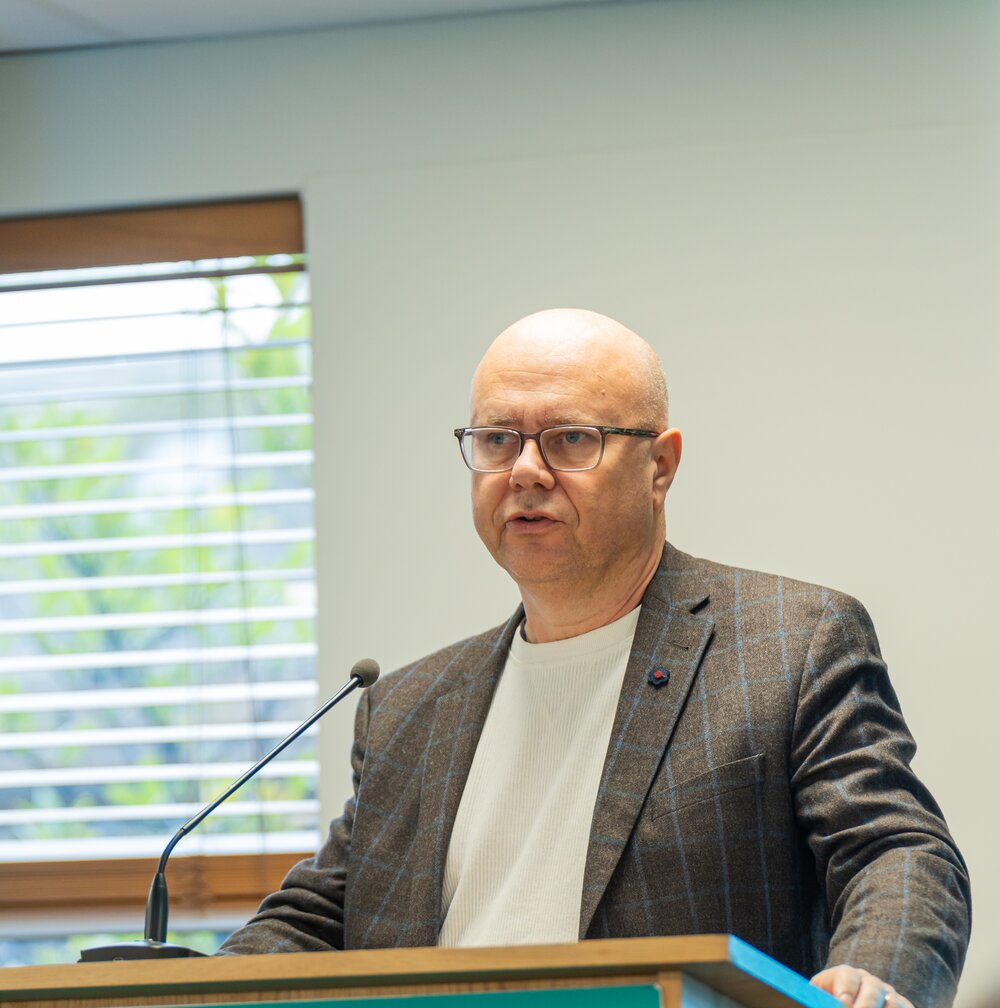
PSI Vice President, Peters Adeyemi, highlighted the transformative potential of the project. Speaking at the launch event, he described how: “Ultimately, this will be the next generation of trade union leaders in Africa and the Arab countries. This has been a long-awaited dream."
Adeyemi also committed that his union, the Non-Academic Staff Union of Educational and Associated Institutions (NASU), will sponsor the first year of the YWEMP and host the upcoming Young Workers Conference in 2025.
Reflecting on her hopes for the network in a video made after, Dahlia Yasser Fetiha, a representative of the Bibliotheca Alexandrina Solidarity Staff Union in Egypt, said:
"I hope the YWEMP empowers young workers by enhancing their skills and union capabilities, while also helping them understand technological developments and use the right tools to support their work in unions."
Systemic issues such as unequal caring responsibilities result in women earning less over their lifetimes and facing inadequate pensions.
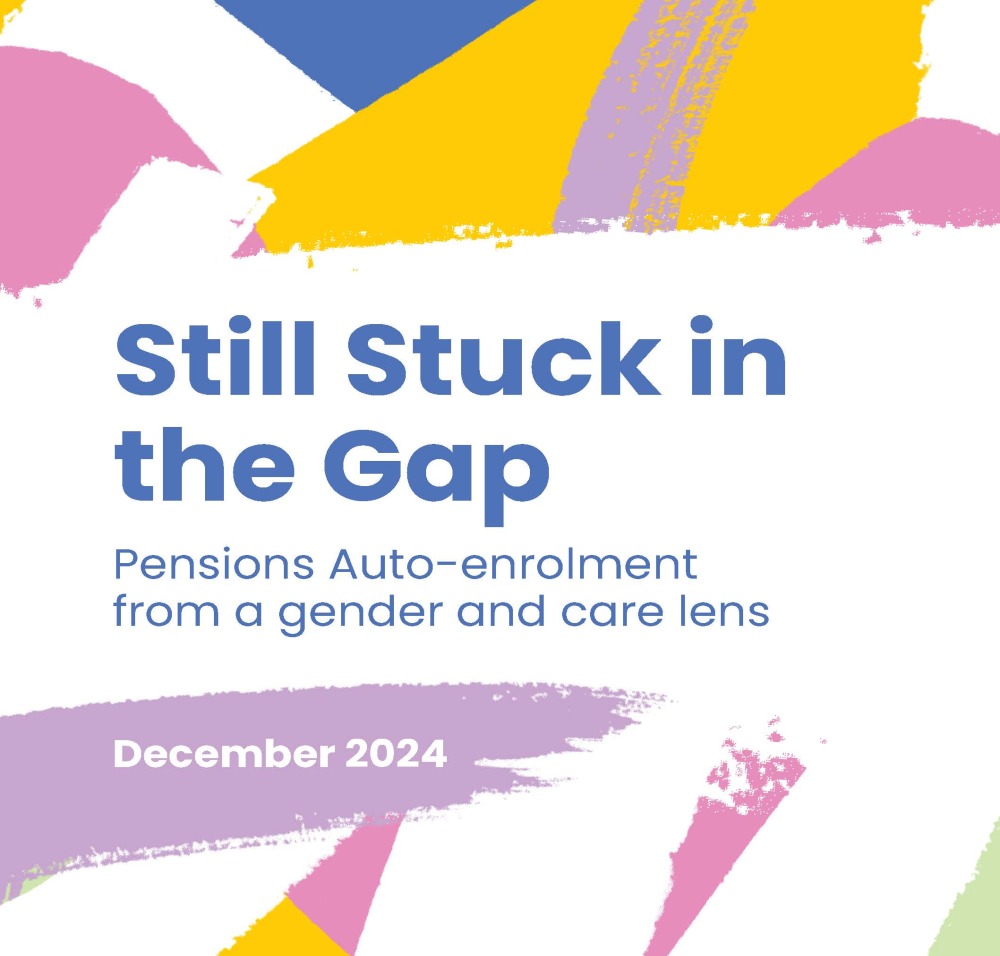
A new report released by the National Women’s Council (NWC) and TASC has raised concerns over the new auto-enrolment pension system. According to the ‘Still Stuck in the Gap’ report, the system due to be rolled out later this year, will likely extend the gender pension gap.
Orla O’Connor, Director of the NWC, has welcomed the new auto-enrolment pensions system, and has said that the report’s intention was to provide “constructive recommendations to build a better more equal system”.
Though strides have been made in the reduction of the gender pay gap when it comes to hourly pay, however, the gender pension gap is much higher. CSO figures from June 2023 show males earn on average 8.2% more than women per hour, while Jennifer Okeke, NWC Chairperson, has placed the gender pension gap figure at 35%. She warned “the pay gap becomes exacerbated in older age” which means “many women have to deal with inadequate pensions.”
The report cites a lack of valuing of care work as one of the bigger contributing factors for the gender pension gap. According to the report the burden of caring responsibilities falls more on women than on men. In section 6, the report states, “Women on average do 21.3 hours per week of care work, more than twice as much as men, who on average do 10.6 hours per week.”
Oisín Gilmore, senior economist at TASC and report author, said “Women have less lifetime income than men, largely due to unequal caring responsibilities.” He explained how unequal caring responsibilities lead to women taking more time off work to raise children, care for relatives, and for maternity leave. This leads to gaps in employment and the taking on of part-time work, which in turn leads to a lower lifetime pay.
According to Oisín, “Men and women contribute the exact same percentage of their income. The difference is men earn a significantly higher income over their lives.” He continued, “Because women work less hours on average than men, auto-enrolment is likely to exacerbate the gender pay gap.”
The report calls for a more equal system and greater value to be placed on care work in general. Oisín explained that changing the approach to care could be promoted through improved policies around caring responsibilities, saying: “Policies can improve employees’ rights so men and women can take on more care responsibilities and remain in employment.”
He gave the example of increased paternity leave as a policy which could create greater equality. Currently the entitlement to paternity leave is set at two weeks and is optional. The entitlement to maternity leave, on the other hand, is 24 weeks with an option for an additional 16 weeks, with two weeks before and four weeks after the due date being mandatory.
In addressing the pensions gap, the report recommends a universal pension system which would “provide an adequate pension for all over the age of 66 regardless of employment history.” Universal pensions would be available to anyone resident in Ireland for a minimum of ten years and would be paid at a value of 1/40 for each year of residency.
Compared to the auto-enrolment system which will improve pensions in the future, the universal system would, according to the report, “address issues of retrospective justice, such as the pension implications of the marriage bar.” The marriage bar having forced women out of the civil service and greatly affecting their lifetime income.
The report also claims the universal pension system is “neutral regarding care and does not punish those who have spent significant periods caring”.
While the report praises the aims and ambition of the auto-enrolment pension system, it sees the auto-enrolment as unlikely to address pre-existing inequalities at best and is more likely to extend the pensions gap for women in Ireland.
From the municipal workers gritting our streets, to the community and voluntary sector staff moving mountains to keep vulnerable people safe from the weather, to school staff keeping heating systems running, Fórsa members never shy away from difficult situations.
Dear colleagues,
I hope that you have had a good start to the new year, and that you were able to benefit from some down time in recent weeks. While many of us will have enjoyed the festive season, this time of year always brings with it specific workplace challenges for those who provide essential public services, in rain, hail, sleet or snow.
This week our members have yet again shown that without them our country would grind to a halt. From the municipal workers gritting our streets, to the community and voluntary sector staff moving mountains to keep vulnerable people safe from the weather, to school staff keeping heating systems running, Fórsa members never shy away from difficult situations. And of course, we can’t forget the meteorologists in our union – who continue to provide essential weather information that has helped keep us all safe during this week's very cold conditions.
Last year the union successfully mobilised to address a broad range of issues, with the negotiation and ratification of a national pay agreement, a successful outcome to the pilots’ strike, and ongoing disputes with the HSE. Our biennial conference in May set the union’s agenda for the two years ahead. We achieved pay improvements in workplaces across all divisions, from St. Christopher’s disability services in Longford, to Drogheda Port, and CE supervisors, to name but a few.
In the autumn we released a manifesto, and called on political parties and candidates in the general election to commit to pay increases that go beyond inflation. We also launched our new LGBTQ+ network. Each month our members stood in support of Palestine at national demonstrations, and we marched under our union banner for the first time ever at Dublin Pride.
Looking to the year ahead we will continue to stand with you and for you every day. Members working in the HSE and section 38 voluntary hospitals have now voted in favour of industrial action regarding the Pay and Numbers strategy – a recruitment embargo by any other name. In Local Government the fight for job evaluation continues, while in Education our school secretaries and caretakers are running a national campaign for pension parity. Work continues in the Civil Service division on overhauling the outdated Conciliation & Arbitration scheme.
In December we lodged the first local bargaining claim since the ratification of the Public Service Agreement 2024-2026. Local bargaining, a new process of national bargaining for collective issues specific to a grade, group or category, is a key feature of the agreement, and one which we intend to make full use of. You can read more about that in this bulletin here.
I am very proud that Fórsa’s membership has grown every year since we came into existence. When our union was formed its name took inspiration from the Irish word meaning a ‘force’ or body of people, also meaning ‘leverage’, and as we continue to build our union and our collective power, I see that force grow. That is thanks to you. By standing up for your colleagues, campaigning for better workplaces and a better world, you show that by acting together, we can win together.
A December ballot of members returned a vote overwhelmingly in favour of accepting an interim pay deal. Members voted 94% in favour of the proposal.
A December ballot of CE Supervisor members, and members working at the Tús initiative, the Rural Social Scheme and the Job Initiative scheme, returned a vote overwhelmingly in favour of accepting an interim pay deal. Members voted 94% in favour of the proposal, with 6% opposed.
The pay deal will see members receive an additional 3% pay backdated to 1st March 2024.
The interim pay deal was negotiated to improve pay amidst the cost-of-living crisis while negotiations for a longer-term agreement are ongoing. Included in the interim pay deal is an agreement for unions and the department to re-enter discussions at an early date this year.
Fórsa official Deirdre O’Connell Hopkins said: “There are outstanding issues from 2024 which will be dealt with in the discussions on pay in 2025. We are eager to get back to talks before the end of January. We are seeking, as a minimum, to match the terms of the Public Service Agreement.”
The ICTU group of unions has contacted the Department of Social Protection to inform them of the outcome of the ballot and have requested that they implement the proposal as soon as possible.
The potential risk of unruly passenger behaviour to the health and safety of our members is a crucial matter of concern for the union.
There were several media reports this week on the decision by Ryanair to sue a passenger who disrupted a flight between Dublin and Lanzarote last April. The airline is seeking to recoup costs of €15,000 associated with the incident.
RTÉ’s Six One news bulletin covered the story on Wednesday (8th January), and featured Fórsa official Lisa Connell, who highlighted the union's priority to ensure cabin crew and passenger safety.
Lisa said: “Our cabin crew members are the first responders in unruly passenger behaviour and the civil action reflects a wider commercial concern about the fallout of these behaviours.”
Fórsa represents cabin crew members working across a number of different Irish airlines. The union joined a new safety initiative by the Irish Aviation Authority (IAA) last November, and is now a signatory to the 'Joint declaration on unruly passenger behaviour in airports and on aircraft'.
Lisa added: “The IAA's recent charter creates a wider awareness in terms of what the expectation for passengers and crew is on board and that the declaration is critical in ensuring Fórsa members safety in the workplace,” she said.
It's understood this civil action by Ryanair is a first of its kind in Ireland, reflecting the airline’s strict ‘zero tolerance’ policy regarding unruly passengers.
Katie Morgan, Fórsa’s head of Services and Enterprises, the divisional home for the union’s aviation branches, added: “As a trade union, the potential risk of unruly passenger behaviour to the health and safety of our members is a crucial matter of concern.
“We’ve seen first-hand the effect that some unruly passenger behaviour has had on our members. Our divisional executive supports the joint declaration because it closely aligns with the objectives of our union in terms of aviation members’ safety, and it’s a welcome initiative,” she said.
Fórsa represents pilots and cabin crew at Aer Lingus, Emerald Airlines (Aer Lingus regional operator), and Ryanair, in addition to office-based staff in airlines, airports and the IAA/AirNav, as well as air traffic controllers and radio operators at AirNav.
The union continues to engage with cabin crew members who’ve been affected by this issue. If you have been affected by unruly passenger behaviour while on duty, please get in touch via cabincrew@forsa.ie.
IALPA has negotiated a pay deal for Aer Lingus pilots in Manchester that, if accepted, would see pilots’ basic pay increase between 12% and 25% over three years.
IALPA has negotiated a pay deal for Aer Lingus pilots in Manchester that, if accepted, would see pilots’ basic pay increase between 12% and 25% over three years.
Aer Lingus’s Manchester base was established in 2021 and is covered by a separate collective agreement to ROI pilots. Members are currently voting on the proposed pay deal, and the IALPA executive is recommending acceptance of the deal.
If the deal, which will run from 1st July 2024 to 1st July 2027, is accepted by union members, pilots at the Manchester base will receive a pay increase backdated to July 2024.
IALPA Manchester base rep First Officer Dave Brooks said: “This deal goes somewhat towards bridging the gap in pay between Aer Lingus pilots and their peers in other airlines in the UK. IALPA recognises that pay would remain slightly below the market average as this is the company’s first base in the UK. We are committed to ensuring that our members’ pay and conditions improve as the Aer Lingus Manchester base grows in the future.”
Shaped by direct input from members through a detailed survey, the claim reflects your priorities and sets the stage for winning major changes in the workplace for clerical officers, grade 3 roles, and related grades.
On Thursday 19th December 2024, Fórsa lodged the first local bargaining claim on behalf of members who are working as clerical officers, in grade 3 roles and related grades. Local bargaining is a key feature of the Public Service Agreement 2024-2026. It is a new process of national bargaining for collective issues specific to a grade, group or category.
Before lodging the claim Fórsa consulted members through a survey which asked what changes they would most like to see made as part of local bargaining. The claim was then developed using members’ responses as its basis.
The claim is as follows:
Removal of Point 6 of the Clerical Officer scales (on completion of 1 year at point 5, the next point of progression is point 7).
Removal of Point 11 of the Clerical Officer scales (on completion of 1 year at point 10, the next point of progression is point 12.
Removal of the 3 years waiting criteria for access to Long Service Increments on the Clerical Officer scales.
An increase of 3.5% to the absolute maximum points of the Clerical Officer Scales.
The claim is on behalf of a diverse range of members across the union: in the civil service division clerical officers and temporary clerical officer are concerned, while in the Education division members encompassed within this claim work in the Education and Training Boards and the Higher Education sector, as clerical officers, Grade III roles, and library assistant posts.
In the Health & Welfare division members concerned work as Admin Assistants, Clerical Officers, in Grade III roles and as Telephonists. In the Local Government and Local Services division, the members concerned work as Clerical Officers, in Grade III roles, and Library Assistants. In the Services & Enterprises Division members concerned work as Admin Assistants, Clerical Officers, in Grade II roles, in Grade III roles, as Library Assistants, Science & Arts Attendants & Visitor Security Officers.
Éamonn Donnelly, head of the civil service division and deputy general secretary said: “Now that the claim has been formally lodged, we await a response. We believe this claim is reasonable and constructive, however if the official response does not share that view, we will need members’ full support to make sure we can pursue the claim vigorously.”
“We will now move to reconvene the Equivalent Grades Committee and plan consultation with grades 4 to 7 and executive officers, administrative officers, and higher executive officers, with a view to lodging a claim on their behalf very soon.”
Éamonn concluded: “Local bargaining is a key feature of the Public Service Agreement 2024-2026. By lodging these claims we are signalling our intention to make full use of Clause 4.2.1 of the agreement.
Under Appendix A of Fórsa Rules, the NEC recently approved the increase of 7.25% to Fórsa’s membership subscription ceiling. Subscription rates remain unchanged. The union’s general subscription rate for 2025 is 0.8% of basic salary.
Following the negotiation and ratification of the Public Service Agreement 2024-2026 in spring 2024, many Fórsa members received pay increases. As membership subscriptions are a percentage of a member’s salary, the maximum rate of subscription will also now increase.
A maximum level for membership subs is set by the union’s National Executive Committee (NEC). This is called the subscription ‘ceiling’. This only effects members with annual salaries exceeding €57,125.89.
Under Appendix A of Fórsa Rules, the NEC recently approved the increase of 7.25% to Fórsa’s membership subscription ceiling which will increase to €457.01 from the 1st January 2025.
Subscription rates remain unchanged. The union’s general subscription rate for 2025 is 0.8% of basic salary up to a maximum of €457.01 (€38.08 per month) reflecting a maximum salary of €57,125.89. This downloadable excel spreadsheet illustrates how the subscription rate applies in a range of different salary bands.
The union’s two other subscription rates are unaffected by the change. These are the legacy rate paid by those who were members of the former PSEU of 0.62% on 31st December 2017 and the 1% rate for new and existing CO related grades in the Civil Service who have access to the former CPSU Benefit Scheme which was carried over into Fórsa.
Benefits
On top of negotiated pay increases and protection when things go wrong at work, union members can benefit from an improved range of membership entitlements.
These include €5,000* in personal accident cover or €5,000 critical illness cover or death benefit, which also is also available to spouses/partners of Fórsa members.
Alternatively, €5,000 in illness benefit is available to members who are out of work for more than 12 months and are permanently unable to return to their position. Fórsa also covers evacuation or repatriation expenses up to the value of €250,000 for members who become seriously ill or injured, or who die, while abroad.
That’s on top of a range of financial benefits, negotiated with external providers, which can mean big savings on financial products like car, home and travel insurance, pension benefits, salary protection and life cover, cover, and financial including mortgage advice.
Fórsa members can also avail of free counselling, legal advice and support helplines, 24 hours a day, 7 days a week, 365 days a year. They can also opt into a group scheme, which gives them access to huge savings on a wide range of everyday items and services including restaurants, retailers, hairdressers and coffee shops.
Fórsa has urged Tánaiste Micheál Martin to intervene at the EU level to secure the release of Dr. Hussam Abu Safiya, a leading Palestinian doctor detained by Israeli Defence Forces since 27th December. Amnesty International reports Dr. Abu Safiya is among hundreds of Gaza healthcare workers held without charge or trial.
Fórsa has written to the Tánaiste and Minister for Foreign Affairs, Micheál Martin, seeking an intervention at EU level to secure the release of leading Palestinian doctor Dr Hussam Abu Safiya.
Dr Abu Safiya has been detained by Israeli Defence Forces since Friday 27th December. Amnesty International has said Dr Abu Safiya is one of hundreds of Palestinian healthcare workers from Gaza who have been detained by the IDF without charge or trial.
The IDF confirmed it has detained Dr Abu Safiya, following its forced clearance of Kamal Adwan hospital last Friday. Beit Lahia, where the hospital is located, has been under an IDF blockade since last October.
In correspondence to the Tánaiste issued on Wednesday (8th January), Fórsa’s general secretary Kevin Callinan said Fórsa is seeking the intervention of the Department of Foreign Affairs on the matter.
“As one of the main trade unions representing health workers in Ireland, members have continued to actively express their solidarity through demonstrations and participation in groups including Irish Healthcare Workers for Palestine, and through motions passed at the union’s national conference last year,” he said.
Kevin acknowledged that the closure of Israel’s embassy in Dublin limits any opportunity to petition the Israeli government directly, and therefore urged the Tánaiste to seek an intervention at EU level, which could help to advance the release of Dr Abu Safiya and other detained health workers.
He further acknowledged the Tánaiste’s continuing efforts to highlight the injustices of Israel’s actions in Gaza: “Fórsa shares your concerns and supports your call for an end to the devastating violence and the appalling humanitarian situation, both in Gaza and the West Bank,” he said.
The conference looked at how to reshape the future of occupational health to make it more inclusive and effective for everyone.
Fórsa presented the trade union Stop the Stigma campaign at a recent conference in Brussels, hosted by the European Trade Union Institute (ETUI). The conference aimed to begin a discussion about how to reshape the future of occupational health to make it more inclusive and effective for everyone.
The ETUI is the independent research and training centre of the European Trade Union Confederation (ETUC).
The two-day conference brought together trade unions, policymakers, researchers, and advocates to explore how to embed gender into occupational health and safety policy and practice, to discuss how gender influences workplace risks, and how a 'one-size-fits-all' approach can overlook critical gender-specific risks and needs.
Mehak Dugal, Fórsa communications and campaigns officer presented the Irish trade union coalition campaign Stop the Stigma, which calls on employers to provide a supportive, stigma-free environment for workers dealing with periods and menopause.
Speaking to the conference Mehak said: “Integrating gender into occupational health and safety is not just the right thing to do, but the smart thing to do for all workers, regardless of gender.”
“If we truly want a healthy workforce, we need to start addressing the barriers that are silently affecting so many workers—especially women. Menstruation and menopause are natural biological processes, but they’re often treated as a stigma or a taboo in the workplaces. And the result is that people who menstruate or go through menopause can be forced to choose between their health and their career, leading to sickness absence, presenteeism, and workplace inequality.”
The presentation was well received and several researchers and policy officers from trade unions across the EU indicated that they would seek to focus on these issues in the months ahead. In closing remarks to the conference, the ETUI’s Director of Research Bart Vanhercke noted that they are keen to further their research on menstrual and menopausal workplace policies.
Mehak told the conference that nine of Ireland’s biggest unions are now also advocating for these policies in the workplaces they represent, and that the campaign is also active lobbying for legislative change, seeking amendments to the Safety, Health, and Welfare at Work Act and the Employment Equality Act.
She said : “In Ireland the Safety, Health and Welfare at Work Act already places a duty of care on employers to ensure the health and safety of their employees. And we’re very clear that menstrual and menopausal health should fall under this duty. We need to see a change in how workplaces are designed to accommodate these biological processes to support the well-being of all workers. Menopause and menstruation impact a significant portion of the workforce. But in reality, these issues are often sidelined in traditional OHS frameworks.”
She said: “We have been and will continue to call on employers to integrate menstrual and menopause policies into their workplaces to ensure our workplaces are safe, supportive, and inclusive for all employees, regardless of their gender or biological processes.”
“The workplace of tomorrow needs to reflect the needs of today’s diverse workforce, and we at Fórsa are very vocal that by implementing these policies and also explicitly embedding these protections in the existing legislation, Ireland will take a crucial step forward in creating healthier, more inclusive workplaces. Our efforts are about creating workplaces where women can thrive, not just survive.”
The conference also discussed LGBTQIA+ working life conditions, Recognizing breast cancer as an occupational disease, gender-based violence and harassment at work. You can watch the conference here: Integrating gender into occupational health and safety | etui
Learn more about the Stop the Stigma campaign here.