Rising commuting costs fuels case for flexible work
by Niall Shanahan
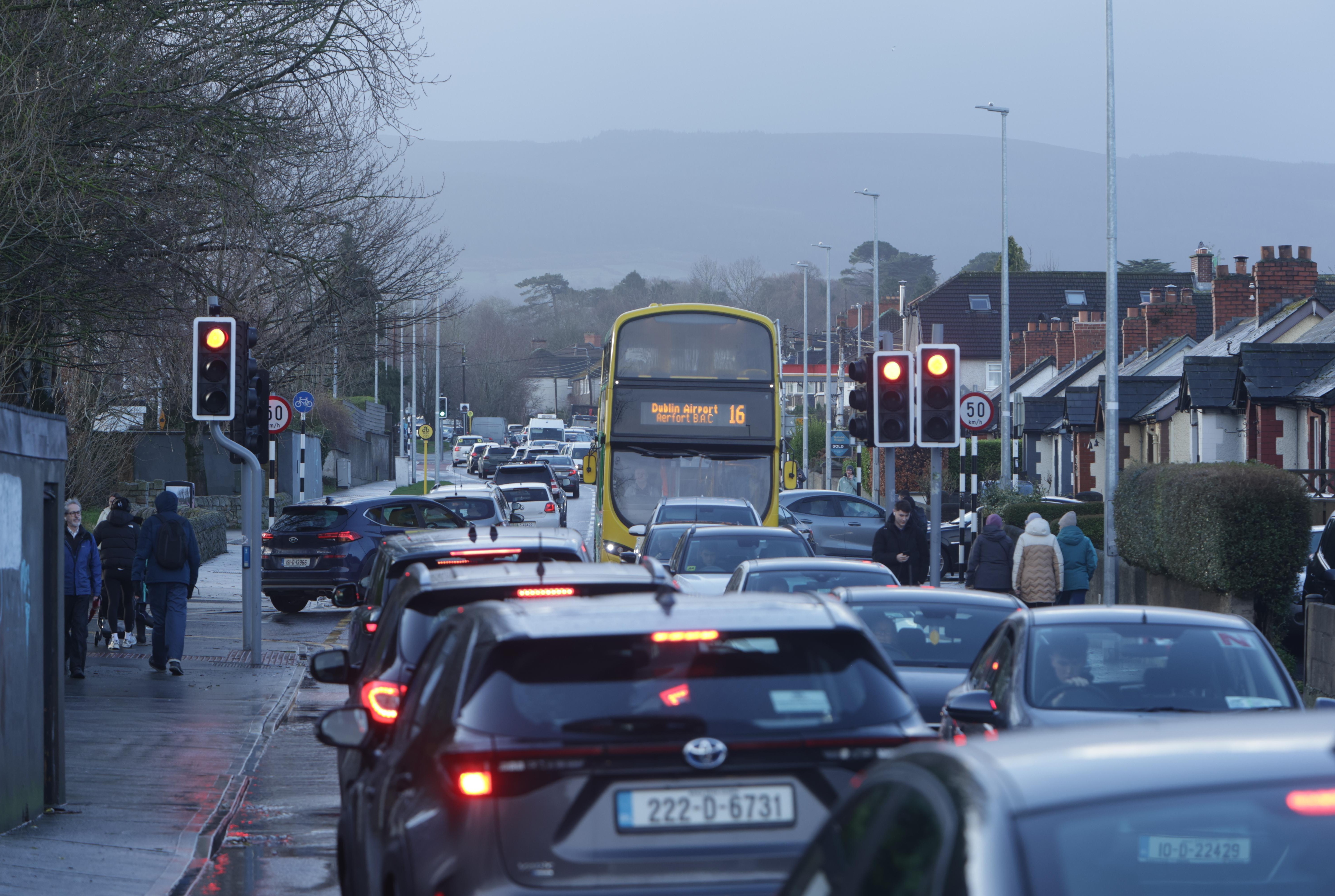
The case for flexible work has been given a strong shot in the arm as fuel price chaos exposes the financial burden of mandatory office attendance and traffic gridlock.
Fórsa has said the sharp rise in fuel prices, and growing uncertainty around global energy supplies, strengthen the case for practical measures that can reduce fuel consumption, including wider access to remote and hybrid working.
The warning comes amid concern that instability in the Middle East could disrupt global energy markets, with motorists already facing sharply higher costs at the pumps.
The Government announced a series of measures this week aimed at easing pressure on households and businesses, including a tax rebate scheme for hauliers, a double fuel allowance payment and a reduction in excise duty to help lower fuel prices.
While such steps may cushion the immediate impact, Fórsa said policymakers and employers should also consider proven ways to reduce fuel demand.
The International Energy Agency (IEA) has highlighted remote working, where possible, as one of several practical measures that can help ease pressure on oil markets by reducing fuel demand from daily commuting.
The union noted that remote and hybrid working arrangements have already demonstrated clear benefits since the pandemic, reducing commuter traffic, congestion and transport emissions while maintaining productivity.
Fórsa deputy general secretary Éamonn Donnelly said: “Even a modest reduction in mandatory office attendance for employees who can work remotely could help lessen the immediate cost-of-living impact for workers who rely on cars to commute, while also easing pressure on fuel demand.”
Fórsa general secretary Kevin Callinan has said stronger protections for remote working will be a key issue in upcoming negotiations on a new public service pay agreement.
A survey of 14,000 Fórsa members last year found that 55% identified protecting existing hybrid and remote working arrangements as their top priority.
Join a union that wins. Join Fórsa.
 |
|
Fórsa raises concerns about Aer Lingus disciplinary procedures
by Niall Shanahan
Fórsa has raised serious concerns with Aer Lingus management about the company’s handling of formal workplace processes, including witness meetings, investigations, and disciplinary procedures.
In a message to members earlier this month, the Fórsa Aer Lingus Cabin Crew branch executive outlined a number of issues that the union believes could disadvantage staff involved in formal proceedings.
The union has written to Aer Lingus seeking urgent engagement and calling for immediate clarification and changes to the practices in question.
Among the concerns highlighted is the company’s practice of “de-identifying” documents used during investigations and disciplinary meetings. According to the branch update, this can involve removing names or other identifying details from documents and correspondence, which may prevent members from seeing the full context or source of evidence being used in cases that affect them.
The union has also raised concerns about the role of HR in investigation processes, warning that the department may be encroaching on the work of independent officers tasked with conducting inquiries. In addition, the branch executive highlighted the possibility that statements made by members during witness meetings could later be converted into formal accusations against colleagues without the witness’s knowledge or consent.
Fórsa assistant general secretary Lisa Connell has set out these concerns to the airline, describing the potential practices as prejudicial to members and incompatible with fair procedures. Reporting on the issue, The Irish Times noted that the union has called for an urgent meeting with Aer Lingus management and has warned that such practices could undermine workers’ ability to defend themselves in disciplinary processes.
Pending clarification from the company, Fórsa is advising members not to attend any formal meeting without union representation. Members attending witness meetings are also advised to clearly state that they do not consent to their statements being used for any purpose other than the witness meeting itself.
Join a union that wins. Join Fórsa.
Unions deliver far more than a payslip for women
by Hannah Deasy
The Irish Congress of Trade Unions hosted its annual Women’s conference last week. The two-day event took place in Cavan, bringing together delegates from all unions across the island.
The Irish Congress of Trade Unions hosted its annual Women’s conference last week. The two-day event took place in Cavan, bringing together delegates from all unions across the island.
Co-chairs of the Joint Women’s Committee Tina Creaney (NISPA) & Lynda Scully, (SIPTU) led proceedings, welcoming delegates and highlighting the main topics on the packed agenda, ranging from universal childcare, reproductive rights, an end to violence against women and climate justice.
The conference theme was ‘Achieving for Women in Work’, which focused on ICTU's new economic model. It calls for living wages to become standard, universal public services including public childcare, universal health care, and collective bargaining as a right, ensuring every workplace has democratic participation.
ICTU President Phil Ní Sheaghdha addressed the opening session of the conference. She tolde delegates that Irish unions now have more women members than men, as the growth in female participation in the labour force in recent decades has been matched by a growing number of women joining trade unions.
Speaking about the impact unions can have on women’s lives, she said: “Trade unions offer something beyond the payslip. We offer dignity. We offer voice. We provide strength and solidarity. Being in a union means the difference between accepting what you're given and negotiating what you deserve.”
Outlining how the new economic model would benefit women workers, she said: “Our new economic model places workers, families, and communities at the heart of economic decision-making, not as an afterthought.”
“It is not based on fantasy economics; these are practical policies already working in countries that prioritise social partnership over unchecked corporate power.”
Fórsa’s delegation included members from all divisions. Melissa Brennan from the civil service DEC spoke on the union’s motion which called for action on Artificial Intelligence (AI) enabled sexual harassment and violence. Urging delegates to support the motion she said:
“We are not talking about hypothetical future risks. We are talking about the reality of today, where AI platforms allow users to generate non-consensual, sexualised images, often referred to as “nudification” or “deepfakes”. These are not accidents or mere glitches in a system. These are malicious adaptations of AI technology. It is digital sexual intimidation designed to harass, silence, and isolate.”
“Technology has evolved faster than our enforcement mechanisms, creating a dangerous vacuum where abusers operate with impunity. We cannot wait for a watershed moment to act when the floodgates are already open. We need to be proactive.”
Fórsa activist and vice chair of ICTU’s women’s committee Margaret Coughlan spoke on motion 18 on neurodiversity and non-visible disabilities. Speaking about her own experience representing members with ADHD, Margaret called for greater awareness in the workplace. She underlined that women are mainly diagnosed with ADHD later in life, rather than as children, a delay that can be very stressful. She called on health unions and teaching unions to come together to campaign for better policies, reduced diagnosis timelines and care for all neurodivergent people.
Margaret condemned the Government’s recent attempt to cut back Special Needs Assistant (SNA) posts, saying SNAs are “lifelines” for neurodivergent children, and called on unions to stand together to push the HSE and the Department of Education to put children’s needs first.
Corrinne Phelan from the Galway Health and Local Government branch described the passion and commitment women trade unionists bring to their work to improve working conditions and equality in society, urging Government and employers to take note.
She said: “Some of the issues debated over the two days are ones we have been campaigning on for quite some time now. From the gender pay gap to miscarriage leave, it is vital that we see real action on these issues, not just empty talk.”
Chair of the civil service division Jean Taylor was also part of the delegation. Reflecting on the conference Jean said: “Throughout the conference we heard powerful testimony from women trade unionists highlighting the issues facing members of all our unions. Coming together at events like this makes us stronger, when we go back to our own unions and workplaces, so that we can continue fighting for equality for women at work and beyond.”
Join a union that wins. Join Fórsa.
Driving test cancellations highlight need for safety measures
by Niall Shanahan
Fórsa has said the high number of cancelled driving tests linked to new insurance verification measures highlights the scale of the safety problem that driver testers had been raising.
Fórsa has said the high number of cancelled driving tests linked to new insurance verification measures highlights the scale of the safety problem that driver testers had been raising.
The union, which represents driver testers employed by the Road Safety Authority (RSA), said the recent cancellations underline why its members had raised concerns earlier this year about being required to conduct tests in vehicles that could not be reliably verified as insured.
Assistant general secretary Ruairí Creaney said the situation demonstrates that the issue needed to be addressed. He said: “The level of cancellations clearly illustrates that there was a real problem that needed to be tackled.
“Our members consistently raised concerns about their safety and their legal exposure when carrying out tests in vehicles that could not be properly verified as insured. The fact that so many tests have had to be cancelled shows those concerns were justified and that stronger safeguards were necessary,” he said.
Fórsa noted that the wider issue of uninsured driving remains significant, with reports that Gardaí seized 19,673 vehicles last year for being driven without insurance.
Driver testers had repeatedly and responsibly raised their safety concerns when conducting driving tests, which ultimately led to a dispute earlier this year and engagement with management.
Fórsa said it is continuing to work with management to ensure the agreed protocols are implemented successfully. An agreement reached last week to accept digital certification of insurance should significantly reduce the number of cancellations seen in the early stages of the new arrangements.
The union said driver testers remain committed to delivering a vital public service and to reducing waiting times for driving tests, while ensuring that all vehicles presenting for tests meet essential safety requirements.
Join a union that wins. Join Fórsa.
Talks continue on staffing issues at AirNav
by Niall Shanahan
Fórsa and AirNav management have agreed further steps in the Internal Dispute Resolution Board (IDRB) process aimed at addressing staffing pressures in air traffic control.
Fórsa and AirNav management have agreed further steps in the Internal Dispute Resolution Board (IDRB) process aimed at addressing staffing pressures in air traffic control.
Following discussions this week, both sides have agreed to establish a small working group, with up to three representatives from each side, to examine staffing issues in detail. The IDRB will appoint an independent chair to oversee the process.
Terms of reference for the working group have been received and will allow for a full exploration of potential solutions. The parties have also agreed that the process should conclude by mid-May.
The IDRB is due to reconvene next week, when further discussions are expected, including on pensions, and consideration of the current call-in system used to maintain services.
Join a union that wins. Join Fórsa.
New 'EU Inc' regulation poses backdoor threat to workers’ rights
by Hannah Deasy
Trade unions are warning that proposed new EU rules could allow companies to pick and choose their own rules and skirt labour law and basic employment rights.
Last week the European Commission published draft legislation which would create new rules for companies operating in the EU, declaring that the proposals will make it ‘easier to do business’ in the EU.
The proposals, which are being referred to as ‘EU Inc’ and had previously been known as the ‘28th Regime’, simplify both the incorporation and insolvency processes for companies based in the EU.
Prior to its publication the Commission had reassured trade unionists that the new rules would not damage employment rights, however the European Trade Union Confederation (ETUC) has reacted with concern, underlining that there is a lack of clear legal provisions protecting employment rights within the proposals.
General secretary of the ETUC, Esther Lynch said the proposals should be redrafted as the European Commission had “failed to deliver” on its promise to safeguard workers’ rights.
She said: “This plan still risks creating loopholes that would allow employers to avoid the most basic workers’ rights like guaranteed rates of pay.”
“Europe should safeguard and not undermine its well-crafted systems of national employment, and social and company law, defined over decades of workers’ collective action and responsible law-making.”
The ETUC highlighted that the draft of the proposed regulation does not include legal provisions to prevent companies from refusing labour inspections; avoiding national labour law and collective bargaining agreements; replacing guaranteed wages or employment contracts with stock options; ignoring workers’ rights to information and consultation in restructuring processes; undermining workers’ right to board-level representation; or avoiding social security payments and national tax.
Esther continued: “Making it easier to do business across borders is an entirely legitimate goal. But, in the way it is written, this proposal seems to assume all actors are good. Not only is that dangerously naive, but it would also fail a basic legal exam.“
“Bad faith actors will use any opportunity to try to dodge labour law, collective bargaining agreements, tax and social security contributions in countries where they employ workers. And this proposal creates many.”
“Simplification cannot be an excuse to unpick the European social model. Without proper safeguards, this proposal risks ending up as a reheated version of the doomed Bolkenstein directive.”
At a recent protest in Cork, Irish unions gathered to express their concerns about the draft legislation. Director of campaigns in Fórsa, Kevin Donoghue said: “These proposals could allow companies to pick and choose a special EU rulebook, allowing them to dodge European and national labour law and collective agreements."
"That would mean that companies could operate in Ireland but not fully respect the standards that trade unions have fought for, weakening collective agreements, and eroding protections that generations of trade unionists fought hard to win."
"We also strongly reject the idea being presented that workers’ rights stand in the way of innovation. This proposal has the potential to carry very real dangers for workers’ rights and trade unions. We will be organising on this issue in the months ahead and will keep members informed.”
Join a union that wins. Join Fórsa.
|
|
Upcoming training opportunities
by Brendan Kinsella
Applications open for May courses
The Skills Academy has now opened applications for its May courses, including the ever-popular Branch Treasurers Training and the Workplace Representatives Training Level 1 for members based in the east of the country.
April courses are nearly full, with only a handful of places left. Don’t wait, register today to avoid missing out.
If you see anything that interests you, you can email your branch training officer or the Skills Academy for more information.
Fórsa Induction - Online - Wednesday 8th April - Open to all new members
Join the Skills Academy for this short welcome session for new members. Learn about the workings of Fórsa and where you fit in, as well as the functions of trade unions, how we operate as a union, and how you can become more engaged, have your voice heard locally, and raise issues at divisional and national levels.
Morning and evening sessions available.
You can register for Fórsa Induction here.
Time Management - Tuesday 14th April - Nerney’s Court, Dublin
For members who are juggling and struggling, trying to fit everything into the day. This session will teach you all the ways to take control of your day and avoid the stress of looming deadlines.
Public Speaking - Tuesday 14th April - Nerney’s Court, Dublin
Biennial Conference is just around the corner now, and many first-time delegates will take to the stage to deliver their branch’s motions. If you are one of these delegates and slightly nervous about speaking in front of a big crowd, the Skills Academy has prepared a special session of Public Speaking training just for you.
Learn how to handle those pre-stage jitters, speak clearly and confidently, and make the best of your time in the bright lights of the Gleneagle events centre in Killarney, with a little help from the Skills Academy.
Industrial Conflict Resolution (Level 2) - Wednesday 15th April - Nerney’s Court, Dublin
The next step in our IR trainings for members who have previously attended the Building Effective Local IR Practises (Level 1) course with Brendan Cunningham. Please note this course is not applicable to members in the civil service division.
Learn how to maintain positive working relationships and turn conflict into an opportunity for positive change.
Branch Training Officers Seminar - Wednesday 15th April - Nerney’s Court, Dublin
A fantastic opportunity for Branch Training Officers to learn more about the role and meet with colleagues from other branches to discuss tips and tricks on how best to use training to benefit your branch. Open to branch training officers and BEC members covering training officer duties.
Resilience Building Workshop - Tuesday 21st April - Nerney’s Court, Dublin
If you find yourself struggling with everything life throws at you, this course can help you manage and maintain your responsibilities. Learn to build resilience by enhancing emotional intelligence, awareness of others and how to manage and reduce stress.
Branch Treasurers training - Thursday 7th May - Nerney’s Court
The Branch Treasurers training is one of our most popular trainings. If you are a treasurer or vice-treasurer, this course is a great opportunity to be guided through your role and responsibilities. Make sure to register early to secure your place!
Level 1, WRT - Tuesday 26th - Thursday 28th May - Nerney’s Court, Dublin
This May, Workplace Representatives Training will come to Dublin. An opportunity not to be missed if you are a workplace rep who is able to travel to Nerney’s Court for the three days.
This training is for reps with no previous experience or training and takes place over three days. The only prerequisite for taking this course is that you are a workplace rep and have previously taken the Fórsa Induction module.
Over the three days you will learn all the basic skills that you will need as a representative in your first year, including:
- the role and function of the workplace rep
- improving interpersonal skills and building good working relationships
- organising your union work
- recruiting members and handling problems
- an introduction to equality and diversity
- health and safety.
To register for a course:
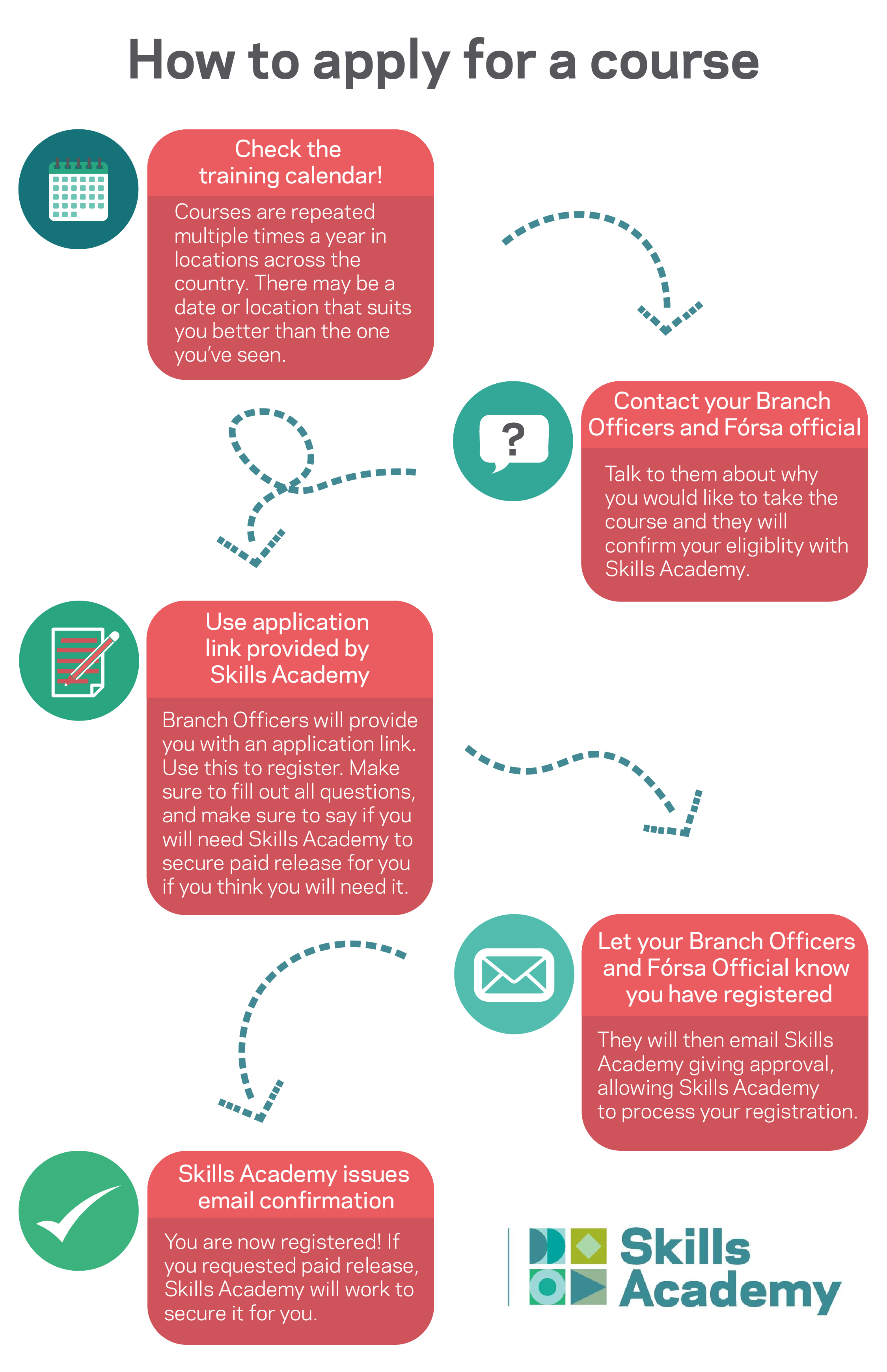
Aside from Live: Lunch & Learn and Fórsa inductions, participation on all courses requires sign off from your branch and official. To apply, contact your branch training officer or secretary if your branch does not yet have a training officer.
Join a union that wins. Join Fórsa.
Summer Series 2026
by Mehak Dugal
Two-day event focused on providing activists with skills, knowledge, and confidence to take campaigning to the next level.
Fórsa is very excited to announce the return of the Summer Series, a two-day event focused on providing our union’s activists with the skills, knowledge, and confidence to take their campaigning work to the next level.
This year the event is taking place on Wednesday 17th June and Thursday 18th June in the Sheraton Hotel, Athlone. Please note that this is an in-person event only.
This year’s programme is built around the real challenges activists are facing right now. Through practical, hands-on sessions, you’ll develop tools to organise more effectively, communicate with impact, and win stronger outcomes. This year’s training themes include:
- Communication and media engagement
- Lobbying and political engagement
- Campaigning and organising to win
- Political economy
BBQ Dinner
In true summer spirit, we’ll also be hosting an evening barbecue. The BBQ is a chance to connect, share experiences, and build solidarity with fellow activists from across Fórsa.
Summer Series 2026 will be an opportunity to come together, sharpen our activism skills, and strengthen the collective voice of Fórsa members. The Summer Series will be of particular value to branch campaigns officers and those interested in developing their campaigning and activism skills.
Please note, this event is open to all Fórsa members but ensure you discuss your attendance with your branch before submitting your application. If you would like to register to attend, please contact summerseries@forsa.ie.
Important note: Travel and subsidies will be the responsibility of the branches. Accommodation must be arranged by participants themselves, though we have arranged a block of rooms for attendees at a reduced rate.
For any queries, contact summerseries@forsa.ie.
Join a union that wins. Join Fórsa.
Exploitation of migrant workers commonplace
by Mehak Dugal
MRCI launch landmark survey exposing systemic and widespread exploitation of migrant workers.
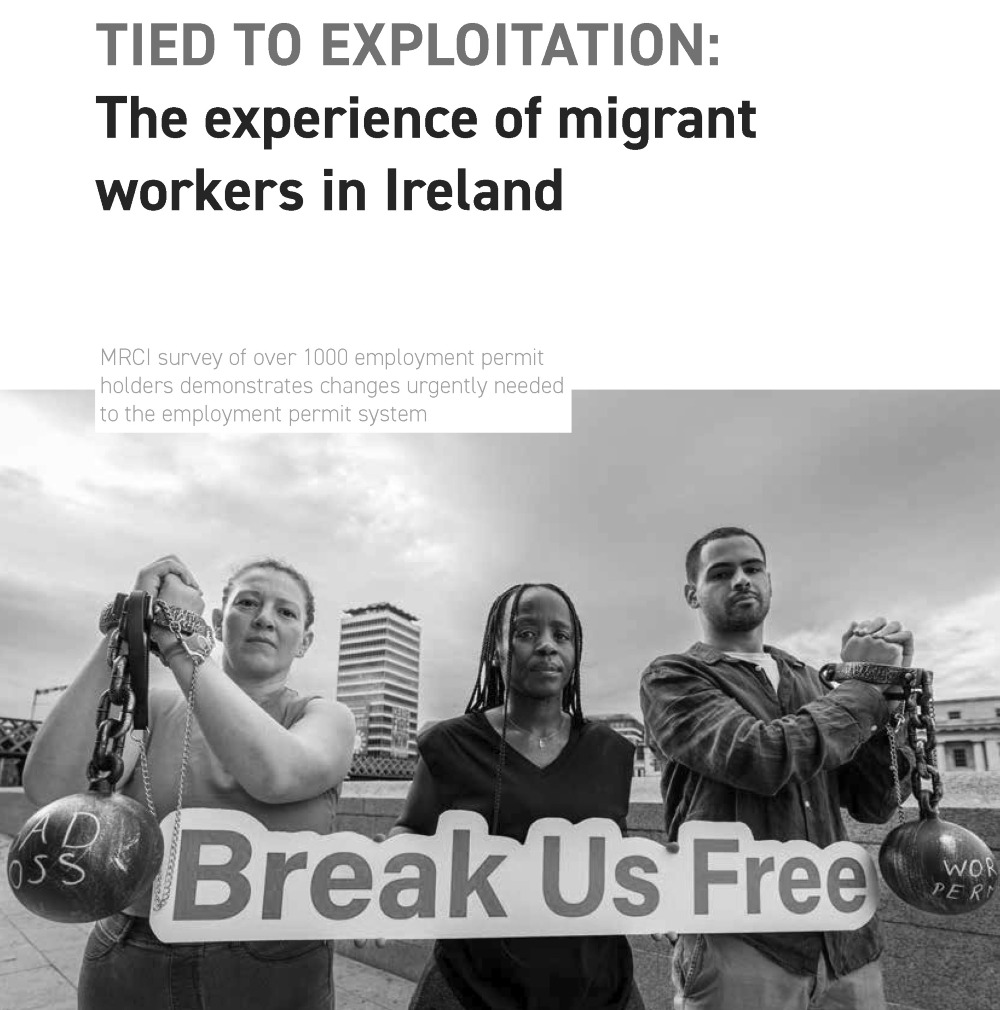
This week the Migrant Rights Centre Ireland (MRCI) launched a landmark survey of over 1,000 employment permit holders, exposing systemic and widespread exploitation of migrant workers across Ireland.
The findings paint a deeply troubling picture where workers are routinely underpaid, overworked, harassed and denied basic rights, with many feeling powerless to speak out due to their dependency on a single employer for both their income and immigration status.
The report, Tied to Exploitation: The Experience of Migrant Workers in Ireland sets out the stark reality facing workers on general employment permits.
These survey results were also highlighted in this week’s RTÉ news article that outlined the case of severe exploitation of a worker, Sam, who came to Ireland six years ago on a general employment permit as a horticultural worker.
What he had hoped would be a turning point for his life soon turned sour. Sam said that in the two and a half years he worked for the company he only got two weeks holidays. "I was afraid to challenge the employer because I was tied to him through my work permit and there was nowhere else I could go," Sam said.
The survey covered 58 nationalities across all major employment sectors, including healthcare, hospitality, agriculture, transport and construction.
Exploitation was found across all job sectors and most nationalities surveyed. Healthcare assistants, the largest group, representing 45% of respondents, had a 78% exploitation rate. Female workers experienced higher rates of exploitation than male workers (76% vs 66%).
71% of general employment permit holders experienced exploitation in employment. 61% experienced severe exploitation – meaning repeated or multiple serious employment rights breaches.
Just over half of those who were exploited did not report it, primarily out of fear of losing their job or permit. The Migrant Rights Centre Ireland is calling on the Government to grant all employment permit holders the freedom to work in any job after two years, rather than the current five-year tie to a single employer, and to introduce a new criminal offence for severe exploitation.
In response to growing evidence of racism at work, the Irish Congress of Trade Unions project Stronger Together: Anti-Racism Workplaces and Trade Unions is working to combat racism and to illustrate the invaluable contributions made to Ireland’s workforce by migrant workers across the island.
The project investigates the prevalence and nature of workplace racism and the responses of trade unions across Ireland, and seeks to develop anti-racist trainings and strategies, to support workers from all backgrounds.
The project found that union members from minority ethnic and migrant backgrounds in Ireland and Northern Ireland frequently experience both direct and indirect racial discrimination, ranging from overt racism and racial slurs to subtle microaggressions and exclusionary practices.
In response, ICTU has designed a toolkit to familiarise trade union members at all levels of organising with the nature and impact of racial discrimination in the labour market and workplace, and support the development of strategies for anti-discrimination actions which can be accessed here.
Join a union that wins. Join Fórsa.
|
|
|
|