“Rooted in solidarity and shaped by change” Conference sets priorities for the next two years
by Hannah Deasy
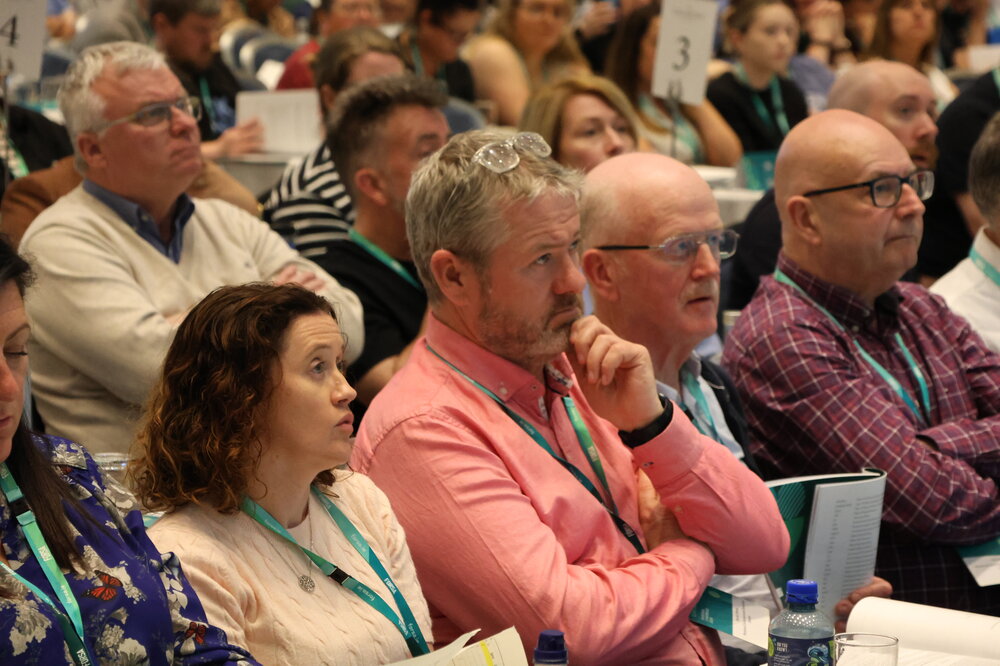
The Civil Service divisional conference took place last week in Galway, running from Wednesday 28th May to Friday 30th May. Delegates came together from across the division’s branches to discuss and debate motions and elect a new divisional executive committee (DEC).
The Civil Service divisional conference took place last week in Galway, running from Wednesday 28th May to Friday 30th May. Delegates came together from across the division’s branches to discuss and debate motions and elect a new divisional executive committee (DEC).
Deputy general secretary and head of the Civil Service division Éamonn Donnelly underlined the importance of delegates taking part in conference. He said: “We had a great conference, defined by active participation and great cooperation. Led by your new chair Jean Taylor and vice chairs Cormac Donoghue and Darragh Fox this division will go from strength to strength and build upon the great work of Helen Linehan, Sue Kelly and Darragh Fox.”
Delegates also adopted a new strategy for the division called Playing Our Part – Together. You can read it here.
With close to 100 motions on the agenda delegates passed motions on issues including blended work, pay, mobility, grading and diversity and inclusion in the workplace. Read more about motions brought by members here.
In her opening address to conference on Wednesday outgoing chair Helen Linehan welcomed delegates to conference and reminded delegates that the motions brought forward at conference can have a wide-ranging impact. She said: “These decisions will shape our policy positions and negotiating priorities. But they will also help to shape the everyday experience of thousands of members working across the Civil Service — people whose professionalism, integrity and commitment provide solid foundations to the functioning of the State.”
Later that day Fórsa general secretary Kevin Callinan addressed delegates. He provided an overview of the recent history of public service pay negotiations and explaining the importance of local bargaining. He said: “Local bargaining is vital. It is essential to ensure fairness and equity for our members. Fórsa has lodged claims that could impact pay for tens of thousands, following extensive consultation with members.”
He then went on to tell delegates that Fórsa expects negotiations on these claims to take place in good faith. On the timeline he said: “The claims won’t all be settled by next September, but we do consider that date of 1st September as sacrosanct for the beginning of the implementation of local bargaining.”
In his address to conference on Thursday morning deputy general secretary and head of division Éamonn Donnelly talked about the need to organise members on relevant issues, namely pay, working patterns, AI, outsourcing and the Civil Service Regulation (Amendment) Bill. He also spoke about the road ahead for local bargaining and recent progress on reform of the conciliation and arbitration scheme.
Éamonn told delegates that just this week he received a letter from the Department of Public Expenditure outlining the agreed principles of a new conciliation and arbitration scheme. He reminded delegates that two years ago this was deemed almost impossible. But, he said, thanks to the continued tenacity of the negotiators, we are now on the cusp of a new system of dispute resolution for civil servants that will bring tangible timelines, an end to the system of statements and counter statements, and a fair process for all.
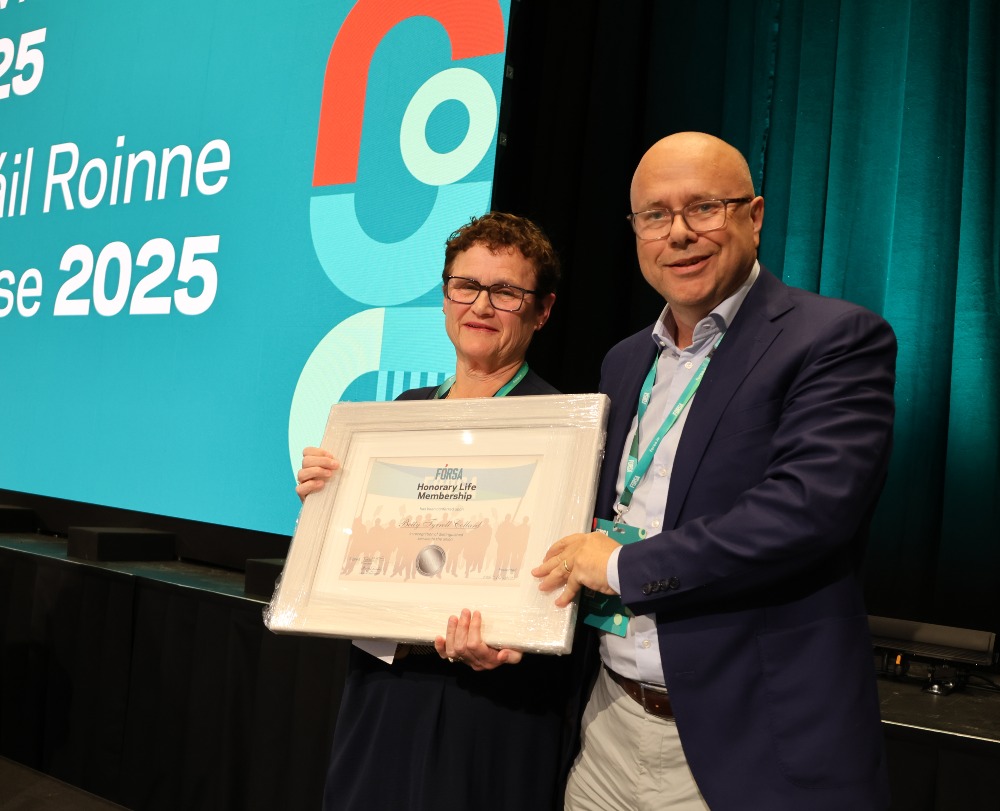
Betty Tyrell Collard received a Distinguished Service Award and Honorary Life Membership of Fórsa. Kevin Callinan presented the awards to Betty and paid tribute to her many elected roles including Vice President of Fórsa, President of the CPSU, President of the Dublin Council of Trade Unions and as a member of the ICTU Executive Committee. He also noted that in 51 years of service Betty saw 42 Ministers come and go from her Department.
Thanking delegates and the DEC past and present Betty said “This division is my home, and it was always my home. I’ve gotten to know a lot of people over the years, and I’m delighted that there’s a new generation of people coming through to represent members.”
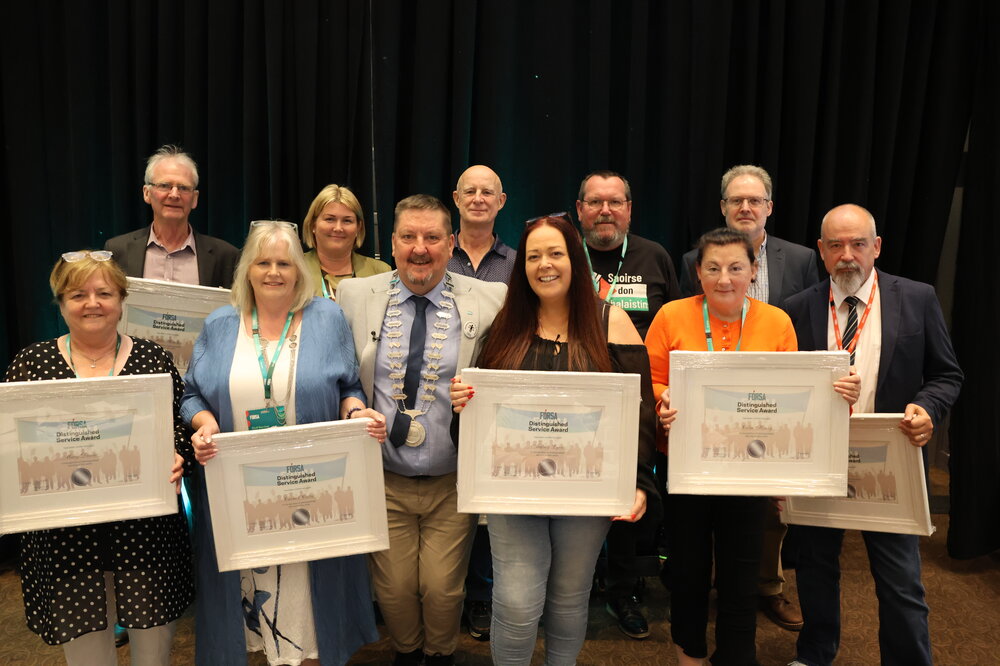
Congratulations to all the members who received awards. They are:
- Carmel Cotter, Revenue Clerical Branch,
- Audrey Lyons, DAFM Executive Grades Branch
- James Higgins, DAFM Executive Grades Branch
- Betty Tyrrell Collard, Dublin Central Branch
- Mary Dunne, Portlaoise CS Clerical
- Colm Henry, Justice Executive Grade
- John Healy, Tipperary General Branch
- George Lynch, Architecture, Engineering and Heritage Services
- Miko Sheridan, Agriculture Food & Marine No.1
- Steve Pilgrim, Ordnance Survey
As conference closed outgoing Chair Helen Linehan was thanked for her leadership, fairness, and dedication to members. Helen paid tribute to members, the DEC and staff and wished the new DEC the very best for their new term.
Join a union that wins. Join Fórsa.
 |
|
Celebrate Pride with your union
by Hannah Deasy
This June we have several Pride events of interest to members.
June is Pride month, a time to celebrate and call for continued progress for LGBTQIA+ rights. Though our union has a proud history of campaigning for equality, we are firmly focused on the future. In the past year, we launched our LGBTQIA+ network, produced a print run of Kieran Rose’s publication Trade Unions and Progress for LGBT People, and most recently we had a stand at every Fórsa divisional conference. This June we have several events of interest to members, detailed below.
Trade Unions & Marriage Equality: A Labour of Love
To mark the 10th anniversary of the passing of the Marriage Equality referendum in 2015 — and the role of the trade union movement in that campaign — an event featuring a panel discussion will take place in Connolly Hall and Cois Life Bar, Liberty Hall, on 17th June 2025, from 18:30 to 20:00.
Karl Hayden (Financial Services Union) will chair the discussion, which will feature a number of trade union and LGBTQ+ activists reflecting on the movement’s pivotal role in the referendum.
Panellists:
- Seamus Dooley – National Union of Journalists (NUJ)
- Ethel Buckley – SIPTU
- Kieran Rose – LGPSU (precursor to Fórsa) Trade Unionist and LGBTQ+ Activist
- Rachel Mathews McKay – SIPTU LGBT
Refreshments will be served, and attendance is free of charge. Early booking is advised: registration linked here.
Join us at Pride
Fórsa’s LGBTQIA+ network is inviting members to march with their union at Pride marches across Ireland this summer. Kicking off in Dublin on Saturday 28th June, we’ll also be at Trans and Intersex Pride in Dublin on Saturday 12th July, followed by Cork Pride on Sunday 3rd August, and finally Galway Pride on Saturday 16th August.
Member of the LGBTQIA+ network steering committee Danni Hickey said “While we know many members will be used to marching at Pride with friends, voluntary groups, or their employers, we want all members to know they’re welcome to stand with their union. Last year was the first time we marched at Pride with our own union banner, and we’re excited to do so again this year, right around Ireland.”
If you would like to join your union at any of the Pride marches listed above, please complete this form so that we can communicate further details with you.
Lunch & Learn with LGBT Ireland
Our Skills Academy runs a monthly Lunch & Learn for members. On Friday 27th June, the session will be focused on how to support our LGBTQIA+ colleagues. This talk will cover the history of pride and will give valuable insights into the current experiences of LGBTQIA+ people.
Participants will gain a clear understanding of LGBTQIA+ terminology and receive practical tools to help make their own workplace more inclusive, one small impactful step at a time. To top it all off, the session will conclude with a 15-minute judgement-free Q&A. This is an event you won’t want to miss this Pride month!
The training will be provided by Lenn Viken (they/them) who works as a trainer with LGBT Ireland and has been engaged in queer activism, education and politics across Norway, France and Ireland for close to a decade.
With substantial experience in community-based LGBTQIA+ education, municipal politics and public speaking, Lenn is motivated by their passion for fighting structural issues through inclusive and non-judgemental knowledge diffusion and discussion. Holding a bachelor's degree in Gender and Equality from Sciences Po Paris and currently pursuing a master's degree at Trinity College Dublin, Lenn is excited to spend the rest of their career working to promote minority rights and inclusion in Ireland and abroad.
To register follow this link here.
Join a union that wins. Join Fórsa.
#StandWithPalestine - Petition launched
by Brendan Kinsella
Following a nationwide moment of reflection by workers this week, we have launched a petition calling for the inclusion of services in the Occupied Territories Bill (OTB).
Fórsa has launched a petition this week calling for the inclusion of services in the Occupied Territories Bill. You can sign the petition here.
Fórsa’s director of campaigns, Kevin Donoghue said “The government has legal advice saying services can’t be included in the bill, but Tánaiste Simon Harris said he had ‘no issue’ with a provision in the bill banning trade in services with Israeli firms based in Palestine. It is imperative that services are included in the bill, and now is the time to make sure we make our voices heard on the issue.”
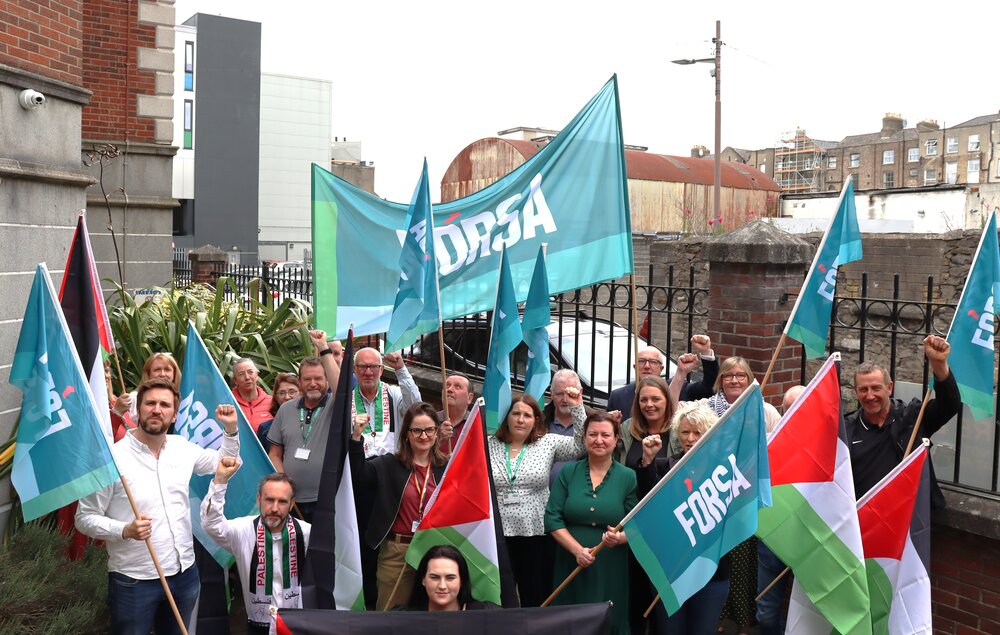
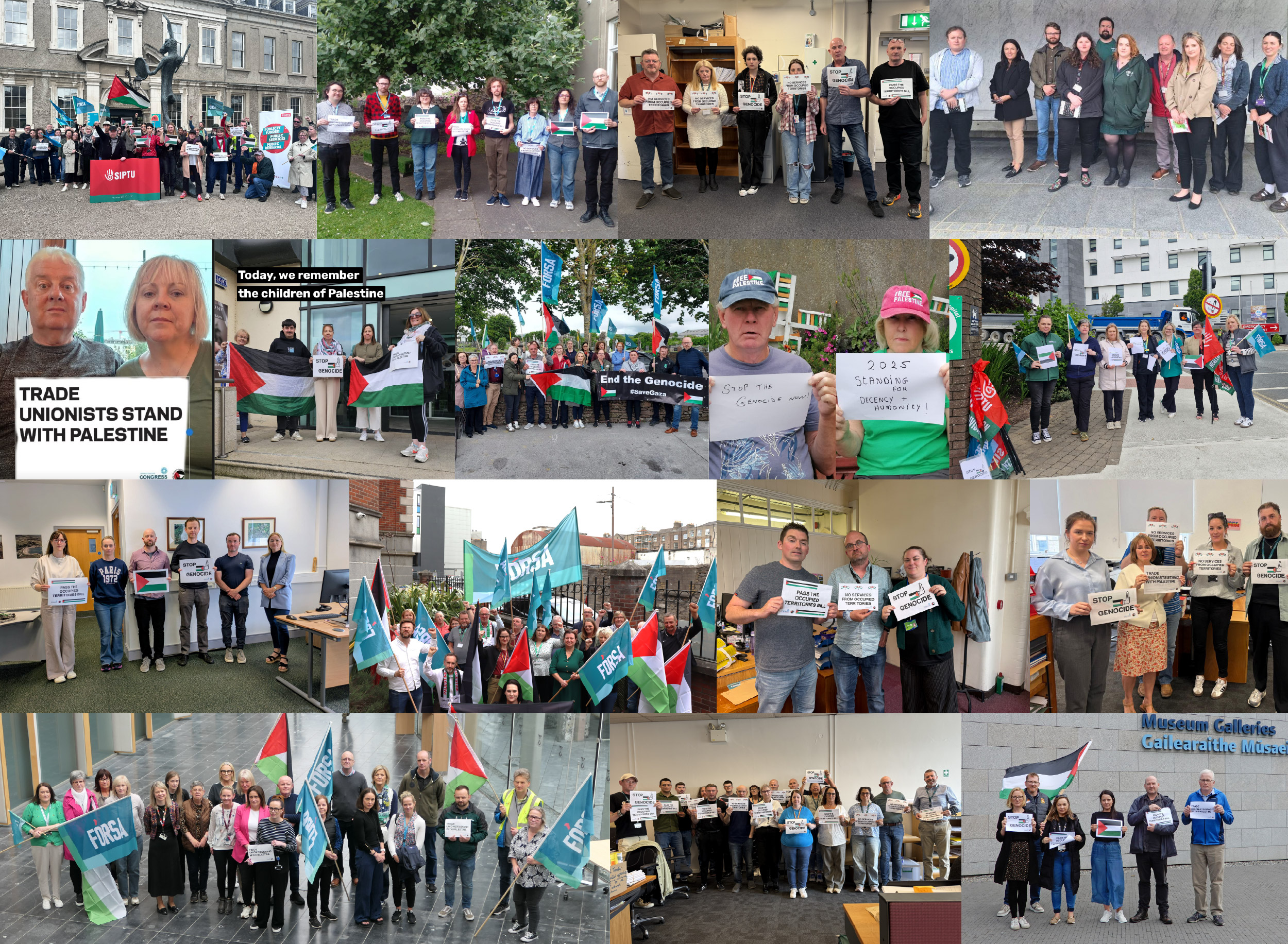
The launch of the petition follows the #StandWithPalestine action which took place on Wednesday 4th June. At 1.05pm, workers showed their support for the people of Palestine by taking a moment to reflect and remember the children who have died in the ongoing conflict in the Middle East.
The event, an initiative of the Irish Congress of Trade Unions (ICTU), brought together Fórsa members and fellow trade unionists from across the movement.
Members took photos in their workplaces and posted them to social media using the hashtag #StandWithPalestine.
Speaking about the event Kevin said “We saw participation from all divisions of the union, with all kinds of workplaces, and even members working from home taking part. Churches around the country also rang their bells in a moving and solemn show of solidarity.”
The event was organised to coincide with the International United Nations Day of Innocent Children Victims of Aggression in remembrance of the more than 15,000 children confirmed to have died and over 34,000 injured in the twenty-one months since Israel began its brutal assault on Gaza.
Join a union that wins. Join Fórsa.
School’s out for summer
by Brendan Kinsella
More trainings ahead and a big surprise for this year's course participants.
June signals the end of the academic year, but Fórsa’s Skills Academy won’t be slowing down. The monthly Fórsa Induction and Lunch & Learn sessions will continue over the summer break. The team will also be busy organising next year’s courses; a full schedule is available here.
Applications for September courses will open beginning in the last week in June and will be advertised here, in the members’ bulletin, as well as sent directly to branches. The Skills Academy is aware of a number of employments that require up to eight weeks’ notice to secure release, which is why applications open with plenty of time to request release.
Coming up this June, the Skills Academy has a LGBTQIA+ themed Lunch & Lunch, and the exciting first ever Skills Academy Certificate Award Ceremony.
Skills Academy Certificate Award Ceremony – 2.30pm 24th June - Nerney’s Court
The first ever Skills Academy Certificate Award Ceremony will take place on Tuesday 24th June at 2.30pm, in Nerney’s Court, following the Consultative Council. This first ceremony will be for students of the Level 1 Workplace Representatives’ Training, Level 2 Workplace Representatives’ Training, Mentoring programme, and Leadership programme from the classes of 2024-2025.
It is hoped that this will become a twice-yearly event with the remainder of the certificates presented following the Consultative Council in November.
Branch officers are encouraged to support their branch colleagues and join with other students, branch reps, national officers, and Fórsa staff to celebrate their achievement and partake of some light refreshments.
If you would like to attend, please let the Skills Academy know by sending an email entitled “ATTENDANCE CERTIFICATE AWARD CEREMONY” to Judith at skillsacademy@forsa.ie
Live: Lunch & Learn – Supporting our LGBTQIA+ Colleagues – 1-2pm Friday 27th June – Online
To celebrate Pride month and our LGBTQIA+ members, the June session of Lunch & Lunch will be Supporting our LGBTQIA+ colleagues. Skills Academy will be joined by guest speaker Lenn Viken (they/them), a trainer with LGBT Ireland who has engaged in queer activism, education and politics across Norway, France and Ireland for almost a decade.
In this session, you will learn about the experiences of LGBTQIA+ people in Ireland at present, the importance of promoting LGBTQIA+ inclusion, and tools to make your own workplace more inclusive. There will also be a short history of the queer rights movement in Ireland.
Lenn believes in creating an inclusive and non-judgemental environment for knowledge diffusion and discussion, so members who don’t have a clear understanding of LGBTQIA+ issues are encouraged to take part.
If you are interested, you can register here.
Watch back - Lunch & Learn 30th May - Fórsa mentoring programme
Last month’s Lunch & Learn is now available on the Skills Academy YouTube. For those who missed it, this session took a look back on the first year of Fórsa’s mentoring programme. The Skills Academy were joined by programme participants and tutors to discuss what went right, what could be improved, how participants benefitted, and what plans lie ahead for year two.
If you are interested in knowing more about the benefits of mentoring and how you and your branch can participate in this year’s programme, the video is linked here.
Join a union that wins. Join Fórsa.
|
|
"We must protect the progress we’ve made—and go further"
Close to 100 motions were on the agenda at the Civil Service divisional conference in Galway last week. Delegates spoke passionately about the challenges they face at work and the solutions they want to pursue with their union.
Close to 100 motions were on the agenda at the Civil Service divisional conference in Galway last week. Delegates spoke passionately about the challenges they face at work and the solutions they want to pursue with their union.
From pay and working conditions, to blended work, political activity, and inclusion, the diversity of issues raised demonstrated the diversity of members in the division.
Blended working dominated debate on the first day of conference. Delegates spoke at length about how blended work has impacted their lives for the better, and how morale is drastically impacted when requests to work from home are unfairly refused. Delegates also emphasised the contribution of blended working to society and the State.
Gary Fagan of the DSP Executive branch told delegates that blended working had become an essential part of how many in the Civil Service operate. He said: “It's our responsibility to ensure that these arrangements are secured in the long term. It's working for members, it's working for services and it's working for the State. We must stand for evidence-based policies, not a rushed return to outdated ways.”
Olasubomi Oyenuga, from the Longford clerical general branch, said blended work was about respect, fairness, and the kind of civil service we want to build. She talked about the punitive and unfair manner in which blended working requests are sometimes responded to, and urged delegates to support the motion saying "We must protect the progress we’ve made—and go further."
The sheer diversity of issues faced by civil servants and, the diversity of workers in the civil service was highlighted throughout the day on Thursday.
Deirdre Morgan, chair of the Legal Professionals branch, brought forward motion 65 calling for mobility to include professional and technical grades, underlining that when those working at general services grades have access to mobility but those who are on professional grades cannot avail of it, it becomes a discriminatory practice and limits career progression.
Hazel Menton of the Archivists branch brought forward a motion on the protection of grading structures for professional and technical grades. Hazel is a member of the National Professional and Technical Committee (NPTC) which is an Equivalent Grades Committee, working to represent professional and technical grades in the civil service.
A poignant moment came during the debate on Motion 33, which called for the establishment of disability, neurodiversity and chronic illness policies within civil service organisations.
Delegates gave a standing ovation to a member who movingly told of how her recent ADHD diagnosis had helped her, she said : “I’m intelligent, I’m strong, and I’m resilient -and I’ve known this since I was diagnosed with ADHD two years ago. I support this motion, but I also believe it’s important to work with the union to explain what ADHD is and raise awareness.”
Two motions calling on the CSDEC to work to reform the blanket ban on political activity by civil servants also passed.
Speaking to both motions, Cathal Kelly of the Finance, PER and Associated Organisations branch said: “There is nothing sacred about the work that civil servants do that means we should be banned from all forms of political activity.”
He continued: “Our blanket ban is excessive, and it is a denial of our rights to be full and active citizens. It bans us from participating in activism on human rights, climate change, in activism on policy on sport to the arts.”
Speakers from the FGE branch spoke passionately about the need to protect their jobs from outsourcing. Ellie Brennan told conference that there are some departments that aren’t recruiting FGE grades anymore and cited the reduction of service officers in Dublin Castle which has reduced from 22 to 7 as an example. Supporting their calls for solidarity, conference sent a strong message that outsourcing service officers’ work will not be supported by the union.
On Friday members passed motions on annual leave and on Gaeltacht Irish language courses.
A number of motions on AI were debated. Delegates emphasised the need to protect jobs, the importance of the ethical and transparent implementation of AI and called for training on AI literacy.
Motions on health and safety covered the full range of health risks at work and demonstrated the very real safety issues members face, from antisocial behaviour to bullying and psychosocial hazards, speaker after speaker sent a clear message that everyone has the right to feel safe at work.
Commending members for their commitment to debating motions, deputy general secretary and head of division Éamonn Donnelly said: “The motions passed by conference will shape our work over the next two years and I would like to thank delegates for their hard work drafting and speaking on motions.”
Join a union that wins. Join Fórsa.
Conference calls for analytics-based review of blended working
by Niall Shanahan
Blended work dominated debates on the first day of the Civil Service divisional conference. Delegates unanimously backed a motion calling for an analytics-based approach to any future review of blended working across the civil service.
Delegates at Fórsa’s civil service divisional conference last week, in Galway, unanimously backed a motion calling for an analytics-based approach to any future review of blended working across the civil service.
The motion, brought by the division’s executive, calls on the union to insist that any forthcoming review—such as that anticipated in the Programme for Government—must be underpinned by “a rational, jointly agreed framework of analytics.”
Delegates stressed that any such review must assess a wide range of relevant factors, including public service delivery, workforce productivity, environmental impact, quality of life, and caregiving flexibility.
Addressing the motion, Fórsa deputy general secretary Éamonn Donnelly said:
“What we’re calling for is a mature, evidence-based discussion—one that recognises the benefits of blended working for the worker, the workplace, the employer, the environment, and the wider public. It’s not about preferences. It’s about what works.”
Éamonn commended members for their strong and united response to recent unilateral attempts by some departments to roll back agreed arrangements: “Our members stood firm in February. That solidarity made clear that arbitrary changes without consultation won’t be accepted.”
Fórsa member Gary Fagan told delegates that blended working is now an essential part of how many civil servants do their jobs: “It’s working for members. It’s working for services. And it’s working for the State. We need to ensure these arrangements are secured and strengthened, not undermined.”
Cathal Kelly, also speaking in support of the motion, referenced survey research from his branch showing that four-fifths of members with caring responsibilities would have to alter their arrangements if required to spend more time in the office. Most said such a shift would negatively impact their productivity.
His remarks were reinforced by findings from a recent UK study conducted by the Global Institute for Women’s Leadership at King’s College London and King’s Business School. The research showed that only 42% of workers would comply with a five-day return-to-office requirement—down from 54% in early 2022—highlighting the growing acceptance of hybrid models.
Éamonn said the study added to a growing body of evidence confirming that blended working is no longer a temporary post-crisis measure: “What employer seriously believes that time spent commuting is more valuable than time spent working productively?”
He also confirmed the issue had been on the agenda at the civil service general council earlier that same day, and that the Department of Public Expenditure, NDP Delivery and Reform is considering engagement in a process based on analytics.
Outgoing civil service Cathaoirleach Helen Linehan echoed this message in her opening address to delegates: “From the outset, Fórsa made it clear—blended working is not a pandemic-era favour to be withdrawn at a whim. It’s a negotiated, structured arrangement rooted in what works best for productivity, service delivery, and work-life balance.
“The real question is: why would any employer seek to reverse this progress except to reinforce outdated ideas about management and control?”
The conference motion passed unanimously.
Join a union that wins. Join Fórsa.
LDA staff survey: help us spread the word
by Hannah Deasy
Share this survey with anyone you know working in the Land Development Agency.
Fórsa is running a survey for Land Development Agency (LDA) staff, aimed at strengthening the union’s understanding of workplace issues and promoting the benefits of union membership.
Union members who work in the LDA are members of the Services and Enterprises division of the union, however workers in the LDA regularly work with local authorities and the civil service, so we’re asking you to please share this survey with anyone you know who works in the LDA.
The survey can be accessed here and is open to all LDA staff, even if they haven’t joined the union yet.
Fórsa has been engaging with the LDA to formally establish an agreement that would allow the union to represent members on collective matters such as pay, terms and conditions. However, the employer is currently refusing to agree to this, and Fórsa has sought the assistance of the Workplace Relations Commission (WRC).
Fórsa official David Field said, “It’s been a frustrating number of months trying to engage with LDA management to establish normal industrial relations within the company. Management has been avoiding a meeting and refusing to allow us to enter the workplace to meet with our members and potential members.”
“We have been engaging with members remotely and off-site to ensure we can answer any questions they may have, and we want to deepen our understanding of workplace issues with the launch of this union survey for all LDA staff.”
David continued: “Fórsa has a broad membership across local authorities, state agencies and private sector employments, and represents a diverse range of professions, including planners, architects, engineers, management, inspectors and administrative staff. We assist our members and activists in negotiating improvements to their pay, terms and conditions and delivering real wins for workers. We want to help our members in the LDA achieve similar improvements in their workplace, something that management is unfortunately trying to obstruct.”
Fórsa national secretary, Katie Morgan said, “It is disgraceful that a state-funded body is refusing to recognise the union for collective bargaining. The employer may think that stopping officials from entering the premises or refusing to meet the union will stop the workforce from organising, but we will continue our efforts to support members and LDA staff.”
“We’re asking all Fórsa members who liaise with LDA staff, or know them personally, to share the survey with them and offer messages of support and solidarity.”
Join a union that wins. Join Fórsa.
Employers in receipt of public funds must recognise unions
by Hannah Deasy
Workers’ rights and access to collective bargaining should be at the centre of Ireland’s public procurement policy.
Fórsa has contributed a submission to the government’s public consultation on the first National Public Procurement Strategy for Ireland.
The union’s submission focuses on ensuring all public procurement is socially responsible, through the inclusion of mandatory selection and award criteria that would ensure workers can access collective bargaining through their trade unions.
Fórsa argued that public procurement rules must ensure that employers bidding for, or in receipt of public funds, recognise trade unions for collective bargaining purposes, engage in good faith when such engagement is initiated and have a union-negotiated collective agreement in place to receive public funds.
Government and state bodies have strong purchasing power which should be leveraged to improve living standards for workers.
Furthermore, the submission highlights the government’s ambition to increase collective bargaining coverage across the Irish labour market, in line with the objectives of the EU Directive on Adequate Minimum Wages.
Fórsa’s research and policy officer Aisling Cusack explained that introducing regulations that require a union-negotiated collective agreement as a prerequisite for eligibility for public procurement would help advance that ambition.
She said: “Workers’ rights and access to collective bargaining should be at the centre of Ireland’s public procurement policy. The development of a new national strategy presents a timely opportunity for the state to get behind workers and promote fair pay and decent working conditions for all workers.”
“The government must move away from an approach to public procurement that focuses solely on cost. This approach, to what is effectively an outsourcing of public work, only fuels a race to the bottom, rewarding companies with the lowest bids, often at the expense of workers’ rights and union recognition.”
Aisling concluded: “There is an onus on the government to ensure that companies awarded state contracts act in the public interest, by ensuring that they respect workers’ rights, recognise trade unions for collective bargaining, and have a union-negotiated agreement in place.”
Join a union that wins. Join Fórsa.
Raise the Roof protests in Dublin and Cork
by Brendan Kinsella
Union-led housing campaign returns with demos on 17th June in Dublin and 21st June in Cork.
Fórsa is calling on members to join the ‘Raise the Roof’ protests in Dublin and Cork this month to demand urgent government action on the deepening housing crisis.
The demonstration in Dublin will take place at 6pm Tuesday 17th June, outside the Kildare Street gate of Leinster House, while the demonstration in Cork city will take place on Saturday 21st June, beginning at 2pm at the National Monument on Grand Parade.
Fórsa will participate in both demos as a member of ‘Raise the Roof’ and is actively involved in organising the event.
The ‘Raise the Roof’ campaign consists of a broad coalition of trade unions, civil society groups, and political parties who are demanding the government stop acting as a bystander and take concerted and effective action to address the deepening housing crisis.
The government has repeatedly failed to meet its own construction targets, with the Housing Commission now estimating a shortfall of 250,000 homes and predicting the government will continue to miss construction targets by tens of thousands.
The failure to meet construction targets is leading to spiralling costs of rent and property prices. Rents now average at €2,000 across the country, and property prices have risen to almost 20% more than at the height of the Celtic Tiger.
Fórsa head of campaigns Kevin Donoghue said, “Members have repeatedly identified housing as a key concern for them. The recent local government conference saw half a dozen housing motions being brought to the floor. Lack of affordable housing is having a serious impact on people’s lives and careers.”
He continued, “Not being able to find somewhere to live can be a barrier to taking on a new job or accepting a promotion in a different location.
“Our members keep the State working. We need the government to take this crisis seriously we need a radical shift in policy, one that is focused on the provision of affordable housing for all.” he concluded.
The ‘Raise the Roof’ campaign has set out a clear set of policy demands which include:
- An expanded programme of public housing on public land, led by local authorities and housing bodies to deliver affordable housing.
- Ensure that at least 20% of all housing is public housing, In line with Housing Commission report.
- Move to a genuinely affordable not-for-profit cost rental model.
- Full restoration and expansion of the tenant-in-situ scheme.
- Urgent action to tackle the tens of thousands of vacant and derelict properties.
- An immediate restoration of the ban on no fault evictions and a freeze on all rent increases.
- And most of all, we need a clear commitment that workers will be able to live in the communities they serve.
Join a union that wins. Join Fórsa.
|
|
|
|