We want to hear from all members, whether you have access to remote work or not – this is about how you work now, in the future, and what kind of society we want.
The survey is designed to build a detailed, evidence-based picture of how members are currently working, how those arrangements affect their lives, and what protections they want secured in future negotiations.
The new survey is open to all members, including those who do not currently have access to remote or hybrid arrangements. The union says that understanding the full range of working experiences - including barriers to flexibility - is essential if it is to negotiate effectively.
The move comes ahead of the expiry of the current Public Service Pay Agreement in June, with signals that remote and hybrid working could be a central issue in the next round of talks.
Fórsa general secretary Kevin Callinan said the experience of the pandemic had fundamentally reshaped expectations around work.
“During and after the pandemic, we all proved that alternative ways of organising the working day are not only possible, but better. Productivity held. Services ran. Communities and families reaped rewards. The question now is: who gets to decide what happens next?”
“This isn’t just about how you are working now. It’s about how you want to work in the future and what kind of society you want to live in.”
During Covid-19 restrictions, large sections of the workforce shifted rapidly to remote and hybrid models. While many of those arrangements have continued, access and implementation now vary significantly across departments, agencies and grades.
Union research conducted last year found that more than half of respondents considered remote working to be as important as pay. All of this has strengthened the union’s determination to treat flexibility as a core workplace issue rather than a peripheral or accidental benefit.
“This isn’t simply about where you work,” Kevin said. “It’s about work-life balance, equality of access, regional development, gender equality and how modern public services are organised. Things that were once seen as radical are now seen as not only practical, but obvious.”
Kevin warned that without collective action, flexible arrangements could become uneven and insecure: “We can’t allow remote and hybrid working to become a privilege for a small minority. If it’s worth having, it’s worth fighting for - and securing collectively. The better we understand how our members are working today, the better we can protect and enhance remote and hybrid working for all.”
Employers across the public service have been reviewing attendance policies over the past year, with some departments tightening in-office requirements. This has led to growing concern among members about the long-term security of hybrid arrangements.
The survey, which is being conducted independently by Amárach Research on behalf of Fórsa, will gather data on current working patterns, commuting times, productivity, wellbeing, and members’ preferences for future organisation of work.
Participation is voluntary, and the union has stressed that all responses will be anonymous and confidential, with findings reported only in aggregate form.
With negotiations on the next public service agreement looming, the outcome of the survey is likely to shape how forcefully remote and hybrid working feature in the union’s demands.
As Kevin put it: “Workers’ voices need to be at the centre of the discussions on the issues that affect us. All the evidence and feedback points to the benefits of new patterns of working and how it removes unnecessary stress and friction from people’s lives. Now the battle will be who gets to decide its future.”
The survey closes on Sunday 15th March, and members are being encouraged to complete it as soon as possible. You can complete the survey here.
The next round of local bargaining negotiations in the civil service will begin today, with Fórsa due to meet with representatives from the Department of Public Expenditure, Infrastructure, Public Service Reform and Digitalisation.
The next round of local bargaining negotiations in the Civil Service will begin today, with Fórsa due to meet with representatives from the Department of Public Expenditure, Infrastructure, Public Service Reform and Digitalisation.
The Engineers grade claim was lodged last year and follows a similar model to other claims submitted by the union, seeking removal of points on the Engineer scales, removal of waiting times for long service increments (LSI), and increases to the maximum points on the scale.
The Engineer grade is considered a ‘marker grade’ as a range of professional grades, not only in the Civil Service, but in the wider public service are directly linked to Civil Service Engineers pay scales.
Deputy general secretary and head of the Civil Service division Éamonn Donnelly expressed cautious optimism about the talks. He said: “Now that the first phase of local bargaining claims for COs, AOs, EOs and HEOs have come into effect, we are on a good footing for these talks. Nonetheless it is vital that we make progress in a timely fashion as members have been waiting for this since last year.”
The application of the first set of pay adjustments for civil servants, agreed under the local bargaining clause of the Public Service Agreement 2024–2026, came into effect following publication of the Government’s latest pay circular.
The new pay arrangements will apply from 1st September 2025, following approval of the proposals by Fórsa members in a ballot that closed in December.
In this opinion piece general secretary Kevin Callinan writes that the future of work in Ireland won't be automated, it will be negotiated.
The future of work in Ireland is not automated. It’s negotiated.
If we asked previous generations what once felt absurdly out of reach for Irish workers, they might say: “A weekend, paid holidays, maternity leave, even a chance to see your children before bedtime.”
Most of what was then dismissed as mad, utopian or economically impossible eventually became reality because workers made it so.
Those earlier transitions remind us of a simple truth: machinery and technology are not the primary drivers of progress, people are. And as Ireland confronts the rise of Artificial Intelligence (AI), it’s workers who must again shape what comes next. History highlights how powerful workers can be in shaping the future. Yet right now, the Irish workforce is deeply uncertain about this latest wave of technological change.
Recent polling paints a striking picture of how Irish people feel about AI. A Sunday Independent/Ireland Thinks survey in December found 48% of respondents believe AI will be a negative force in Irish life, with just 27% positive. An Ipsos B&A poll the previous month had similar findings on AI and employment.
Most striking of all: young people - typically the optimistic early adopters of new technology - are the most pessimistic. As journalist Mark Little observed: "The digital natives are jaded by Big Tech companies that promise empowerment but make the future ever more precarious. They sense the hammer of AI falling in the workplace, removing entry-level jobs that were a gateway to a stable career."
This should concern us all. If a generation raised on technology sees AI as a threat, not opportunity, it is a sign that we’re mismanaging this transition.
History tells us their concern is well-founded. According to the Economic Policy Institute, between 1948 and 1973 - during the dawn of the computing age - a 97% jump in productivity was coupled with an inflation-adjusted 91% increase in average hourly wages. Workers and employers shared in the gains of technological progress.
But between 1973 and 2013, productivity increased by another 74% while, when similarly adjusted for inflation, average hourly compensation increased by just 9%. Workers were getting more productive thanks to technological advancement, yet they were rarely the ones who benefitted.
Too often, AI is presented as a tool for efficiency alone: a way to cut costs, shrink headcounts, and squeeze more from fewer people. If that's all it becomes, we already know the outcome. Workers who feel the ground shifting beneath them, with no say in where it settles, do not stay silent forever.
But it doesn't have to be this way. We can choose a path where technology expands human potential, not compresses it - one that safeguards responsibility and protects the judgment, creativity and empathy that make us human, rather than treating them as inefficiencies to be engineered away.
If AI genuinely makes us more productive, that productivity can be channelled into something better than leaner payrolls and longer hours. It can mean improved conditions. It can mean more time for life outside work. It can mean reinvestment in the public services on which Irish people depend. The choice is not between progress and fairness - it's about whether we have the will to pursue both.
Workers have the capacity to organise, to act together, and to insist that technological change benefits the many, not just the few.
This isn't utopian thinking. The Oireachtas Joint Committee on Artificial Intelligence, in a recent interim report, emphasised AI decisions should be "rooted in human rights and equality considerations". It warned "a key focus for Government must be how to avoid deepening existing inequalities."
Cross-party consensus recognises AI adoption must be handled carefully. What's missing is a strong voice for workers in that conversation.
The trade union movement has long understood technological change is not something that simply happens to workers - it is something that can and must be shaped by them. Recent research conducted by Amárach among 14,000 Fórsa members showed their priorities were clear: safeguarding hybrid and remote working, more flexible working arrangements, and a shorter working week. They feel as strongly about these issues as they do about pay. And more than eight in 10 say they're prepared to take action to secure them.
The Government has a role to play too, not just as regulator, but as Ireland's largest employer. It can lead by example: adopting AI to the highest ethical standards, while demonstrating the gains are shared with workers and reinvested in public services.
The current public service pay agreement expires in June. What comes next can be a beacon for all employers and workers across the country. When discussions begin, civil and public servants will want to see a fair, negotiated approach to AI on the table, where AI doesn’t replace what makes our work human, but instead gives people more space to do it.
When workers lead, the impossible becomes possible, progress becomes shared, and Ireland moves forward together.
This opinion piece by Fórsa general secretary Kevin Callinan originally appeared in the Irish Examiner on Thursday 19th February 2026.
Women and younger workers are the most likely to feel they are excluded from workplace decisions and lack equal negotiating power with employers.
A majority of Irish workers believe their pay does not fairly reflect the skills and effort they bring to their jobs, according to new polling published earlier this week by the Irish Congress of Trade Unions (ICTU).
The Ireland Thinks poll of 1,850 people reveals that 52% of workers say their current pay fails to match their contribution to their job, compared to just 44% who feel fairly compensated.
The survey reveals that the sense of unfair pay is compounded by workers' lack of influence in the workplace. A striking seven out of ten (68%) workers polled feel they do not have the same level of power as their employer when negotiating terms of employment. Just one in four workers (24%) believe they can negotiate on equal footing with their employer.
Commenting on the findings, Fórsa deputy general secretary and ICTU vice-president Katie Morgan said: “Economies that put collective bargaining at the centre of their labour market are more successful, more productive, and more equal. Strong worker voices lead to better jobs and stronger economic performance.
“In the absence of a strong collective bargaining arrangement for Irish workers, these survey results should not surprise Government, but should serve as a warning,” she emphasised.
The polling reveals particularly sharp disparities across groups:
Women are significantly more likely than men to feel shut out of workplace decisions, with less than half (48%) saying they have a meaningful say, compared to 60% of men.
Younger workers aged 18-34 are least likely to feel they have equal negotiating power with employers (17%), compared to 37% of those aged 65+.
Workers who identify as working class are more likely to say their pay is unfair (66% say no) compared to middle class workers (40% say no).
The findings come as the Irish Congress of Trade Unions launches its Good Jobs report, calling on the Government to raise employment standards. The report follows similar proposals from the European Commission and the Northern Ireland Executive, as well as a new Employment Rights Act recently passed into law in Britain.
Among other measures, the report calls for Government to:
End the employer veto and ensure workers have a legal right to engage in collective bargaining through a union.
Raise minimum employment standards, by increasing statutory sick leave, and bringing the minimum wage into line with the living wage.
Provide better work-life balance through pay-related family leave benefits and flexible working arrangements.
Katie added: “Irish workers want the Government to live up to its own commitments. The findings of the High-Level Group on Collective Bargaining were clear, workers need a real, enforceable right to bargain collectively if they are to have a meaningful voice in their workplaces.”
“Across Europe, these policies are becoming the norm. The British Government has passed the most significant employment rights legislation in decades. The Northern Ireland Executive has proposed its own Good Jobs Bill. The European Commission is advancing a Quality Jobs Act. Yet Irish workers are being left behind by their own government,” she said.
Turn solidarity into action by buying your own Fórsa-Palestine GAA jersey. Every jersey sold makes a real impact, directly supporting the children playing GAA in Palestine.
You can now order your own Fórsa-Palestine GAA Jersey to support GAA Palestine and show your solidarity with the people of Palestine. The jerseys are now available to purchase here.
Every jersey sold makes a real impact, directly supporting the children playing GAA in Palestine. Speaking about the initiative, Fórsa national secretary Richy Carrothers said: “This jersey is a unique symbol of solidarity, but more importantly, it delivers very real support to children and communities that desperately need it. This initiative is about more than sport; it is about turning solidarity into action.”
“When you buy this jersey, you are making a direct contribution to help the children in Palestine, as well as proudly showing your solidarity as Fórsa members and trade unionists.”
This initiative supports the work of GAA Palestine, a grassroots project that has grown over the past two years from a small sports therapy effort into a thriving network of five clubs across the West Bank. With vans on the ground and support from a cross-Ireland network, the organisation provides equipment, coaching, and safe sporting spaces for children to play hurling and Gaelic games.
Retired Clare player, Gordon Kelly, is one of the leading organisers of the project. Gordon underlines that jersey sales are the primary source of income for GAA Palestine, saying “This revenue enables everything we do, including purchasing equipment and training gear, hiring sports grounds, and rolling out new initiatives.”
"The Palestinian people, and particularly the children in the West Bank, have strongly and warmly embraced GAA sports. They have a great fondness for Irish culture, driven by their deep appreciation for the advocacy of the Irish people and the Irish government on the international stage.
“They view GAA sports as something unique, specifically calling hurling 'The Freeman's Sport'. They recognize that these games were not brought to Palestine by a colonial power; instead, they were introduced in an environment of genuine friendship and solidarity."
Encouraging people to buy the jerseys Gordon said: “Jerseys are a powerful way for people to show their solidarity with the people of Palestine, both in Gaza and the West Bank. By wearing the jersey, supporters show their moral support; by purchasing it, they contribute financially to vital initiatives on the ground.
GAA Palestine harnesses the power of Gaelic games to foster healing, community resilience, cultural exchange, and development. Their mission is to create sustainable pathways for growth and collaboration between Ireland and Palestine, promoting peace, understanding, and empowerment through sport. Read more about their work here.
A wide variety of fantastic courses in late March and April are now taking applications.
With February nearly behind us, the Skills Academy is now accepting registrations for its April courses. Don’t miss your chance to avail of fantastic courses like Public Speaking, Time Management, and Resilience Building.
If anything strikes your fancy, you can email your branch training officer or the Skills Academy for more information.
Fórsa Induction - Online - Wednesday 11th March - Open to all new members
Unravel some of the mysteries of Fórsa with this short welcome session for new members. Learn about the functions of trade unions, the structure of Fórsa, how we operate, and how members can become more engaged, have their voices heard locally, and raise issues at divisional and national levels.
Level 1, WRT – Tuesday 24th – Thursday 26th March – Wexford Union Office
This is a fantastic opportunity for workplace reps in the south-east of the country to learn how to not only fulfil their role as rep, but prosper.
The course is designed for reps with no previous experience or training. It will take place over three days. The only prerequisite for taking this course is that you are a workplace rep and have previously taken the Fórsa Induction module.
In this course you will learn all the basic skills that a representative will need in their first year, including:
the role and function of the workplace rep
improving interpersonal skills and building good working relationships
organising your union work
recruiting members and handling problems
an introduction to equality and diversity
health and safety.
Communications Training – Tuesday 31st March – Woodford Office, Santry, Dublin
This will be the last session of the branch comms training this academic year. Don’t miss your chance to learn the most effective tools for keeping your members informed, engaged, and active.
Time Management – Tuesday 14th April - Nerney’s Court, Dublin
Ever wish there were more hours in the day? Well, learn the tricks to make it seem like there are! This session will teach you all the ways to take control of your day and avoid the stress of looming deadlines.
Public Speaking – Tuesday14th April - Nerney’s Court, Dublin
Biennial Conference is just around the corner, and for many members it will be their first time speaking in front of such a large audience. If you are a delegate who will be speaking on a motion brought by your branch, and you aren’t yet confident in your ability to speak in public, then this course is for you.
In this session, you will learn how to handle those pre-stage jitters, speak clearly and confidently, and make the best of your time in the bright lights of the INEC in Killarney.
This course is for members who have previously attended the ‘Building effective local IR practices for course’ with Brendan Cunningham. This is the next step where you will learn how to handle IR issues when they come to conflict. Learn how to maintain positive working relationships without shying away from conflict and how to use conflict as an opportunity for positive change.
Branch Training Officers Seminar - Wednesday 15th April – Nerney’s Court, Dublin
A fantastic opportunity for branch training officers, and Branch Executive Committee (BEC) members covering training officer duties. Learn more about the role and meet with other training officers to discuss tips-and-tricks on how best to use training to benefit your branch.
Resilience Building Workshop – Tuesday 21st April – Nerney’s Court, Dublin
Learn how to enhance emotional intelligence and awareness of others, along with the tools and templates to effectively build personal resilience and reduce stress.
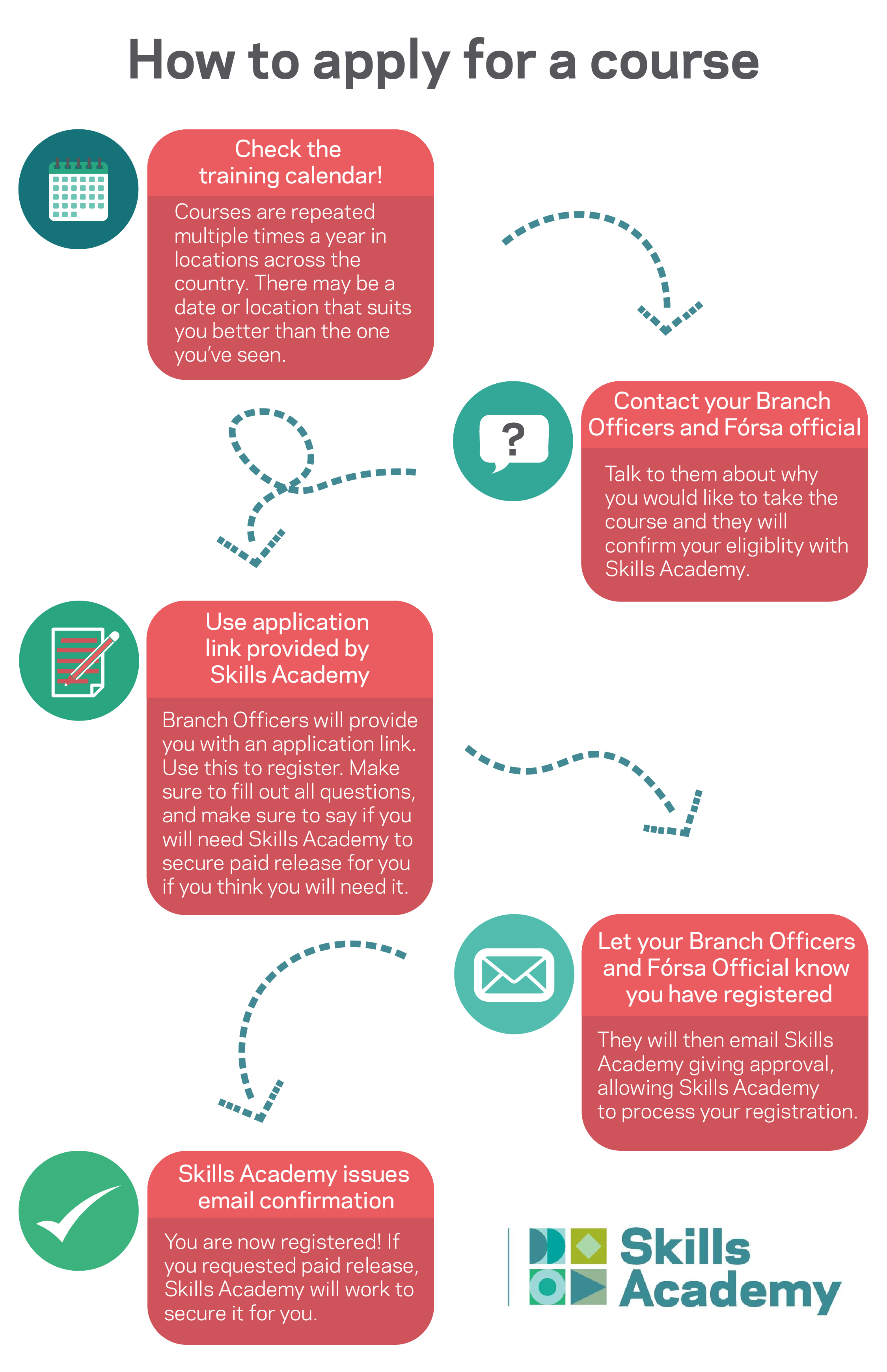
To register for a course:
Aside from Live Lunch & Learn sessions and Fórsa inductions, participation on all courses requires sign off from your branch and official. To apply, get in contact with your branch training officer or, if your branch doesn’t yet have one, your branch secretary.
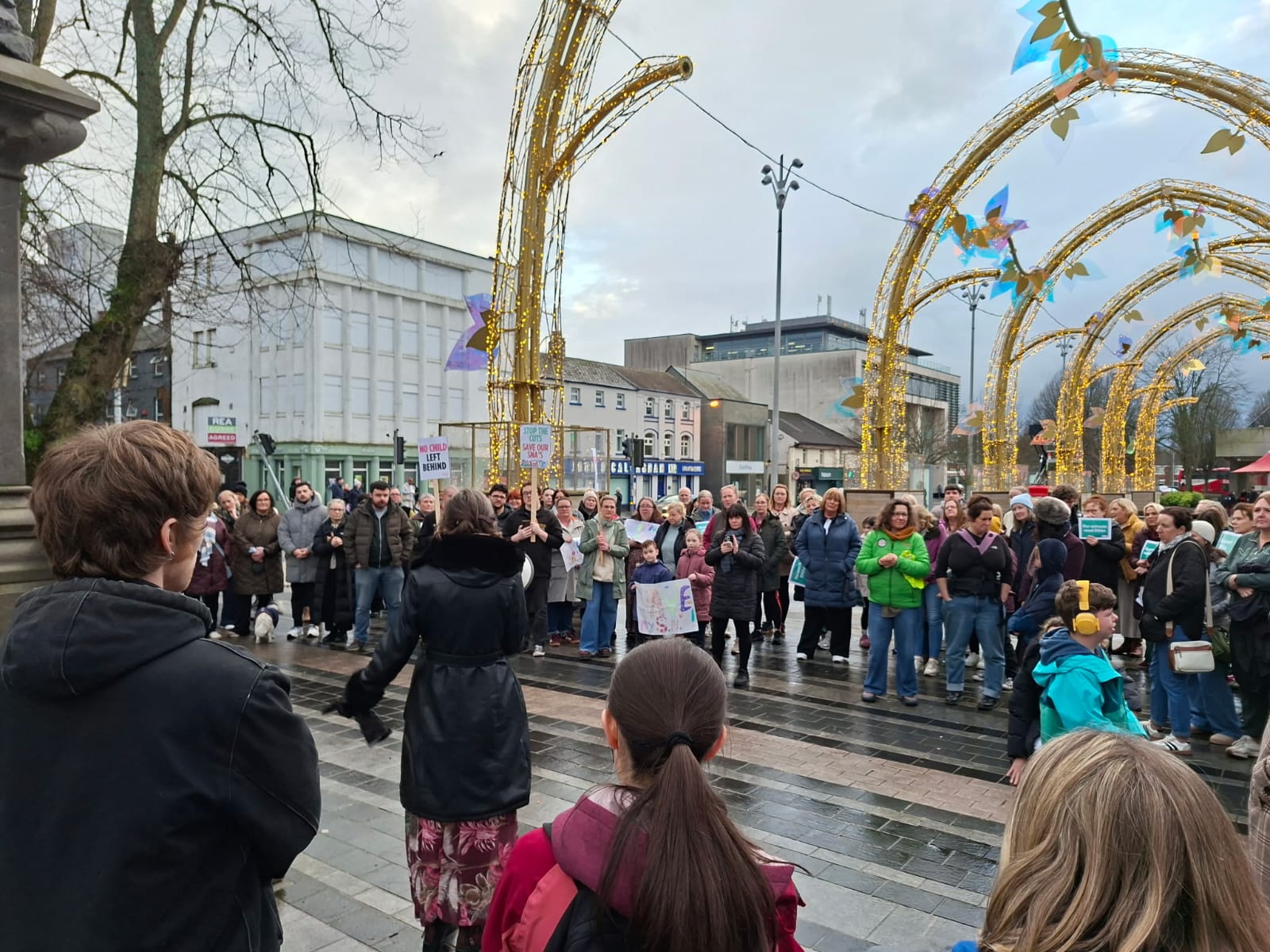
On Wednesday nationwide grassroots protests took place over proposed SNA cuts.
Watch our video recorded on the ground at Dáil Éireann during Wednesday's protest.
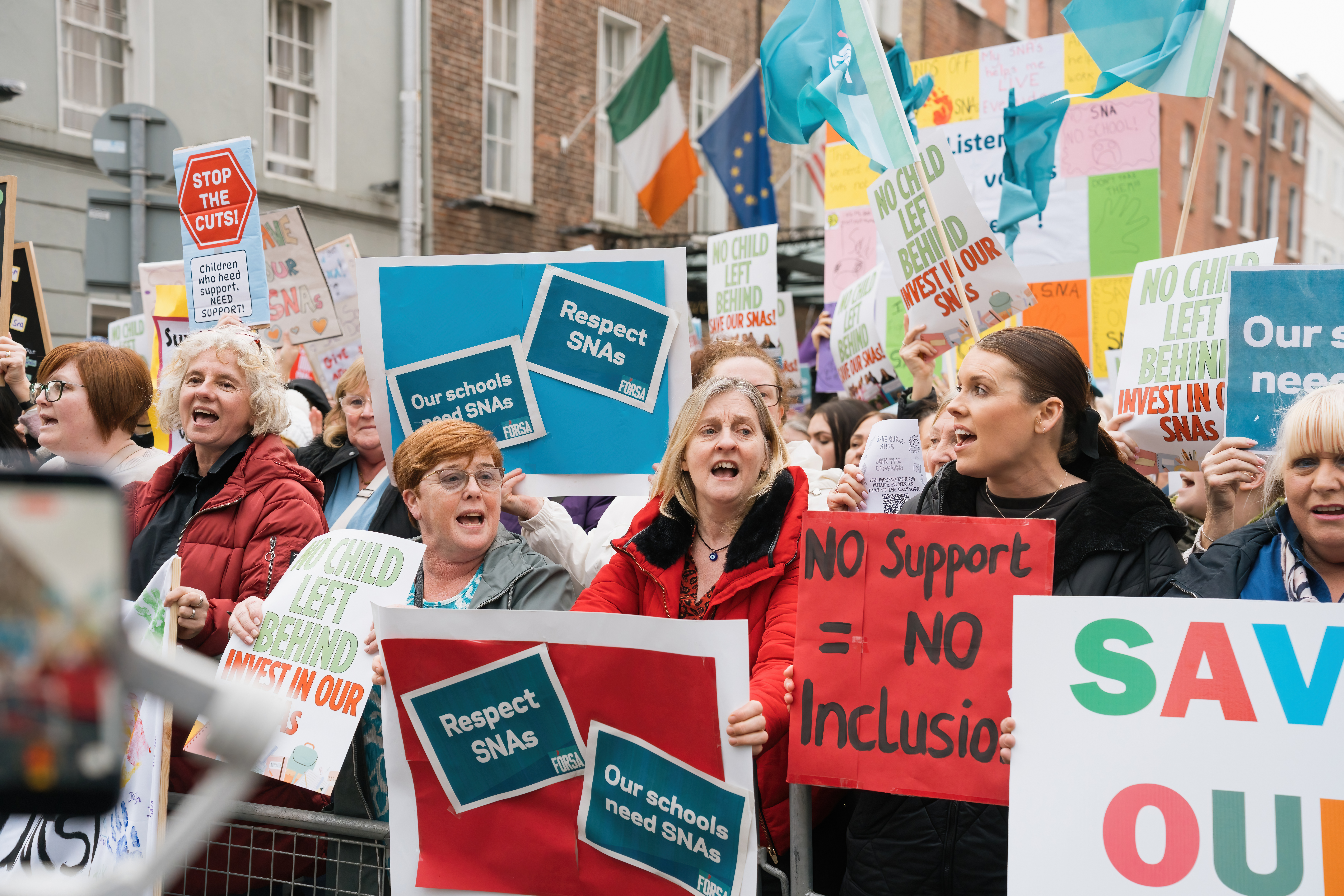
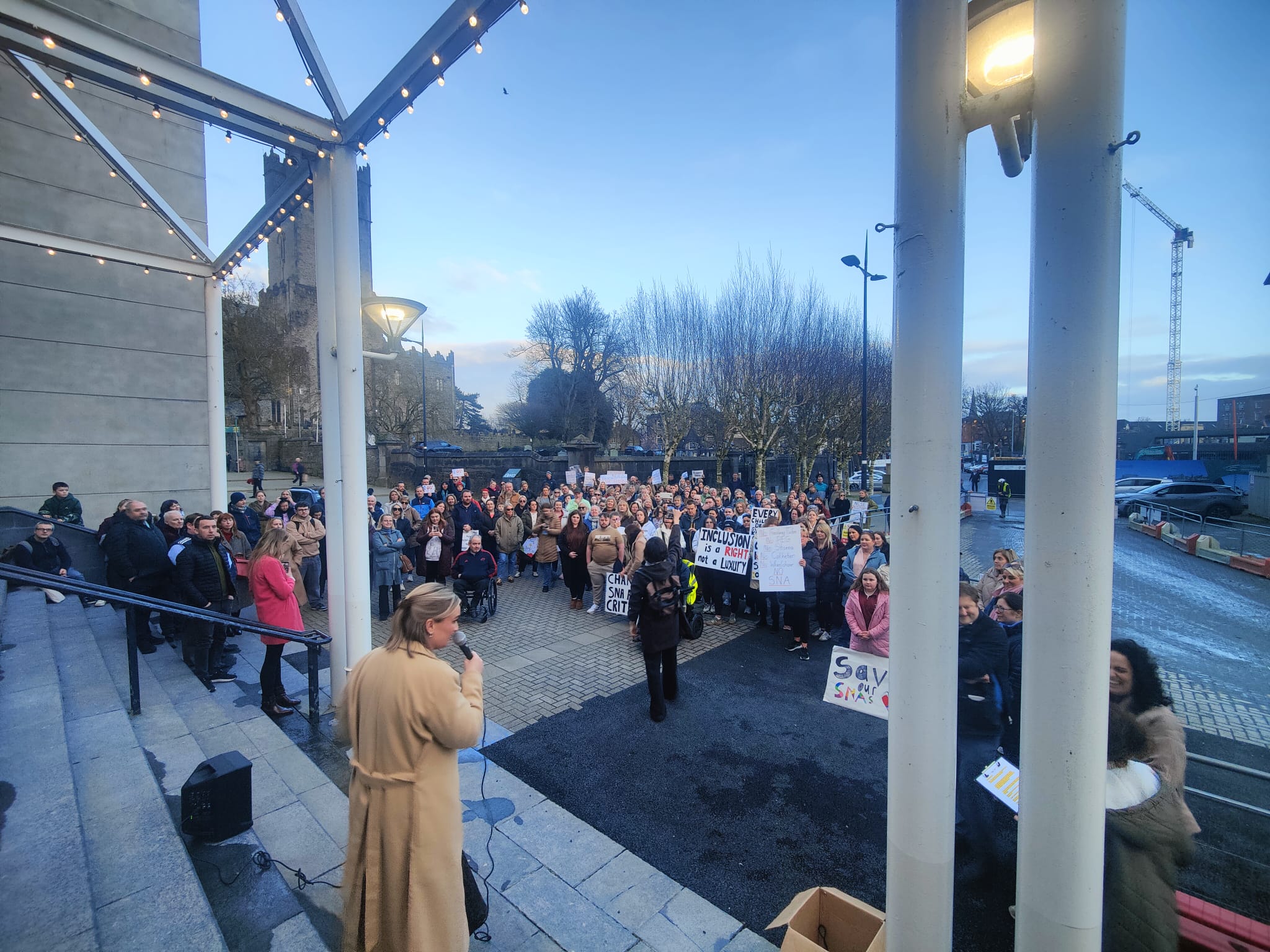
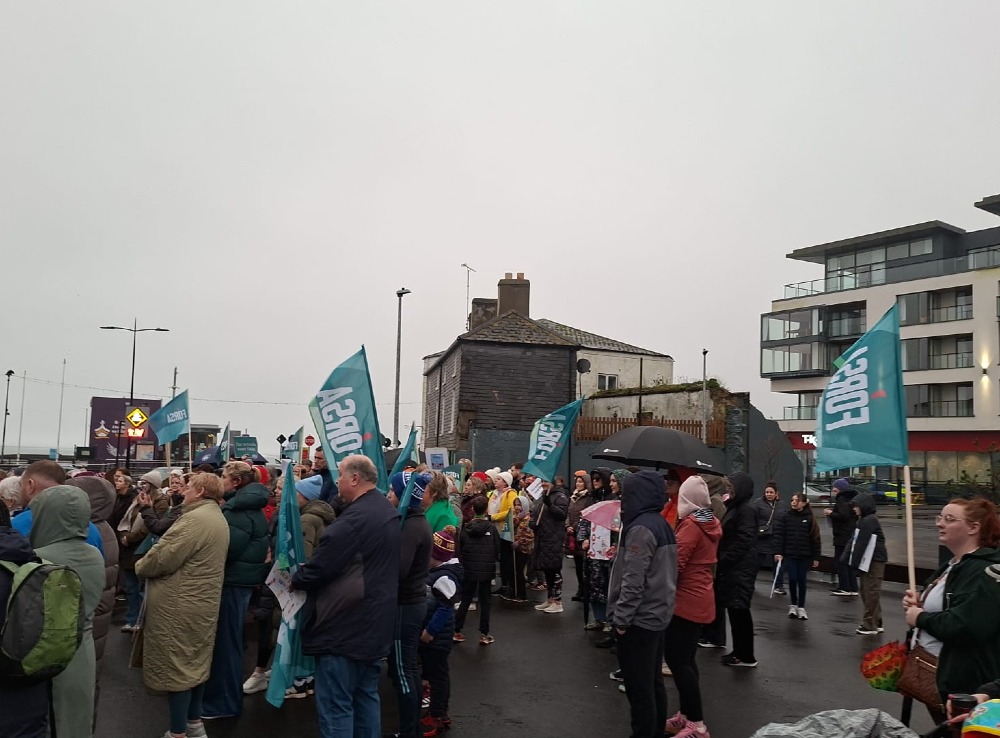
On Wednesday, from Market Square in Buncrana to Market Cross in Killarney, grassroots protests over reductions to Special Needs Assistants took place nationwide, with organisers struggling to keep an accurate tally of just how many were taking place.
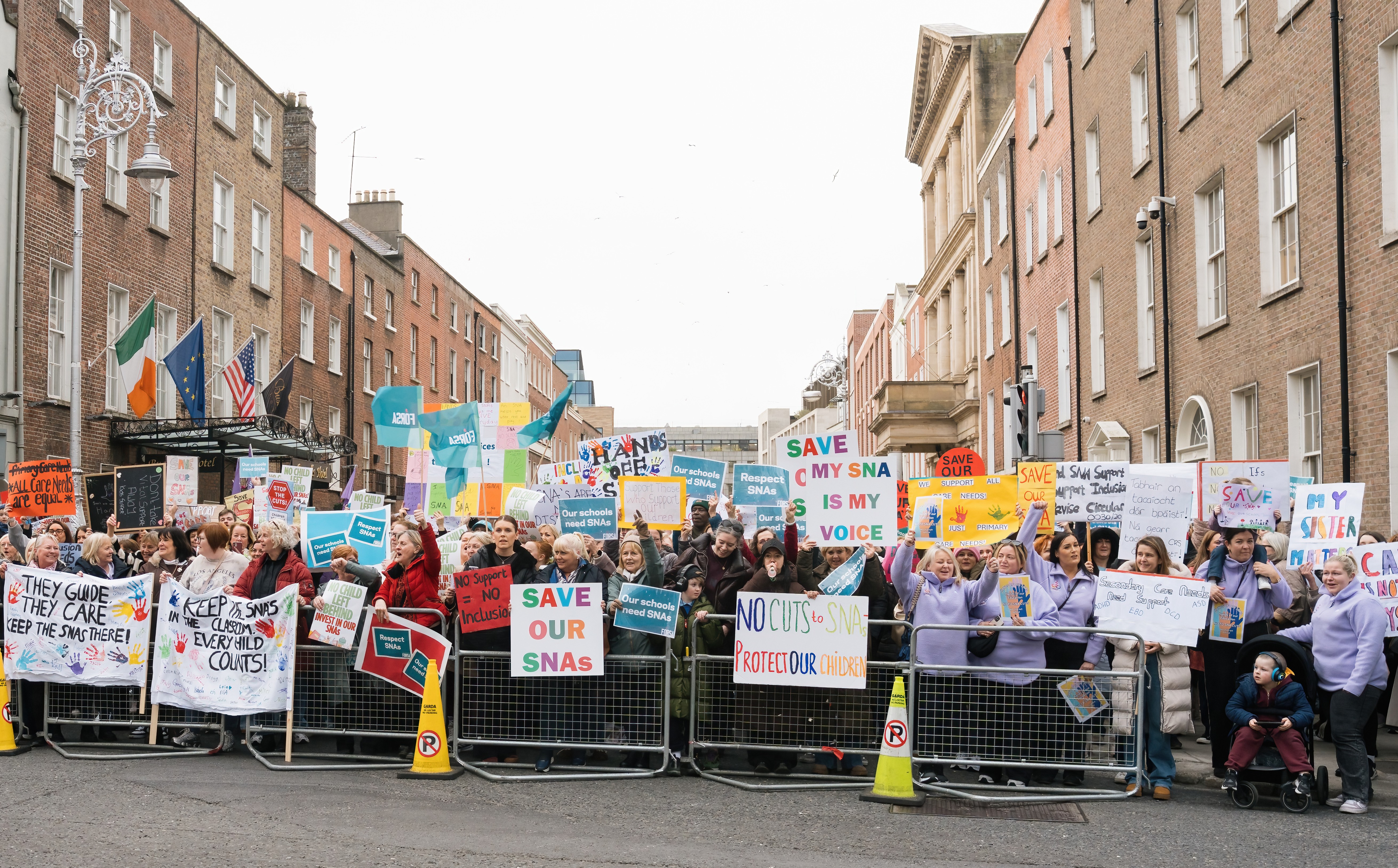
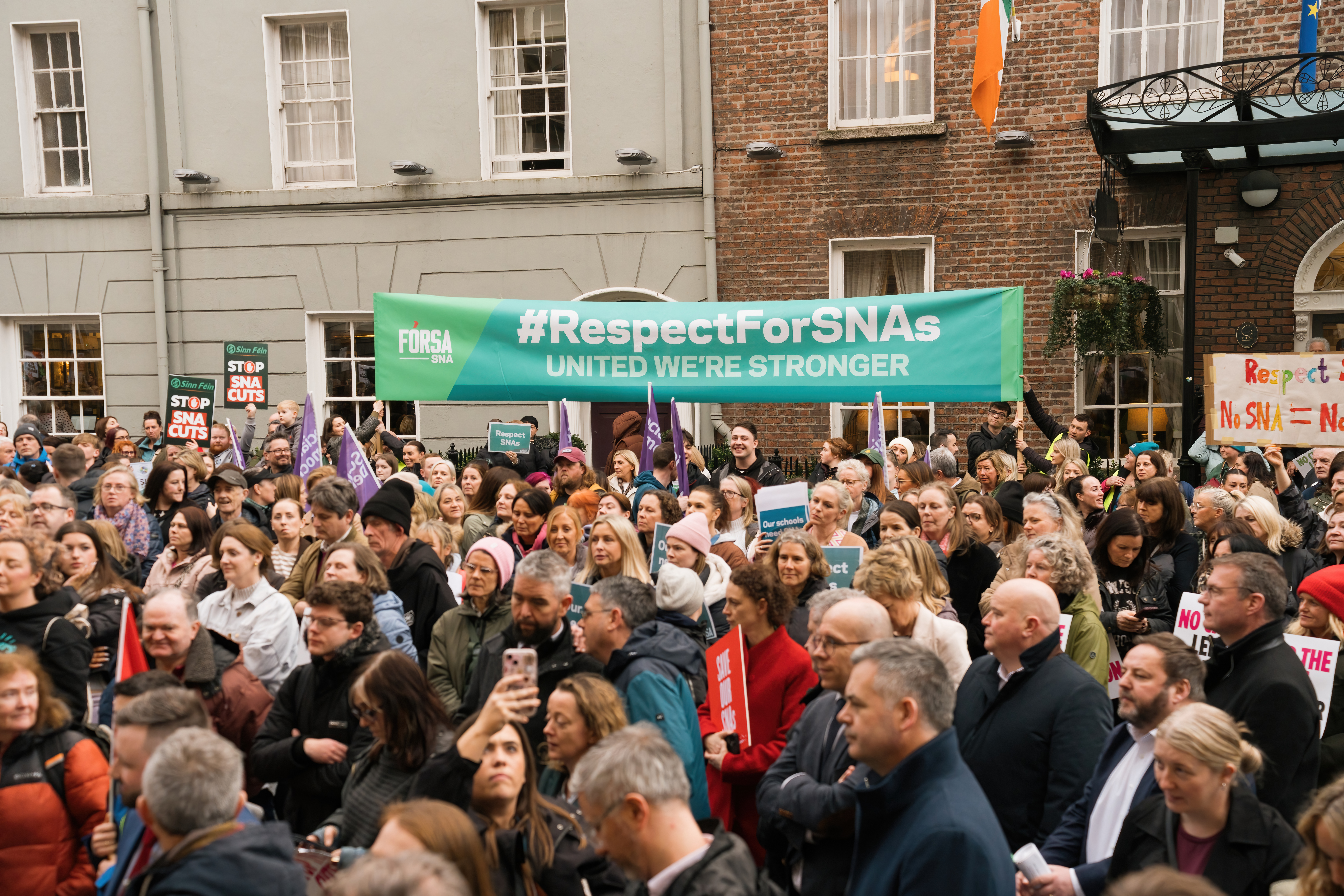
In Dublin, crowds converged outside Leinster House at 5pm during a brief golden hour that held off the threat of rain. Parents stood with SNAs. Teachers stood with families. The mood was direct, coordinated and unflinching.
Chants rolled through the crowd without pause: “When children's rights are under attack, stand up, fight back.”
School communities came together to say "no" to cuts.
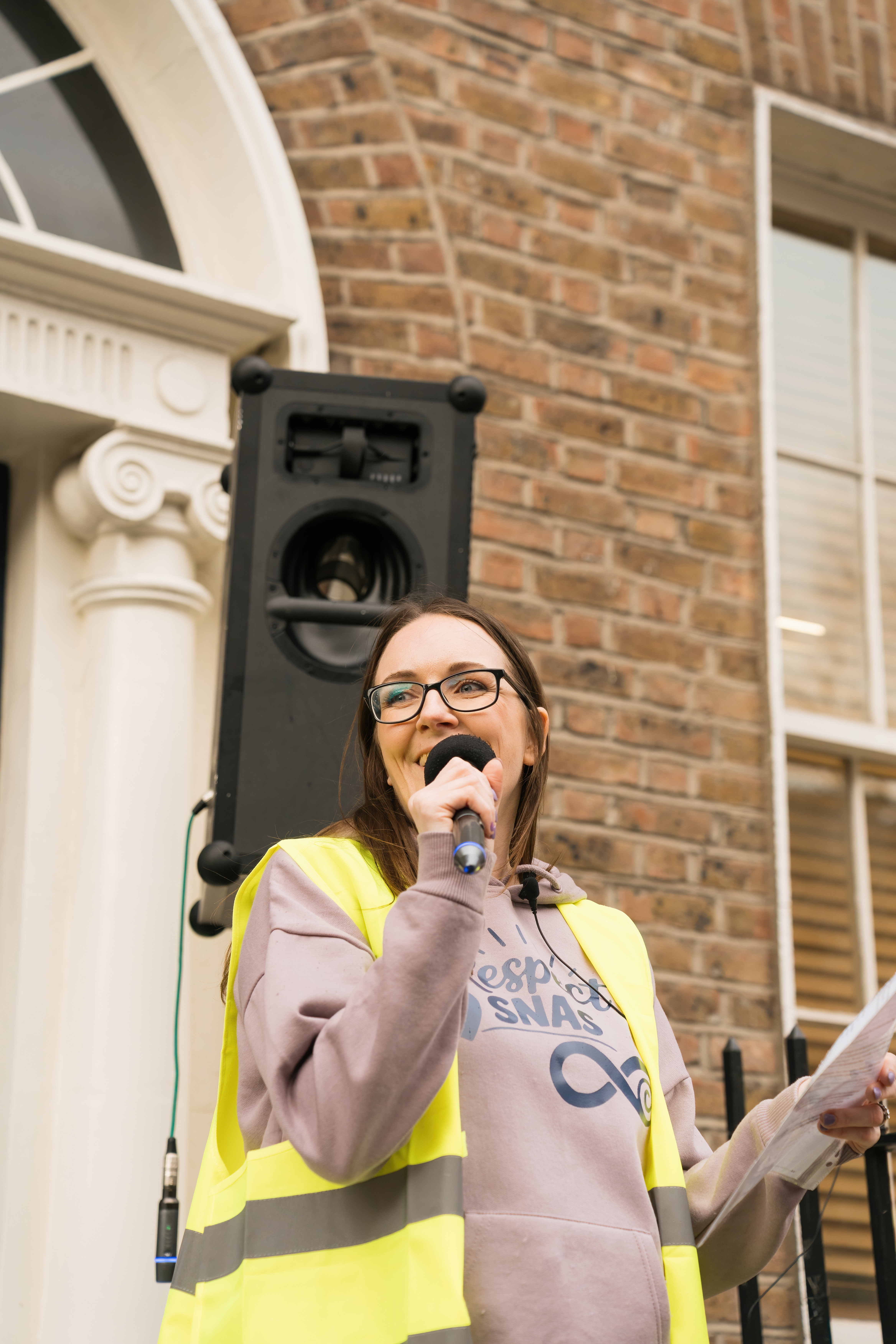
Samantha O’Flanagan, workplace rep with the North Dublin North Leinster SNA branch, was wearing many hats on the day. Not only was she one of the protest's organisers, she also addressed the crowd and even live-streamed the protest to supporters around the country.
She said: “This is one of the biggest movements that we've seen about special education at the moment. There's 30 protests happening across the country, most of them today, some of them over the next few days. Because we're not stopping here.”
Jesslyn Henry, also a workplace rep with the North Dublin North Leinster SNA branch and an organiser of the Dublin protest, admitted the scale had caught even the organisers off guard. “We absolutely weren't expecting the crowds that have come here today, and we absolutely weren't expecting another 31 protests across the country. So thank you. Every single one. Ten years I have been fighting as part of Fórsa to make sure our voices are heard.”
Samantha O'Flanagan, "Every child has a right to access an education."
For many speakers, the issue went far beyond allocations and administrative circulars. Samantha said: “Every child has a right to access an education, to feel safe in school, to participate, to communicate, to learn and to belong. But for many children with additional needs, those rights are only possible because of SNAs."
“This situation didn't happen overnight. It's years of decisions made by the government to under-resource our education system and to treat support for children with additional needs as an afterthought. This wasn't inevitable. This was allowed to happen by the people in the building over there.”
The protests followed ten days of uncertainty over the review of Special Needs Assistant (SNA) provision in mainstream schools, with the Government confirming on Monday night that there will be no reductions to SNAs for the next school year.
Earlier in February, schools began receiving notifications from the National Council for Special Education (NCSE) that their SNA allocations would be reduced. Over the course of a week, SNAs in more than 200 schools were warned their jobs could be at risk, causing widespread distress in school communities and deep concern among individual SNAs.
The notified cuts provoked widespread public outcry. A broad coalition of SNAs, parents and teachers mobilised in opposition, calling for an end to the reductions and for proper resourcing of special education.
Molesworth street filled with supporters demanding respect for SNAs.
The NCSE review strictly applied the 2014 circular governing the SNA role, which links allocation to students’ “primary physical care needs” and does not reflect the full range of learning, emotional regulation and neurodivergent needs now present in mainstream classrooms.
Fórsa has long argued that the circular is outdated and fails to capture the essential role SNAs play in supporting students’ learning and wellbeing. In mainstream schools, SNAs are central to ensuring children can participate fully and reach their potential.
The Government initially paused the review, late last week. By Monday night, it confirmed a full reversal of the notified cuts. While there was widespread relief, SNAs and school communities remain focused on what happens next.
Merchants Quay, Limerick.
Market Square, Mullingar.
The Square, Dundalk.
Fórsa's head of education Andy Pike said the union had warned Ministers that implementing the review without proper redeployment arrangements in place - despite a 2025 commitment by the former education minister - would amount to a collective redundancy scheme. He said schools and SNAs must have clarity on redeployment before any future review takes place.
Andy said the episode demonstrated a failure to plan properly for special education in mainstream schools. While the emergency allocation of €19 million to resolve the crisis was welcome, he said it was only a short-term fix: “What we need now is genuine engagement, proper resourcing and long-term planning for inclusive education,” he said.
Andy added that SNAs remain clear about their priorities, which include bringing an end to 72-hour contracts and June working, as well as tackling exploitation, introducing appropriate qualifications, and improving training and professional recognition: “The coalition that came together to defend SNAs will now have to chart the next phase of action, at a time when trust between SNAs and the Department is at its weakest,” he said.
Join us today for an online session on the 4-day work week!
Ready to rethink the workweek? Today’s lunchtime session will provide an insightful deep dive into the four-day work week, exploring what it means for workers, the trade union movement, and wider society.
You can register for this session here:
The webinar will run from 1pm-2pm.
As usual, the session will be hosted by the Skills Academy. It will take the format of a conversation between Fórsa national secretary Linda Kelly, and Joe O’Connor, CEO and cofounder of Work Time Revolution, a global consulting and research firm that specialises in innovative work models, and the co-author of a new book 'Do More in Four’.
This lunch and learn will also provide an excellent opportunity for you to raise your own questions and contribute to the discussion.
Joe O’Connor has designed and led four-day-workweek pilots around the globe, and this session will be an opportunity for Fórsa members to explore ways to get involved with the movement in their own branches and workplaces.