Organising for Equality: LGBTQI+ network to be launched
by Róisín McKane
Register to attend the event on 27th November.
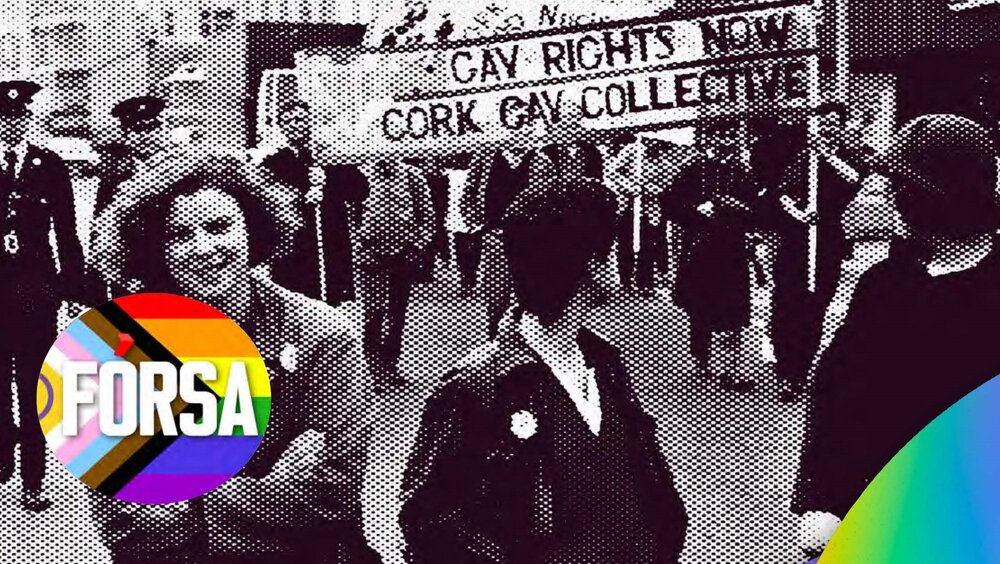
Fórsa’s Equality network will hold a seminar in Nerney’s Court on Wednesday 27th November 2024 from 2pm to 5pm to formally mark the establishment of the Fórsa LGBTQI+ network, and launch ‘Trade Unions and Progress, a personal history’ by Kieran Rose.
Ahead of this, Fórsa will soon conduct a survey to gain a more comprehensive understanding of LGBTQI+ members' experiences, both in and out of the workplace. This will be emailed to members in the coming days.
The trade union movement has long been a shining light of support for LGBTQI+ people and has been instrumental in battling discrimination and fighting for equality for the LGBTQI+ community.
In 1982 LGPSU activist Kieran Rose brought a motion to an ICTU conference supporting the decriminalisation of homosexual acts on the basis of equality, and calling for equality legislation. This was the first motion if its kind, thus sparking hard fought trade union campaigns, spanning decades, which further improved the rights of LGBTQI+ people.
Over 40 years later, earlier this year, at Fórsa’s biennial Conference in May, delegates voted overwhelmingly in favour of a motion proposed by the Galway Health and Local Government branch, instructing the incoming National Executive committee to establish a LGBTQI+ network to support all members and staff who identify as a member of the LGBTQI+ community. This event will formally launch that network.
If you would like to attend, you seek nomination from their branch and register their attendance here.
Places are limited and branches will be facilitated on a first come first serve basis. Early registration is encouraged.
If you require any further information, please contact Róisín McKane at rmckane@forsa.ie.
Join a union that wins. Join Fórsa.
Move your feet for Palestine
by Brendan Kinsella
Fundraiser events taking place this Saturday in Inchicore, Dublin.
Two upcoming events will give members further opportunities to show their support for Palestine. On Saturday November 9th a national demo wil take place, and this weekend on Saturday 2nd November, you can show your solidarity with cultural pursuits.
From 12pm this Saturday 2nd November, the CIE Hall in Inchicore, Dublin, will play host to a fundraiser for the Ireland Palestine Solidarity Campaign (IPSC).
The day will open at 12pm with an afternoon flea market. Three rooms full of a variety of wares, from vintage clothes, to records, books, art, cards, jewellery, activist t-shirts, flags, badges, and more. There will also be tasty food stalls and at the bar there will be that most elusive thing, a reasonably priced pint within the M50.
From 1pm to 5pm the Lounge will host a gig which is free to enter for all market shoppers. Proceedings will kick off with the family friendly reggae vibes of Damai Soundsystem. Selector’s Bob Damai and Mick Herrity (Saoirse Sounds) will be joined by Aminah on vocals for what promises to be an enjoyable set that will get the whole family dancing.
At 3pm hip-hop takes over, with legendary Kilkenny hip hop hooligan Captain Moonlight taking to the stage with Palestinian MC Talha Wise Wolf and bilingual Gaeilgeoir rappers Blue Niall and Mory. The set promises to be exciting, politically conscious, and anarchic.
Both the Flea Market and flea market gig are free to enter but require pre-registration. To register follow this link here.
Later in the evening a fundraiser gig will kick off at 7pm. Entry is €25 for a night with some of the country’s hottest bands.
Trouble Pilgrims are set to open, a band with a reputation for delivering tight and exciting live shows. They have played festivals and music venues across Ireland with some high-profile special guest appearances from The Boomtown Rats and The Undertones. With such a high-quality act opening punctuality is a must.
Following Trouble Pilgrims will be T.A. Narrative a Limerick duo, Tara Nix & Anna Murphy. They have worked together under various guises, sharing the stage in Irish punk bands and touring and recording in the U.S. Drawing influences from post-punk, electronic & pop music the pair promise to put on a show to remember.
The Gakk, a well-known five-piece punk band from Dundalk, take to the stage following T.A. Narrative. The band are renowned for their distinctive sound, taking influences from the classic punk sound of the '70s, they are urrently touring extensively across Ireland and the UK with their melodic street-punk and highly energetic live performances.
Headlining the night are Dash! a seven piece new wave synth pop band currently based in Dublin. Dash! ascended to planet Earth from "Space Place" (-!=⊕Λ) in search of intergalactic fun and frolics but so far have found only intergalactic sorrow and high rents. Dash! promise an exciting set with their distinctive brand of cometcore high energy new wave synth pop.
To buy tickets for the Palestine Solidarity Gig, follow this link here.
Regular service will resume next weekend with a National Demo on Saturday 9th November. Members are encouraged to march as part of the trade union bloc, which will meet outside the Mandate offices from 12.30pm (across the road from the Gate Theatre). Flags and banners will be available to collect in the Fórsa offices at Nerney’s Court from 12pm on the day.
Can’t come to Dublin? Find an event near you, for a comprehensive list of Palestine Solidarity actions and events across the country follow this link here.
Join a union that wins. Join Fórsa.
New Youth officers elected
by Róisín McKane
Fórsa Youth will be working on issues affecting young workers.
Fórsa’s Youth Network elected a new term of officers at its recent AGM, and they’re getting down to business working on issues that affect young members.
Hugh McInerney from the Oireachtas, Courts and Foreign Affairs branch has taken up the mantle as chairperson, while SNA Rachel Fennelly was elected as secretary to the network. James Joy from Cork General Clerical was elected vice-chair.
Áine Bullock from the union’s Finance, PER & Associated Organisations branch has taken up the position of the Youth Network’s recruitment officer, and Fergal Twomey from the Health Executive branch has taken on the role of campaigns officer, with a focus on campaigns affecting younger workers.
The incoming steering committee is now charged with the orderly running of all network activities and will work together to strengthen and empower younger members by providing an open, equal and respectful space for them to discuss relevant matters, while respecting every contribution.
The network sets out to equip young workers with skills, training, and confidence to be effective leaders in their personal life and workplace, while being a voice for young members.
Each branch may nominate a maximum of one voting youth representative under the age of 35 to attend meetings of the National Youth Network, and branches may send additional non-voting representatives to meetings.
If your branch does not have a youth representative, the branch chairperson or secretary can put forward a nomination by emailing their name and details to youthcommittee@forsa.ie.
More information on the Network can be found here.
Join a union that wins. Join Fórsa.
 |
|
Fórsa sound the alarm on HSE staffing crisis at Oireachtas committee
by James Redmond
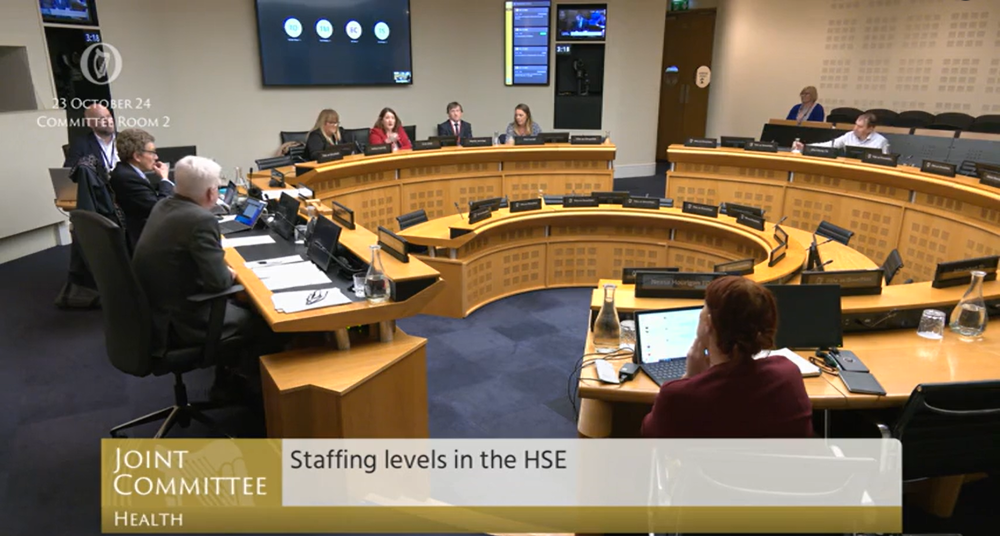
National secretaries Ashley Connolly and Linda Kelly appeared before the Joint Oireachtas Committee on Health to lay out in full detail the impact of the "pay and numbers strategy" on staff and services.
As protests continue outside hospitals nationwide, inside the corridors of power, Fórsa’s Ashley Connolly and Linda Kelly held no punches as they channeled the concerns that are exercising Fórsa members across the country, when they spoke to the Joint Oireachtas Committee on Health, last week.
They channeled the anger and frustration of health care workers across the country who are tiring of the HSE's “cheap tricks” and a sense on the ground that staffing shortages were being used to introduce privatisation by stealth.
Led by Ashley Connolly, Fórsa’s head of health and welfare, and Linda Kelly, national secretary, the union presented findings from the recent survey Unfilled Posts, Unseen Consequences, and expressed dire concerns over the Health Service Executive’s (HSE) so called “pay and numbers strategy.” Ashley and Linda were joined by Orla Carroll and Corinne Phelan from the Health and Welfare DEC and Martin Jennings, chair of the Physiotherapy national professional committee.
According to Ashley Connolly, Fórsa’s internal survey shows that there is a defacto hiring embargo drastically undermining and impacting front-line services. “Services are being curtailed or stopped, morale is on the floor, and there does not seem to be any clear plan on how staffing for services is going to be managed under the pay and numbers strategy,” she told the committee, noting that Fórsa’s findings show a “very different” story from the one presented by HSE leaders in recent briefings.
The Fórsa survey highlights specific examples of strain within the health system, showing that speech and language therapy services are facing increases in waiting times for paediatrics, while staffing limitations prevent expansion of adult services. In occupational therapy, members told of restrictions on services and increases in patient length of stay.
Administrative roles are also under pressure, with Ashley describing a situation where “services have fallen behind on essential duties,” and some clinical teams are taking on clerical work to keep services functioning.
“The story that the survey results show is very different to that which was portrayed by the joint chairs of the productivity and savings task force in front of this committee several weeks ago. The results of our survey have been reaffirmed at every location where we have held multi-union protests over the past month. From Connolly Hospital in Dublin to Midland Regional Hospital in Tullamore, the feedback is the same,” Ashley told the committee.
Linda Kelly followed, criticising recent remarks from Robert Watt, Secretary General of the Department of Health, who recently stated that it would not be sustainable in the long term to continue to increase the health budget in line with demand every year.
Linda argued that this perspective, which she described as a “neoliberal tactic,” undermines public healthcare and opens the door to privatisation.
“This narrative must be refuted in the strongest possible terms,” she said. “The population of our country is growing, and the over-65 cohort, who need the most services from health, is growing exponentially. We should have a legitimate expectation that staffing to provide those services would increase with relativity.”
According to Linda, Fórsa members are increasingly frustrated by the lack of recognition and investment in their roles, especially as private consultancy firms suck up large sums of public money intended to support healthcare services.
To emphasise the point Linda outlined how many posts could be covered with the amount of money currently being spent on consultancy fees: “The €79.493 million spent on private, for-profit consultancy firms for strategic planning and business improvement in 2023 would fund 1,865 entry-level therapy posts across the country, 2,354 medical secretary posts, or over 1,300 psychology posts. Imagine what difference that level of staffing would make to people when accessing services?”
Fórsa’s representatives also expressed dissatisfaction with the HSE’s approach to industrial relations, noting that when the HSE finally held a presentation on the pay and numbers strategy in July, it was “nothing more than a fait accompli and a tick-the-box exercise. It has blatantly refused to listen to the voices of its own staff, choosing instead to work with outside agencies to craft a plan without any internal input. It is quite simply a recipe for disaster.”
Criticising HSE CEO Bernard Gloster for what she sees as an unwillingness to resolve the staffing crisis in collaboration with unions, Linda stated “One can only conclude on the behaviour to date that Bernard Gloster has no intention of resolving this dispute and is prepared to gamble the health service during the winter months rather than engage with staff on an issue of fundamental dispute.”
The union’s concerns also stem from recent reports suggesting that the HSE is instructing its human resources department to “switch off” vacant posts on its payroll system, a move that could further reduce transparency in staffing decisions and prevent critical roles from being filled.
Ashley Connolly warned that this lack of transparency and the absence of a structured workforce plan are likely to deepen the staffing crisis and disrupt services, especially as demand surges in winter. “Such an approach, when coupled with the lack of transparency about the data underpinning the HSE pay and numbers strategy, should be of grave concern to this committee,” she said.
“There can be no better return on investment for the HSE than investing in its staff,” Linda concluded, asserting that a robust, public-oriented workforce plan is essential to ensuring that Ireland’s health services remain both effective and accessible.
You can watch the committee session here, and read Ashley Connolly’s contribution to the committee here and find Linda Kelly’s here.
Join a union that wins. Join Fórsa.
|
|
Have you voted yet? ‘The higher the turnout, the stronger our message will be’
by Hannah Deasy
Understaffed and overworked? Don't suffer in silence. Let HSE management and the Department of Health know how you feel. Make sure to vote in the ballot on industrial action for members working in HSE and Section 38 hospitals.
Fórsa members working in HSE and Section 38 hospitals, are being asked to vote in a ballot on industrial action, up to and including, full strike action. The ballot opened on Monday 14th October and will close on Tuesday 26th November.
This ballot is being held in response to the impact of the HSE Pay and Numbers Strategy, which imposes a fixed employment ceiling on all areas, as well suppressing all posts that were vacant on the 31st December 2023.
Over the past month members have been protesting outside hospitals around the country, together with colleagues from other unions, including SIPTU, the INMO and Connect.
Fórsa national secretary Linda Kelly said: “A general election will be called any day now. We’re doing everything we can to tell HSE management and the Department of Health that services are suffering and our members cannot be ignored. Your vote matters.”
Director of membership Seán McElhinney said: “If you have already voted, encourage your colleagues to vote, and if you haven’t voted yet, don’t delay - please do so today. Turnout in the ballot is steady, but we really need to increase it. The more members who vote, the stronger our message will be.”
What can you do?
- Print this Get Out The Vote poster to display and distribute in your workplace.
- Remind your colleagues to vote.
- Tell people in your community why this matter to you.
All eligible members have received their Unique Voting Codes by now. An FAQ on the ballot is available here, and a ballot hub on the Forsa website has further resources. You can access the hub here. If you have any queries in relation to the ballot, please email hwhelp@forsa.ie
Join a union that wins. Join Fórsa.
Fórsa serve notice of industrial action at St.Christopher’s
by Hannah Deasy
The industrial action will begin on Monday 18th November, following the three week notice period required in the health service. The issue in dispute is the non-payment of promised increments.
Fórsa has served notice of industrial action in St. Christopher’s Intellectual Disability Services in Longford. In a letter sent last week on Thursday 24th October, Fórsa assistant general secretary Tony Martin said that the industrial action will commence on Monday 18th November, following the three week notice period required before industrial action can take place in the health service. The issue in dispute is the non-payment of promised increments.
While members at St. Christopher’s approved industrial action in a ballot earlier this year, previously planned industrial action was suspended to allow for talks under the auspices of the Workplace Relations Commission (WRC).
The proposal that emerged from those talks was rejected by members in a ballot in June. Local engagement has continued but there has been no positive outcome. After the most recent meeting between management at St. Christopher and Fórsa again proved fruitless, the union’s Health and Welfare Divisional Dispute Committee met on Tuesday 22nd October to discuss the matter and approved industrial action.
Speaking about the issue Tony Martin said: “Morale among staff is low, given the long running nature of this issue, and the continuing pressure placed on staff. At every step of the way we have made ourselves available for engagement with the employer, but to date the outcome is entirely unsatisfactory.”
He continued: “The issue in dispute is the breach of a collective agreement around the payment of increments.
“In March the employer told us that the HSE had requested that the payment of increments be suspended in 2024, until further notice, as they were unable to provide the necessary the funding, and since then the funds have still not been released.”
“Workers at St. Christopher’s have to contend with all of the challenges other Section 39 employees have to deal with and to have this on top of all that add insult to injury.”
“In advance of the industrial action we will continue to engage with the employer on how the dispute will be conducted and the issue at hand, namely the non-payment of promised increments.”
Join a union that wins. Join Fórsa.
Social Care Workers: Are you ready for CORU registration?
by Brendan Kinsella
Fórsa will be hosting an online webinar to take Social Care Workers through the ins and outs of CORU registration and the new responsibilities being introduced to the profession.
On 30th November 2025 the title ‘Social Care Worker’ will become a legally protected title in Ireland. This means anyone currently working as a social care worker will need to register with CORU. The two-year window for existing social care workers to gain access to the register will enter its second and final year on 30th November 2024.
As part of Fórsa’s commitment to supporting members and members’ colleagues we have a webinar planned for social care professionals. It will take place on Saturday 30th November 11am-1pm via Zoom. This will be a once off event to prepare social care professionals for statutory regulation with CORU.
All aspects of statutory regulation for social care workers will be covered by the webinar. Attendees will be taken through the registration process so they will be able to avoid any confusion or pitfalls when registering. There will also be explanations of what the code of conduct will mean for workers, and a breakdown of what CPD requirements will be in place.
The webinar follows on from the regional roadshow which ran from February to September. The roadshow consisted of a series of in-person seminars in regional centres across the country. Due to space limitations the regional seminars were only open to Fórsa members. As this will be online and not face the same issue, the webinar is open to all social care professionals regardless of membership.
Encouraging members to attend, Fórsa national secretary Linda Kelly said “During the webinar we will lay out everything our members and their colleagues need to know in a clear and concise manner, so you will be able to focus on your work without having to worry that you may have missed something.”
The seminar is free to attend for social care professionals regardless of whether they are Fórsa members. To register follow this link here.
You can also print this leaflet and display it in your workplace to encourage colleagues to attend.
The webinar will take place Saturday 30th November from 11am to 1pm online via Zoom.
Join a union that wins. Join Fórsa.
Let’s talk about the general election
by Róisín McKane
With an election fast approaching Fórsa is holding an event to discuss all things general election, including our general election manifesto and the results of the Amarách survey, in which 20,000 of you highlighted your key priorities for the union.
Fórsa is holding an event on Thursday 14th November to discuss all things general election, and we are encouraging members to get involved.
This event will take place from 11.00am in Nerney’s Court and light refreshments will be provided. If you’re interested in attending speak to your branch and register here.
The event will provide a unique opportunity to learn about Fórsa’s general election manifesto, which outlines what a society that works for workers would look like. We’ll also delve into the policies that would address the major challenges faced by Fórsa members at work and in their lives. In addition, we’ll further explore the results of the Amarách survey, in which 20,000 of you highlighted your key priorities for the union.
Fórsa’s director of campaigns Grace Williams said: “Everyone has a part to play in campaigning for a better Ireland. The general election is an important opportunity for Fórsa members to tell candidates running for election about what matters to you, and the Fórsa manifesto outlines these key priority issues that we will campaign on and advocate for during the lifetime of the next Dáil.”
“Our upcoming general election event is a chance for you to learn more about this. For those of you who can’t join us, we’ll be contacting members in the weeks ahead to let you know what you can do to highlight the priorities of Fórsa members in this general election.”
Members can register here, if you have any further questions, please email campaigns@forsa.ie.
Join a union that wins. Join Fórsa.
Hostility and rumour campaigns target female reps to undermine unions
by James Redmond
A shocking new report highlights the tactics being used to frustrate union organising in Ireland, and proposes recommendations to improve trade union access.
A new report has found that rumour spreading and hostility to female union representatives have been uncovered as part of a toolbox of tactics used to frustrate union organising in Ireland. The Friedrich-Ebert-Stiftung (FES) Ireland unveiled its new report on union access in Ireland on Wednesday 9th October.
The study, titled ‘Union Access to Workers in Ireland - Barriers faced by representatives in Ireland within a comparative European context’ documents a range of tactics employed to limit union access, from subtle manoeuvres to outright intimidation.
The report, authored by Dr. Michelle O’Sullivan and Dr. Caroline Murphy, draws on a comprehensive survey of union officials to bring to light serious obstacles facing union organisers across the country. The Friedrich-Ebert-Stiftung (FES), Germany’s oldest political foundation (est. 1925), promotes social democracy. Its Dublin office fosters progressive dialogue and strengthens German-Irish relations among policymakers and unions.
Speaking at the launch of the report Dr. Michelle O’Sullivan summarised the broader impact of unions on society: “Unions and collective bargaining are crucial for economic growth and democracy, benefiting everyone involved.” As the November 2024 deadline approaches, there is cautious optimism among union officials, who stress the need for robust implementation to ensure meaningful progress.
This report positions union rights as integral to a just economy and a democratic society, underscoring the need for urgent reform to protect and expand workers' rights in Ireland.
According to the report, a toolbox of sly restrictive practices used by employers have made it increasingly challenging for unions to reach and represent workers, especially in the private sector.
One of the report's most alarming findings is the heightened hostility faced by female union representatives. Data indicates that three out of five hostile actions are directed at women more frequently than their male counterparts.
The report describes how: ‘The findings show that union recognition has become increasingly difficult, especially in the private sector. Employer hostility and anti-union sentiment are significant problems.”
Common anti-union tactics that are detailed in the report include stonewalling/delaying responses, victimisation of union members, and line managers briefing against unions. The most common anti-union action experienced by officials was “spreading rumours about them.”
To address these obstacles, the report offers three primary recommendations. The first is the introduction of a “union default pilot” or statutory rights for union recognition, backed by penalties for employers who do not comply. This would ensure that workers have more straightforward access to union support.
The second recommendation is reframing denial of union rights as not only a labour issue but also a health and safety concern.
The report suggests that anti-union actions should be viewed under a strengthened Code of Practice on Flexible and Remote Working, where these more subtle forms of resistance can be addressed.
Finally, the report calls for unions themselves to improve internal practices, advocating for enhanced information sharing and training programs to help representatives navigate hostile work environments.
The FES report also points to the role of the EU Adequate Minimum Wages Directive, which encourages member states to improve access to collective bargaining. For Ireland, where union membership remains lower than in other European nations, the directive could provide a critical opportunity for change.
By the November 2024 transposition deadline, Ireland could strengthen its union access and collective bargaining laws, aligning with EU standards. “A strong transposition of the directive, in line with its spirit, could bring Ireland in line with international human rights standards, including the Universal Declaration of Human Rights and the European Convention on Human Rights,” said Dr. Caroline Murphy, co-author of the report.
Echoing this sentiment, Owen Reidy, General Secretary of the Irish Congress of Trade Unions (ICTU), stressed the economic importance of collective bargaining. “The best way to make work pay is by promoting and supporting collective bargaining. The EU Directive commits the Government to do just this. It is unacceptable that hundreds of thousands of workers across the state are still denied access to unions and collective bargaining,” he stated, underlining the potential of the directive to address inequities in the labour market.
The full report can be read here.
Join a union that wins. Join Fórsa.
‘A brilliant advocate’: Al Butler remembered
by Hannah Deasy
Union colleagues remember former IMPACT National Secretary for his wit and wisdom.
Former IMPACT national secretary Al Butler died earlier this month. He worked for IMPACT for over a quarter of a century, retiring in 2005.
Since then, tributes from former union colleagues have all emphasised his skill as a negotiator, wealth of experience and good humour.
Former IMPACT general secretary Peter McLoone said “The Local Government and Public Services Union (LGPSU) and IMPACT were very fortunate to have Al as one its officials for over a quarter of a century. He brought a rich tapestry of experiences, energy, skill and wisdom to the many roles he filled. His personality was infectious, his wit legendary. Al possessed a wide repertoire of perspectives that always brought laughter when he shared his stories and experiences. No one captivated an audience like Al when he was in full flow.”
A piece that featured in IMPACT News on his retirement gave an overview of Al’s early career. He worked for a brief period in Guinness’s as a fitter turner and then as a draughtsman. He then moved on to the ESB as a technical officer, it was there that he became involved with trade unions. He was chairperson of the ESB group of unions and Irish president of the Amalgamated Union of Engineering Workers Technical, Administrative and Supervisory Section (AEUW TASS).
He joined the LGPSU in 1980 as a regional officer in Dublin. His area of work then expanded to include the northeast, midlands and southeast. In 1991, when IMPACT was founded, Al was promoted to national secretary, a role he held first in the services and enterprises division and then in the local government division, two years later.
Members in the union’s Dún Laoghaire Rathdown branch recalled taking part in union trainings given by Al: “The enthusiasm with which Al played the role of the adversarial employer made us relieved that he was on our side. Over the years when he served as national secretary, he played a more familiar role as a strong trade unionist representing the interests of our members.”
Kevin Callinan, general secretary of Fórsa, extended sympathies on behalf of the union to Al’s family and friends. Kevin said: “For those of us who knew him, the news of Al's death hit hard. He was a wonderful colleague with so many sides to his character. His ability as a raconteur, his wit, and his collegiate nature, often disguised a searing intellect, a capacity for incisive analysis, and brilliance as an advocate and negotiator."
In the 1990s Al became involved in the Local and Regional Government Committee of the European Public Service Union (EPSU). Over the years he was a member, vice-president and president of the EPSU Standing Committee on local and regional government. Through these roles he contributed to the development of European social dialogue with the European employers in the Council of European Municipalities and Regions.
Jan Willem Goudriaan, general secretary of the EPSU said it was a pleasure to have worked with Al. In a letter sending condolences Jan wrote: “Al was a trade union leader who played an important role in EPSU. I remember his humour, down to earth attitude and his comradery.”
These recollections are only a handful of the tributes that have been made since Al’s death. There can be no doubt that he will be remembered with great fondness by his union colleagues.
Join a union that wins. Join Fórsa.
Fórsa’s International Solidarity drives transformative education in Cambodia
by James Redmond
The Fórsa Developing World Fund is changing lives the world over. We take a look at how funding for See Beyond Borders is having a transformative effect on education in Cambodia, empowering students and building brighter futures.
Earlier this year Fórsa published its inaugural international solidarity biennial report, highlighting the union’s work in support of international solidarity projects. As many members will know international solidarity is a cornerstone of the union, and in 2022 and 2023 Fórsa donated over €1.3 million to global solidarity projects through its long-established Developing World Fund. In the months ahead your bulletin will include stories on the many causes supported by the union’s activities in this area.
“Fórsa works to better workers’ rights, quality public services, human rights and equality both in Ireland and internationally and this vital work is achieved through the generosity of members. Funded by 3% of every member’s union subscription, the Fórsa Developing World Fund gives over €600,000 a year to projects around the world, allowing the union to make ongoing contributions to human rights and development, as well as responding to humanitarian emergencies,” said Richy Carrothers, national secretary with Fórsa.
Proceeds from the Developing World Fund are distributed through trade union federations like PSI, key Irish charities, including Concern, GOAL, Trócaire, the Irish Red Cross, and other smaller NGOs, delivering focused campaigns, including Self Help Africia, Vita Ireland, Justice for Columbia, and Tír nan Óg Childrens Foundation.
In Cambodia, Fórsa’s ongoing support has had a transformative impact on See Beyond Borders, an organisation working to elevate education standards. The organisation’s heartfelt gratitude was recently conveyed in a video message from Maeve Corish, a representative from See Beyond Borders: “A huge thank you to everyone in Fórsa for your ongoing support of our work in Cambodia. Being here with ten other Irish teachers, I’ve witnessed the incredible change enabled by our new Transform Education Program, made possible with Fórsa’s support.”
The Transform Education Program focuses on enhancing school leadership and fostering communities of practice among educators. Through this initiative, See Beyond Borders has developed new Teacher Development Centres in key areas, addressing the need for improved educational quality. “The support from Fórsa is absolutely groundbreaking in helping us carry out the work we are doing in the country,” Maeve added.
For 15 years, See Beyond Borders has been committed to empowering Cambodian children through quality education, engaging with over 250 schools and supporting more than 700 teachers, positively impacting the lives of over 30,000 students. Founded by Ed and Kate Shuttleworth, the organisation was inspired by the challenges they witnessed during their visit to Cambodia in 2002.
With ongoing support, the organisation is optimistic that its efforts will lead to better educational outcomes for Cambodian children, ensuring that every child has the opportunity to thrive, regardless of their background. “We want to not only make an impact; we want our interventions to be sustainable,” Maeve Corish noted.
You can learn more about See Beyond Borders here. Watch our video about Fórsa’s global solidarity work here and download the full report on international solidarity work here.
Join a union that wins. Join Fórsa.
|
|
|
|