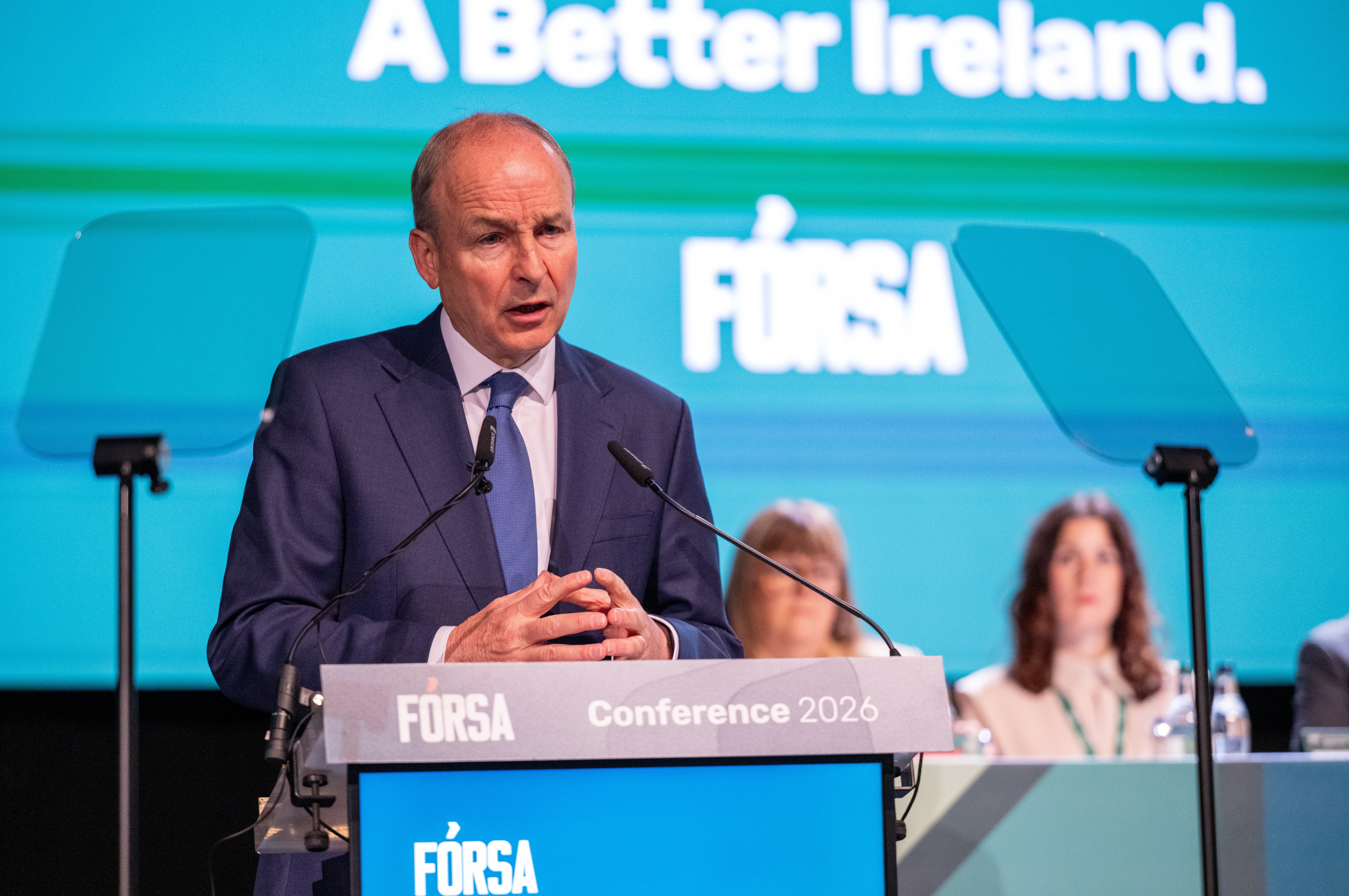
On Thursday 14th May, Taoiseach Micheál Martin TD addressed Fórsa delegates at the union’s Biennial Conference in Killarney. In the speech he indicated that government is "ready to explore a potential new agreement". Responding general secretary Kevin Callinan made it clear that industrial peace is not a certainty and wage bargaining must make up the shortfall created by last year’s budget.
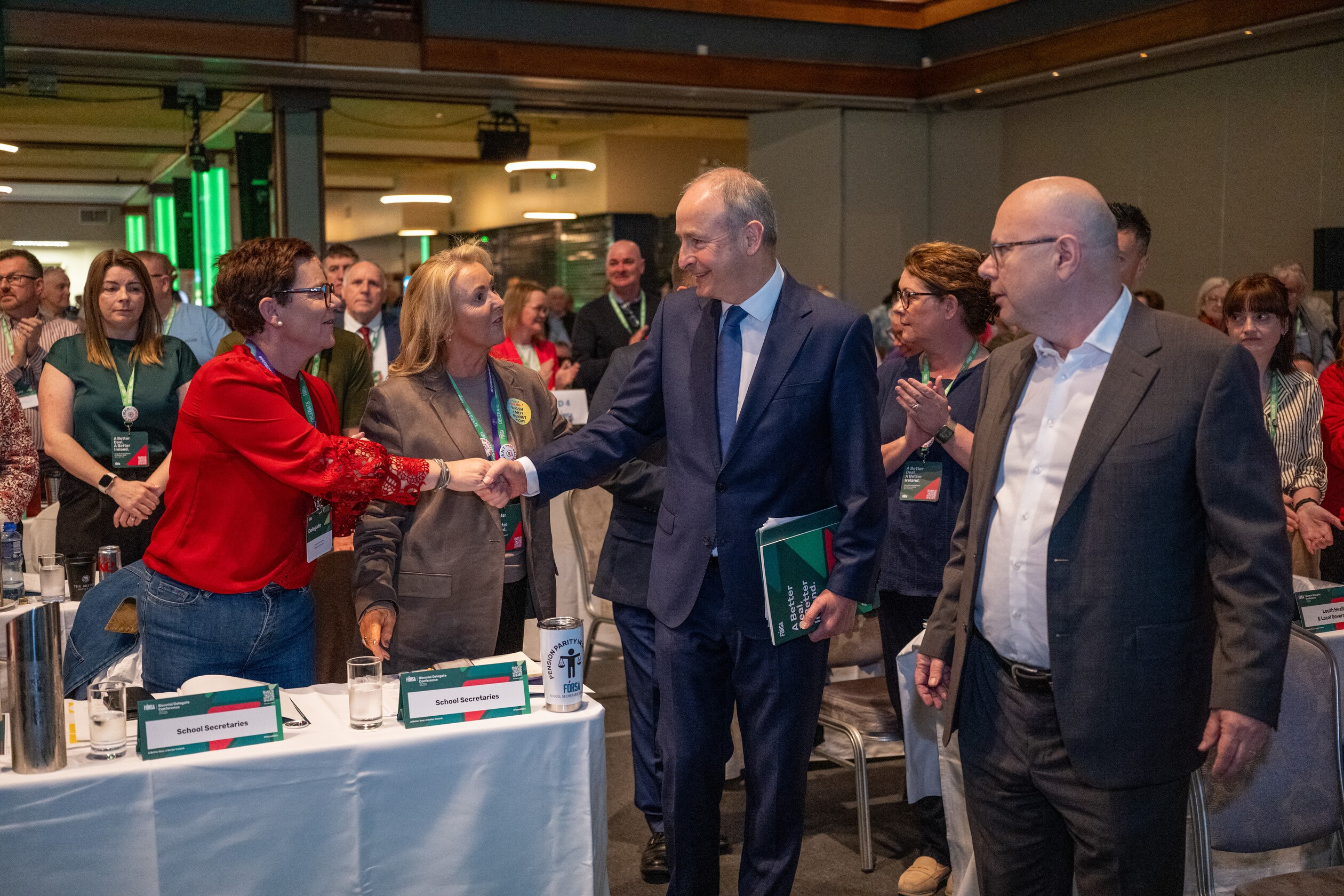
On Thursday 14th May, Taoiseach Micheál Martin TD addressed Fórsa delegates at the union’s Biennial Conference in Killarney. Addressing delegates in the opening session of the day, the Taoiseach acknowledged that the current public service pay agreement expires in June and said that government was “ready to explore the potential for a new agreement with public service unions and representative associations over the period ahead.”
He was also explicit that local bargaining claims should be resolved quickly so that public service pay talks can begin, saying: “I have made clear to all Ministers that I want and expect rapid progress in the coming weeks to resolve outstanding aspects of applying the local bargaining clause.”
Referring to a key concern for Fórsa members he accepted that the current remote working legislation is balanced in favour of the employer, indicating that it will be reviewed.
In a wide-ranging speech, the Taoiseach also outlined investment in public services made in recent years by government, notably referencing SNA provision, and housing, as well as efforts to address cost of living challenges in last year’s budget and the recent fuel crisis.
General secretary Kevin Callinan provided a robust response that drew applause from delegates on several occasions.
Kevin welcomed the Taoiseach noting that his attendance at Conference came at an important milestone moment for the union, as it hit 100,000 members.
He went on to outline the union’s priorities ahead of any public service pay negotiations, saying there was “an urgency” to address the significant cost of living challenges people are facing, and noting the elements of the ‘A Better Deal’ pledge, which has now been signed by over 45,000 people.
He expressed the union’s frustration with the Department of Public Expenditure in regard to the slow progress on local bargaining, saying: “They have delayed and frustrated the local bargaining process while controlling the implementation of outcomes. More than eight months after it fell due, most public servants haven’t had outcomes on claims.”
“They seem to be either unable or unwilling to police the agreement with some sectoral employers proceeding to breach its terms on issues like AI and outsourcing.”
Speaking about remote work, a critical issue for many members, he argued that Ireland must seek excellence in its implementation of remote work, referencing the research launched at conference which indicated that the benefits of remote work extend far beyond the workplace, and include balanced rural and regional development, environmental factors, the elimination of unnecessary commuting, supporting well-being, family life and community involvement.
On pushing for action on common good issues, Kevin said: “We are no longer prepared to accept that some of these items are ‘off the table’”. He said that previous experience dealing with officials “stuck in an austerity-era mindset” had shown “that system is completely inappropriate to the changed economic conditions and to the challenges we face as a country.”
Kevin renewed calls he has previously made for engagement between government, employers and unions to become action-oriented, rather than continuing to be 'a talking shop'.
He stressed the importance of meaningful engagement and clarity, saying “Industrial peace, cost certainty and co-operation with change are not givens – they are part of a bargain.”
He went on to say last year’s budget had felt like a “betrayal” to workers given the pressure of the cost-of-living crisis, and the commitment public service workers have to their country, noting that he had been clear wage bargaining will have make up the gap where the budget fell short.
Finally, Kevin made it clear that if there is to be a new multi-annual agreement: “It must provide a real voice for workers” on common good issues, particularly public investment in housing and healthcare, before summing up meaningfully saying “Fórsa members want ‘A Better Deal’, because we all deserve a better Ireland.”
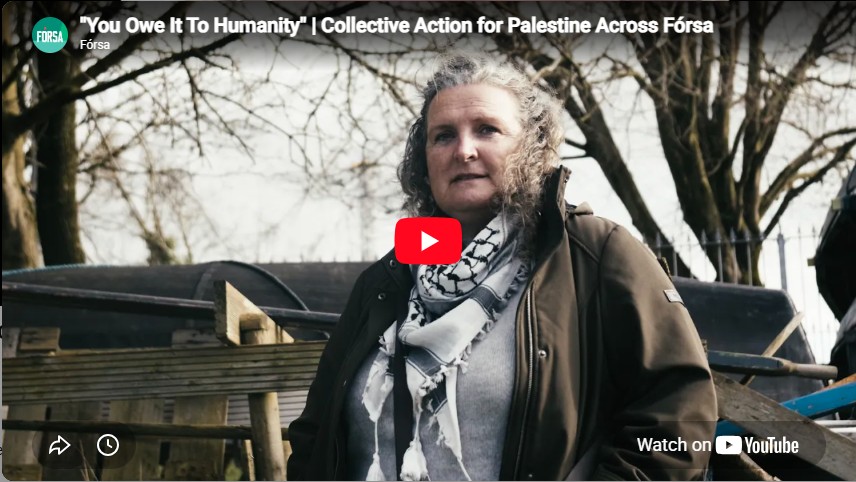
Watch our video on the collective action taken by Fórsa members standing in solidarity with Palestine.
In the past two and a half years of Israel’s relentless assaults on Palestine, Gaza and the West Bank, Fórsa has campaigned for peace, justice, and the human rights of the Palestinian people.
This year at our Biennial Conference, we premiered a video highlighting the actions taken by our union and members.
From a Fórsa member joining the humanitarian flotilla mission to Gaza, to workplace walkouts, efforts to build the Boycott, Divestment, and Sanctions (BDS) movement, calls for sanctions, and support for conscientious objectors, this video highlights the workers and campaigners in our ranks organising for an end to Ireland’s complicity in genocide and occupation.
Together we have organised for an end to Ireland’s complicity in genocide and occupation. We have taken part in workplace walkouts, efforts to strengthen the BDS movement, calls for sanctions, and given our support for conscientious objectors.
The video features Fórsa member Donna Schwarz who risked her life by bravely taking part in the Global Sumud Flotilla, in an attempt to break the IDF’s siege on the Gaza Strip and deliver aid to Palestinians.
Alongside Donna, the video features Fórsa activists, taking part in efforts to support Palestinians and pressure government action, as well as speakers at a recent BDS super panel in the Teachers’ Club, including Omar Barghouti and Sally Rooney.
Further details announced and this year's event promises to be the most ambitious yet.
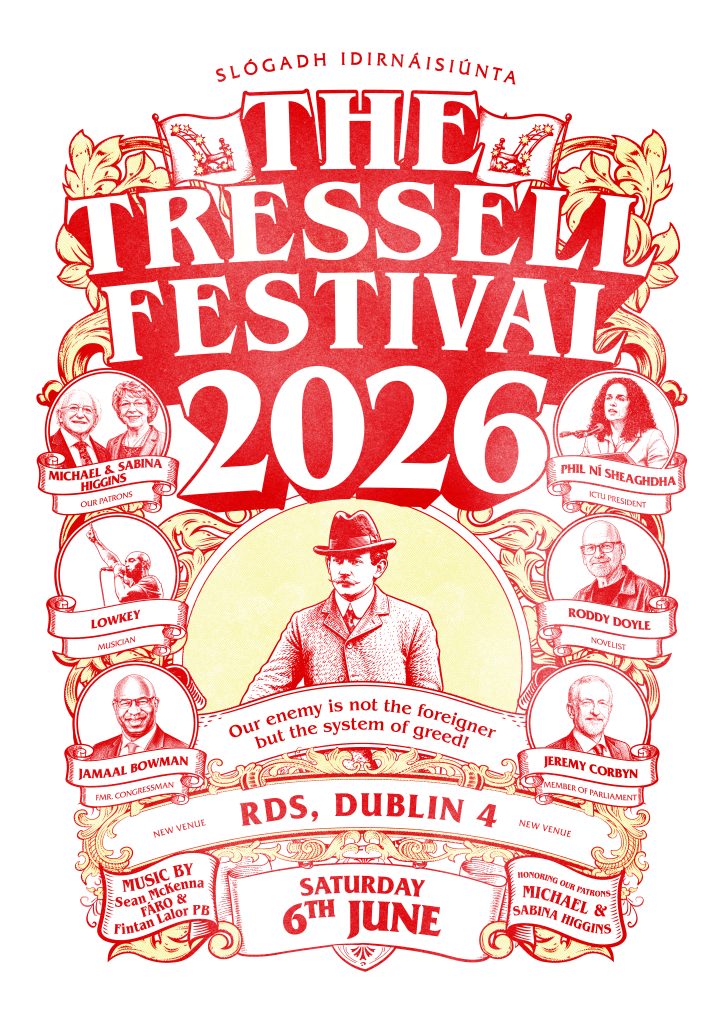
Taking place on Saturday 6th June, at the Concert Hall, RDS, Dublin 4, the annual Slógadh Idirnáisiúnta International Gathering, will bring together some of the most compelling progressive voices from across the globe under one roof.
The Tressell Committee has created a special ticket offer available for Fórsa workplace representatives, members and staff.
The festival will feature tributes to Michael D. and Sabina Higgins, along with an exciting line-up of high-profile speakers and performers, including Rep. Jamaal Bowman, Roddy Doyle, Fórsa National Secretary Hazel Nolan, Laura Pidcock, Rebecca O’Keeffe, Sean McKenna, trade unionist Mick Lynch, Faró and many more!
We hope Fórsa members, staff and activists can join us to celebrate solidarity and trade union culture.
Convened every two years, delegates from all branches of the union vote at conference to elect union officers and set policy. This year was a landmark Biennial Conference, with the announcement that we now have over 100,000 members, an achievement only made possible by the hard work of organising, mobilising and building that members have undertaken over the past two years.
Fórsa’s Biennial Conference took place last week in Killarney. Convened every two years, delegates from all branches of the union vote at conference to elect union officers and set policy.
This year was a landmark Biennial Conference, as it coincided with the exciting news that our union has hit, and surpassed, the recruitment goal of 100,000 members. A great achievement only made possible by the hard work of organising, mobilising and building that members have undertaken over the past two years.
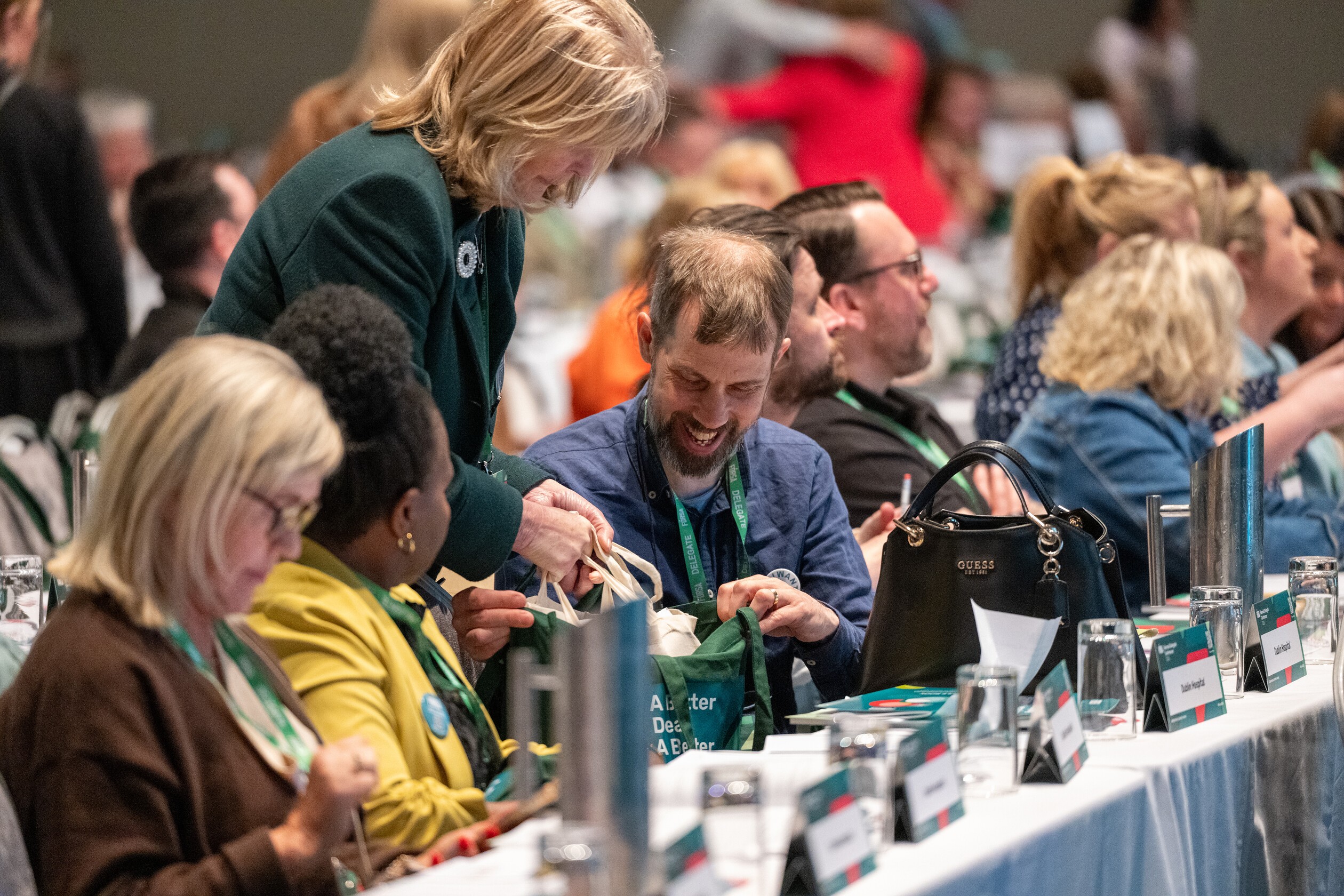
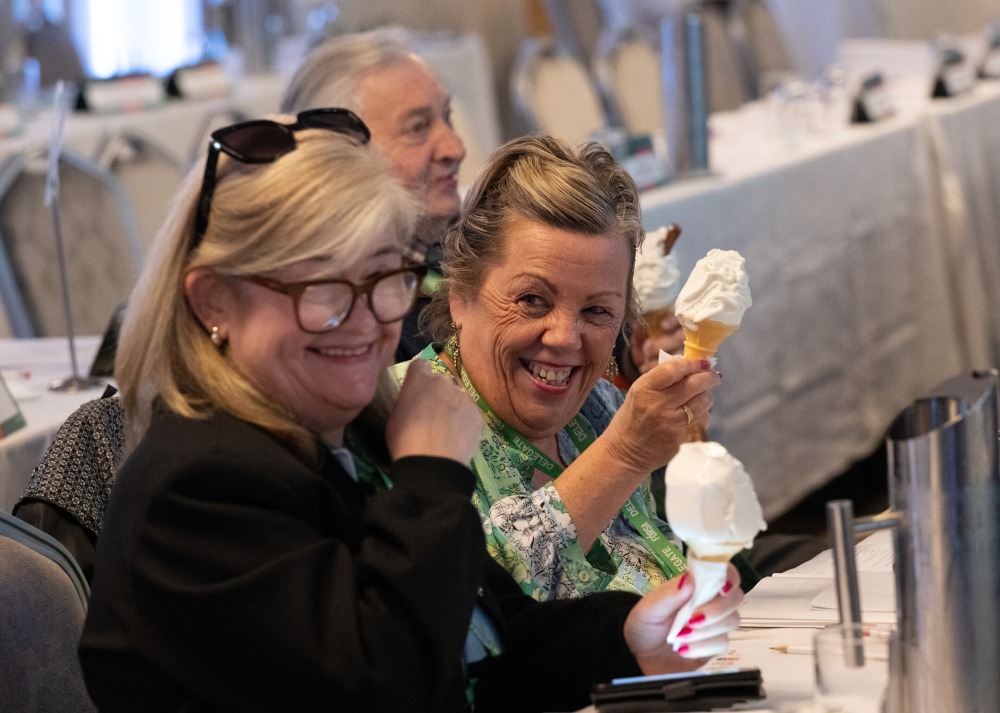
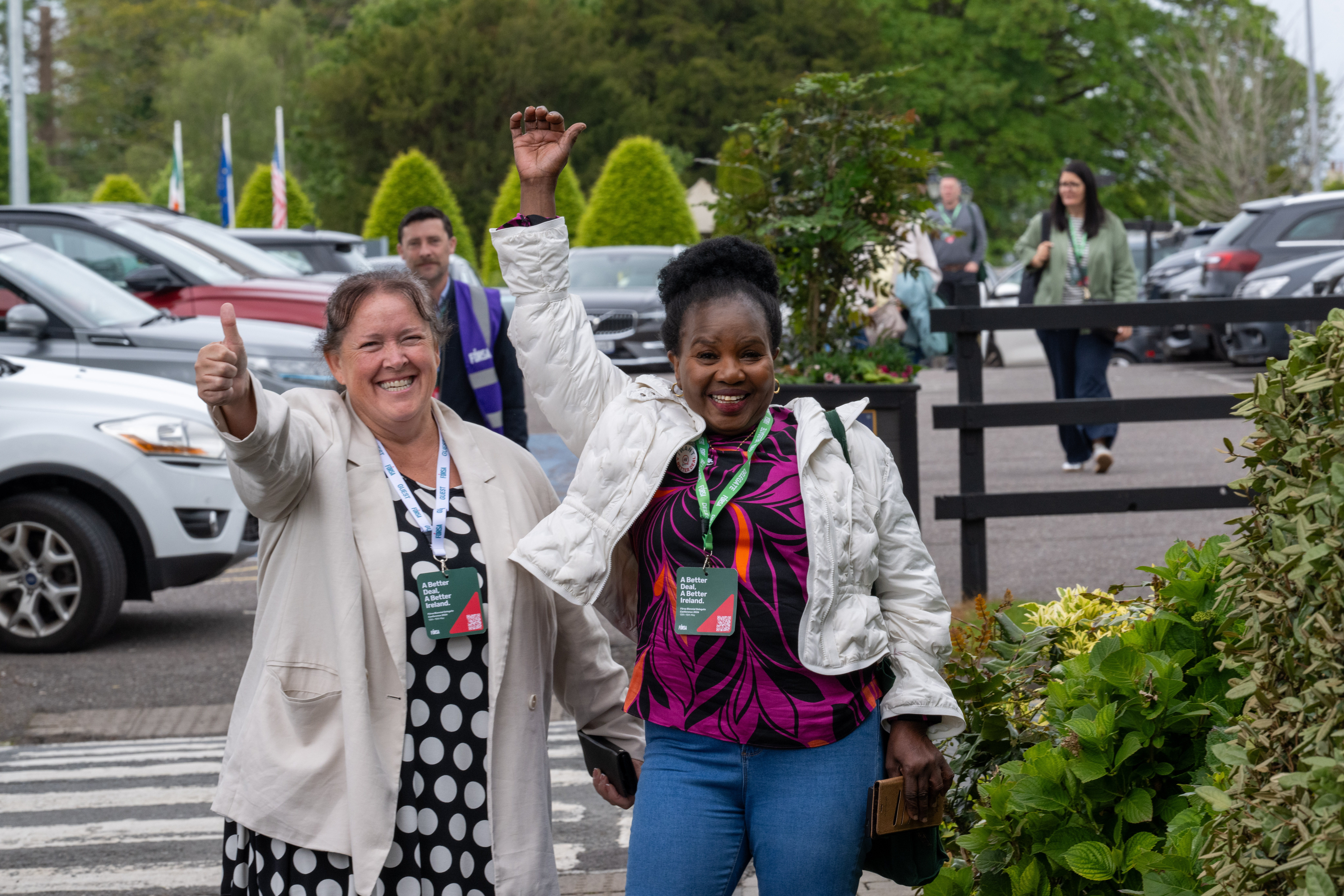
Running from Wednesday 13th May to Friday 15th May, Conference brought over 850 delegates from all corners of the country to the INEC in Killarney.
Delegates faced a jam-packed schedule over the three days with over 150 motions to debate, elections, panel discussions on remote work and the common good, and an appearance from An Taoiseach, to name but a small amount on the agenda.
Fórsa President Martin Walsh opened Conference with a wide-ranging speech that covered key issues facing all divisions and considered the broader challenges facing union members.
Martin reminded members that while “Almost everything can be negotiated with an employer, respect, fairness, and dignity at work are non-negotiable, and together that’s what we stand for.”
Motions on pensions were taken first and covered a wide range of aspects, including gender proofing, and enhancing fairness within the public sector pension scheme. Later in the debate, motions on climate and the environment were brought forward.
NEC member Keivan Jackson proposed Motion 44 calling for robust legislation to protect workers’ rights in the face of climate change, including maximum and minimum workplace temperatures. He said: “Climate change is no longer some distant environmental concern. It is already affecting our workplaces, our public services and the lives of our members.”
General secretary Kevin Callinan then addressed conference, outlining the urgent need to win a better deal for workers in the next pay talks, and telling delegates that the days ahead will define our success.
Kevin received a rousing applause from delegates upon his announcement that Fórsa has hit the 100,000 membership target.
He went on to note that collective strength will be needed during pay talks, saying: “Winning a better deal will take all of us. We will go into these talks not hoping to be heard, but impossible to ignore.”
On Thursday Kevin reiterated this sentiment in his response to An Taoiseach’s address on Thursday, when he threw down the gauntlet for Micheál Martin’s government, ahead of the expiry of the current Public Service Agreement, in June.
An NEC motion on pay, proposed by Tara Horigan, set out the union’s position ahead of possible negotiations.
Proposing the motion, Tara told delegates that the debate on pay comes against a backdrop of growing economic uncertainty internationally, which has increased the significant financial pressures faced by members arising from rising grocery and energy bills, fuel and commuting expenses, and wider cost-of-living challenges, as headline inflation has increased in recent months.
The motion outlined the union’s strategy for the pay talks noting that if a negotiated multi-annual agreement cannot be achieved, the union should seek an immediate pay round, pursue local bargaining claims independently, and ballot members for industrial action where necessary.
Tara said Fórsa’s objective remained serious engagement aimed at delivering a deal that members can vote for: “That’s the single most important objective for the union, while maintaining stability during a period of significant economic uncertainty.”
She also said the next agreement would need to engage with wider “common-good issues” affecting workers and public services, including housing affordability, commuting costs, remote and flexible working arrangements, and the long-term sustainability of public services.
She added: “The housing crisis threatens to undermine decades of social and economic progress. It is now directly affecting recruitment and retention right across the public service. We need to confront that and negotiate solutions that will work.
“Rising living costs, childcare costs and the daily cost of getting to and from work are placing real pressure on working households. If we are serious about maintaining strong public services, then those realities must form part of the conversation,” she said.
The motion underscores Fórsa’s “A Better Deal” campaign, which has attracted more than 45,000 member pledges, calling for pay improvements alongside progress on housing, healthcare investment, local bargaining claims and flexible working arrangements.
In a range of motions proposed by delegates throughout the day it was abundantly clear that improvement in working conditions are to the fore of members' concerns.
Jennifer Doyle from the Marine New branch spoke on Motion 17 which called for templates and a toolbox to develop more equality among how public sector employers implement flexible working policies. She said: “Organisations have vastly different policies for flexible working, why should access depend on what employer you work on? It’s unfair, destabilising and completely unnecessary."
Motion 73 was put forward by the Higher Education branch and called for the NEC to campaign for changes to be made to circulars on bereavement leave, which it contended, unfairly discriminate on grounds of marital status.
Caitriona McElhinny from the Donegal Local Government branch proposed Motion 76 seeking enhanced employer- funded mental health supports, saying “Mental health isn’t a side issue, it affects attendance, morale and the quality of public services we all rely on. Staffing levels are tight and workloads keep growing. The expectation is always there to do more with less.”
A range of motions called for the union to intensify its work for a shorter working week, while the risks of excessive workplace surveillance were also highlighted.
Speaking on this issue Amy Hibbets, from the Probation Officers branch said: “Technology should support workers and not be used for micro-management. Quality of outcome cannot always be measured in output metrics. Workers perform best when they are respected and supported, excessive monitoring creates fear and anxiety.”
Thanks to the substantial efforts of delegates and the Standing Orders Committee, all slated motions were debated and voted upon. Implementation of the motions which were passed by Conference will now be considered by the National Executive Committee (NEC).
Delegates at Conference voted to elect union officers for a two year term.
Martin Walsh (Louth Health and Local Government) was re-elected as President, while Michael Smyth (School Completion Programme) was re-elected as Treasurer. Michael Crowe (DSP Executive Grades) was elected Senior Vice President, while Julie Flood (Dublin City) and Mark Tighe (IALPA) were also elected as Vice Presidents.
Ballot boxes for the election of Fórsa President opened at 10am on Thursday 14th May, closing just before noon that morning. The subsequent elections continued throughout Conference, wrapping up with the announcement of the election of vice presidents on Friday 15th May.
Martin Walsh (Louth Health and Local Government) was re-elected as President, while Michael Smyth (School Completion Programme) was re-elected as Treasurer. Martin thanked members for their trust in his leadership and vowed to continue putting their interests to the fore of everything he does.
Michael Crowe (DSP Executive Grades) was elected Senior Vice President, while Julie Flood (Dublin City) and Mark Tighe (IALPA) were also elected as Vice Presidents.
The election was decided through the votes of branch delegates. Officers will hold the positions for the next two years.
Under Fórsa rules, each of the union’s divisions must be represented on the five-person officer group, with the Local Government and Municipal Employees’ divisions counting as one constituency for this purpose.
New research commissioned by Fórsa was launched last week at Conference. Over 19,000 members took part in the survey which informed the research, making it one of the largest ever studies of workers on this topic.
The research shows that not only has remote and hybrid working become a standard expectation of modern employment, but it is also having positive impacts on productivity, transport, infrastructure, regional development, local economies, family life and staff retention.
Last week at Biennial Conference Fórsa launched the results of major research on remote and hybrid working.
Over half a decade since it became part of modern working life, research now shows remote and hybrid working is having an impact far beyond the workplace.
Two new pieces of research commissioned by Fórsa, The Social Impacts of Remote and Hybrid Working Arrangements in Ireland (Ireland Thinks) and Remote & Hybrid Working (Amárach), were presented to delegates at Biennial Conference. The presentation was followed by a panel discussion on the findings, moderated by Dr. Laura Bambrick (ICTU) and featuring contributions from Dr. Margaret Heffernan (DCU), Sinead O’Sullivan (Amárach) Kevin Cunniningham (Ireland Thinks) and Kevin Donoghue (Fórsa).
Over 19,000 members took part in the survey which informed the research, making it one of the largest ever studies of workers on this topic.
The research shows that not only has remote and hybrid working become a standard expectation of modern employment, but it is also having positive impacts on productivity, transport, infrastructure, regional development, local economies, family life and staff retention.
Despite the recent increase in return-to-office mandates, the research shows little divide between workers and managers, with managers also reporting positively on productivity and deadlines in remote working arrangements.
Attitudes were overwhelmingly positive towards remote and hybrid working, with managers and workers alike reporting that remote and hybrid working arrangements performed as well as, or better than, fully on-site working arrangements.
Retention risk
Reduction in access to remote and hybrid working arrangements emerged as a significant risk factor for retention of staff. While 28% of workers said they would accept a reduction in access to remote working, four in ten said they would look for another job to retain or improve their current level of flexibility. This rises to seven in ten for members who currently work in remote or hybrid arrangements.
Commenting on the findings, Fórsa campaigns director Kevin Donoghue said: “For many workers, hybrid working is no longer viewed as a perk or temporary pandemic arrangement. It has become part of the new normal of working life.”
While much of the drive to bring workers back to the office relies on claims of issues with productivity and team cohesion, these issues are not born out in the experience of the managers who responded to the survey.
Managers reported experiencing fewer problems among staff working in remote or hybrid arrangements than among fully on-site teams. Similarly, managers overseeing remote working staff were less likely to report problems relating to deadlines, communication with external clients, or collaboration with colleagues.
This is reflected by 86% of managers supervising remote-working staff having said employees seldom or never missed work-related deadlines, compared with 73% among fully on-site teams.
Benefits beyond the workplace
Kevin said the findings pointed towards a need for better workplace adaptation rather than a simple return to pre-pandemic working models: “The research suggests that where challenges exist, there are practical ways to address them through better management supports, clearer expectations and more effective workplace policies, rather than simply assuming the solution is a blanket return to the office.”
“But this research also shows that the future of work debate now extends far beyond office walls. Hybrid working affects commuting patterns, congestion, childcare, family life, local economies, climate policy, regional development and participation in communities.” He continued.
Seven out of ten reported experiencing increased congestion and crowding at peak times over the past twelve months. Despite the increase in travel times, nearly half of commuters who work remotely reported gaining more than three hours each week by not travelling to or from the office.
“In that context, hybrid working arrangements clearly have a role in any serious policy discussion about infrastructure and climate measures,” Mr Donoghue said.
Workers avoiding long commutes emerged as a possible boon for local economies, as 77% of remote and hybrid workers reported spending more money in their local area because of remote work, with almost half saying it is money that was previously spent near workplaces.
Mr Donoghue added: “Working from home is changing where Ireland spends its money. The daily coffee purchase, in some cases, had moved to Clonee, Longford, Ballinasloe or Ennistymon. This kind of economic redistribution could play an important role in supporting rural and suburban towns which, at one time, risked becoming dormitory communities for people working in larger towns and cities,” he said.
Worryingly, research indicates the emergence of a divide in access to flexible work, with 64% agreeing that remote work opportunities are unfairly concentrated among higher-paid or higher-skilled jobs.
Mr Donoghue added: “Remote work cannot become a class divide in the workplace. The challenge now is ensuring that flexibility, where possible, is implemented fairly, transparently and sustainably across the workforce.
“This research emphasises the ordinary, practical value of remote work. The benefit is not only fewer hours in the office. It is also a calmer morning, the ability to do a school run, time to exercise, the chance to start dinner earlier, or the ability to recover from work without a long commute,” he emphasised.
What’s coming up this month: Induction for new members and an online lunch and learn on psychosocial safety at work.
As summer gets under way, the Skills Academy has moved to its summer schedule, with Fórsa Induction and Live: Lunch and Learn continuing on a monthly basis.
This month’s Live: Lunch and Learn will explore how to go about protecting yourself and your colleagues from psychological risk in the workplace.
Live: Lunch and Learn - Psychosocial Risk - Online – 1pm-2pm Friday 29th May
Join guest speaker Frank Vaughan for a session exploring why psychosocial risks have become such an important issue, and how trade union representatives can seek to protect their members from the health hazards, both psychological and physical, that can arise from these risks in the workplace.
Frank Vaughan is the former ICTU head of Health & Safety and former board member of the Health & Safety Authority. He represents ICTU on the ETUC’s Occupational Safety & Health (OSH) Committee, is a member of the European Commission’s Advisory Committee on Safety & Health (ACSH) and is a member of the European Trade Union Institute’s Psychological Risks Network.
Fórsa Induction - Wednesday 10th June - Online - Open to all new members
A highly beneficial welcome session for our new members. Skills Academy explains the need-to-knows of Fórsa, how we work, how you fit into it all, what we do for you, and what you can do to become more engaged, have your voice heard locally, and raise issues at divisional and national levels.
There are morning and evening sessions available to fit your schedule. So, if you’re a new member, or looking to become a union activist, make sure to join Skills Academy for this session.