Date for your diary: ICTU seminar on gender in occupational health and safety
by Róisín McKane
Taking place on 4th March the seminar will look at how occupational hazards affecting women are often overlooked in workplace policies.
The Irish Congress of Trade Unions (ICTU) is set to host an important seminar examining the often-overlooked issue of gender in occupational health and safety. “One Size Does Not Fit All: Focusing on Gender in Occupational Health and Safety,” will take place on 4th March 2025, from 10:30am to 1:30pm at the Communication Workers' Union (CWU) Office in Dublin.
The seminar will be chaired by Katie Morgan, Vice President of ICTU, and will feature discussions by a range of experts on the challenges and gaps in workplace health and safety policies concerning women.
The event aims to highlight the fact that health and safety research, policy development, and workplace protections have traditionally been designed with men in mind, often failing to account for the distinct risks and needs of women in the workforce.
ICTU reports that many occupational hazards affecting women are either overlooked or insufficiently addressed in workplace policies. This seminar will explore the implications of this oversight and discuss ways to develop more inclusive and effective safety measures that cater to the needs of all workers.
The seminar will feature a panel discussion which will explore the issue of gender in workplace health and safety from a range of perspectives. Tara Horigan, Fórsa Vice President, will be sharing her expertise as part of the panel, along with speakers from the ASTI and the INMO.
With gender equality and workplace safety gaining increasing attention, this seminar is expected to generate meaningful dialogue and actionable insights towards safer and more inclusive working conditions across all sectors.
Fórsa is encouraging members to attend. Interested members should register their interest by contacting Natalie Higgins at natalie.higgins@ictu.ie.
Join a union that wins. Join Fórsa.
Sowing solidarity with the Irish Red Cross In Nepal
by James Redmond
We hear from Anna Marie O’Carroll on how the union's International Solidarity fund is empowering people in Nepal to change their lives.
The Irish Red Cross is one of the beneficiaries of Fórsa’s International Solidarity fund. James Redmond chats to Anna Marie O’Carroll from the Red Cross about how members’ union subs is empowering people in Nepal to be agents of change in their own lives and the valuable lessons that can be harvested for home.
"When we talk about charity, it often implies a top-down approach," explains Anna Marie straight away. She acknowledges the vital role of emergency relief in times of crisis but sketches out the importance of a practice of empowerment.
“Solidarity, on the other hand, is about walking alongside people,” she says. “It's recognising their inherent strengths, their knowledge and their agency. It's about building partnerships based on mutual respect and shared goals. It's about empowering communities to lead their own development.”
This philosophy underpins their work in Nepal, where the organisation empowers communities through cash grants rather than in-kind donations. Beyond financial support, training is a crucial component of this. Right now, 447 farmers are benefiting from Red Cross training schemes funded by Fórsa.

Anna Marie O’Carroll is the Programme Manager for International Affairs at Irish Red Cross. She’s pictured here with local women in Nepal.
“This includes things like financial literacy, marketing and business planning. We also help them connect with relevant markets, so they have access to sell their products or services,” explains Anna Marie.
A key aspect of their Nepal project is the introduction of climate-smart and high-value crops. Resistance to change was an initial challenge faced by the project. “People are used to growing what their families have always grown, and there can be a fear of trying something new. To address this, we focused on education and demonstrations. We set up trial plots where farmers can see firsthand how these crops perform.”
Anna Marie explains how some people were hesitant at first. They'd seen other projects come and go, and they were weary of empty promises.
“This is where the strength of the Red Cross truly lies,” says Anna Marie. “Our local presence, our social mobilisers and volunteers come from within these very communities. They are a huge bridge between the project and the people. They speak the local languages, understand the cultural nuances and have preexisting relationships built on trust and familiarity.”
Overcoming such challenges and building trust within the communities proved crucial lessons in the power of partnerships for the project.
“They also have existing networks and relationships that we can leverage. These partnerships, and the strength of our volunteer base, has been invaluable to help us navigate challenges and ensure the sustainability of our programs. Later this year as we expand into a new district we'll be taking these lessons learned to heart. We'll be focusing even more on community engagement from the very beginning, ensuring that the project is truly community owned and driven.”
Combating outward rural migration that sees young people fleeing for better opportunities elsewhere is also a huge focus of the programme. The project works to provide viable alternatives by supporting cottage industries and diversified livelihoods.

Riki Maya is a widowed mother of two. With training and a Red Cross microgrant, she started a successful poultry farm, providing a brighter future for her family.
Riki Maya is typical of the people who benefit from these schemes. A widowed mother of two, she started a successful poultry farming business, after accessing training and a cash grant. She can now provide a brighter future for her family from selling eggs and chickens,
“These are small-scale, home-based businesses that allow people to generate income without having to leave their communities. They offer a way to combine traditional skills with modern business practices, creating sustainable livelihoods right where people live. These cottage industries can take many forms for example we’re working with women’s groups to establish a handicraft business producing textiles. We're also supporting the development of honey production, recognizing the potential for these high value products.”
“The key is to identify opportunities that build on existing resources and skills within the community. We don't just provide seed funding and walk away. We offer comprehensive support including training and business management, marketing and financial literacy. We help connect these small businesses with markets both locally and sometimes regionally. We also provide access to micro loans, which can be crucial for scaling up production and expanding operations.”
While outward migration remains a complex challenge, the project is making a difference, often in simple ways like averting the loss of many traditional arts and crafts.
Like anywhere, within Nepal’s rural communities, certain groups—low-income families, female-headed households, disabled people—face even greater challenges. Anna Marie explains how for the Irish Red Cross empowerment is the ultimate goal.
“So how do we do this in practice? Well, it starts with really listening. We conduct detailed community assessments that specifically seek to understand the unique needs and vulnerabilities of different groups. We don't just assume we know what's best. We ask. We talk to women, to people with disabilities, to low-income families, to socially excluded groups, and we hear directly from them about the challenges they face and their aspirations for the future. Ultimately, our goal is to empower these marginalized groups to become agents of their own change.”
People like Anna Marie who work with the Irish Red Cross believe international partnerships can offer valuable lessons. Like with all international solidarity work, there’s a natural degree of reflexive learning involved – it’s not all one way.
“The communities we work with in Nepal often face incredibly challenging circumstances, whether it's the impact of climate change, limited resources, or geographical isolation. Yet they demonstrate an incredible ability to adapt, innovate and find solutions with what they have. It's a powerful reminder of the human capacity for resilience and a challenge is also to reflect on our own responses to adversity.”
Ultimately, Anna Marie believes this kind of cross-cultural exchange fosters a sense of global citizenship. It reminds us that we're all interconnected, and that we have a responsibility to contribute to a more just and sustainable world.
“The lessons we learn in Nepal, the stories we hear and the relationships we build stay with us long after we return home. They shape our thinking, our values, and our actions,” she concludes.
Join a union that wins. Join Fórsa.
Solidarity as Amazon workers face “shameful” shutdown
by James Redmond
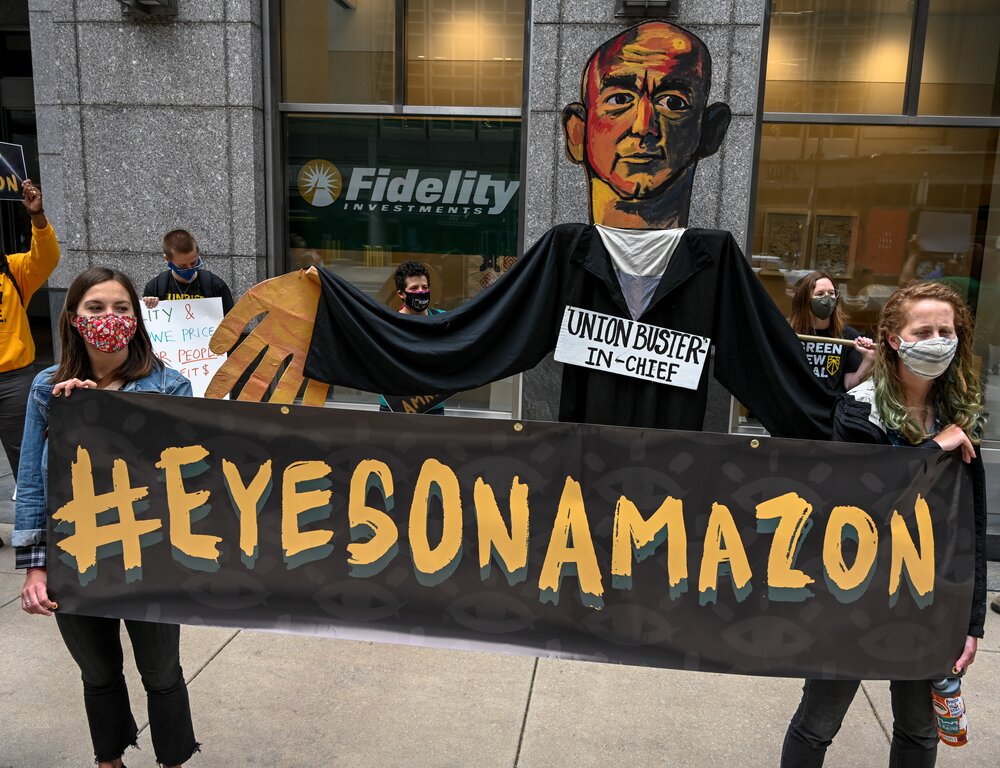
Amazon has become the ground zero in the fight for collective power across North America.
Amazon’s long-standing resistance to trade unions is grabbing more global headlines - this time in Quebec. Following the closure of multiple warehouses in the province, thousands of workers have been laid off, prompting legal action and calls for a boycott.
The Confédération des syndicats nationaux (CSN), a major union federation in Quebec, is spearheading the fight against the tech giant, which it views as attempting to pull the rug on unionisation efforts. The closures impact facilities in Laval, Lachine, Longueuil, and Côteaux-du-Lac, with more than 4,600 workers affected. Amazon claims the shutdown is part of a strategic efficiency initiative, and that they are simply returning to a model using subcontractors.
CSN President Caroline Senneville believes that’s a ruse: “They’re not fooling anyone. The only reason for Amazon to have a different business model just for Quebec is that there’s a union here.”
Fórsa general secretary Kevin Callinan, condemned Amazon’s actions, calling them “shameful.” In a letter to Amazon workers, he expressed solidarity and criticized the company’s unwillingness to negotiate with unions, saying, “As one of the richest companies in the world, it is disgraceful that Amazon would rather sack low-paid workers than share profits more fairly with their hard-working workforce.”
Kevin commended the unions resolve and offered them the old Gaelic phrase “Ní neart go cur le chéile – There is no strength without unity” as a guiding motto as they battle Goliath.
The mood on the ground among workers is resolute. Standing in the snow outside a warehouse north of Montreal one worker told City News, a local Canadian newswire: “We will not take this lying down as Quebec, as Amazon workers.”
“We’re human, we're not just simple objects” said Corali O’Campo, another worker whose job is due to be terminated later this week.
The CSN has announced plans to pursue legal action to halt the layoffs, reinstate workers, and seek damages. “What it calls its ‘new business model’ is just an attempt to circumvent its obligations under the Labour Code,” Federation President Caroline Senneville said in a statement. “The court should recognize that this scheme violates the law, and it can then order the reinstatement of Amazon’s workers.”
The union will also stage an anti-Amazon demonstration in Montreal on 15 February and is urging Quebecers to cut the cord with Amazon’s services, including Amazon Prime.
Uguelin Jean-Baptiste, a former worker at Amazon’s DXT4 warehouse in Laval, described the dire working conditions that prompted unionization efforts. “There were hundreds of injuries in a span of about two to three months,” Jean told the Montreal City News. “The workers had to go see doctors and do physiotherapy because it’s an extremely physically demanding job.
This latest unrest takes place against the backdrop of a broader fight against Amazon in North America. The Amazon Labor Union (ALU) made history in April 2022 by successfully unionizing the JFK8 warehouse in Staten Island, New York, despite fierce opposition from the company.
However, Amazon has continued to challenge union efforts, often deploying aggressive anti-union tactics, including mandatory anti-union meetings and firings of pro-union employees.
The ongoing battle took another dramatic turn in December 2024 when the International Brotherhood of Teamsters organized the largest-ever strike against Amazon in US history. Thousands of Amazon warehouse workers and drivers walked off the job in cities such as New York, Atlanta, San Francisco, and Chicago.
Teamsters General President Sean M. O’Brien squarely blamed Amazon for the Christmas disruption: “These greedy executives had every chance to show decency and respect for the people who make their obscene profits possible. Instead, they’ve pushed workers to the limit, and now they’re paying the price.”
Despite Amazon’s deep pockets and relentless anti-union strategies, the labour movement appears to be gaining momentum. Nearly 10,000 Amazon workers have joined the Teamsters, and more union drives are underway across North America. Union advocates see the Quebec layoffs as part of a broader pattern of corporate retaliation against labour activism.
For many organisers the battle to win in Amazon represents an existential fight for the very future of the union movement itself.
“This is not just about one warehouse or one city,” said Leah Pensler, a warehouse worker in San Francisco during December’s Teamster led stand-off. “This is a fight for all of us who want fair wages, safer conditions, and respect on the job.
Photos by Joe Piette
Join a union that wins. Join Fórsa.
 |
|
Fórsa and INMO lay out next steps in ‘pay and numbers’ dispute
by Niall Shanahan & Hannah Deasy
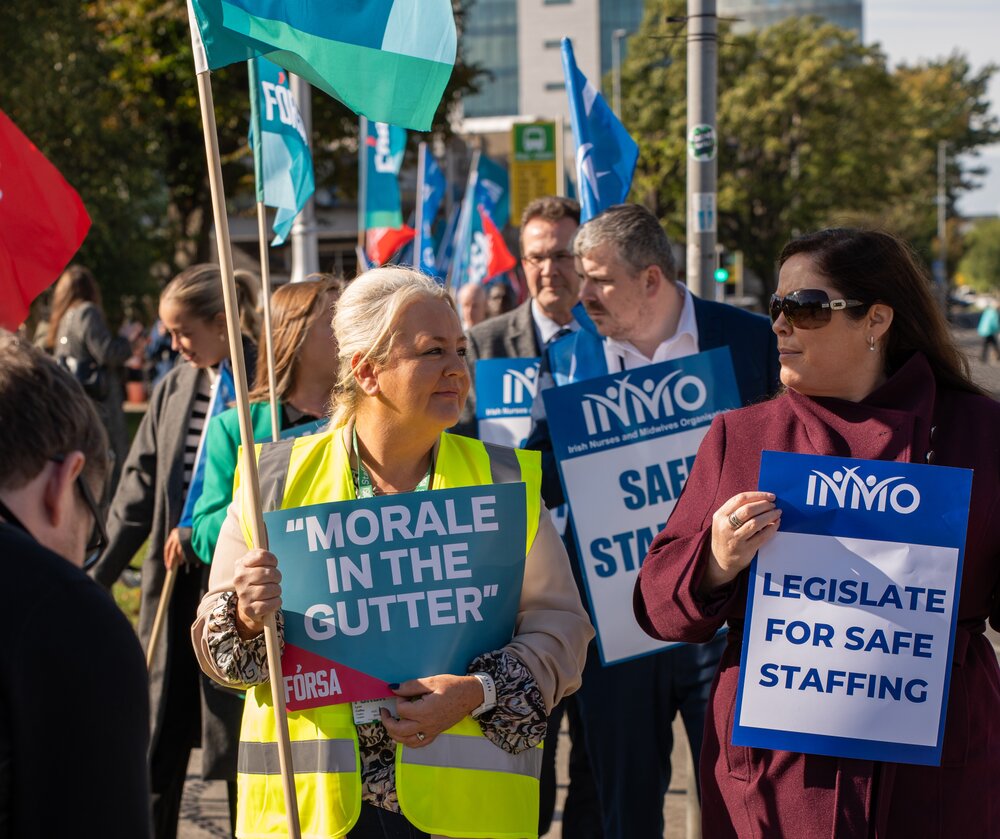
Both unions have now sanctioned the establishment of joint organising committees (JOCs) within each of the six newly established health regions, which will be authorised “to engage with regional and local management to progress our mandate from members.”
Fórsa and the INMO have advised HSE chief executive Bernard Gloster of the unions next steps to address ongoing difficulties with workforce planning by the HSE, and the elimination of crucial and previously sanctioned posts at the national health body, confirmed by the publication, last year, of the HSE’s ‘Pay and Numbers’ strategy document.
Criticising the HSE’s failure to respond to multiple efforts by individual unions to resolve the dispute, since the introduction of the initial recruitment embargos in 2023 and 2024, the unions said the HSE has not yet “acknowledged or addressed the staffing deficits and the consequential issues arising.”
To avoid further escalation of the dispute, the unions said the severity of the impact of staffing restrictions, and “the absolute necessity for effective and timely resolutions” should not be underestimated.
Both unions have now sanctioned the establishment of joint organising committees (JOCs) within each of the six newly established health regions, which will be authorised “to engage with regional and local management to progress our member’s mandate.”
These committees will be tasked with collecting and collating accurate information regarding vacant posts, maternity leave positions left unfilled, use of third-party contractors and more.
Head of division Ashley Connolly said: “These local committees will be hugely important as we plan the next steps ahead of industrial action. We have sought this information from the HSE on multiple occasions, to no avail. We’ve been left with no option other than to collect and collate the information ourselves.”
Members of Fórsa and the INMO have voted overwhelmingly in favour of industrial action. Both unions represent over 77,000 healthcare workers across numerous grades in the public health service. Other trade unions including Connect Trade Union, Unite and the Medical Laboratory Scientist Association have also voted for industrial action.
The unions further advised that engagement on the substantive issues around pay and numbers “must be addressed nationally, and we expect that you and your senior HSE management team will prioritise this.”
The unions advised Mr Gloster, who was appointed in 2023, that members continue to provide frontline services at a time of great need, but “are clear that the current approach to staffing is unsafe and unsustainable.”
The unions also highlighted the current spend on agency staff - €750 million – “doesn’t hide the reality of significant gaps in service,” and expressed concern “that the HSE believes this is an appropriate approach and that business can continue as usual.”
National secretary Linda Kelly added: “The pressure on anyone working in the health system now is immense. From primary care to acute hospitals everyone is doing the very best they can.
“But our members are crying out for help. They need our support now. A new Minister for Health has a huge opportunity to show our members they are valued and come up with a sustainable way to fill the vacant posts,” she said.
Join a union that wins. Join Fórsa.
|
|
Unions contact new disabilities Minister seeking renewed WRC engagement
by Niall Shanahan
The ICTU-led group of unions has contacted the new disabilities minister, Norma Foley TD, seeking the recommencement of the adjourned WRC negotiations on pay in health service employments in the community and voluntary sector (sections 39, 56, 10).
The ICTU-led group of unions has contacted the new disabilities minister, Norma Foley TD, seeking the recommencement of the adjourned WRC negotiations on pay in health service employments in the community and voluntary sector (sections 39, 56, 10).
Norma Foley was appointed as Minister for Children, Equality, Disability, Integration and Youth in January. Unions have continued to pursue the completion of a talks process aimed at creating pay parity between healthcare workers in the sector and their equivalents in the HSE and Section 38 employments.
The 2023 WRC agreement provided for a process to re-establish the link to public service pay terms, as the community and voluntary sector continues with the challenge of recruiting and retaining skilled healthcare workers.
In a letter to the new Minister, the group of unions outlined the status of the process, which had effectively paused because of the General Election and the formation of a new government.
The unions said that while some progress had been made in negotiations: “It has not been possible to reach a final agreement.”
Unions advised the Minister that government representatives had informed them last December that it had not been possible for the departments involved to achieve any change to their existing mandate for these negotiations and advised the process would pause “until departments are in a position to get a renewed mandate from an incoming Government and new Ministers.”
ICTU added that the new Programme for Government includes commitments to “consider measures to attract and retain staff in the disability sector” to consider the development of “a new workforce plan to address immediate staffing shortages and longer-term needs” and to “work with the voluntary sector through industrial relations mechanisms and other processes to progress pay issues that affect the delivery of disability services and the long-term viability of organisations within the sector.”
On that basis, the unions have sought confirmation that the Minister will seek the recommencement of the adjourned WRC negotiations, and that the Minister plans to provide her officials “with a mandate that will lead to an agreement.”
Fórsa national secretary Ashley Connolly said the unions were ready to go back into talks: “There is an urgency among the unions to get the job done. Fórsa members continue to work in an environment where staff retention continues to be a major challenge,” she said.
Join a union that wins. Join Fórsa.
Standing strong to protect remote work
by Hannah Deasy & Niall Shanahan
A tense stand-off over the future of remote work between union officials and civil service management resulted in a win for workers. Following a high-profile confrontation, staff were granted permission to maintain their current remote work arrangements while consultations unfold.
Last week a tense exchange took place between union officials and civil service management, following an unprecedented and unilateral decision to change the established pattern of remote work in the Department of Social Protection. On Friday afternoon Taoiseach Micheál Martin intervened publicly, commenting that normal industrial relations processes should be followed.
On Thursday evening, 30th January, your union issued an instruction to all members working in the Departments of Social Protection and Finance instructing them to continue with their usual pattern of remote work.
The instruction came in response to a directive to reduce remote working days from the first week of February. In a note to members head of the Civil Service division Éamonn Donnelly said:
“This is a serious and avoidable dispute that concerns the unilateral alteration of the Blended Working Policy 2022 to the disadvantage of workers, without discussion, analytics or prior consultation.”
He continued: “This is the first instance in which the Government has rolled back remote working arrangements for its own staff, following the recent publication of the new Programme for Government, which commits the new administration to a review of remote and blended work policies.”
The union instruction was widely reported on in national media the next day, Friday 31st January, featuring on the cover of The Irish Times, and later that morning Éamonn spoke about the importance of remote working for peoples’ lives on The Claire Byrne Show on RTE Radio One.
He said: “Reviews of hybrid working arrangements must be based on analytics which take account of the benefit to the workplace, the worker, and the wider socio-economic benefits. In this instance the Department told us no analytics were used in making this decision.”
“A balanced discussion is needed. Operational reasons do need to be discussed but so do the societal reasons in favour of hybrid work, such as reduction of carbon emissions and urban congestion, and caring responsibilities undertaken by workers.”
Then, on Friday afternoon Taoiseach Micheál Martin intervened publicly, commenting that normal industrial relations processes should be followed.
DSP revised its position and advised staff they had the option to continue current arrangements while consultation takes place.
Thanking members for their support, Fórsa official Paul MacSweeney said: “This outcome would not have been achieved without your willingness to take a stand. We will continue to stand up for remote working, and we need you to get involved too. Ask your colleagues to join the union today so we can build our strength.”
What’s happening on the ground? Fill us in.
The pandemic forced many to hit the reset button on work-life balance. What began as a necessity—working from home—soon revealed new freedoms and benefits, like cutting the needless commute, and a reduction in number of sick days taken. Now, we want to hear from you: How would returning to the office impact your life? Are there aspects you would welcome? Can we ever truly go back to full-time office work? Talk to your colleagues and let us know what the mood is like on the ground.
Use our bulletin feedback form to tell us how you feel about this issue.
Join a union that wins. Join Fórsa.
Barnardos staff to ballot on industrial action
by Niall Shanahan
Fórsa members at Barnardos will begin a ballot for industrial action next week, in a dispute over the organisation’s failure to implement the terms of a 2023 WRC agreement, and the employer’s refusal to engage with the union on the issue.
Fórsa members at Barnardos will begin a ballot for industrial action next Friday (14th February), in a dispute over the organisation’s failure to implement the terms of a 2023 Workplace Relations Commission (WRC) agreement, and the employer’s refusal to engage with the union on the issue.
Barnardos is a charity, part-funded by the State, providing services to vulnerable children and families.
The October 2023 WRC settlement applies to health service employments in the community and voluntary sector (sections 39, 56, 10) and was instrumental in averting sector-wide strike action at the time.
Fórsa official Louise O’Hara said Barnardos management has claimed the funding it received - to implement the terms of the 2023 pay deal - was used instead to ‘reimburse’ Barnardos for a pay increase to staff in 2022, which was agreed and implemented around 18 months in advance of the 2023 agreement.
Louise explained: “There is no provision in the 2023 agreement for an employer to unilaterally decide to take any of the funding for pay as a reimbursement, especially not for decisions on pay increases prior to the agreement being reached.
“Crucially, the State funding bodies have confirmed to Fórsa that the money is not for reimbursement,” she said.
Of the 8% payable under the terms of the 2023 WRC agreement, only 4% has been paid. Louise commented: “The employer has refused to engage with the union and has also declined an invitation from the WRC to attend conciliation.
“Our members at Barnardos have clearly expressed their frustration with the position the employer has taken, and a ballot for industrial action is now a necessary step toward resolving this dispute,” she said.
Louise added: “Audited accounts for 2023 show that Barnardos had more than €15m, of mostly unrestricted funding, in reserves.
“This is a charitable organisation whose actions have imposed an unfair financial hardship on its staff. The terms of the 2023 WRC agreement are very clear, and Barnardos needs to honour them,” she said.
The ballot will run over three weeks, concluding on 7th March.
Join a union that wins. Join Fórsa.
Second local bargaining claim survey opens
by Hannah Deasy
A second local bargaining claim is being prepared. It will relate to members working in roles which are grades 4 to 7, including executive officers, administrative officers, and higher executive officers.
23,000 members have been asked how they would change their pay, in a unique opportunity to contribute to bargaining strategy.
The responses will inform the shape of Fórsa’s second local bargaining claim, which will be lodged on behalf of members working in roles which are grades 4 to 7, including executive officers, administrative officers, higher executive officers and other equivalent roles.
Local bargaining is a key feature of the Public Service Agreement 2024 to 2026, outlined in Clause 4.2.1 of the agreement. It is a new process of national bargaining for collective issues specific to a grade, group or category. Claims amounting to 3% can be made, however there will be no automatic payment without a claim being submitted.
To ensure members’ specific challenges are addressed in these claims, Fórsa are consulting members prior to developing each claim. The surveys are cross sectoral, as are the claims, which powerfully demonstrates the commonality of issues faced by Fórsa members.
Deputy general secretary Éamonn Donnelly urged members to take part, saying: “The survey has been developed by your colleagues on the EO/HEO/AO/Grade IV-VII Equivalent Grades Committee, and asks you for your priorities on pay and related matters. Tell us what matters to you by completing this short survey.”
If you have any questions, please contact localbargaining@forsa.ie
The survey is open now and will close at midday on Thursday 13th February.
Join a union that wins. Join Fórsa.
Disability Matters group moves on conference motions
by Brendan Kinsella
The Disability Matters Working Group has provided recommendations for fulfilling motions passed at national conference on disabilities. Following NEC approval these will now be put into action.
The union’s National Executive Committee (NEC) has accepted recommendations submitted by the Disability Matters Working Group. The recommendations were part of a report delivered by Jean Taylor, NEC and working group member, on Wednesday 29th January.
Disabilities emerged as a common theme among the motions passed at biennial conference last year. As a result, the NEC decided that a working group should be set up to examine motions related to disabilities and map out how best to implement them.
The group was established in July of last year with the remit of examining motions 75–79, 120, 129, 131, and 132.
From their examination the working group found the motions can be grouped around four main themes. The first of these themes was supporting workers with disabilities. This theme recognises the barriers disabled people face in career progression and the need to actively ensure their access to meaningful opportunities.
The second theme was empowering line managers. For disabled people ignorance can be as dangerous as malice. This theme recognises the need to give managers support and training to enable them to ensure the disabled people who report to them can prosper in their workplace.
The third theme, supporting members in disability care services, recognises the important work undertaken by our members in disability care services. Their efforts allow disabled people to live full and fulfilling lives. Advocating for the needs and well-being of those working in this sector is necessary to enable them to continue their support of disabled people.
The last theme was campaigning for improved public care services. This theme recognises the need to push for better provision through enhanced public services. It also outlines the need to identify the care needs and responsibilities of members to inform what enhanced public services will look like in action.
Recommendations
To fulfil the four themes, the report puts forward a series of five recommendations. The first three recommendations lay out a road map for a union wide campaign on the needs of members who live and work with disabilities, who work in disability services, and those who have care responsibilities in their personal lives.
The first step in this campaign will be to establish the needs of affected members. This will be achieved through a survey of members, developed by the Disability Matters Working Group in conjunction with relevant staff, with input from the Health and Welfare Division.
The survey will inform the second step of the campaign, the drafting of a position paper. The position paper will, in turn, inform how the union wide campaign takes shape.
The remaining two recommendations will be carried out at divisional level. Divisions will contact employers in their respective divisions to establish whether they are meeting the minimum statutory employment target for persons with disabilities to be employed in the public sector, which rose to 6% this year.
Divisions will also establish whether a disability resource toolkit exists to support line managers in the management of staff who have a disability. This information will be used to establish the steps need to ensure a disability resource toolkit is made available to line managers.
As National Secretary tasked with the implementation of conference decisions, Catherine Keogh is coordinating the Disability Matters Working Group. She said “I commend the Disability Matters Working Group for their hard work in incorporating these motions into an actionable plan. The number of motions reflects the strength of feeling of our members.”
She continued “While supporting members who live and work with disabilities has long been Fórsa policy, motions like these give us firm goals and milestones to aim for.”
Join a union that wins. Join Fórsa.
Fórsa activists level up with leadership training
by Brendan Kinsella
Winners of the inaugural Fórsa Members’ Awards took part in a unique leadership course, the first of its kind to be organised by the union. Participants reflect on what they learned about the nature of leadership.
The final day of Fórsa’s Leadership Programme training took place in Nerney’s Court on Thursday 23rd January. Launched last year, the course consisted of six days spread out over October to January.
Participants from across the union, not only learned about concepts of leadership, but were invited to engage with their own ideas of what makes a good leader.
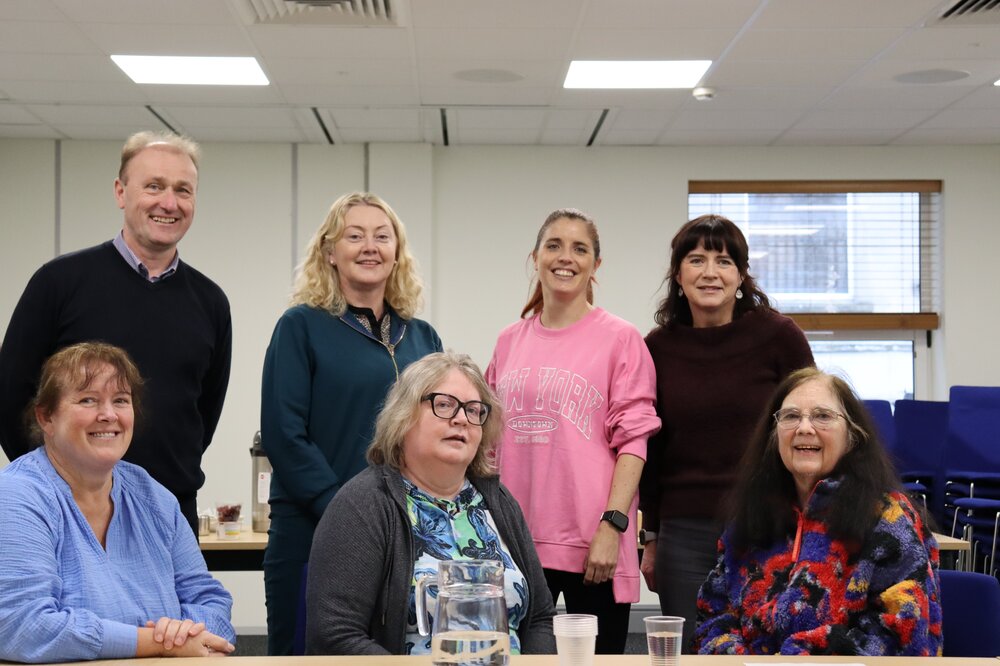
The programme is the brainchild of Fiona Dunne, Fórsa’s Director of Membership Training & Development. “We have been building a whole suite of training courses and programmes to enable our members to excel in their roles within the union” she explained. “We developed the leadership programme because leadership is a skill that is crucial to the success of the union.”
Over six days, members learned about different leadership styles, the dos and don’ts of planning as a leader, effective time management, team development, and strategic thinking and planning. The programme also focused on building participants’ confidence and resilience while equipping them with the tools needed to handle leadership responsibilities.
Among those taking part on the day were the winners of the inaugural Fórsa Members’ National Awards which were presented at a fringe event during Biennial Conference last year.
Fiona said, “The winners of the awards last year are already doing exemplary work as leaders in our union. If we foster their talents, by providing additional training, we can help them become the kind of leaders they want to be.”
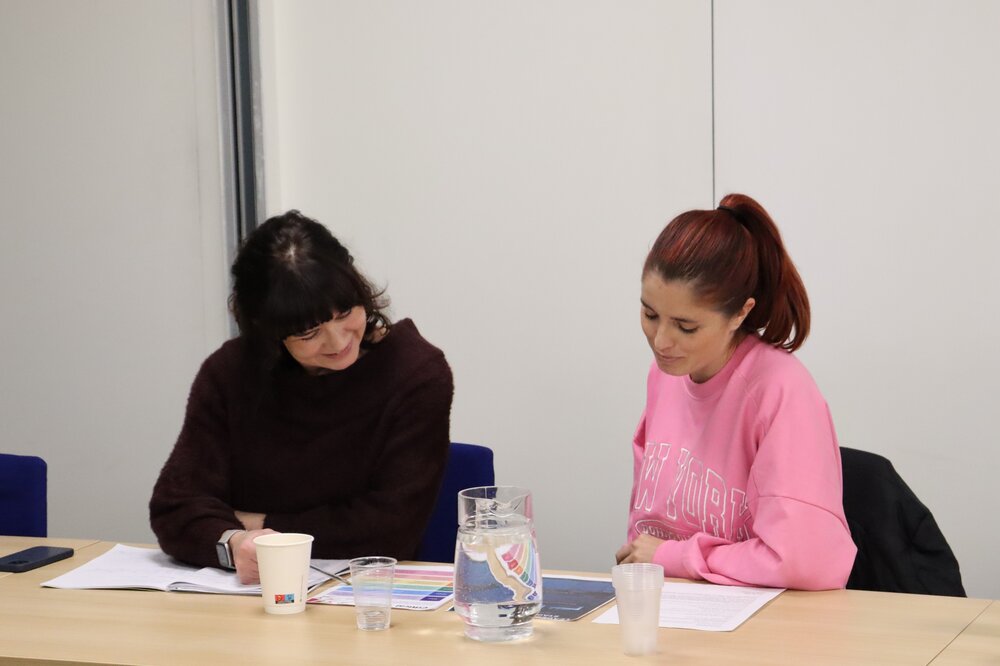
Winner of the outstanding pandemic response champion award, Christina Nestor said, “I found the course very valuable. Meeting other members from other branches with vast experience in union work and in their professional lives was very inspiring. The knowledge, skill, and dedication that they possess is fantastic.”
She continued “I found the training to be uplifting and refreshing, providing opportunities for learning, reflecting on my leadership style, what is working and what I need to do different.”
Organising award winner, Caoimhín Ó Tuathail reiterated the value of putting thought into being a leader, saying: “The leadership programme shows you what the actual role of a leader is. It gets you to look inside and see what kind of a leader you are and what you need to become the kind of leader you want to be.”
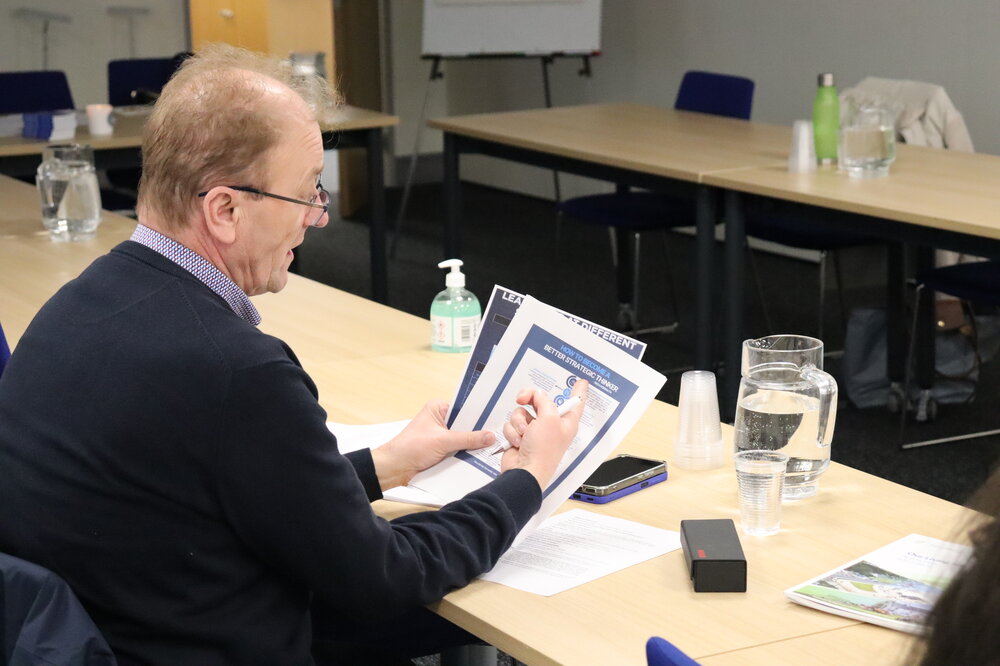
“Leading isn’t just standing out in the front” he explained, “a leader is not just a leader. They are someone who brings others along who can become leaders in the future.”
A feedback session will be held in May where participants will discuss how the programme has helped in their union work and if there is anything they feel is missing. The training was provided by Fabia Gavin, who regularly works with unions on training programmes.
Concluding on the importance of this kind of training Fiona said: “Our aim is always to help members enhance the work they’re already doing by providing them with skills to take their activism to the next level. The participants on this programme were so impressive, they really inspired us to further build this programme. Watch this space!”
Join a union that wins. Join Fórsa.
Seamus Dooley reviews: 'Trade Unions and Progress, a personal history'
Seamus Dooley, of the National Union of Journalists, reviews Kieran Rose’s recent publication, released by Fórsa at the launch of our LGBTQIA+ network in late 2024. The network will meet on 20th February. Members who wish to attend should register here.
Fórsa launched our LGBTQIA+ network in late 2024. The network will meet on 20th February. Members who wish to attend should register here.
This review by Seamus Dooley of the NUJ was originally published by the Irish Labour History Society. It is reproduced here with the kind permission of the author.
Kieran Rose is a significant chronicler of the campaign for LGBT+ rights in Ireland.
A trade unionist, town planner, human rights activist and a champion of the campaigns for the decriminalisation of homosexuality, civil partnership and marriage equality, Rose has meticulously preserved and archived records and photographs of his involvement in some of the most significant social movements in Ireland spanning almost 50 years.
In publishing Trade Unions and Progress for LBGT People: A Personal History Kieran Rose has done a service to labour history, not least by highlighting the oft neglected role of the labour movement in the slow, difficult and often painful march toward equality.
The booklet is literally Rose tinted and the author does not claim to offer anything other than a personal perspective. The personal is political and Rose has always been an astute participant in and observer of political campaigns.
Rose traces his own evolution from the early days of the Cork Gay Collective in the 1980s to his leadership of the Gay and Lesbian Equality Network and his high-profile involvement in the Yes Equality campaign.
It was through the Cork Gay Collective in the 1980s that Rose led the successful efforts to get the Irish Trade Union Movement to support gay rights, utilising links with Cork Council of Trade Unions.
The opening picture features Laurie Steele of the Collective standing on the steps of Cork City Hall during the ICTU Biennial Delegate Conference in 1981 with a poster “Gay Rights, Workers Rights”, not a revolutionary concept but a message which made many delegates uncomfortable at a time when homosexuality was still a crime in Ireland.
In the same year the first National Gay Conference was held in Cork which featured a trade union workshop chaired by Rose. Among the motions passed was one condemning the failure of the Irish Federation of University Teachers for not sending a motion on LGBT+ workers which had been successfully proposed by David Norris for inclusion in the ICTU BDC conference agenda.
Rose acknowledges the support he received from his own union, through the Cork branch of LGPSU.
He writes: “In 1992 the Cork branch of LGPSU adopted a motion proposed by myself and Tricia Tracey calling for gay law reform and amendments to the Unfair Dismissals Act, the Employment Equality Act and legislation dealing with the employment of civil servants, the armed forces and Gardaí to prevent discrimination on the basis of sexual orientation”.
Rose notes that it was the first time he had spoken at a trade union meeting and was accompanied by Cork Gay Collective members for moral support.
The motion was subsequently adopted at the LGPSU annual conference in May 1982 despite, according to Rose, the declaration of one delegate who proclaimed, “If Cork have a problem with homosexuality, then let them go away and solve the problem quietly.”
The delegate missed the point. Cork had no problem with homosexuality or homosexuals and Rose, with no false Munster modesty, strongly emphasised the role of Corkonians in the development of the Irish gay rights movement.
“It is 40 years ago this year that the Cork Gay Collective was set up. We had huge ambitions and determination to achieve great progress as soon as possible. We organised the first National Gay Conference in Cork at Connolly Hall which really set the agenda for years to come. It was also a time of political ferment and optimism generally,” Kieran recalls.
The booklet is richly illustrated with photographs from the Collective’s archive and the author’s own archive.
The photographs re-enforce the personal nature of the publication, which traces the author’s path from his first trade union branch meeting to his pivotal role in the foundation of the Gay and Lesbian Equality Network. He is however careful to acknowledge the achievements and contributions of others, such as Sylvia Meehan and John Mitchell, General Secretary of IDATU, now Mandate.
He is somewhat reticent about the struggles faced by trade unionists in putting the issue of gay rights, including decriminalisation, on the agenda at a national level.
The study of labour history would benefit from less reticence from Rose, who has a tendency to accentuate the positive.
That positivity is rooted in the success of campaigns on employment rights including his role in securing an amendment to the Unfair Dismissals Act in 1993 to outlaw discrimination based on sexual orientation, the introduction of the Employment Equality Act 1998, and more recently his contribution to the introduction of the Civil Partnership Act in 2010, later paving the way for Marriage Equality in 2015.
The book does not detail in any detail the significant role of the labour movement in the Marriage Equality campaign, a task others may take up.
Through personal recollections, photographs, press cuttings and illustrations Kieran Rose has managed to convey a sense of the work undertaken by trade unions as well as providing an insight into his own contribution across many spheres.
It would be easy to forget just how much courage it took to move that motion at his first trade union conference. The trade union movement was not always welcoming of initiatives which disturbed the status quo but Rose reminds us of the power of prescience, building alliances and strategic campaigning.
Seamus Dooley, Assistant General Secretary, National Union of Journalists.
Join a union that wins. Join Fórsa.
Conference motions: Artificial Intelligence and Big Tech
by Brendan Kinsella
Artificial Intelligence, digital platforms and tools are evolving all the time. Support and information is available from Fórsa’s Digital Director.
Artificial Intelligence and other digital platforms and tools are evolving all the time. Unions, like all organisations, are investing time and thought in exploring how to respond to the workplace challenges resulting from the increased use of AI.
If your branch is putting forward motions for your divisional conferences on anything related to these topics, we’re here to help.
Fórsa’s Director of Digital is available to discuss how these platforms currently operate, what they can do, and the potential risks and opportunities. The support is to provide information for members; not to support the creation or proposal of the motions.
Encouraging members to get in touch, Kate said: “Knowing how these platforms work, what they can be used for, and what the latest development means, can be hard to stay on top of. So don’t hesitate to get in touch if we can provide support.”
Contact Kate O’Sullivan by email kosullivan@forsa.ie, if you would like to set up a session.
Join a union that wins. Join Fórsa.
|
|
|
|