Bernie Sanders to headline Robert Tressell Festival
by Brendan Kinsella
 |
The third annual Robert Tressell Festival will take place in Liberty Hall in Dublin on Saturday 24th May 2025. Following last year’s highly successful event, the festival of debate, music and drama includes a range of leading international and Irish labour movement figures.
Tressell festival committee member and Fórsa official, Lisa Connell stated that the Robert Tressell Festival celebrates everything that the labour movement has to offer, particularly in terms of art, culture and real left-wing solutions to societal problems.
Lisa explained, “The event is a safe space that allows for the trade union movement in Ireland to discuss the best ways to keep the wheels of progress turning with our international union sisters and brothers.”
Festival publicity organiser and SIPTU official Paddy Cole said: “Building on the success of last year’s Tressell Festival we hope to bring together trade unionists, working class people and political activists from Ireland, Britain and the U.S. to debate and discuss how we can combat the carnival of reaction that is unfolding around the world. We are particularly honoured to have Senator Bernie Sanders deliver the Annual Robert Tressell Festival address this year.”
Tickets are available here.
Join a union that wins. Join Fórsa.
Stand in solidarity with Palestine
by Mehak Dugal
Join Fórsa members in the trade union bloc on Saturday 22nd March.
Fórsa will be marching for Palestine once again on Saturday 22nd March 2025 and you’re invited to join our delegation in the trade union bloc to show solidarity with the Palestinian people and call for an end to the genocide.
Fórsa members are invited to meet from 12.30pm outside the Mandate Trade Union offices on Cavendish Row (across the road from the Gate Theatre). Flags will be available for collection from the Nerney’s Court office at 12.15pm.
The march will begin at the Garden of Remembrance at 1pm and finish outside the Dáil on Molesworth Street/Kildare Street to bring our demands to the Irish government’s doorstep.
The Ireland-Palestine Solidarity Campaign, supported by over 150 Irish civil society organisations, called for a national demonstration this month, stating: “Despite a fragile ceasefire bringing an end to Israel’s genocidal carpet bombing of Gaza, Israel continues to routinely violate the terms of the ceasefire, and has escalated attacks on Palestinians in the illegally occupied West Bank, with 40,000 forcibly displaces from refugees camps, and widespread attacks on the healthcare system. In the ruins of Gaza, they are still counting the dead, with around 62,000 now feared dead, and children still dying from cold, malnutrition, and lack of medicine.”
This demonstration takes place during ‘Anti-Racism Month’ and will be the first event of Israeli Apartheid Week 2025 – a global week of action, now in its 20th year, being organised in hundreds of towns and cities across the world under the slogan of ‘People Power Makes Apartheid History’.
If you are interested in being more involved with Fórsa’s Palestine demonstrations or would like to receive regular updates on the union’s activities in this area, contact campaigns@forsa.ie.
Join us in standing for justice, peace, and human rights!
Join a union that wins. Join Fórsa.
Empowering educators in Cambodia
by Mehak Dugal
Funds from Fórsa support See Beyond Borders as they work to transform educational outcomes.
Over the past year, Fórsa has partnered with See Beyond Borders Ireland to improve the quality of primary education in Cambodia.
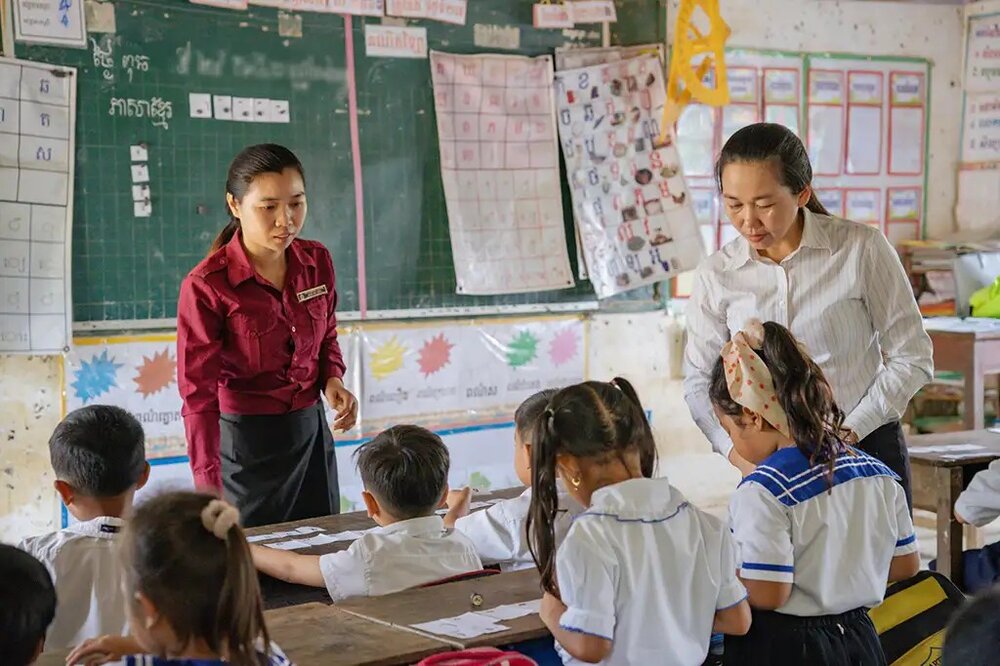
Thanks to over €20,000 in donations from the Fórsa Developing World Fund, See Beyond Borders has successfully continued its Transform Education Programme, improving the school experience for more than 3,000 children across 20 government primary schools in the remote rural districts of Krahlanh and Srei Snam in Siem Reap province, Cambodia.
Children in this region face significant challenges in accessing quality education, but this project is changing that by empowering teachers and school leaders to make a lasting impact.
By the end of the first year of the programme, 84 teachers were empowered to identify and actively pursue their professional development goals through the Teacher Professional Identity and Leadership in Learning modules. They achieved this by participating in workshops, attending monthly reflective sessions, and receiving ongoing mentoring.
32 school leaders were also equipped with the knowledge and skills to drive progressive teaching and learning practices across 20 primary schools. This was achieved through leadership workshops, and ongoing support, including school visits, online meetings, and reflective sessions.
Community engagement events were also successfully held in 16 schools a part of this program. These events, named 'Education Inspires', were led and organised by school leaders, with parents invited to see their children's learning displayed and observe their learning processes. Teachers also showcased their work and explained their roles to parents, outlining how parents could better contribute to their children's education.
The overall impact on student learning in the first year was also extremely positive, 22% of students achieved proficiency in literacy - exceeding the 18% target, and proving that interventions to enhance school leadership and teaching practices effectively contributed to improved student learning outcomes.
Funded by 3% of every member’s union subscription, the Fórsa Developing World Fund gives over €600,000 a year to projects around the world, allowing Fórsa members to directly assist in crucial humanitarian efforts and support human rights and development activities in various countries.
For 15 years, See Beyond Borders has been committed to empowering Cambodian children through quality education, engaging with over 250 schools and supporting more than 700 teachers, positively impacting the lives of over 30,000 students.
Founded by Ed and Kate Shuttleworth, the organisation was inspired by the challenges they witnessed during a visit to Cambodia in 2002.
For decades now, Cambodia has been experiencing what the World Bank calls ‘a learning crisis’. On average, a Cambodian child will spend just 4.7 years in school, with less than 3% of Cambodian children reaching minimum learning standards in numeracy and literacy.
Fórsa’s national secretary Richy Carrothers highlighted the impact of the union’s contributions, noting that Cambodia has one of the youngest populations globally. He emphasised that, thanks to Fórsa members’ support, teaching and learning opportunities were enhanced for over 3,000 children this year alone—children who might not have had the same opportunity otherwise.
Speaking about the broader significance of the initiative, he said, “The work of organisations such as See Beyond Borders is essential in addressing the learning crisis in Cambodia. These children’s futures are on the line, not only their education. Positive learning can shape and transform the lives of every single one of these children.”
Richy also expressed Fórsa’s pride in supporting See Beyond Borders and reaffirmed the union’s commitment to the cause: “We at Fórsa are very proud to support the incredible work See Beyond Borders do in providing quality education and support to empower Cambodian children, and Fórsa has committed to a total project spend of €60,000 over three years.’
You can learn more about See Beyond Borders here. Watch our video about Fórsa’s global solidarity work here.
Join a union that wins. Join Fórsa.
Upcoming trainings in March
by Brendan Kinsella
Courses are on offer for reps, activists, and members.
March is shaping up to be a busy month for Fórsa’s Skills Academy, with an exciting range of training opportunities available.
Level 1 Workplace Rep Training, 25th-27th March – Wexford
This three-day course will give new workplace representatives a firm understanding of the basic skills and information needed to effectively carry out their duties as a representative. The course is open to workplace reps with less than 2 years of experience as a representative who have previously attended Fórsa Induction or its predecessor course Fórsa 101.
Attendees will be taken through a number of topics crucial to becoming a successful rep, including: the role and responsibilities of the workplace representative, organising and recruiting members, industrial relations, handling members' problems and local representation, and much more.
Members looking to attend can register here.
Level 2 Workplace Rep Training Part 3 – Health & Safety, 18th March - Galway
Reps who have already completed the Level 1 Workplace Representative training and wish to take on the Level 2 training may be interested in this session in Galway. This course will cover part 3 – Health and Safety and will go towards earning a certificate of completion. This programme consists of three parts which must all be completed, though not in a specific order.
Applications will close as soon as course capacity is reached. If you are interested in this training, please contact skillsacademy@forsa.ie to apply.
Live: Lunch & Learn: Make learning easier, assistive technologies for students, 28th March - Online
Access UCC has created a resource on free Technology to Make Learning Easier. It consists of free, built-in tech to make reading, writing, planning and studying easier. Deirdre Madden, Assistive Technology Outreach Co-ordinator at Access UCC, will share her experience working in disability support and take attendees through the Make Learning Easier resource.
This will be of especially interest to SNAs and members working in education and disability support.
Registration will be open soon.
Join a union that wins. Join Fórsa. Join a union that wins. Join Fórsa.
|
|
SAR members approve temporary change to CLA
by Hannah Deasy
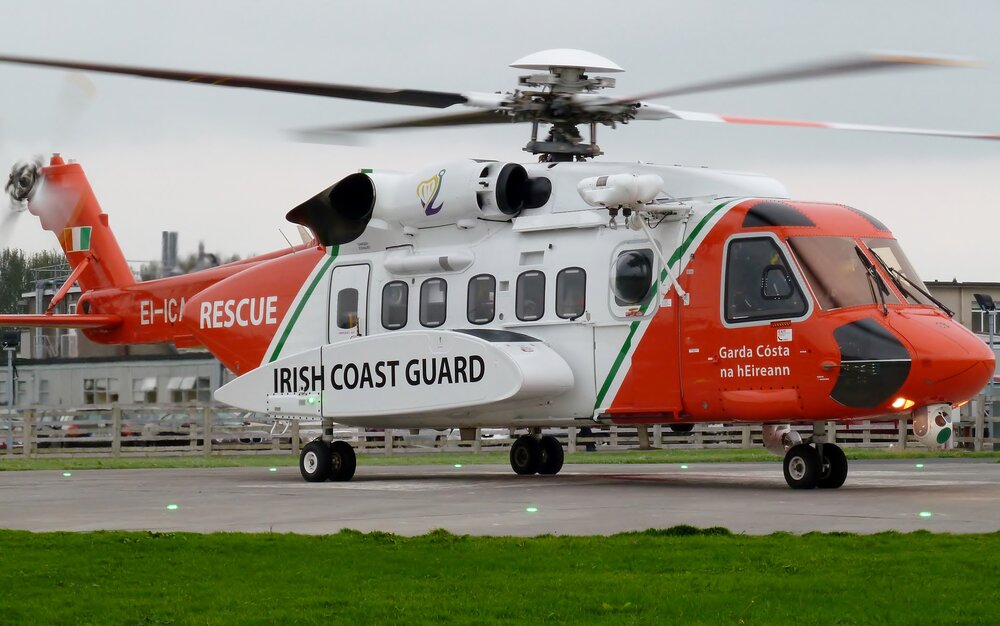
IALPA members in the Search and Rescue service (SAR) have voted to accept a temporary alleviation to their collective labour agreement which will see their shift patterns change from 24-hours to 12-hours.
IALPA members in the Search and Rescue service (SAR) have voted to accept a temporary alleviation to their collective labour agreement.
The temporary alleviation will see their shift patterns change from 24-hours to 12-hours. The change in shift schedule will require pilots to work at least three days per month in addition to their contracted number of shifts.
100% of members voted to accept the temporary agreement, with 100% voting.
IALPA Vice President Finance, Captain Daniel Langan said: “Following the transfer of the Shannon base from CHC to Bristow, the Irish Aviation Authority (IAA) imposed 12-hour shift patterns on the search and rescue operation.”
“This posed a serious contractual issue for IALPA members as pilots had previously worked 24-hour shifts. It was a massive change to existing custom and practice in the operation.IALPA negotiated a temporary alleviation to our collective labour agreement which fairly compensates our members for altering their terms and conditions."
Captain Langan added: “IALPA are keen for the new operator to re-establish 24-hour shift patterns and we would encourage all stakeholders to engage meaningfully in the process.”
Join a union that wins. Join Fórsa.
|
|
Member spotlight: Ciarán Kissane of IFCO
by James Redmond
With over 89,000 members our activists work in all sorts of roles. In a new series we meet with Fórsa members in lesser-known workplaces and learn about their working lives. This week Ciarán Kissane of the Irish Film Classification Office (IFCO) takes fellow Fórsa members behind the scenes of his work.
You’ve probably seen Ciarán Kissane’s name on the silver screen more times than any Hollywood A-lister, but the bells might not be ringing. James Redmond catches up with Ireland’s Director of Film Classification (and Fórsa activist) as he gives members of the Service and Enterprises Divisional Executive Committee a behind-the-scenes look at his work.
It’s a gloomy Thursday morning in Smithfield as more than a dozen members of the Service and Enterprise Divisional Executive Council (DEC) wait in the lobby of the IFCO building. It’s handily tucked away in a new build beside the Light House cinema. Tea and coffee are provided, and we’re handed red clipboards with a breakdown of the Irish classification system as it ranges through G, PG, 12A, 15A, 16 and 18. There’s a matrix of concern that veers across thematic content, violence, sex, language and drugs.
We’re ushered upstairs to the small cinema where Ciarán has lined up three recent trailers for Bridget Jones: Mad About The Boy. Each trailer is edited to be played before a different feature film audience and we’re asked to give our thoughts on how we’d grade them. 1,365 theatrical works were classified in 2024 and trailers take up a surprising amount of his time.
Last year alone, IFCO reviewed 700 trailers, a process that begins early each morning. “You can get a15A-rated one first, and then the 12A, or a PG as the trailers tend to target particular films being released each week. Therefore these trailers for Bridget Jones were submitted weeks apart,” Ciarán explains.
Members of Fórsa DEC debate the Bridget Jones trailers, dissecting the subtle nuances between different versions—ranging from standard rom-com laughs to darker takes on bereavement, before culminating in an over-the-top raunchiness that would make a hen party blush.
Next up we’re diving into a recent Irish short film called The Golden West. It’s a gloomy gothic western set on the harsh Snowdonian coastlands of Wales. Two sisters, filled to the brim with mutual loathing and bitterness have fled the Irish famine and are spending their days prospecting for gold. It’s a beautifully filmed psychological horror with bursts of dark comedy, put together as a passion project by Oscar and BAFTA-winning directing duo Tom Berkeley and Ross White. The film weaves a tale of survival, greed, and fractured sisterhood.
85 short certificates were issued in 2024 mainly for Irish productions - it’s a remarkable jump up from 17 the year before. The film includes off-screen violence and a suicide pact between the two women, complicating the rating as members of the DEC struggle to guess its age appropriateness. It’s a perfect film for Kissane to use to talk us through the more complex aspects of classification work.
“Suicide thematically, that's one of the things that has become much more of an issue than it would have been maybe 20 years ago—representations of harmful behaviour, suicide, things like that, are triggering for people. Whereas, you know, 20 or 25 years ago, that really wasn't something that was taken into account,” he says.
The use of humour as a mitigating factor becomes a contentious point in the discussion, with some on the DEC seeing the film as funny while others perceive it as incredibly dark. The room is divided on whether the film should be rated 12A or 15A.
He explains that understanding "mitigation"—factors that lessen the impact of a potentially harmful scene—is crucial. “And that often comes in in horror films, where you have a lot of humour, and that can reduce the impact because you're laughing with it, rather than necessarily being terrified by it," Ciarán explains pointing to the black humour of writers like the MacDonagh brothers, who often weave dark humour mirth films like The Guard and In Bruges.
As the world of content continues to shift, new technologies like AI are beginning to play a role in the classification process elsewhere. The British Board of Film Classification (BBFC) launched an AI content classification project with Amazon Web Services in 2023, and Kissane is keenly aware of the implications of AI and how streaming technology is reshaping how we consume media. Can machines really read cinematic complexities?
He reminds me that Safer Internet Day took place earlier that week and points to fresh research. “There was research only published two days ago by Cyber Safe Kids, it’s a short document and one of the frightening stats in it is that over 80% of children between eight and 12 have an internet connected device in their bedroom, which is generally a smartphone.”
Ciarán believes his role is still vital despite all the AI hype.
"While audiences recognise the different contexts in which they view audiovisual content, they have an expectation that some basic standards and protections will apply,” he explains."
This is particularly the case in cinema, which is a communal experience where the theatrical nature of the presentation remains more immersive and impactful than home entertainment."
Kissane maintains that film classifiers still have an essential role, citing research published by IFCO in 2023, which found that 80% of parents trust the office to provide reliable age ratings. "88% of parents believed the advice provided through the website is useful," he concludes, emphasising the continued significance of his role, and that of the film classification office.
Join a union that wins. Join Fórsa.
This International Women’s Day: tell your sisters to join the union
by Hannah Deasy
Over 70% of Fórsa members are women. On the eve of International Women’s Day we acknowledge the contributions of women activists in our union, as well as highlighting what we’re doing to improve the working lives of women in Ireland today.
Over 70% of Fórsa members are women. On the eve of International Women’s Day we acknowledge the contributions of women activists in our union, as well as highlighting what we’re doing to improve the working lives of women in Ireland today.
International Women’s Day has trade unionism at its heart. In recent years it may have become a byword for celebration, but its origins in the early 20th century lie firmly with women trade unionists campaigning for better working conditions, pay and representation for women.
Our recent campaigns for paid domestic violence leave and to stop the stigma around periods and menopause in the workplace came from members of our union, women who raised issues, and wrote motions, advocating to get these issues on the union’s agenda. In turn that allowed activists to work together on campaigns that ultimately led to real, lasting change for women in Ireland.
Fórsa activist Linda O’Sullivan brought the issue of domestic violence to the union’s biennial conference in 2022. Linda said: “Knowing that the union had my back and cared about this issue made a huge difference. When you stand together you can achieve so much more. From that motion we began the journey to making paid domestic violence leave a legal reality. We won’t stop until DV leave is extended to 10 paid days.”
Fórsa’s general election manifesto, launched last November, called for a number of key commitments to improve gender equality in the workplace.
Policy officer Aisling Cusack said: “In the manifesto we called for a commitment to amend the Safety, Health and Welfare at Work Act and Employment Equality Act to protect employees affected by period or menopause-related symptoms in the workplace; as well as highlighting the need to ensure the implementation of free access to hormone replacement therapy (HRT) to alleviate painful and uncomfortable symptoms of menopause.”
“We’re also calling for full implementation of the Third National Strategy on Domestic, Sexual & Gender-Based Violence 2022-2026. Public provision of affordable childcare that is accessible for all families is another priority. Without it, Irish women’s participation in the workforce will continue to be one of the lowest in the European Union.”
ICTU vice president and Fórsa national secretary Katie Morgan said: “In addition to our work on gender issues there are many more campaigns and policies we are working on that would enhance everyone’s working lives, not least women. Measures like granting trade union reps a statutory right to facilitate union meetings during working hours at times that suit workers, and don't impact on family and caring responsibilities would make a huge difference. In turn this would increase gender balance in all unions, and workplaces. Our union's strength is our members, so this IWD, tell your female colleagues who aren't in the union that it's time they joined."
Join a union that wins. Join Fórsa.
Members shape latest local bargaining claim
by Hannah Deasy
Local bargaining is a process of national bargaining on issues specific to grades, groups and categories, that union members can use to improve their pay and conditions. This claim is on behalf of executive officers, administrative officers, higher executive officers, and grades 4 to 7, across the civil and public service.
On Friday 21st February Fórsa lodged a local bargaining claim on behalf of Executive Officers, Higher Executive Officers, Grade 4 -7s in the civil service and related grades in the public service (health, education and local government sectors).
Local bargaining is a national bargaining process for collective issues specific to a grade, group or category. This is the third local bargaining claim Fórsa has lodged.
Last week, Fórsa general secretary Kevin Callinan met with the Department of Public Expenditure, NDP Delivery and Reform (DPENDPDR) in his capacity as Chair of the ICTU Public Services Committee, to finalise the local bargaining units. Department officials acknowledged that Fórsa has now submitted three local bargaining claims.
Speaking about the engagement, Kevin said: “The members covered by this claim were surveyed in advance, and their responses informed the nature of the claim.”
“For local bargaining to have a real impact on members’ lives, it is vital that members have a chance to input into claims early in the process. Members’ support will also be pivotal in securing the claims. There are no automatic entitlements here, these claims will need to be negotiated, fought for and won.”
Following a similar approach to the claim submitted on behalf of Clerical Officers and related grades, this claim seeks to reduce the length of time it takes to move up each scale, to eliminate the waiting period for Long Service Increments (LSI), and to add an increase to the maximum point of each scale.
Deputy general secretary Éamonn Donnelly submitted the claim on behalf of members. Éamonn stated: “Three local bargaining claims have now been submitted on behalf of Fórsa members. Taking members’ views on board, we have taken a common approach and adapted the claim to each grade and role that is covered. We’ll keep you informed as the process unfolds.”
The claim is as follows:
- Removal of points 6 and 10 of the Executive Officer scale. Removal of the 3 years waiting criteria for Long Service Increments on the Executive Officer scale. An increase of 3.5% to the absolute maximum point of the Executive Officer scale.
- Removal of points 3 and 6 of the Higher Executive Officer scale. Removal of the 3 years waiting criteria for Long Service Increments on the Higher Executive Officer scale. An increase of 3.5% to the absolute maximum point of the Higher Executive Officer scale.
- Removal of points 6 and 8 of the Grade 4 scale. Removal of the 3 years waiting criteria for Long Service Increments on the Grade 4 scale. An increase of 3.5% to the absolute maximum point of the Grade 4 scale.
- Removal of points 2 and 5 of the Grade 5 scale. Removal of the 3 years waiting criteria for Long Service Increments on the Grade 5 scale. An increase of 3.5% to the absolute maximum point of the Grade 5 scale.
- Removal of points 3 and 5 of the Grade 6 scale. Removal of the 3 years waiting criteria for Long Service Increments on the Grade 6 scale. An increase of 3.5% to the absolute maximum point of the Grade 6 scale.
- Removal of points 3 and 6 of the Grade 7 scale. Removal of the 3 years waiting criteria for Long Service Increments on the Grade 7 scale. An increase of 3.5% on the absolute maximum point of the Grade 7 scale.
You can read the claim here.
Join a union that wins. Join Fórsa.
March pay boost takes effect
by Brendan Kinsella
Good news for workers! Thanks to the Public Service Agreement 2024-2026, the first pay increase of 2025 took effect on 1st March, putting an extra 2% or €1,000 (whichever is greater) in workers’ pockets.
Public service pay scales are currently being amended to reflect an increase of 2% of gross pay, or €1000, whichever is the greater, effective from 1st March.
The pay adjustment was due under the existing terms of the Public Service Agreement 2024-2026, negotiated by unions last year and overwhelmingly accepted in a ballot of Fórsa members in March 2024.
Workers earning under 50k will receive a flat rate increase of €1000 to their annualised pay. This means lower paid workers will receive a higher percentage increase. For example, a Clerical Officer on the first point of their pay scale will see their pay increase from €28,432 to €29,432, a 3.4% increase.
Fórsa general secretary, Kevin Callinan said “When we were negotiating the Public Service Agreement, the cost-of-living crisis was very much to the fore in our minds. It made including flat rate increases for lower paid workers really important. They ensure our colleagues being hit the hardest have a better chance of maintaining a decent standard of living.”
The agreement covers the period from 1st January 2024 to 30th June 2026 and makes provisions for pay improvements worth 9.25% – with a further 1% available for local bargaining – for public sector workers. The next scheduled pay increase will be an additional 1% for all workers and will come into effect on 1st August.
Join a union that wins. Join Fórsa.
A new digital toolkit to empower activists
by Mehak Dugal
The ‘Digital Revolution Toolkit’ is designed to equip trade union activists with the necessary tools to adapt to an era defined by rapid technological change and shifting socioeconomic landscapes.
The European Trade Union Confederation (ETUC) has launched a new digital trade unionism toolkit as a ‘one-stop shop’ to help activists navigate future challenges.
The ‘Digital Revolution Toolkit’ is designed to equip trade union activists with the necessary tools to adapt to an era defined by rapid technological advancement and shifting socioeconomic landscapes, where unions find themselves at a critical juncture.
The toolkit represents a synthesis of lessons learned, best practices identified, and innovative strategies devised to confront the challenges of our time. Activists can access practical tips and strategies to help unions thrive in the digital age here.
Fórsa’s digital director Kate O’Sullivan and campaigns director Kevin Donoghue contributed to its development.
Speaking about its impact, Kate, a key contributor to its creation as a member of the ETUC committee for digital trade unionism, emphasised that the new guidance aims to help activists understand and apply digital tools to their campaigning and organising activities. “The vast majority of us spend a significant amount of time online, both personally and professionally, so trade unions must have a presence there too,” she said. “This toolkit is about sharing what works best and strengthening our movement.”
The digital toolkit addresses a broad range of challenges, offering practical guidance on resource shortages, technological advancements, data-driven decision-making, GDPR compliance, countering far-right narratives online, member recruitment and retention, and effective online campaigning.
The toolkit is the result of a comprehensive two-year project led by ETUC. Funded by the European Union, it aims to help national trade unions enhance their digital campaigns, boost their membership, and organise more effectively.
Fórsa’s director of campaigns Kevin Donoghue said: “Precarious contracts, bogus self-employment and the rise of platform work are all making it harder for unions to reach workers. In parallel, the rise of the far-right poses a direct threat to the fundamental principles of social justice and workers’ rights that unions champion. Now more than ever we must be as active online as we are offline if we want to effectively organise workers.”
The European Trade Confederation represents 45 million members from 94 trade union organisations in 42 European countries, as well as 10 European Trade Union Federations.
Join a union that wins. Join Fórsa.
Trade Union Week 2025 announced
by Brendan Kinsella
Organisers are hoping to build on last year's success and make this year's celebration of trade union members bigger and better. Get involved!
Last year union members across Ireland came together to host events during the first ever Trade Union Week, held as part of the Better in a Trade Union campaign. The campaign aims to build union membership across Ireland by highlighting the value of union membership and advocating for collective action.
Now entering its second year, Trade Union Week 2025 will take place Monday 28th April to Friday 2nd May.
ICTU Vice President and Fórsa national secretary Katie Morgan said: “Last year’s Trade Union Week was a huge success. From a Christy Moore gig in Dun Laoghaire to a book reading in Wexford, and in hospitals, schools and offices all around the country, our members celebrated what it means to be in a union and most importantly recruited new members. Branches that hosted workplace events experienced a remarkable 25% increase in recruitment compared to the same week the previous year.”
Forsa’s director of campaigns Kevin Donoghue said: “Organising a Trade Union Week event is a great way to talk to potential members about why being in the union matters to them. This year we’re encouraging branches to work with other unions in their workplace to host joint events.”
“There were high levels of participation among branches last year and we are aiming to expand on that this year. We have bespoke merchandise available to order and event guidance for anyone who needs it.”
Branch chairs and secretaries have received a link to an order form. If you're interested in hosting an event contact your branch or email campaigns@forsa.ie.
Join a union that wins. Join Fórsa.
|
|
|
|