This year, across workplaces and communities, members organised, applied pressure, and stood together to win real change. From headline-making strikes to quieter but no less important victories on flexibility, pay, and dignity at work, this was a year that proved a simple truth: when workers move, things shift.
This year, across workplaces and communities, members organised, applied pressure, and stood together to win real change. From headline-making strikes to quieter but no less important victories on flexibility, pay, and dignity at work, this was a year that proved a simple truth: when workers move, things shift. What follows is a rewind through a year where members did it for themselves.
1. The strike that shook the country
As the year draws to a close, the strike by school secretaries and caretakers stands out as one of the most significant moments of collective action in 2025. Long-ignored workers organised around shared issues, and Fórsa members across every county saw their union’s colours visible in cities, towns and rural communities nationwide.
Around 2,800 school secretaries and caretakers took indefinite strike action from Thursday 28th August. After seven days an agreement was secured with the Department of Education at the Workplace Relations Commission – a clear demonstration of what unity and determination can achieve.
From five mass regional rallies in places like Athlone and outside the Dáil, to isolated rural pickets in towns such as Dunmore East, the campaign was marked by creativity, resilience and momentum. New tactics emerged, including noisy protests outside politicians’ constituency offices, while morale was sustained by the warmth of friends and families, solidarity from other school workers, and constant gestures of public support from passing cars. It was a movement few anticipated, but once it began, it was everywhere.
In Dublin, more than a thousand secretaries and caretakers gathered outside the Department of Public Expenditure on the first day of the strike, demanding pensions, fair leave, and a proper pay agreement for caretakers. Their stories cut through to the wider public, winning hearts as well as headlines.
An Ireland Thinks survey confirmed the scale of public backing, underlining that this dispute was not just a victory for those on strike, but a powerful reminder of the strength of organised workers heading into the year ahead.
As things stand now, the issue has been referred to the Labour Court with the union warning that further strike action “cannot be ruled out.”
Essential link: Head over to our YouTube channel and relive those heady days of last September.
2. The battle for flexibility
Fórsa’s 2025 member survey made one thing crystal clear: workers want control - over their pay, their time, and their working lives. Members feel as strongly about work–life balance as they do about pay itself, with the top-ranked priorities being protecting hybrid and remote working (55%), securing a shorter working week with no loss of pay (54%), and safeguarding flexible hours (53%).
These concerns cut across divisions and sectors, even as remote and hybrid work is derided in some media commentary and challenged by rollbacks across parts of the civil service.
Following Fórsa’s successful pushback against an attempt to unilaterally change blended working arrangements in the Department of Social Protection in January, we asked members to share their experiences - and the response was overwhelming. We were inundated with real-world accounts of how hybrid working shapes people’s lives, supports caring responsibilities, and improves wellbeing.
For many, it remains the only positive gain to emerge from the pandemic, and they are clear they do not want to give it up. At divisional conference in May, civil service workers unanimously called for debate on the topic to be driven by “mature discussion based around analytics” and argued that it should not be seen as a pandemic-era quirk, or a managerial favour to be withdrawn at whim.
While many members have benefited from more agile approaches to working time, others are still constrained by outdated, clock-bound systems. That’s why concrete wins matter. This year saw Clare County Council workers secure the right to an enhanced flexitime scheme, ending a situation where staff had to sacrifice annual leave just to attend appointments or deal with basic life admin.
Against a backdrop of billionaire guff and “return-to-office diktats”, Fórsa’s campaigns team kept the pressure on - including organising an online consultation to feed directly into the government’s review of the right to request remote work legislation, which drew 3,427 responses in just four days. The lines drawn this year prove one thing: collective pressure works - and our movement moves forward, not back.
Essential link: Dive into the Spring 2025 edition of CSQ to read how real workers like you feel about new patterns of working.
3. A year of wins that will shape the future for members
As anyone active in a union or movement knows, not every battle grabs the headlines. But every single one matters. Each campaign builds confidence, strengthens solidarity, and shows -step by step - just how much can be achieved when workers stand together. A quick survey of the Fórsa year reveals activity and wins all over the country.
2025 was a defining year for health workers, as Fórsa members and colleagues across the health unions confronted the damaging impact of the HSE’s ‘Pay and Numbers’ Strategy. The suppression of vacant posts and the imposition of a rigid employment ceiling left hospitals and community services dangerously understaffed, pushing workers to breaking point with morale plummeting while agency costs soared.
After months of frustration and the serving of industrial action notice in March, intensive engagement at the Workplace Relations Commission (WRC) led to proposals aimed at tackling delayed recruitment, filling vacant posts and improving workforce planning. Fórsa members working in the HSE and Section 38 hospitals voted to accept the proposals, standing down planned action to give the agreement a chance.
By year’s end, it was evident that progress had fallen short. Following further unsuccessful talks at the WRC, health unions referred the dispute to the Labour Court, with a hearing set for January 2026.
Elsewhere, there was a major win in the long fought for campaign for job evaluation in local authorities, with an agreement reached on the shape of the scheme, and for a pilot to be introduced. In the same sector industrial action looks set to take place in 2026 as local authorities are struggling to retain Information and Communication Technology (ICT) workers, where morale is low and the Government’s digitalisation goals are at risk. Our members are organising on this critical issue, and recently took a ballot for industrial action to force recognition of the actual work they are doing.
Prison chaplains secured a win in a pay disparity claim. The board upheld Fórsa’s claim that chaplains, recruited from 2015 onwards, had been placed on an incorrect, lower, pay scale. The estimated difference in pay between those appointed before and after 2015 was about €18,000 per point on the salary scale. The Arbitration Board determined that pay adjustments should be backdated to July 2023.
Taken together, these aren’t isolated victories - they’re evidence of an organising culture taking root. Or as the GAA would say: take the points, and the goals will look after themselves.
Essential link: The members’ bulletin is the beating heart of the union. Every issue is archived on the website. Dive into the back issues from your division and others. Stay connected. Keep yourself and your workmates bang up to date.
4. Fighting for the common good at home and around the world
Housing remained the defining social crisis of the year. With homelessness at record levels and thousands of homes lying vacant, unions highlighted the growing gap between policy commitments and lived reality – particularly for frontline workers who are both responding to the crisis and experiencing it themselves.
With the picture on housing becoming more and more grim, major mobilisations took place around the country to support ICTU’s Raise The Roof campaign, there was a rally at the Dail in June which saw hundreds gather for speeches and performances from artists like Meryl Streek and a range of others.
Trade union solidarity is not an abstract principle in Fórsa – it is something members live and practice, locally and internationally, every day. Over the past year, that solidarity has been expressed powerfully through action for Palestine, while also taking concrete shape in communities across Ireland.
Internationally, members have stood shoulder to shoulder with the Palestinian people in multiple ways. Fórsa members participated in a recent seminar with Makan discussing concrete solidarity actions while strong member turnouts at demonstrations and days of action ensured that solidarity was visible on the streets as well as in meeting rooms.
Our international work was practically minded too, with support for ethical initiatives like our sponsorship of Self Help Africa projects in Burkina Faso providing a lifeline for tens of thousands of rural families.
The union also deepened its international work in Latin America this year as Fórsa proudly stands for peace and justice in Colombia, supporting efforts to ensure the voices of workers, activists, and communities are heard internationally in the struggle for peace and justice, reflecting a commitment to defending trade union rights and strengthening global movements for reconciliation.
Crucially, this international solidarity has been matched by organising and action closer to home. It’s reflected in countless smaller but deeply meaningful acts of solidarity: such as funding a defibrillator for a local GAA club and the now-familiar sight of union-sponsored sports kits appearing in communities at home and abroad.
Fórsa also fuelled 30 inner city community projects this year like the Dublin Docklands Boxing Club with funding of up to €500 each. Ahead of Christmas the NEC donated to the Capuchin Day Centre in Dublin, and just as we go to print, we can report on the most successful year for our Toy Appeal for the Children's Health Foundation.
What’s clear is that Fórsa members continue to demonstrate that union values extend well beyond pay and conditions or even borders.
Essential link: Watch on YouTube how Fórsa workers brought ICTU’s Day of Action on Palestine to life or read about one of the SNA Soccer Blitz’s here.
5. The Better Deal campaign
As the year closes out, one message from Fórsa members has been loud and clear: rising living costs, an ongoing housing crisis, pressure on public services and growing threats to flexible and remote working have left workers stretched and frustrated.
Our recent Amárach survey confirmed what members already know - living standards are falling and the next public service pay agreement must deliver real change. Crucially, members are ready to act, with only 2% saying they would not be willing to stand up to secure a better outcome.
In response, Fórsa launched A Better Deal - a back-to-basics campaign focused on rebuilding workplace power and collective strength. The campaign begins with a simple but powerful pledge: members will only support a pay agreement that delivers meaningful pay increases, fair work-life balance, resolves local bargaining claims and real investment in the common good. Built on one-to-one conversations led by workplace reps, the campaign puts members at the centre and makes clear that public servants will not be passive participants in the next round of talks.
Beyond the workplace, Fórsa members are thinking about how they can shape wider society. In our most recent survey, when asked which ‘common good’ issue Fórsa should campaign for more public investment in, members named healthcare (32%) as their top priority, followed by housing (19%), with care for older people, education, and childcare close behind.
These results reflect not just personal experience but shared frustration with underfunded public systems. And while the government hasn’t engaged with ‘common good’ issues in national pay talks for over 17 years, three-quarters (74%) of members want that commitment brought back.
A new form of collective bargaining was created last year when you voted for the Public Service Agreement 2024 - 2026. This is a new way for groups of workers across the civil and public service to bargain together and improve their pay and conditions. Since last December, Fórsa has been lodging claims based on what thousands of members have told us. This is totally driven by members, so get involved - back your claim and build your union.
The first offers resulting from local bargaining negotiations were received last month in the civil service, and members have been voting on them this past week, showing that once again members are at the centre of union strategy and decision making.
7. From the floor up: a year of member-led conferences
Across Fórsa’s divisional conferences in 2025 one message rang clear through motions, debates and amendments: this union is shaped from the floor up, not handed down.
In a rain-swept Galway in April, the Education divisional conference celebrated the socially transformative nature of their jobs and voted for industrial action to support school secretaries and caretakers. Delegates tackled equality, inclusion, and gender-based violence, while the Minister announced a long-awaited SNA redeployment scheme. Many spoke of how conference replaced isolation with solidarity – and left them energised to act.
The sun split the stones in Letterkenny as Health and Welfare members shared stark frontline realities: low morale, unsafe conditions, and being forced to work in cars and kitchens. But alongside the anger came solidarity, strong motions, and a renewed determination to fight for pay justice, decent conditions, and patient care.
At the Local Government conference, energy ran high as delegates celebrated a long fought for win on job evaluation, and debated fair pay, housing, staffing levels and resistance to outsourcing. Folk music set a reflective tone, but the message was urgent: local government is the bedrock of daily life and must be defended and strengthened.
Delegates from the Municipal Employees' Divsion met in Galway. Their conference celebrated the work of the 'muno' with a video documenting their early morning bin runs to the quiet care of gallery halls, this short doc gives voice to the people who keep the city moving.
Later that month, the Services and Enterprises divisional conference met with a focus on growth and wins. With over 1,000 new members, delegates shared successful campaigns – from cabin crew conditions to fertility and peer support policies – and heard lessons from the IALPA strike. The message was clear: when workers organise with purpose, real progress follows.
The civil service divisional conference closed the conference season, public servants spoke plainly about what’s at stake: flexible work, dignity on the job, inclusion for neurodivergent workers, the realities (and myths) of AI, hybrid work, and the growing momentum behind a ‘Four Day Week’. Youth reps, frontline staff and union leaders made it clear – rights aren’t given, they’re won.
Essential link: You can dive through our video coverage of the conferences here.
8. New voices, new spaces
This year was about Fórsa working to create new spaces and amplifying new voices across the union. From campuses and conference halls to fields in Offaly, members came together to organise, celebrate, and build power. Whether you were just starting out in work, retiring after decades of service, or finding community through shared identity, 2025 proved that Fórsa members are a hugely diverse community.
Fórsa Youth led the charge with a year defined by energy and ambition. From fundraising for Palestinian trade union solidarity, to visible mobilisation at May Day, and powerful contributions at the education conference, young members made their mark. The inaugural Fórsa Youth Conference in Trinity College Dublin brought together trade unionists, academics, activists, and politicians to tackle housing, the cost of living, and workers’ rights.
The union also opened vital new spaces for belonging and solidarity. This year saw the launch of Fórsa’s first-ever LGBTQIA+ Network, born from member activism and a clear need for collective support in the face of rising prejudice. The network was born from a motion brought to the Biennial conference in May 2024 by activist Rob Partridge. It will work to support all members and staff who identify as a member of the LGBTQIA+ community.
This year marked Fórsa’s second year formally taking part in Pride marches across the country under the union’s own banner. From Budapest to Ballymena, Fórsa sent our solidarity and pride to our LGBTQIA+ members and communities bravely and proudly marching everywhere.
At the other end of the working journey, the Retired Members Association held its first national conference, affirming that retirement is not a departure from solidarity but a continuation of it - bringing decades of experience, wisdom, and activism into a growing and vibrant community.
Nerney’s Court was heaving as retired members, long-time activists, and union stalwarts gathered for the milestone occasion of the first-ever conference of the Retired Members Association (RMA). From the moment people arrived, the buzz of conversation and shared memories filled the air.
Finally, Fórsa brought the union message beyond the workplace and down to one of the largest gatherings in the country with a return to the National Ploughing Championships where union officers were on site meeting members from all walks of life with a connection to all things rural.
Essential link: More and more our YouTube channel is growing with material capturing the rich activity of members. Make sure to subscribe and stay connected.
We know we haven’t captured everything. And that’s where you come in. As we say farewell to 2025, we’re handing the story over to you - our members. This roundup isn’t complete without what happened on the ground. We want to hear about your branch highlights, local disputes and victories, and the campaigns, actions, and moments we may have missed.
Because the real story of 2025 lives in workplaces - and it’s yours to tell. Send us your stories, and we’ll share the best in the New Year edition of the bulletin.
With education workers facing well-established risks of physical and psychological injury, Fórsa has welcomed a bill that will address a real and sustained problem in their work environment.
Fórsa trade union has welcomed the introduction of the Education (Leave for Injuries) Bill 2025, tabled in the Seanad this week by Senator Laura Harmon. The union has described the bill as a “necessary and proportionate response” to the growing incidence of workplace injury, experienced by teachers and special needs assistants (SNAs), across the education system.
The Bill would place clear statutory standards on any assault or injury leave scheme operated by the Minister for Education and Youth, replacing uncertainty and inconsistency with negotiated, transparent and enforceable protections for staff injured in the course of their work.
Fórsa said education workers, particularly those supporting students with additional and complex needs, face well-established risks of physical and psychological injury. When injuries occur, workers must be able to access timely paid leave, medical support and appropriate workplace protections without financial penalty or procedural barriers.
Fórsa’s head of education Andy Pike said the union welcomed the Bill’s requirement that any leave-for-injuries scheme be negotiated with the recognised trade unions: “This, in addition to provisions for immediate financial assistance, medically certified paid leave, access to specialist and psychological supports, and early retirement in cases of long-term or permanent incapacity, satisfies the provisions we’ve sought now for several years.
“It’s a solid piece of legislation designed to address a real and sustained problem in the education work environment,” he said.
Andy also highlighted the importance of the Bill’s non-discrimination provisions, ensuring parity of entitlements for teachers and special needs assistants, and its clear articulation of schools’ obligations under health and safety legislation following an injury at work.
Andy added: “Assault and injury are workplace hazards in education, not exceptional events. Staff who are injured while doing their jobs should not be left in limbo or forced to exhaust sick leave while recovery and investigations are ongoing.
“Oireachtas support for the Bill would aid its timely enactment. Statutory clarity is essential to maintaining safe schools, and retaining experienced staff in frontline education roles. This Bill sets a fair baseline and reinforces the principle that protections must be negotiated, not discretionary,” he said.
As the Labour Court hearing date for school secretaries and caretakers’ pension parity dispute approaches, preparations are well underway for the union to set out the case for members. The hearing will take place on Monday 12th January 2026.
Preparations are well underway for a Labour Court hearing on the school secretaries and caretakers pension dispute.
The union will now set out the case for members at a Labour Court hearing, which will take place on Monday 12th January 2026.
This process will result in a recommendation from the Court on the issue of the provision of comparable pension benefits for secretaries and caretakers. Once the Labour Court issues its recommendation members of the school secretaries and school caretakers branches will be consulted on acceptance or rejection of the terms.
Three other claims on caretaker pay levels, bereavement leave, and sick leave remain in process at the Workplace Relations Commission (WRC).
Head of education Andy Pike commented: “The Labour Court hearing will allow us to put forward our proposals for a resolution to the dispute.”
“We will demonstrate that when compared to the public service pension arrangements, the new auto enrolment savings scheme requires secretaries and caretakers to pay higher contributions, whereas the government contributions are lower, and members would receive inferior pensions.”
Andy continued: “We will also be explaining the need to recognise the long and significant service provided by members who are over the age of 60 and are ineligible for auto enrolment. Our members deserve equal treatment, and we will be asking the Court to recognise that.”
Branch chairs Luisa Carty and David Hearne thanked members for their patience and perseverance.
Luisa said: “The work from our members over this past year has been immense. Building awareness of the issue, preparing the strike and then stopping work for a week took huge resolve. We know it is hard to keep the faith during the long talks process, but the Labour Court hearing offers a unique opportunity to put forward our proposals.”
David Hearne said: “This year the caretakers branch has gone from strength to strength. I’m so proud of how we’ve grown and the collective power we have built. This is a long process, but it will be worth it when we get the outcome we deserve.”
Earlier this month Fórsa was invited to address an international audience of over 600 trade union activists from around the world on an ‘Organising for Power’ webinar to explain how the Pension Parity campaign was organised.
Luisa Carty discussed the issues that gave rise to the campaign, while David Hearne explained the determination of members to take strike action in pursuit of fair treatment. National secretary Andy Pike presented on how Fórsa overcame the difficulties of organising members across thousands of different workplaces.
The Fórsa campaign was one of three presentations, the others featured an organising campaign in a university, and the third presentation was given by a health workers union from Ghana.
Speaking about the event Andy Pike said: “This was a great opportunity to share experiences with union colleagues on an international basis, and to highlight what we have learnt about how to organise members in really difficult circumstances across multiple workplaces, which was of significant interest to many colleagues on the webinar, who are dealing with similar problems in their own countries”.
“The level of interest in this campaign shows how much we have achieved together over the past year and serves as a powerful reminder of our collective strength.”
The Department of Education and Youth has largely concluded consultation with stakeholders, including Fórsa, and will now proceed to discussion with the Department of Public Expenditure, Infrastructure, Public Service Reform and Digitalisation (DPER) on costings and other implementation issues.
As we approach the end of the year, many Special Needs Assistants (SNA) members will be wondering what’s been happening during 2025 on the SNA Workforce Development Plan and the review of the SNA employment contract. The Department of Education and Youth has largely concluded consultation with stakeholders, including Fórsa, and will now proceed to discussion with the Department of Public Expenditure, Infrastructure, Public Service Reform and Digitalisation (DPER) on costings and other implementation issues.
Once the plan has been finalised, the Minister for Education and Youth will bring a Memorandum to Government seeking approval for the package of measures, after which Fórsa will make the appropriate arrangements to consult with members in meetings and conduct a ballot.
As there has been a recent change of minister in the department, this process may take a bit longer than usual to complete.
Discussions have taken place throughout the year on the issues listed below:
A new circular on the role of the SNA
The new circular is still in draft form. It sets out clarifications for SNAs and schools on the various ways SNAs support students with additional needs. The new circular will more accurately reflect the variety of demands on SNAs in schools.
It will be accompanied by comprehensive guidance providing additional information and examples to inform SNA practice in schools. The circular and guidance document will not extend the role of the SNA. The draft text is intended to capture best practice and recognise the value of the role of the SNA to students and the whole school community.
72-hour obligation
Fórsa has consistently maintained a position that the 72-hour obligation needed to be removed. We have argued that the hours were consistently abused and that SNAs have been expected to undertake meaningless and often demeaning tasks under their guise.
Consensus has been reached on a more flexible and reasoned approach to the use of these hours. SNAs may only undertake appropriate duties including appropriate training and CPD, assist with student planning and review and attend relevant staff meetings/policy planning meetings during these hours. The main focus will be on training and development which will account for at least half the time available with SNAs asked to complete a form at the end of the school year setting out what training they have completed.
June working in Post-Primary
The requirement for SNAs in post-primary to be present in school during the month of June has been fully considered, with Fórsa making arguments for the obligation to be removed.
The final plan will clarify work that is appropriate to be carried out by SNAs in addition to supporting students with additional needs who are sitting exams or assessments. If work has to be allocated it can include work that the SNA can carry out remotely such as training.
SNAs who are supporting students with additional needs will continue to be required to support them through the examination process. This means SNAs not supporting students sitting exams should be allocated work they can do remotely.
Redeployment Scheme
The SNA Redeployment Scheme will be operational in 2026 and will facilitate the redeployment of SNAs who may be at risk of redundancy. The introduction of this scheme will ensure that knowledgeable and experienced SNAs are retained by schools. The details of the redeployment scheme are still under discussion; it has been confirmed that the scheme will be administered by the NCSE, and updates will be published on the NCSE website and the SNA information hub, as they develop.
New Minimum Educational Qualification
It is expected that the minimum educational qualification will change to a more appropriate level of qualification, which we expect to be at QQI Level 6 in accordance with the longstanding Fórsa claim. There are still issues to consider regarding the way in which this change is managed. The SNA National Training Programme with ATU, St. Angela’s will continue and is accredited at QQI Level 6.
Training provision
The final plan will contain a learning and development framework for SNAs. It is intended that a Learning and Development Programme will be established with actions to support SNAs through training opportunities to build their individual capacity and that of the SNA workforce as a whole.
Career progression for SNAs
Fórsa submitted a claim for the establishment of new SNA Posts of Responsibility (PoRs) as part of the local bargaining process under the Public Service Agreement 2024-2026.
The purpose of PoRs would be to support and mentor new staff, to provide support to colleagues and also to liaise with school management. The Programme for Government states that the Department will provide clarity on career paths for SNAs and we have received confirmation that the Department is willing to develop a proposal on introducing SNA PoRs in the near future.
As the local bargaining funding (1% of the SNA pay bill) has to be used before the current Public Service Agreement expires in June 2026, there will be a problem if these new posts cannot be introduced in September next year which seems highly unlikely.
Therefore, Fórsa is considering seeking the adoption of the claim for clerical and administrative grades across the civil and public sector which provides for an increase at the top of the payscale of 1.25% from September 2025 and the skipping of an increment from the pay scale to assist members reaching the top of the scale in a shorter period of time. If this option is used, discussions on introducing PoRs will continue. Members will be consulted on this option when a formal offer is made.
Review of the SNA Contract of Employment
There has been significant discussion and exchanges on a new contract of employment. It is intended that a new updated contract will replace the old contracts set out in Circular 12/05 and 15/05. We expect there to be greater clarity provided around the appropriate application of contracts. Guidance will be provided to support the issuing of the new circular and employment contract, to ensure SNAs and school management are clear on the provisions within the contract.
Consultation
The past 18 months have seen extensive engagement on all areas of the plan, including on the above items. 5 working groups were established under which the various elements of the plan were discussed with all stakeholders and the Department, where views and positions could be put forward.
The work of those groups was scheduled to be completed in September; however, this was delayed slightly, and the groups concluded their discussions in October.
Extensive research has been carried out by the department to inform the plan, and a number of reports have been published and are available on www.gov.ie on the SNA Information Hub. Many of you participated in this research providing important information to support the views presented by Fórsa on your behalf. Reports from the consultation processes that took place are linked below:
Consultation with children and young people seeking their views on the role of SNAs was completed in early 2025. The report will be available on www.gov.ie shortly.
Deputy general secretary Matt Staunton will retire at the end of this month, after a decades long trade union career, serving those who serve.
A familiar face to union members past and present, deputy general secretary Matt Staunton will retire at the end of the month.
Before becoming a full-time union official, Matt was an activist in the Tax Officials Union, when he worked at the Revenue Commissioners, however that wasn’t the start of his union activism.
In 1979 Matt spent seven months on strike while working as a postman. Describing that strike as “long and dirty” today he nonetheless credits it with giving him a deep understanding of the realities facing workers taking industrial action.
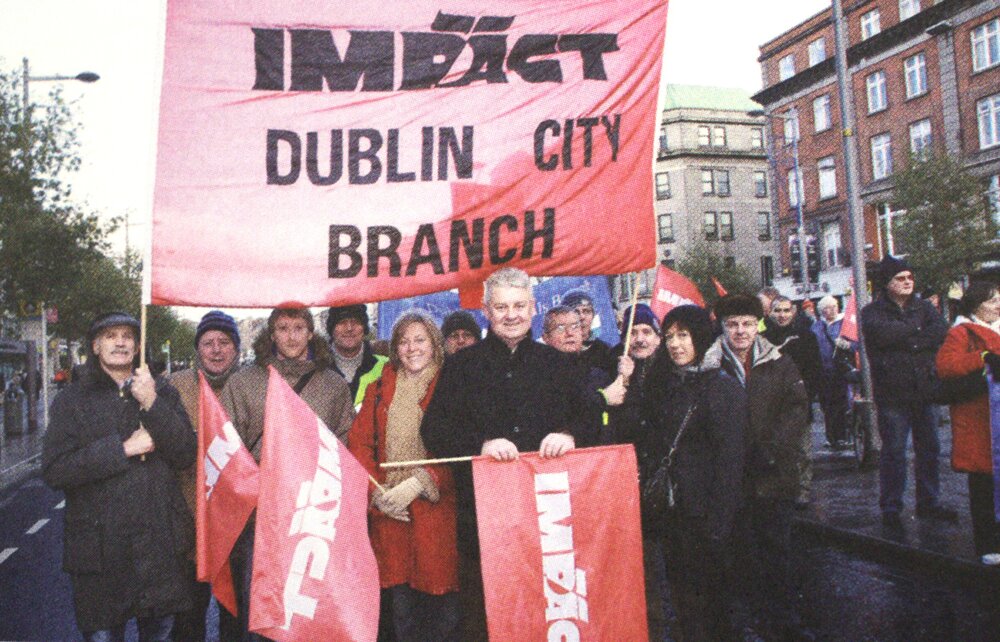
Matt joining the Dublin City IMPACT Branch at the ICTU Day of Protest 6th November 2009.
In the 1990s Matt started working full time for the union. In IMPACT he served as a trade union organiser, official and national secretary. During that time, he worked in the health sector, the civil service, education and local authorities. From 2010 to 2015 he headed up the services and enterprises division before becoming IMPACT’s general manager.
In that role, Matt updated and modernised all the union’s buildings and spearheaded the creation of Fórsa, including organising its inaugural biennial conference in Tralee in 2018.
In 2019 Matt became deputy general secretary, a role in which his sound counsel, calm demeanour, and deep sense of fairness have been universally appreciated by members and colleagues alike.
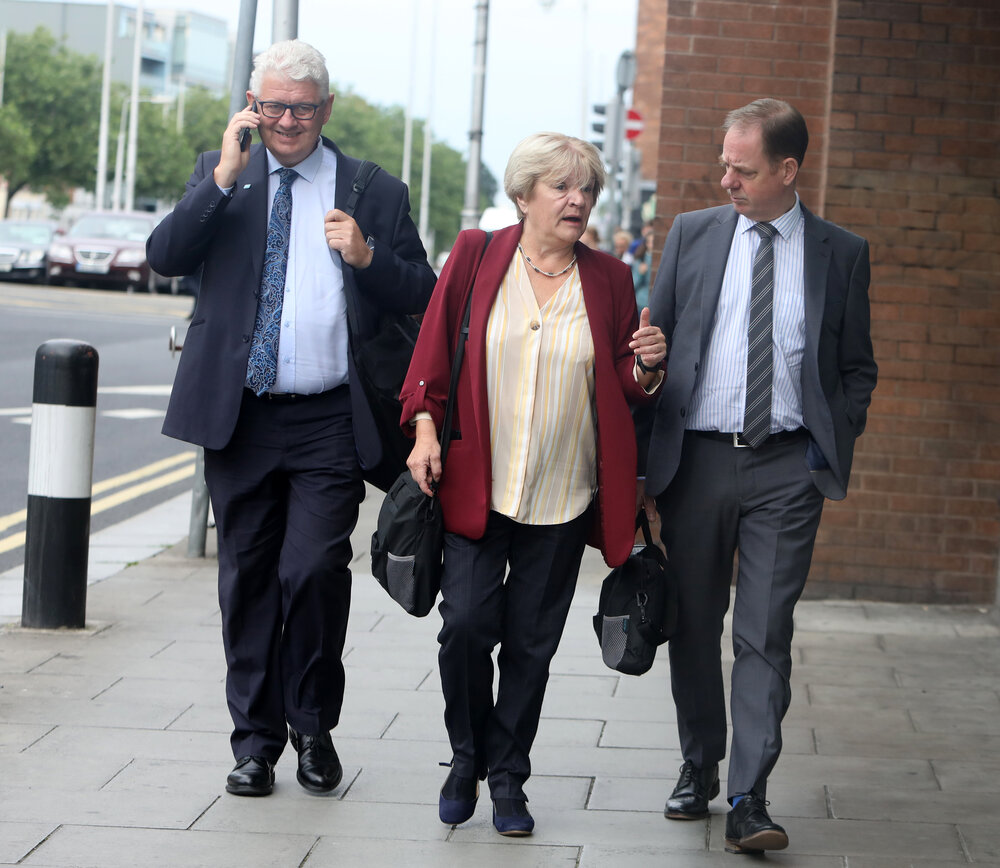
Matt with former national secretary Angela Kirk and former head of communications Bernard Harbor arriving at the High Court Dublin during the 2019 Ryanair case.
His prudent management of the union’s finances has been of crucial importance in recent years, as well as his capacity to navigate at times choppy waters, from High Court cases to a global pandemic.
Speaking about his upcoming retirement general secretary Kevin Callinan said: “It’s an understatement to say Matt will be missed on a daily basis here in Nerney’s Court. He has done so much to build Fórsa and to support staff and members over the years.
“Aside from his huge impact on industrial relations in Ireland, he leaves a lasting legacy in regard to member services and supports. In fact, it was Matt who came up with the €5000 schemes Fórsa members can avail of in times of deep personal distress. Schemes like these make the trade union value of solidarity a concrete reality. So many people have benefited from these schemes. And ultimately that is down to Matt.”
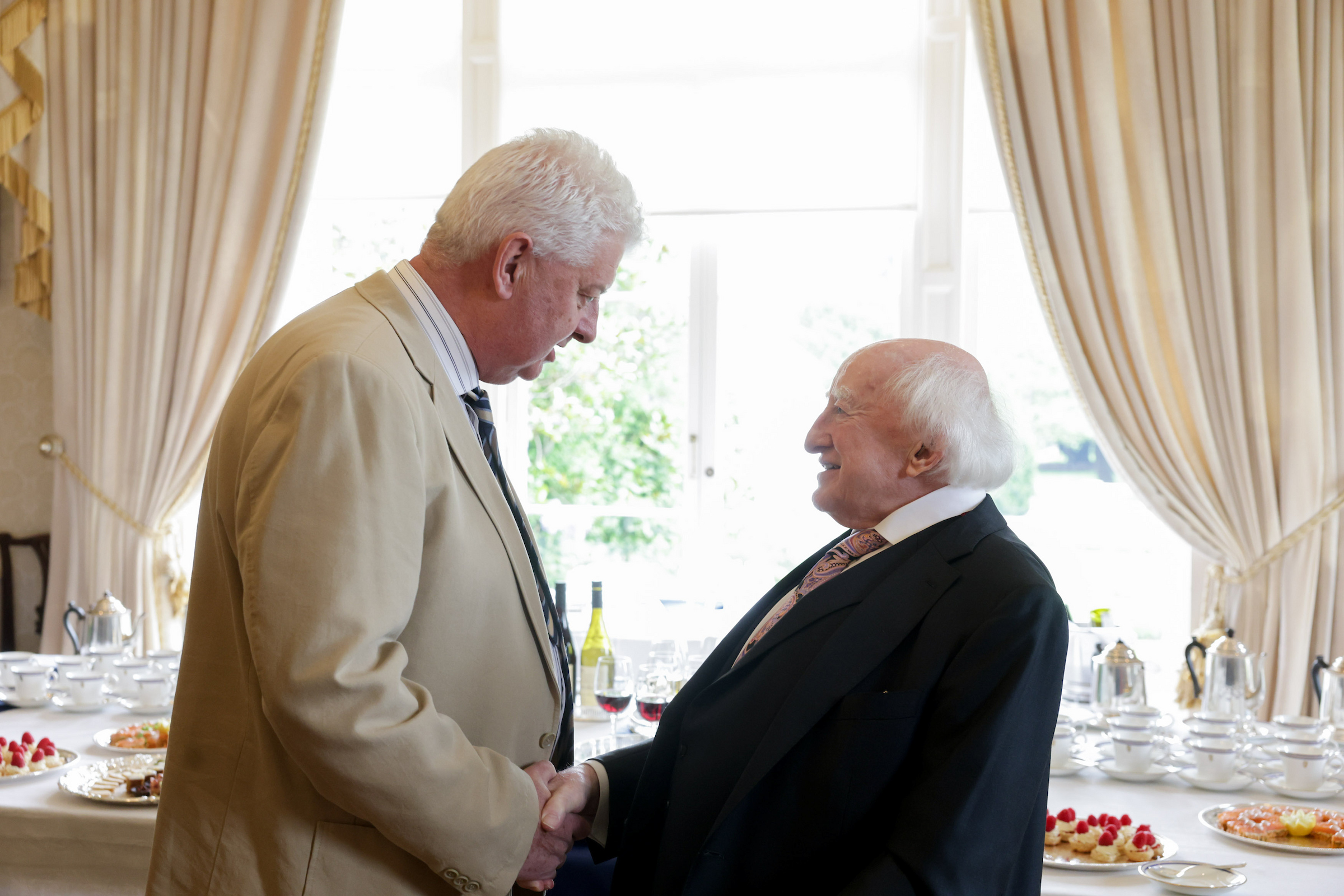
Matt meeting President Michael D Higgins at this year's May Day Union Leaders' event at Áras an Uachtaráin.
“We’ve worked together every day for six and a half years. I’ll miss his collegiate approach to our work and his vast knowledge. Nonetheless, we wish him well in this new chapter, where he will hopefully have more time for family, travel and other pursuits!”
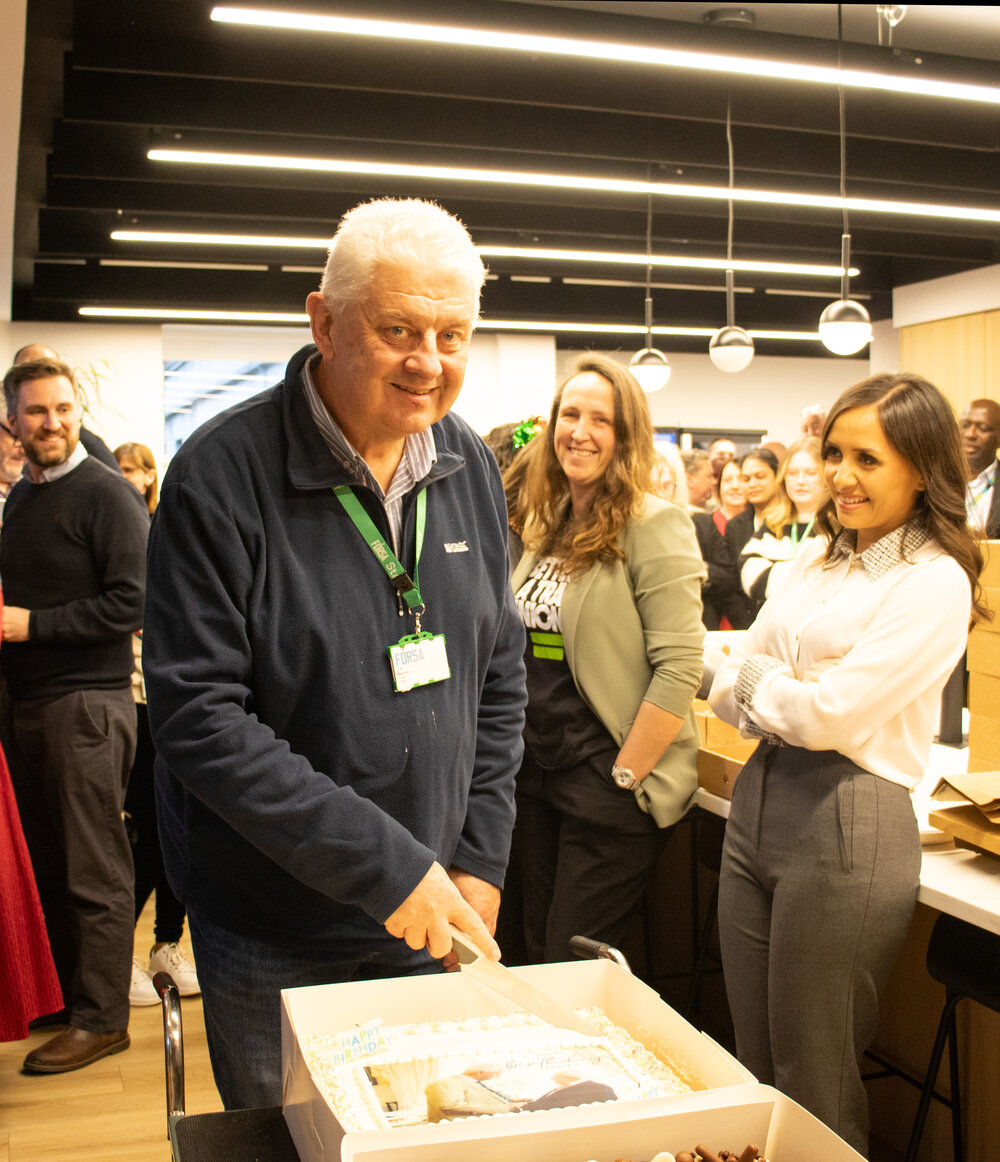
Colleagues note that they will miss his steady hand and at times dry wit. Martina O’Leary, Fórsa’s Data Protection Officer, who worked with Matt over several decades, and most recently as part of the union’s operations team, said: “He really has been an outstanding colleague and leader. His keen sense of detail, and innate fairness have made working with him a pleasure for all.”
Following his appointment as deputy general secretary in 2019 Matt told the bulletin: “My immediate concern is to grow and strengthen Fórsa so that we can follow through on the amalgamation and deliver a union that looks after its members and their families from cradle to grave, and that all members are proud to be part of." Looking back over the last six years no one could question his immense contribution to the achievement of those aims.
A fond farewell for Matt as colleagues wish him the best in his retirement.
Speaking at his final consultative council in November, Matt noted, in a typically understated manner, that it had been a “privilege to serve those who serve”. His remarks were met by a lengthy standing ovation – a sign of the esteem and appreciation in which those he sought to serve hold him.
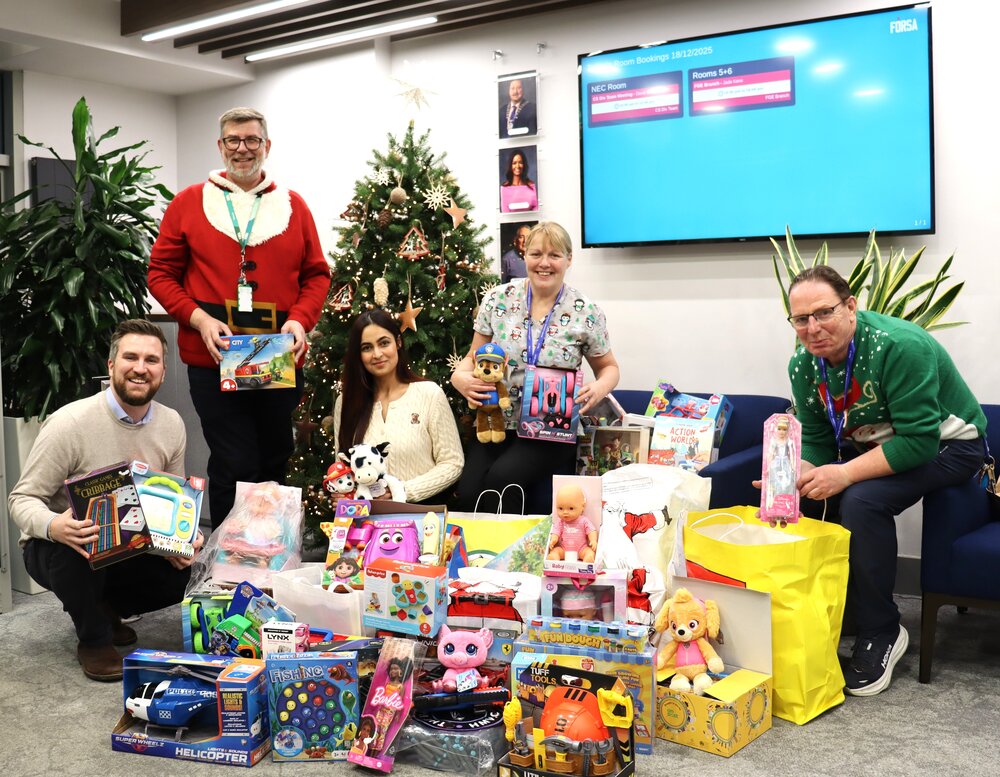
Fórsa branches sleighed expectations for this year’s appeal collecting record-breaking donation of toys and the highest level of financial contributions ever received with the final tally hurtling towards 10k as we go to print.
The spirit of Christmas giving was truly alive across Fórsa branches this year, as our annual Christmas Toy Appeal became the most successful yet, raising the highest level of donations and contributions in the appeal’s history.
Colleagues responded in incredible numbers, donating hundreds of toys and vouchers, as well as contributing thousands of euros through direct donations. Thanks to the extraordinary generosity of Fórsa branches and individual members across the organisation, the appeal truly captured the spirit of Christmas giving.
Once again, the appeal supported the Children’s Health Foundation (CHF), benefiting children and teenagers receiving care in Temple Street, Crumlin, Tallaght, and Connolly hospitals. With many Fórsa members working in hospitals, including our next-door neighbours in Temple Street, this cause continues to hold a very special place in our hearts.
John Doyle, a Fórsa member and hospital porter at Temple Street, who sees first-hand the impact of the appeal, spoke about what the donations mean at this time of year.
He said: “For children who are sick and spending the holidays in hospital, these donations really light up what can be a very difficult time. At this time of year, when children should be at home surrounded by family and excitement, being in hospital can be incredibly tough. The generosity shown through this appeal is honestly overwhelming.
“We can see first-hand the difference it makes and the smiles and excitement it brings, and it is such an important reminder of how powerful kindness can be. Every toy, every voucher, every donation becomes a moment of joy for a child who is going through so much. You can see the light it brings, not just to the children, but to their families and to staff as well. It’s a powerful reminder of the kindness that exists, especially at this time of year.”
The success of the appeal was further boosted this year by the option to donate directly to CHF via a QR code, making it easier than ever for members to take part.
Whether it was dropping gifts at the Nerney’s Court office or contributing financially, every act of kindness helped bring comfort, joy, and Christmas magic to children spending the holidays in hospital.
We would like to extend our heartfelt thanks to every single member and branch that contributed.
Your generosity ensured that this year’s appeal was not only the biggest yet, but one that will have a considerable impact on children and families during a difficult time of year.
Thank you for helping us keep this wonderful Fórsa tradition alive and for making a real difference where it matters most.
Merry Christmas and happy holidays from the Christmas toy appeal team, Mehak, Kevin, Gary, Kate, Katie and Sofia, and all at Fórsa.
The Irish Congress of Trade Unions has called out the Government on its continued discrimination against workers under the age of 21, with the practice of suppressing pay for young adults being called “grossly unfair.”
The Irish Congress of Trade Unions (ICTU) has urged the Government to end pay discrimination and called for Oireachtas members to back the National Minimum Wage (Inclusion of Young Persons, Apprentices and Interns) Bill 2025, tabled by Senator Nessa Cosgrove.
The bill seeks to bring the minimum wage for workers aged under 21 and in apprenticeships into line with the wider workforce and was debated in the Seanad on Wednesday (17th December).
Currently, under the Minimum Wage Act, workers under the age of 21 have a lower minimum wage than the rest of the working population. Apprentices are outside the scope of the Act. ICTU has long argued that this is grossly unfair and out of line with how the majority of member states treat younger workers.
In a statement, ICTU said the ending of the sub-minimal rates of pay was unanimously recommended by the Low Pay Commission last year, on the back of impact analysis by the Economic and Social Research Institute (ESRI). In June this year, the Commission again called for sub-minimum wage rates for younger workers to be abolished and for this to remain a priority for Government.
ICTU said the Government has used multiple delaying tactics to avoid acting on this recommendation and now plans to postpone a decision until 2029, after the next election.
Congress general secretary Owen Reidy said: “Everyone deserves decent pay for a day’s work. Yet, at a time when people are struggling with the cost of living, the Government continues to suppress pay for young adults and other young workers.”
“Young workers and apprentices pay the same rent and the same bills and taxes as everyone else. Ireland is now one of only a small handful of EU member states to allow employers pay reduced rates based on an employees’ age.
“The Low Pay Commission was twice unanimous in calling for an end to sub-minimum rates of pay. The ESRI impact analysis shows that removal of the rates would have minimal impact on businesses. What’s more, good employers are being undercut by bosses benefitting from subminimum wage rates.
“Faced with independent advice, their own report, and a European directive, the Government continues to leave young workers working for less. We’re urging Oireachtas members to rectify this and back the bill”.
A thank you to everyone who took part in training and supported our work.
A Merry Christmas and happy holidays from Fórsa’s Skills Academy, and a sincere thank you to all members who took part in trainings, helping make it a wonderful year.
It has been a busy 2025 for us here at the Skills Academy. Not only were we able to provide more training sessions than ever, but we also introduced new courses and helped our members develop additional skills.
We are truly grateful to our learners for their hard work and their great attitude. You make each training session a pleasure, and we look forward to seeing as many as possible return in the new year to take on new challenges.
The schedule for 2026 is already jam-packed with training sessions, and there may just be a few surprise announcements coming down the line! With so much on offer, we hope to see some of our past learners return to the classroom, and we look forward to meeting more members next year.
This year we were able to hold two awards ceremonies to celebrate our learners’ hard work. We saw these as our way of congratulating and acknowledging the commitment of our representatives in completing training to be more effective in the workplace. What we didn’t expect was for the ceremonies to be as fun as they were, or the palpable sense of joy in the room. We’re already looking forward to the next one!
We are very grateful for the support and enthusiasm of the National Executive Committee (NEC) and the NEC sub-committee on training. Their encouragement is of real value, and we hope to continue meeting their expectations in the New Year. We also want to thank the Fórsa staff who are so involved in our work, from officials to trainers and admin staff. Your commitment to training members is greatly appreciated.
Last, but far from least, we have a big thanks to branch training officers, who are a crucial component in the success of the Skills Academy and the development of an effective representative network. Their liaison with us is vital to ensuring our representatives get the support they need as quickly as possible and are able to avail of the opportunities to develop as reps. It is thanks to them that we have been able to expand our ambitions and offer additional training sessions. So, from all three of us, a heartfelt ‘thank you.’
Not every branch has a training officer yet. We encourage every branch to elect a member to the position. It’s invaluable to our work and an asset to the branch. Becoming a training officer is a rewarding experience, and a great chance to meet and get to know other members. If this sounds like something you would like to do, we would love to welcome you to the team.
To all our members we hope you keep us in mind when making your New Year’s resolutions. Whether that is to consider becoming a training officer in your branch, develop your own skills further, or to join us for the first time, we’ll be delighted to see you in 2026.
Merry Christmas, happy holidays, and have a wonderful New Year.
The New Year approaches, as do the traditional thoughts of cutting back on bad habits, joining the gym, and taking better care of our health. This year, try doing something just as powerful for ensuring your long-term health, and consider getting health insurance for the first time, or moving to a better plan, more suited to where you are in life.
Our friends at Cornmarket will be hosting a free health insurance webinar exclusively for Fórsa members from 12pm to 1pm on Wednesday 14th January.
Health insurance expert Dermot Goode will take you through the ins and outs of private health insurance and give you the information you need to get the best deal suited to your needs.
Dermot has worked with a range of top insurance providers including VHI, Irish Life Health, Bupa Ireland, Mercer and IPT Healthcare Practices. Drawing on his extensive experience, he will offer guidance on all aspects of private health insurance, both for those who have existing cover and those who are new to health insurance.
Over the hour-long session Dermot will not only share his advice on plans, benefits and how to save money on health insurance, but will also answer any questions you may have.
Start off the new year confident that you will be taken care of, no matter what happens.
It’s not too late to win! Competition deadline: 31st December 2025
Cornmarket is running an exclusive competition for our members and have released a discount code that can be used for car or home insurance.
Cornmarket Financial Services provides several insurance partnership schemes for Fórsa members, details of which can all be found here.
As renewal season approaches, Cornmarket has launched a competition for a €2,000 Center Parcs voucher and have also released a new discount code giving members €200 off either home or car insurance policies.
Members can get a quote online or call 0818 601 601 and if you decide to take out a new policy, use the code FA200 for a €200 discount.*
The Center Parcs voucher competition is now open and runs until 31st December 2025.
If you missed our recent webinar, don’t worry! You can now watch the recording.
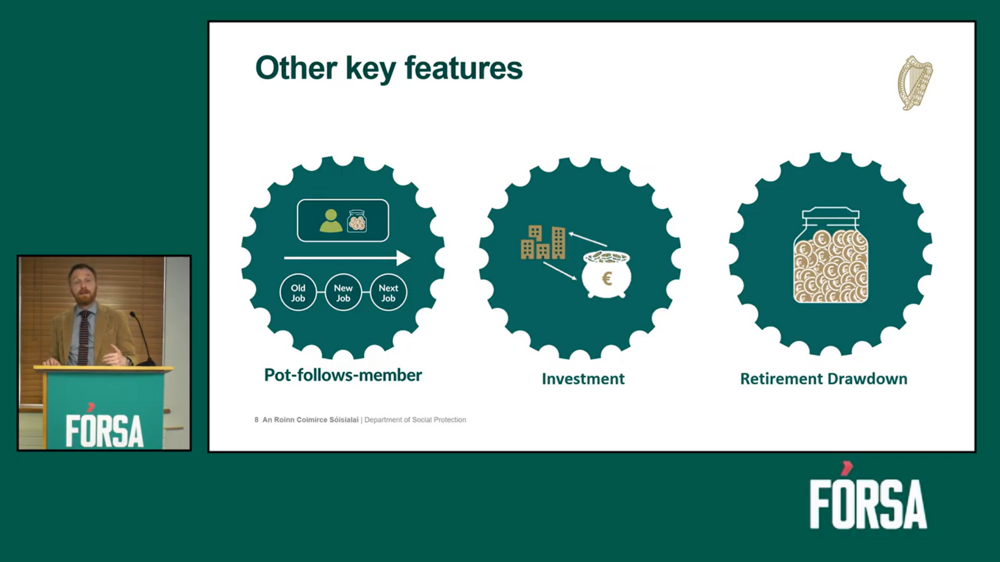
The new year will begin with a big change for workers as the new auto-enrolment pension scheme takes effect. From 1st January workers without a pension will be automatically enrolled in the new government scheme.
To help workers prepare Fórsa hosted an explainer webinar on Tuesday 9th December 2025.
Fórsa national secretary Katie Morgan was joined by Dr. Laura Bambrick, head of Social Policy & Employment Affairs at the Irish Congress of Trade Unions, and Paul Orde of the Department of Social Protection’s Auto-Enrolment Programme Management Office.
Over the course of the hour-long session, they explained what the new scheme will mean for workers, how it works, who is eligible, how contributions are calculated, and what choices workers have.
The webinar was recorded and is available on our YouTube.
More information on the auto-enrolment pension scheme can be found in our previous article.
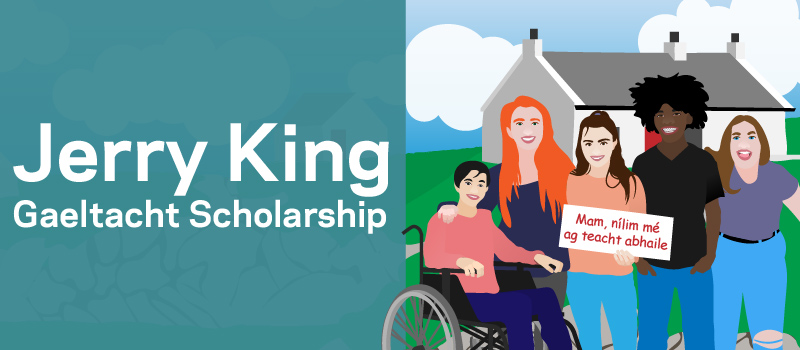
Comhghairdeas ó chroí le gach duine a bhuaigh. Congratulations to the children of Fórsa members who will receive a grant under the Jerry King Gaeltacht Scholarship Scheme for 2026.
Thanks to the generous contributions of our strategic partner Cornmarket Insurance, for the first time grants will be offered to everyone who applied for 2026.
The scheme is to assist the children of Fórsa members, aged between 11 years and 18 years of age, to attend residential Irish Language courses in Gaeltacht areas, as well as daytime only courses outside Gaeltacht areas during the summer months.
This year the scheme will provide grants of €150 each to a record number of children, ensuring more children than ever will have the opportunity to improve their Irish and enjoy the experience of visiting the Gaeltacht.
Speaking about this year’s Gaeltacht Scholarship Scheme, Senior Vice President Julie Flood said that Fórsa is “delighted to be in a position to offer almost three times the number of grants compared with previous years,” adding that this growth reflects both the union’s expanding membership and its determination to keep improving the benefits available to members.
She noted that the union’s priority is to ensure that members “see real, tangible value” from Fórsa’s success, and highlighted that supporting children of members to attend the Gaeltacht is one of the most meaningful ways to do that. According to Julie, helping families to preserve the Irish language and maintain cultural traditions is “not just an investment in education, but an investment in who we are.”
She also acknowledged the vital role of Cornmarket, saying their continued partnership “has allowed us, for the first time, to ensure that every applicant receives support this year.” This, she said, demonstrates what can be achieved when the union grows collectively and remains focused on delivering for its members.
Fórsa staff have contacted all winners to let them know of their successful application and how to access their payment.
Any queries concerning the Jerry King Gaeltacht Scheme can be sent to gaeltacht@forsa.ie.