Marking May Day by remembering the fight for the minimum wage
by James Redmond
As part of Trade Union week this event looks to learn from the past.
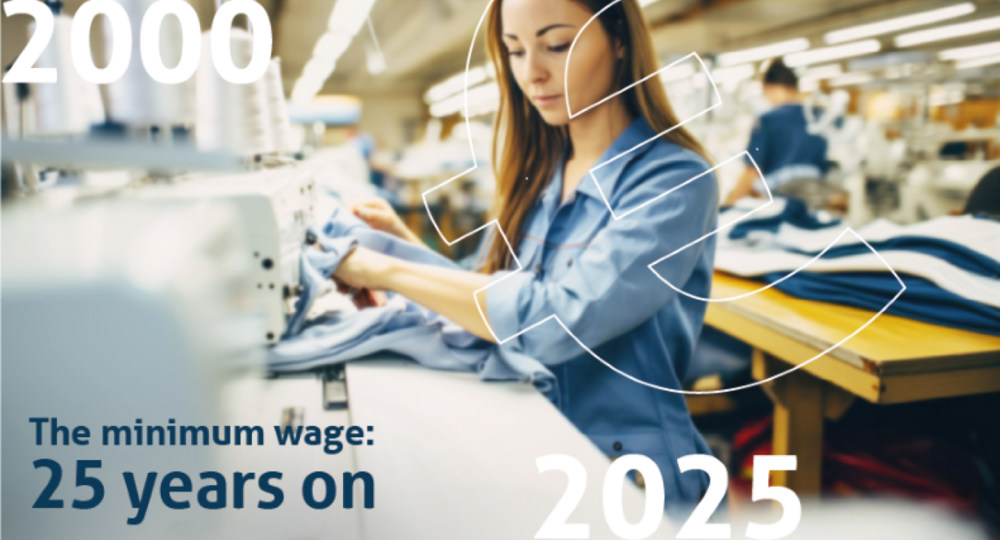
The introduction of the National Minimum Wage Act in April 2000 was a breakthrough, setting a legal wage floor in Ireland and challenging the idea that workers should be left to the mercy of market forces.
As part of their Trade Union Week celebrations, the private sector committee of the Irish Congress of Trade Unions (ICTU) is hosting a symposium to mark the 25th anniversary of Ireland's minimum wage in Nerney’s Court on Thursday 1st May.
General secretary of Fórsa Kevin Callinan welcomed the event and recalled the significance of the minimum wage campaign.
“Before 2000, wages were largely left to negotiation between employers and unions, which was fine for organised sectors. But the Celtic Tiger exposed a deep issue of widespread low pay and social inequality. Despite all the talk of boom, too many workers were struggling to make ends meet. But unions, backed by organisations like the Irish National Organisation of the Unemployed and the Combat Poverty Agency, pushed back. Through sustained campaigns, strategic organising, and political pressure, they forced the government’s hand and manged to get a commitment through Partnership 2000 that this was going to happen.”
At the event, a panel of senior union officials will reflect on trade union involvement in the introduction of the minimum wage, its impact on earnings, employment, and employers, and the implications for collective agreements.
With the government’s implementation of the EU adequate minimum wages directive still on the boil, the symposium is being designed with a forward-looking approach. ICTU has been pressing the government over its failure to transpose the directive into Irish law. This legislation mandates the state to actively promote collective bargaining, enabling workers and employers to negotiate at both workplace and sectoral levels to improve living conditions.
For Kevin, the day provides a valuable opportunity to reflect on past achievements while looking ahead to future campaigns.
“It probably sounds unbelievable to people now, but this was a major breakthrough at the time. Evelyn Owens, former President of the Local Government and Public Services Union, which I was a member of and was a forerunner of Fórsa, was the chair of the National Minimum Wage Commission. Her involvement was central to what was a major win for workers.”
“If there was any big lesson I’d draw from it, it’s that when the union movement works together, we can win major social gains for workers.”
“At the time employers and neoliberal economists warned the minimum wage would kill jobs. It didn’t. Instead, it lifted wages and helped reduce inequality. Today that battle extends to things like hybrid work and weighing up the social benefits of the four-day week over the old rat race model that has us experiencing a profound housing crisis and teetering on the edge of environmental collapse. It’s no coincidence this event is on May Day, when we commemorate the battle for the eight-hour day -it’s a timely reminder that the way we work isn’t set in stone, we can keep up the fight to change things!”
For more information on the event read this flyer. To register to attend the event email unionweek@ictu.ie
Join a union that wins. Join Fórsa.
Save the date: Fórsa International Solidarity Autumn School
by Hannah Deasy
With so many international issues impacting workers around the world this event is not to be missed.
Members are encouraged to save the date for the Fórsa International Solidarity Autumn School, which will take place on Friday 26th and Saturday 27th September 2025, in Nerney’s Court, Dublin 1.
The school will provide a unique opportunity for interested members to discuss a range of international, trade union, and human rights issues. Delegates will hear about projects that Fórsa actively funds across the world, and it will also be an opportunity to hear about the union’s global solidarity work.
Coordinator of the union’s International Solidarity School national secretary Richy Carrothers said: “We’re really excited to organise this year’s International Solidarity Autumn School. With so many international issues impacting workers around the world and here at home this event is not to be missed."
"At a time of global uncertainty and upheaval, it is important that we understand and debate the critical issues of the day, from solidarity with the people of Palestine, to working with unions around the world, understanding the shifting industrial landscape in the US, and supporting worker led initiatives in places as far away as Nepal, Cambodia and Columbia, Fórsa’s international work shows our solidarity knows no borders.”
Further information and a link to register will circulate to members over the coming months. In the meantime, if you have any queries, you can email internationalsolidarity@forsa.ie.
Join a union that wins. Join Fórsa.
Training in April
by Brendan Kinsella
Check out what's on offer this month.
Coming up this month the Fórsa Skills Academy has a very exciting Lunch and Learn on offer. This month’s session, An introduction to Artificial Intelligence (AI) in your workplace, will help members cut through some of the hype and catastrophising surrounding AI.
As conference season is fast approaching, the session will take place earlier in the month than usual, on Friday 11th April, at 1pm.
Love it or loathe it, it looks like AI is here to stay. It’s regularly in the media, either hailed as the “fifth industrial revolution” or decried as a destroyer of jobs.
Despite how much coverage AI gets, finding reliable information on what it will mean for workers is still quite difficult. This session will bring together speakers from Fórsa and the European Trade Union Institute (ETUI) who will explain what generative AI is, what effects it may have on workers, and what unions are doing to ensure AI improves jobs rather than replacing them.
Fórsa national secretary, Catherine Keogh, will explain Fórsa's work in the area. She will take members through motions passed at conference, the establishment of Fórsa’s Artificial Intelligence Working Group, and the working group’s recommendations.
Kate O’Sullivan, Fórsa’s digital director, will outline the basics of generative AI, what it is, what it does, its limitations, and its uses.
AI can be a useful tool, but it comes with the danger of falling foul of GDPR legislation. Martina O’Leary, Fórsa’s Data Protection Officer, will explain how GDPR applies to AI, and how to stay compliant with data privacy regulations.
An ETUI representative will round the session off with an examination of the wider context of AI, what effects it may have on working life, and the opportunities it presents for improving workers’ lives.
If you are interested in attending, you can register here.
Registration is open until close of business on Thursday 10th April 2025.
The online session will run from 1-2pm on Friday 11th April.
Watch back: Making learning Easier, assistive technology in education
The March Lunch and Learn is now available online. In this very well received session, Deirdre Madden, assistive technology outreach co-ordinator at Access UCC, explained the various types of assistive technologies and how they can be useful to both abled and disabled people.
Members, particularly those working in the education, training, or disabilities sectors, are encouraged to take a look.
You can watch the session here.
Join a union that wins. Join Fórsa.
 |
|
WRC proposals to be considered by Fórsa members
by Niall Shanahan & Hannah Deasy
With industrial action in the HSE suspended after 25 hours of marathon talks, ballot planning is underway as proposals will soon be put to members. Details of information meetings will be communicated via email.
On Sunday 30th March, after nearly twenty-five hours of engagement between unions and the HSE in the Workplace Relations Commission (WRC) regarding proposals to recruit and retain staff in the health service, Fórsa, the Irish Nurses and Midwives Organisation (INMO), Connect, Unite and the Medical Laboratory Scientists Association took the decision to suspend a work-to-rule action that was due to begin on Monday 31st March.
An emergency meeting of Fórsa’s health and welfare divisional executive committee (DEC) took place at 8am and decided to suspend the planned action to allow time to consider the proposals. This decision was then immediately communicated to members working in the HSE and HSE-funded hospitals.
The DEC met again on Monday 31st March and Wednesday 2nd April to consider the proposals. This was following a Divisional Council meeting, held on Tuesday 1st April, attended by 60 branch and NPC representatives from across the country.
At the DEC meeting on Wednesday, the committee unanimously agreed to ballot members on the proposals and to recommend acceptance.
Commenting on the proposals, head of Fórsa's health and welfare division Ashley Connolly said: “This was a challenging negotiation with a robust exchange of views. The DEC had clearly set out the basis for any potential resolution before we went into negotiations which enabled us to clearly advocate for members when we were in the room.”
“We were clear that in order to avert industrial action it was essential that any proposals would include Fórsa members having a role in workforce planning, a review of recruitment to already agreed posts, commitments against outsourcing, protections for direct employment, as well as processes to address the posts that were vacant on the 31st December 2023 and ongoing cover for maternity leave. These proposals address all these issues.”
“There is also a six-month review of implementation under the auspices of the WRC, which is a crucial element of these proposals. We need to make sure that the HSE honours these proposals nationally and locally. Regional forums will be established to allow for extensive local engagement and provision of information on staff numbers, grades, areas, activity levels, and other relevant details.”
National secretary Linda Kelly said: “We’re immensely proud of the resolve our members demonstrated in the planning and preparation for this industrial action. Without it we would not have been able to achieve these proposals. The HSE knew that a work to rule by our members would severely disrupt the health services and moved considerably beyond their starting position to stop that from happening.”
“If passed, these proposals will provide members with clear opportunities to have input into workforce planning both at local and national level – this is a significant move in the health sector where members have previously been excluded from such discussions. For members, this will be an opportunity to solidify the collective strength and leverage that they created in preparation for the industrial action.”
Ballot planning is underway, and details of information meetings will be communicated to members via email.
Join a union that wins. Join Fórsa.
|
|
Ballot of community and voluntary sector members to open next week
by Niall Shanahan
The ballot of members working in Section 10, 39, 40, and 56 funded organisations will open on Monday 7th April and close on Monday 28th April.
Fórsa is recommending that members vote ‘Yes’ in a ballot of members in health service employments in the community and voluntary sector (Section 10, 39, 40 and 56 funded organisations), on the terms of a pay deal finalised last month at the Workplace Relations Commission (WRC).
The ballot will open on Monday 7th April and close on Monday 28th April. Members who are eligible to vote in the online ballot will receive an email with a link to Mi-Voice, our secure voting platform, along with a Unique Voting Code (UVC).
The union’s health and welfare divisional executive - comprised of senior elected workplace representatives – is recommending members vote in favour of the terms of the new deal.
The proposed pay agreement was achieved following months of challenging negotiations and builds on the terms of the October 2023 agreement. It contains pay increases for 2024 through to 2026.
The agreement acknowledges that the pay of some workers in the community and voluntary organisations has fallen behind equivalent grades in public sector organisations.
It allows for funding to be adjusted to allow for application of equivalent general round pay adjustments, as provided for in any successor agreements to the Public Service Agreement.
A Frequently Asked Questions (FAQ) document has been developed for members to address any queries you might have. You can read it here.
Pay terms of the new deal
If the terms of the new deal are accepted in the forthcoming ballot, the pay terms of the new agreement are valued at 9.25% over two years (October 2024 to October 2026):
2024
- A general round increase in annualised basic salary of 2.25% backdated to 1st October 2024
2025
- A general round increase in annualised basic salary of 1% on 1st April 2025
- A general round increase in annualised basic salary of 2% on 1st November 2025
2026
- A general round increase in annualised basic salary of 2% on 1st April 2026
- A general round increase in annualised basic salary of 2% on 1st October 2026.
Join a union that wins. Join Fórsa.
Member engagement on Tusla reform process continues
by Hannah Deasy
A positive meeting between Fórsa and Tusla took place last week to agree terms of reference for consultation and engagement in relation to the ongoing reform process in Tusla.
A positive meeting between Fórsa and Tusla took place last week to agree terms of reference for consultation and engagement in relation to the ongoing reform process in Tusla. Further to the meeting a draft document was received and is currently being worked through.
Earlier this week Fórsa hosted a general meeting for members working in the Prevention, Partnership and Family Support Programme (PPFS) service in Tusla. Over 200 members attended, and an extremely useful conversation took place.
Fórsa official and national lead for Tusla, Tony Martin said: “I would like to thank members for their engagement in recent weeks. The survey which we issued had almost 800 responses for which I really thank you. The range and breadth of responses was very encouraging.”
“177 respondents to the survey said they are willing to become workplace contacts and leaders, and at the in-person meeting for members working in PPFS several of you agreed to become regional contacts and leaders for that group.”
Tony continued: “We are really beginning to build our army of members in Tusla. We intend on having similar general meetings with all the other grades and groups in Tusla over the coming weeks. Keep an eye on your emails for those dates and times.”
Join a union that wins. Join Fórsa.
Take part in our survey on working in the HSE
by Brendan Kinsella
This survey is part of a larger study exploring current morale among the healthcare workforce; how this has changed over the last two years; and staff confidence in delivering Sláintecare reforms.
We want to hear your views on morale and confidence in the health sector and how this has changed over the past two years. Please fill out our survey which can be found here.
This survey is part of a larger study exploring current morale among the healthcare workforce; how this has changed over the last two years; and staff confidence in delivering Sláintecare reforms.
The purpose of this study is to provide insights into the experiences of healthcare workers to support your union’s efforts to improve working conditions for you and your colleagues.
We have developed this survey in collaboration with TASC (Think Tank for Action on Social Change).
Your participation in this survey, along with that of your colleagues, will play a crucial role in our work to advocate for better working conditions in the health service.
We need a health service built for patients and communities, that respects and supports the staff that make that happen.
Who should take part in this survey?
This survey is open to Fórsa members working in the HSE, Tusla, Section 38 organisations and Section 39 community and voluntary sector organisations.
We urge you to please fill out the survey, which can be found here.
The survey will close midnight Monday 7th April.
Please pass this survey along to Fórsa colleagues in your workplace.
Join a union that wins. Join Fórsa.
A school of democracy: European unions come together in Belfast
by Mehak Dugal
Over 600 union leaders from 50 countries gathered at UNI Europa’s conference last week to strengthen collective bargaining, build a stronger labour movement and organise across borders to meet the common challenges facing workers and unions across Europe.
Over 600 union leaders from 50 countries gathered in Belfast at UNI Europa’s three-day conference last week to strengthen collective bargaining, build a stronger labour movement and organise across borders to meet the common challenges facing workers and unions across Europe.
The 6th UNI Europa Conference took place from 25th-27th March and concluded with a strong, clear and urgent message to defend democracy in the face of tech oligarchies’ growing power and the far right’s attacks on unions and democratic institutions.
Fórsa national secretary and Irish Congress of Trade Unions (ICTU) Vice President Katie Morgan took part in the conference. Speaking about the experience Katie said: “It’s great to come together with trade union colleagues from across Europe to share strategies on the common challenges we face in an increasingly interconnected world. Defending democracy and the rise of AI are just two examples of issues unions across the world are facing. The trade union movement has always been an internationalist movement, built on the bedrock of solidarity.”
UNI Europa President Peter Hellberg highlighted unions’ critical role in the fight for democracy at the conference. He said: “When workers organise to give collective voice to rightful demands for better working conditions and better workplaces, it is not only an expression of freedom of association and freedom of speech at the workplace. It is also an expression of the trade union movement being a great school of democracy.”
The panels on worker well-being tackled the future of union strategy in the digital and post-pandemic workplace. Speakers addressed AI, remote work, and mental health and called for a renewed focus on “cutting-edge collective bargaining” to keep pace with change.
A considerable portion of the conference was dedicated to debating AI’s growing role in today’s world and focused on the challenges as well as opportunities it presents for unions. Frédéric Favraud (FEC-FO, France) said: “AI should help workers progress – not increase pressure on them,” reflecting a common concern about technology being used as a tool of control rather than empowerment.
In Denmark the opportunities AI provides are being harnessed through an innovative initiative to train one million Danes in AI skills in a national digital partnership. Annette Mikelsen (Finansforbundet, Denmark) said “Let’s make AI a source of better jobs and not a threat to livelihoods,” she said.
Reduced working hours and their benefits were also platformed in the conference with Belgian trade union ACV-PULS linking the push for shorter working hours to the long legacy of workers’ struggle. “We continue the historical struggle of free time for working people,” they said, announcing an 8-minute work stoppage on 8th May across Belgium to press for better work-life balance.
Another central theme of the conference – public procurement reform – saw trade unionists demand that EU institutions link public contracts to collective agreements. Esther Lynch, General Secretary of the European Trade Union Confederation (ETUC), delivered a rousing address calling out widespread union-busting. She said: “No euro of public money should go to companies that bust unions” and cited Tesla as an example of the “green transition” being used to justify anti-union behaviour.
But through all of this, one consistent concern remained: the growing threats to democracies across several nations.
Peter Hellberg, President of Unionen and UNI Europa, recalled the central role of unions in the defence of democracy: “Our democratic way to manage our unions is carried out through meetings, discussion and respect to make joint decisions. As a movement we must protect the democratic process and include new groups of people. Democracy is endangered everywhere in the world,” said Mr. Hellberg.
UNI Global Union’s General Secretary Christy Hoffman also backed the call to action for unions: “In these dark and difficult times, the path ahead is tough – but the answer is clear. Workers are counting on us. Only unions have the power to fight back against oligarchs, demand ethical use of AI, and defend democracy – both at the bargaining table and in the halls of parliament. We must act with courage, because together, we are unbreakable,” she said.
Join a union that wins. Join Fórsa.
ICTU Joint Women’s Seminar: “The power in the room is palpable"
by Kate O'Sullivan
Powerful speeches and practical workshops addressed racism, misogyny, and the importance of allyship as hundreds of delegates discussed the role of trade unions in shaping a better society.
The Irish Congress of Trade Unions (ICTU) Joint Women’s Seminar took place in Dundalk this year, with hundreds of delegates from across Ireland coming together. The seminar had a strong focus on equality, solidarity, and how to ensure a better society for workers and communities.
Co-Chairs of the ICTU Women’s Committee, Margaret Coughlan (Fórsa) and Tina Creaney (NIPSA), welcomed delegates and expertly chaired a wide range of speakers. This was followed by a rousing opening speech by Jacquie White, chairperson of ICTU’s Northern Ireland Committee (NIC), which set the tone for two days of getting to the heart of the key issues facing women trade unionists.
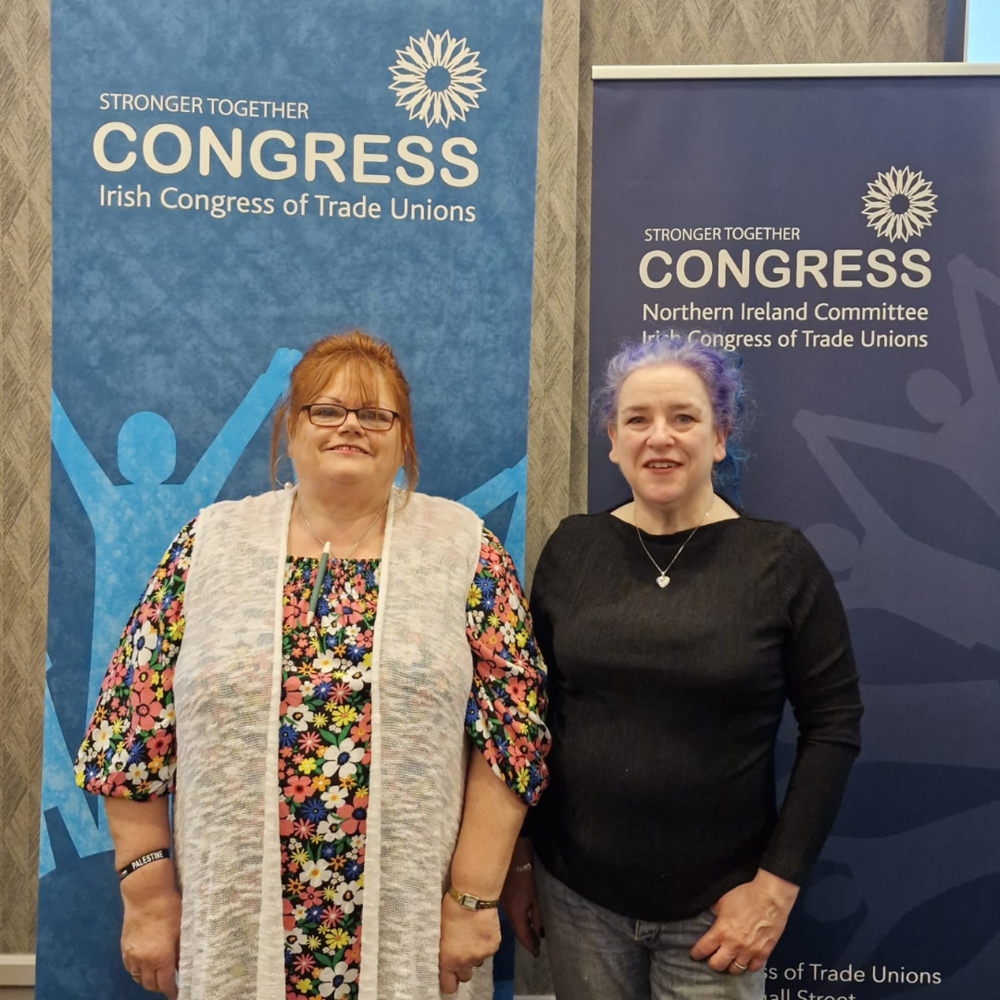
Co-Chairs of the ICTU Women’s Committee, Margaret Coughlan (left) and Tina Creaney (right)
The keynote speakers were Kudsia Batool, head of equalities at the Trades Union Congress (TUC), and Aakanksha Surve, from the ICTU Black Leadership Programme and National Union of Journalists (NUJ). They addressed the critical issues of racism and misogyny and discussed the vital role trade unions play in combatting them. Aakanksha spoke movingly on her own experiences of racism, emphasising the importance of allies speaking out against discrimination, while Kudsia provided powerful, real-life examples of how to confront the far-right.
An update on the horrific situation in Palestine was presented by Patricia McKeown, regional secretary of UNISON, who visited the region in 2023 as part of an ICTU delegation along with Fórsa general secretary Kevin Callinan. It was a reminder to everyone in the room that we need to double our efforts for peace and justice.
The two fringe events were packed, with one on how trade unions can work together with civil society organisations to tackle racism, and another on the Boycott, Divestment, and Sanctions movement (BDS). They were practical workshops on how to implement the conversations delegates had been having all morning, from confronting unconscious bias to the companies in Ireland on the boycott list.
A session that shocked delegates was ‘The Role of Pornography in the Pandemic of Violence Against Women and Girls’ by Ruth Breslin, director of the Sexual Exploitation Research and Policy Institute. Conversations on how this must be tackled by wider society kept going long after the session.
ICTU general secretary Owen Reidy opened the second day with a pledge of continued allyship to women trade unionists, which was welcomed strongly by all in the room. This was followed by an expert update on the United Nations Commission on the Status of Women presented by Giulia Massobrio, ITUC, and Deirdre O’Connor, Irish National Teachers’ Organisation (INTO).
This led into the final session of the seminar with a panel on misogyny, hate and the far-right. Maxine Murphy Higgins and Sally Rees from the National Association of Schoolmasters Union of Women Teachers (NASUWT), Kellie O’Dowd from GMB union, and Helen Crickard of Raise Your Voice, discussed how we can use our own experiences as well as the expert advice from the seminar to inform the work of our respective unions.
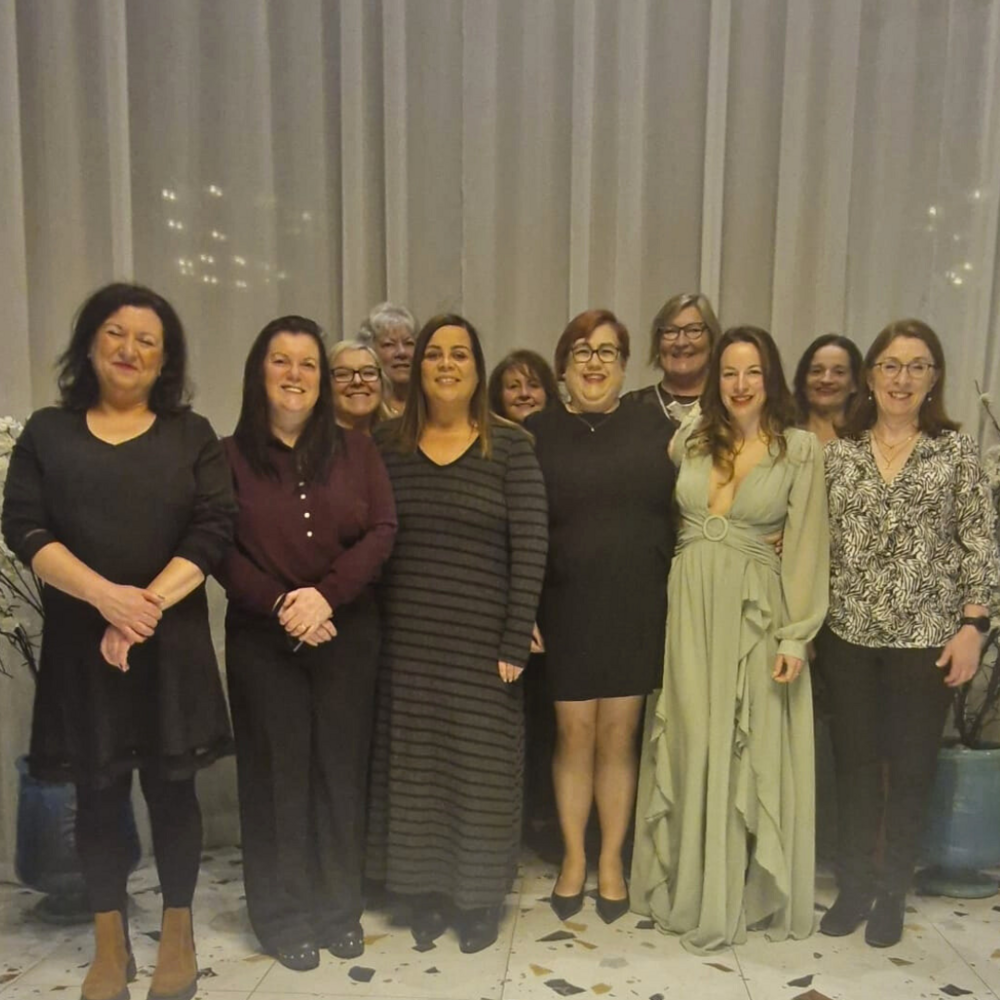
Fórsa delegation
Speaking about the event, Fórsa delegate Corrine Phelan, a member of the health and welfare division and Galway branch, said:
“I come to this seminar every chance I get, as I believe in growing women’s strength in the union movement. It’s always eye-opening, with amazing speakers and it’s also an opportunity to network with other women across trade unions. The solidarity with each other is one of the best reasons to come here.”
“I have to admit that it is tough to hear that we’re still working on the same issues year after year. But it makes us even more determined to keep fighting, and to empower every woman in the workplace.”
Chair of the ICTU Women’s Committee (South) Margaret Coughlan said: “When women in the trade union movement come together the power in the room is palpable. At this seminar we have heard some really important contributions. Now, we need to keep pushing within each of our own unions to ensure gender equality issues in the workplace and in wider society stay on top of the agenda.”
Join a union that wins. Join Fórsa.
US unions stand strong against creeping authoritarianism
by Mehak Dugal
America's labour movement has positioned itself as the defender of United States democracy against a sweeping authoritarian agenda posed by Trump’s presidency, according to Public Services International (PSI).
America's labour movement has positioned itself as the defender of United States democracy against a sweeping authoritarian agenda posed by Trump’s presidency, according to Public Services International (PSI).
PSI highlighted how unions forming the American workforce's backbone—from teachers to nurses, service workers to government employees—are at the vanguard of defending democracy, confronting the existential threat posed by Project 2025's plan to dismantle America's most important institutions.
A range of recent executive orders in the United States have caused a wave of transfer of public services and goods directly into private hands to serve elite interests instead of the common good.
This includes significantly reducing the federal workforce, privatising essential social programs like social security and Medicare—federal health insurance for those aged 65 or older and younger people with disabilities—and auctioning off critical services, such as the US Postal Service, to corporate interests.
In response, US unions have launched unprecedented multi-front resistance in the streets, the workplace, the media and in courts.
The American Federation of Government Employees last week secured a landmark legal victory against Trump's illegal termination of federal workers. The ruling found that the administration had fabricated performance claims to justify firings and ordered the immediate reinstatement of thousands of workers while declaring that the terminations were "based on a lie."
PSI states how this victory proved unions could successfully challenge authoritarian overreach through the courts—a lesson being institutionalised through new initiatives like Democracy 2025, which pre-positions legal teams to file challenges within hours of unconstitutional actions taking place.
The American Federation of Teachers mobilised against school voucher schemes that defund public education. The National Nurses United is fighting to defend Medicare from privatisation through patient advocacy campaigns. Members of American Federation of State, County, and Municipal Employees (AFSCME) are deploying emergency response plans for mass firings of civil servants. The Service Employees International Union has partnered with civil rights organisations to combat voter suppression tactics targeting working-class communities.
On the legislative front, labour’s allies in the US Congress have also reintroduced the Protecting the Right to Organize Act to strengthen union organising and collective bargaining rights.
On 28th March, Trump’s administration took its most blatantly anti-worker, anti-union action yet: an executive order stripping the right to organise from hundreds of thousands of federal workers.
The AFL-CIO, the largest federation of unions in the United States, described the action as plain and simple union-busting, firmly stating “we won’t stand for it.” They described the recent executive order as a punishment for unions that are leading the fight against the administration’s illegal actions in court and in the streets, calling it “a blatant attempt to silence us.”
This Saturday, 5th April, America’s unions are coming together with allies at hundreds of events all across the country with a series of ‘Hands Off’ events to send the message: “Hands off our Social Security. Hands off our public schools. Hands off our Medicare. Hands off our jobs. And hands off our unions and our contracts!”
PSI also highlighted how organised labour's recent resistance in the United States has transcended trade unionism and has become a defence of the social contract itself. “As unions deploy their organisational might through strikes, lawsuits, legislative pushes, and voter mobilisation drives, they're fighting not just for contracts and benefits, but for the fundamental character of democracy. Their victories—from courtroom triumphs to workplace organising wins—provide guidance and inspiration for the broader fights to defend democracy in the US and globally,” said PSI.
You can PSI’s full coverage of the issue and the range of organising activities undertaken by American affiliates here.
Join a union that wins. Join Fórsa.
Fórsa Youth quiz night: a roaring success
by Fórsa Youth
A Stop the Wall fundraiser and raffle marked the first Fórsa Youth quiz of 2025.
Fórsa Youth held their first quiz of 2025 on Thursday 20th March in aid of Stop the Wall, a grassroots Palestinian campaign that has been organising resistance against the apartheid wall in the West Bank, since its construction in 2002.
Held in Fórsa HQ, this fun-filled event was a great opportunity for Fórsa Youth members and supporters to come together and contribute to an important campaign.
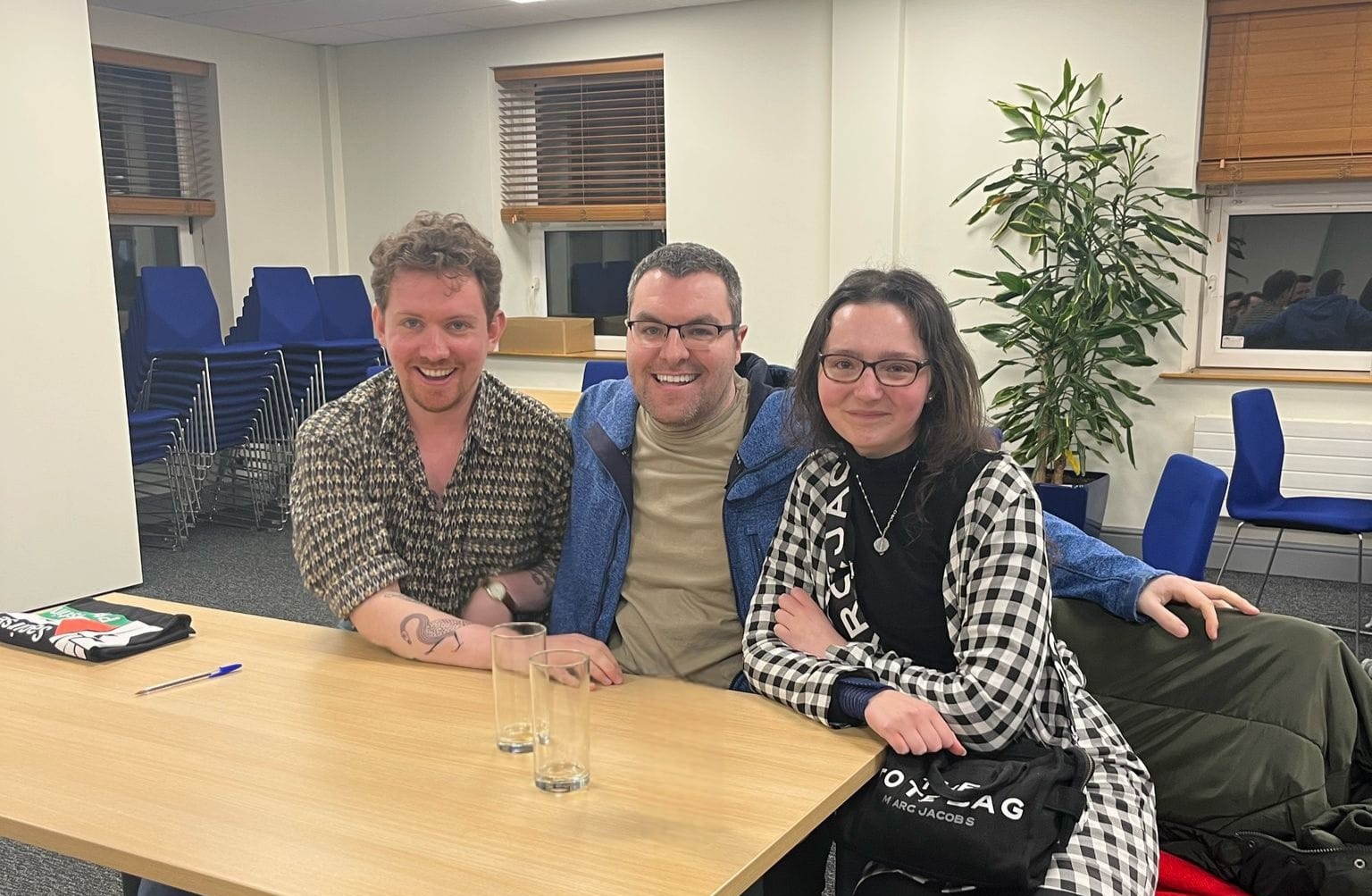
Winning team “Only Plans”
Bridget Moylan, Fórsa Youth communications officer, said “Stop the Wall is an organisation dedicated to supporting communities affected by the West Bank Wall. It’s a cause near and dear to Fórsa Youth.”
Fergal Twomey, Fórsa Youth campaigns officer, delivered an impassioned speech on the night. He outlined the vital work of Stop the Wall and explained how the apartheid system plays a crucial role in suppressing labour rights in Palestine. He also drew attention to the temporary work visa system for Palestinian workers, describing how they must cross a barrier to reach their jobs while facing little to no legal protections.
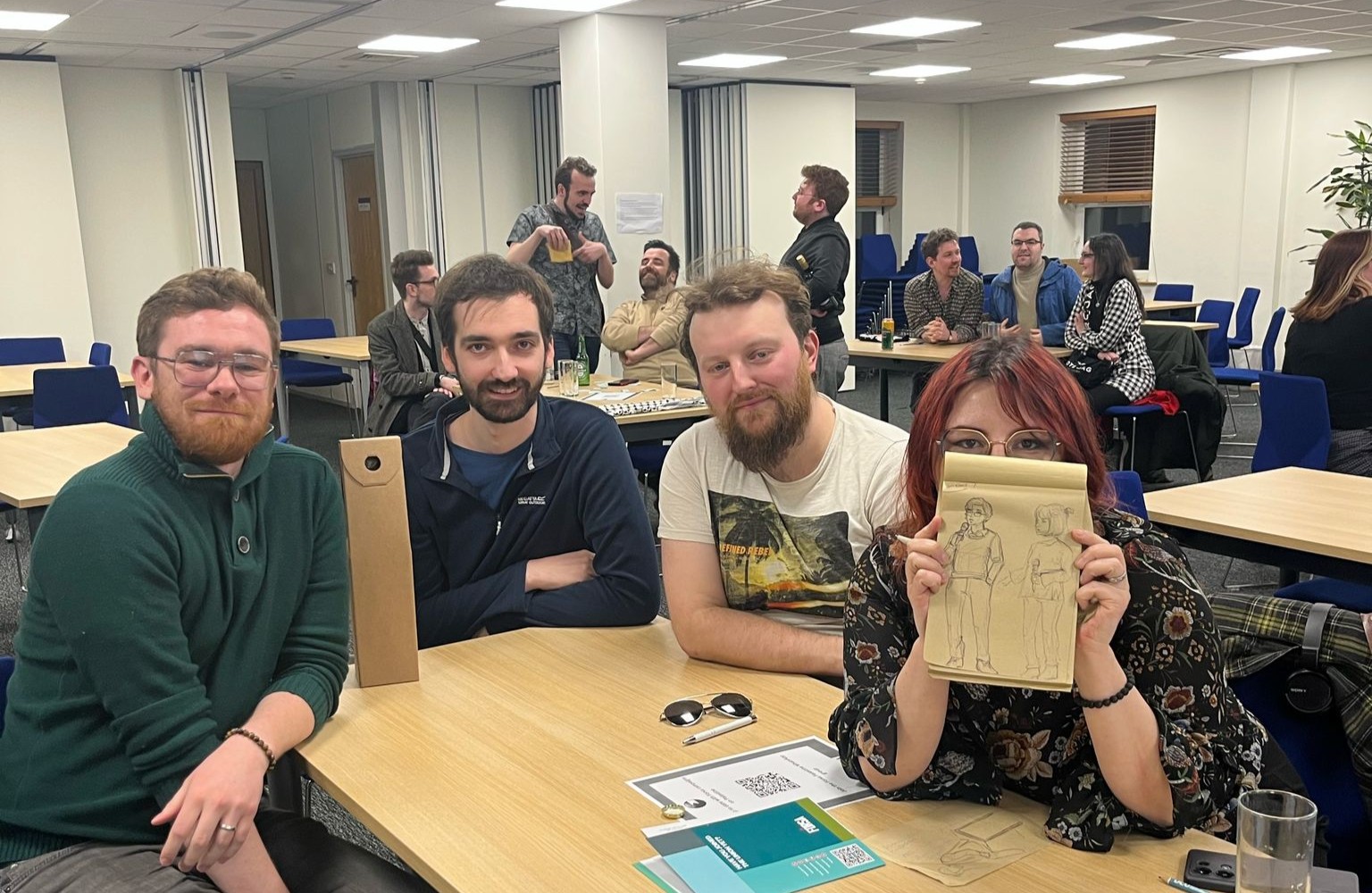
Second place team “Tequila Mockingbird”
Martin Walsh, Fórsa President, kicked off the quiz by highlighting the importance of supporting causes such as Stop the Wall, and supporting human and worker rights wherever they are under threat.
Hosted by Fórsa Youth Chair Hugh McInerney, the quiz provided participants with challenging questions as the teams went head-to-head in the hope of becoming victors. The quiz was followed by a raffle which had some great prizes up for grabs, ranging from Mary Wallopers’ concert tickets and goodie bags, to a cookery course and tickets to a Bohemian’s F.C. match.
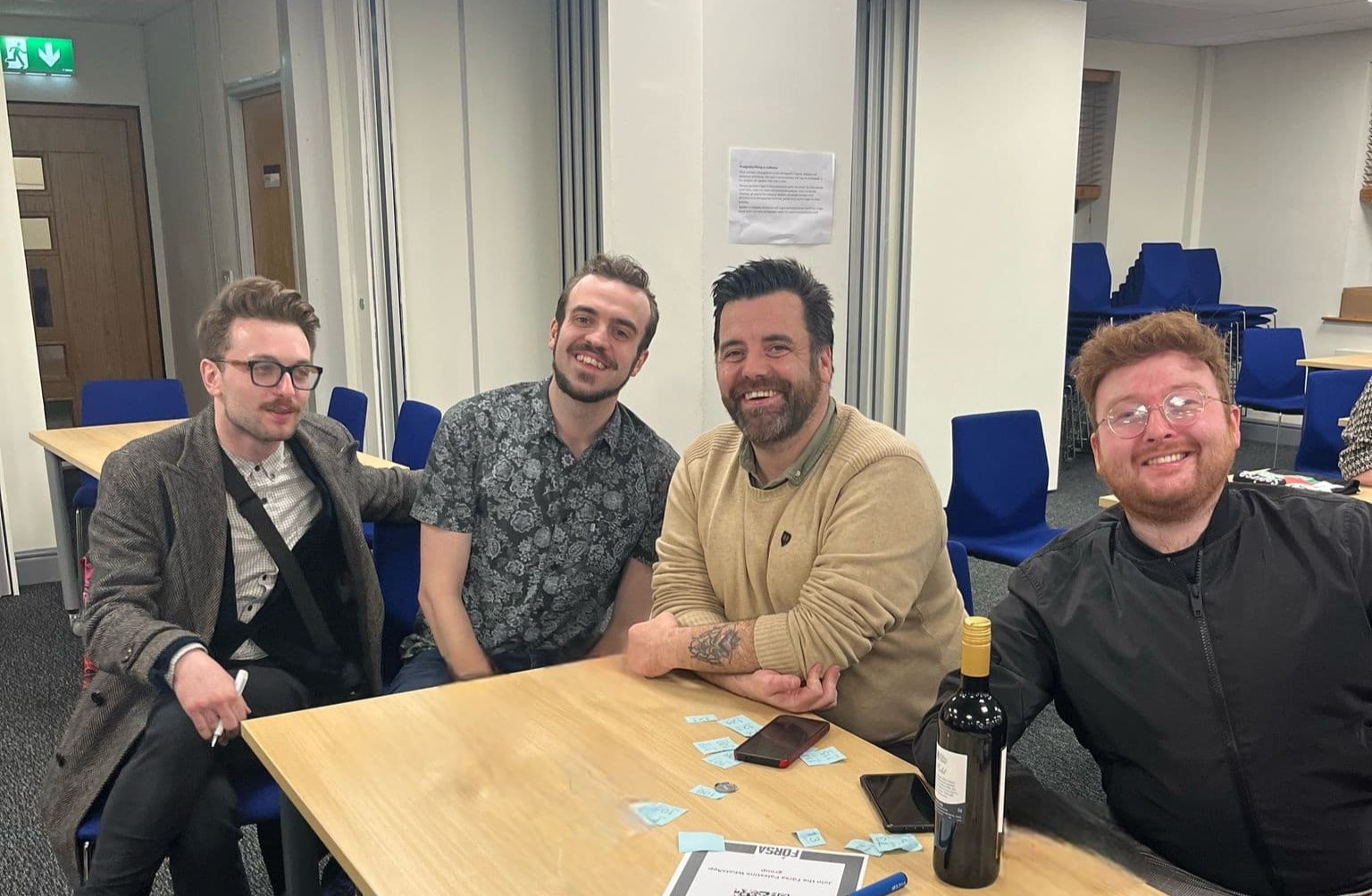
Best team name winners “Collective Bargain Hunters”
Bridget thanked Fórsa officials who facilitated the event and extended Fórsa Youth’s thanks to everyone who supported the quiz, including attendees and sponsors of prizes and tables.
There is still time to support Stop the Wall. If you wish to donate, please get in touch with forsayncsecretary@forsa-rep.ie.
Join a union that wins. Join Fórsa.
|
|
|
|