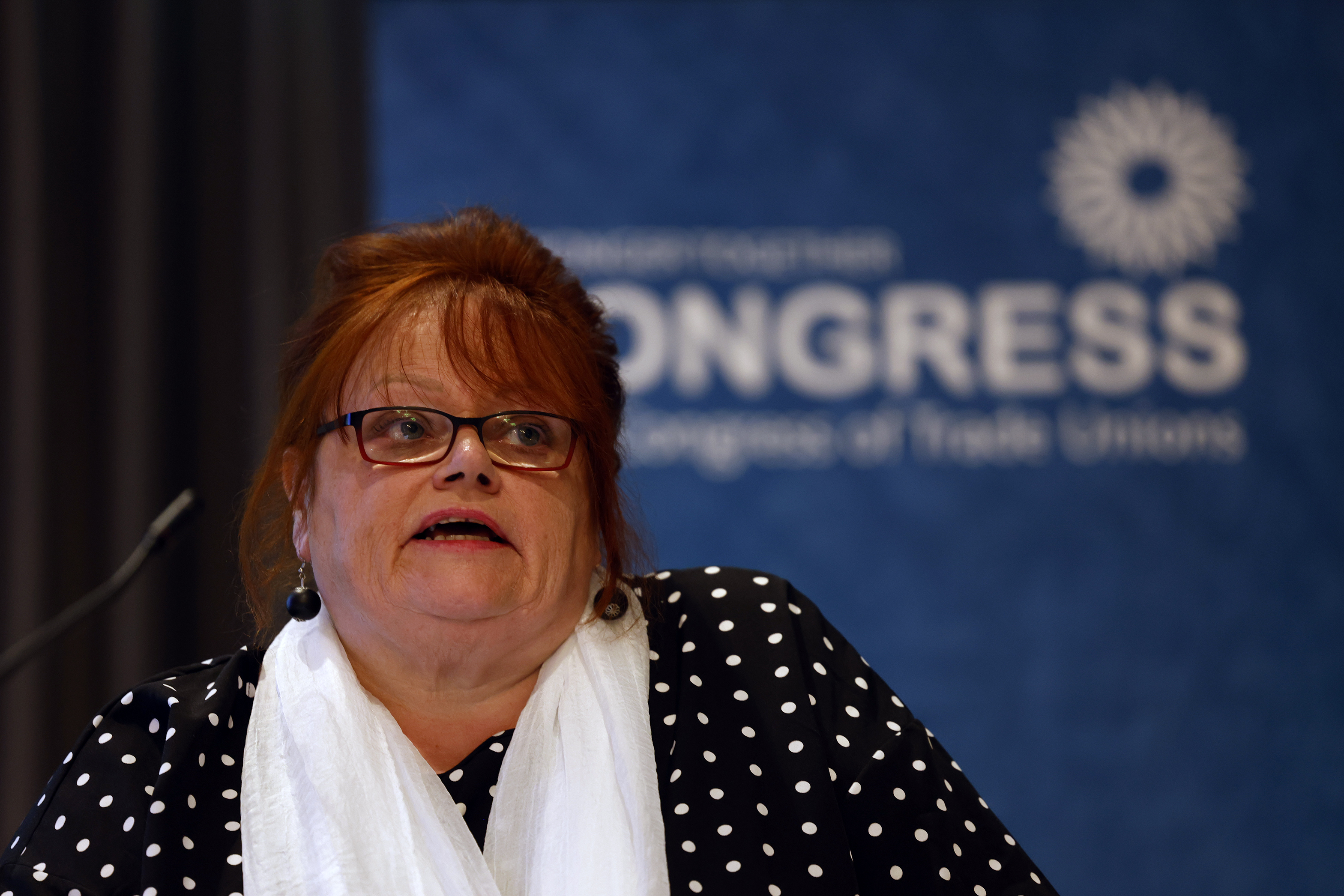
The Irish Congress of Trade Unions hosted its annual Women’s conference last week. The two-day event took place in Cavan, bringing together delegates from all unions across the island.
Co-chairs of the Joint Women’s Committee Tina Creaney (NISPA) & Lynda Scully, (SIPTU) led proceedings, welcoming delegates and highlighting the main topics on the packed agenda, ranging from universal childcare, reproductive rights, an end to violence against women and climate justice.
The conference theme was ‘Achieving for Women in Work’, which focused on ICTU's new economic model. It calls for living wages to become standard, universal public services including public childcare, universal health care, and collective bargaining as a right, ensuring every workplace has democratic participation.
ICTU President Phil Ní Sheaghdha addressed the opening session of the conference. She told delegates that Irish unions now have more women members than men, as the growth in female participation in the labour force in recent decades has been matched by a growing number of women joining trade unions.
Speaking about the impact unions can have on women’s lives, she said: “Trade unions offer something beyond the payslip. We offer dignity. We offer voice. We provide strength and solidarity. Being in a union means the difference between accepting what you're given and negotiating what you deserve.”
Outlining how the new economic model would benefit women workers, she said: “Our new economic model places workers, families, and communities at the heart of economic decision-making, not as an afterthought.”
“It is not based on fantasy economics; these are practical policies already working in countries that prioritise social partnership over unchecked corporate power.”
Fórsa’s delegation included members from all divisions. Melissa Brennan from the civil service DEC spoke on the union’s motion which called for action on Artificial Intelligence (AI) enabled sexual harassment and violence. Urging delegates to support the motion she said:
“We are not talking about hypothetical future risks. We are talking about the reality of today, where AI platforms allow users to generate non-consensual, sexualised images, often referred to as “nudification” or “deepfakes”. These are not accidents or mere glitches in a system. These are malicious adaptations of AI technology. It is digital sexual intimidation designed to harass, silence, and isolate.”
“Technology has evolved faster than our enforcement mechanisms, creating a dangerous vacuum where abusers operate with impunity. We cannot wait for a watershed moment to act when the floodgates are already open. We need to be proactive.”
Fórsa activist and vice chair of ICTU’s women’s committee Margaret Coughlan spoke on motion 18 on neurodiversity and non-visible disabilities. Speaking about her own experience representing members with ADHD, Margaret called for greater awareness in the workplace. She underlined that women are mainly diagnosed with ADHD later in life, rather than as children, a delay that can be very stressful. She called on health unions and teaching unions to come together to campaign for better policies, reduced diagnosis timelines and care for all neurodivergent people.
Margaret condemned the Government’s recent attempt to cut back Special Needs Assistant (SNA) posts, saying SNAs are “lifelines” for neurodivergent children, and called on unions to stand together to push the HSE and the Department of Education to put children’s needs first.
Corrinne Phelan from the Galway Health and Local Government branch described the passion and commitment women trade unionists bring to their work to improve working conditions and equality in society, urging Government and employers to take note.
She said: “Some of the issues debated over the two days are ones we have been campaigning on for quite some time now. From the gender pay gap to miscarriage leave, it is vital that we see real action on these issues, not just empty talk.”
Chair of the civil service division Jean Taylor was also part of the delegation. Reflecting on the conference Jean said: “Throughout the conference we heard powerful testimony from women trade unionists highlighting the issues facing members of all our unions. Coming together at events like this makes us stronger, when we go back to our own unions and workplaces, so that we can continue fighting for equality for women at work and beyond.”
Join a union that wins. Join Fórsa.





 Like
Like


