Clarity on pay essential before public service talks can begin
by Niall Shanahan
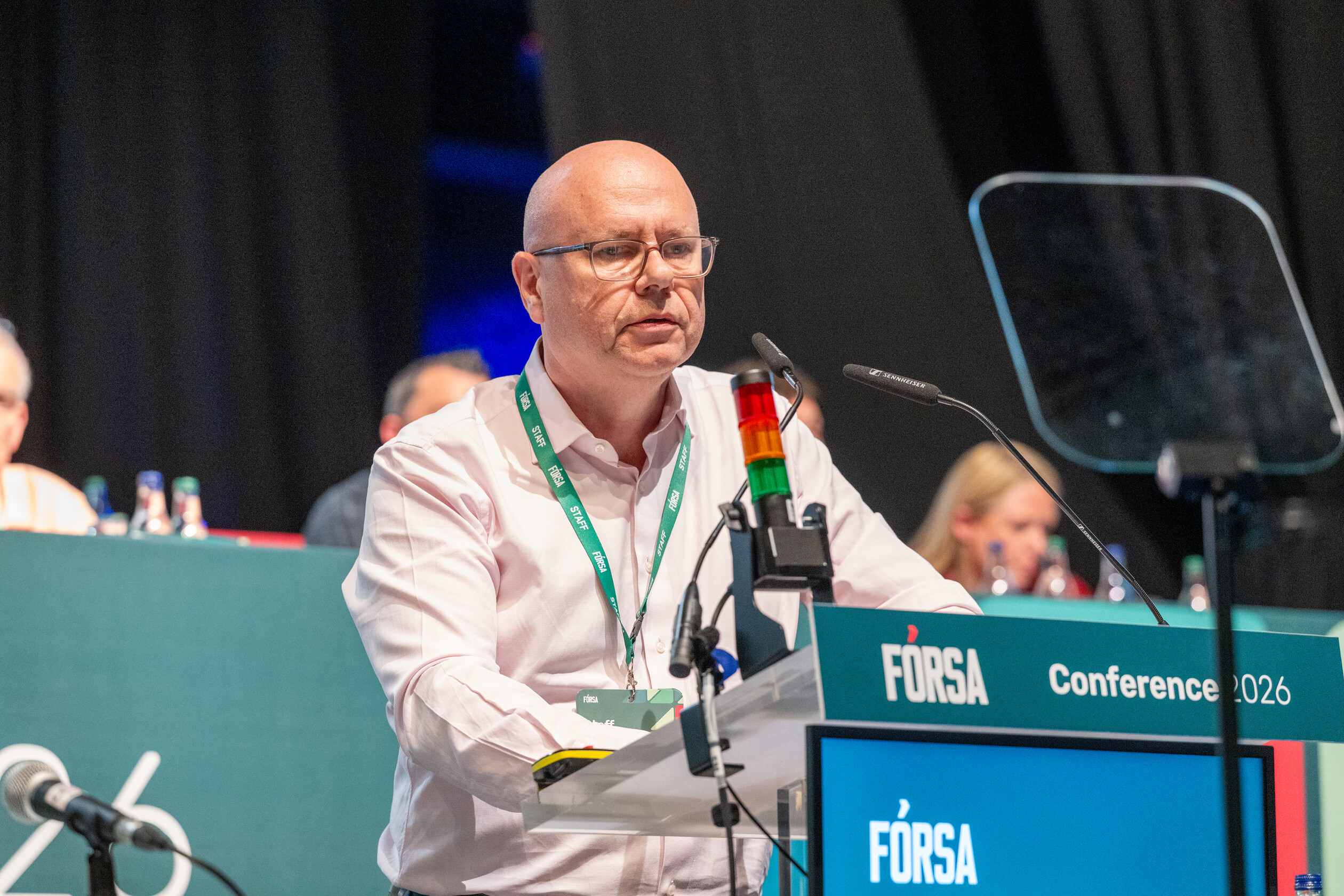
Fórsa has said formal negotiations on a successor public service agreement cannot proceed without clarity on pay and living standards at the outset of any process. The union position was set out by Fórsa general secretary Kevin Callinan in an update to branches issued yesterday.
Fórsa has said formal negotiations on a successor public service agreement cannot proceed without clarity on pay and living standards at the outset of any process.
The union position was set out by Fórsa general secretary Kevin Callinan in an update to branches issued yesterday (Thursday). It follows exploratory talks last week between officers of the ICTU Public Services Committee and officials from the Department of Public Expenditure, NDP Delivery and Reform. After two meetings, the union side advised Government officials that it did not believe there was a viable basis for opening formal negotiations.
Referring to comments by Minister Jack Chambers, Kevin said: “The Minister has said that ‘everything is on the table’ and has characterised the union side’s position as setting preconditions. That does not reflect our experience of the exploratory talks.
“We remain open to a multi-annual agreement, but a different approach is required if talks are to have a realistic prospect of success. In particular, we are seeking certainty, or as much certainty as possible, on pay before entering a wider process covering other issues,” he said.
Kevin said previous negotiations involved lengthy discussions at the Workplace Relations Commission (WRC) on text covering a range of issues before pay was addressed. When pay was eventually discussed, Government offers fell well short of inflation projections. He said that experience underlined the need to deal with pay at the beginning of the process.
The union side has argued that a pay increase is required to cover the period from July to December this year. While no specific claim has been tabled, Kevin noted that inflation was running at 3.6% in May, more than wiping out the benefit of 1% increases paid in February and June.
He said public service pay has fallen significantly behind prices over recent years. Pay increases under Building Momentum and the first two years of the Public Service Agreement 2024-26 amounted to 15.75%, or 16.89% cumulatively, while average annual inflation over the same period totalled 20.8%, or 22.44% cumulatively. Taken together, this means pay has lagged behind rising prices.
Kevin acknowledged that lower-paid workers had done better under recent agreements, an approach championed by unions during the Building Momentum talks. But he said the gains had been overstated by the Minister and departmental officials, particularly when compared with the increase in the National Minimum Wage over the same period.
Kevin added: “Central Bank projections have recently been revised upwards, and the possibility of a more severe inflation scenario remains. In that context, any multi-annual agreement would need a formula to ensure wages do not fall further behind, while also providing a sustainable way to address recent losses.
“We remain available for further engagement if departmental officials have something substantive to say on pay. In the meantime, unions must prepare for the possibility that there will not be an agreement for an indefinite period. A meeting of the 19 unions affiliated to the ICTU Public Services Committee is due to consider next steps later today,” he said.
You can read the letter to branches here.
Join a union that wins. Join Fórsa.
 |
|
Summer learning
by Brendan Kinsella
September applications open as reps receive certificates in Nerney’s Court.
Amid last week’s heatwave, the Skills Academy celebrated this year’s students at the Skills Academy Summer Certificate Ceremony.
Eager to begin the next semester, the Skills Academy has opened applications for Workplace Representatives Training Level 2, a not to miss training for reps who have already completed the Level 1.
Fórsa Induction and Live: Lunch & Learn will continue through the summer months. With the date set for July’s Induction session. The topic of Live: Lunch & Learn will be announced later this month.
Summer Certificate Ceremony
Cheers and laughter echoed through the halls of Nerney’s court on Tuesday 23rd June, as reps received their certificates at the Skills Academy Summer Certificate Ceremony.
Certificates were presented to reps who had completed Workplace Representatives Training Level 1 and the Level 2 course, Branch Chairs and Secretaries trainings, and the Leadership Programme this year.
Fórsa president Martin Walsh, began the ceremony reflecting on how far training had come from his time as a new workplace rep. He emphasised the importance of training and mentoring for ensuring the future generations of leaders within the union.
He said: “The future leaders of the union are in this room today” and encouraged branches to combine training with further mentoring to ensure graduates fulfil their leadership potential.
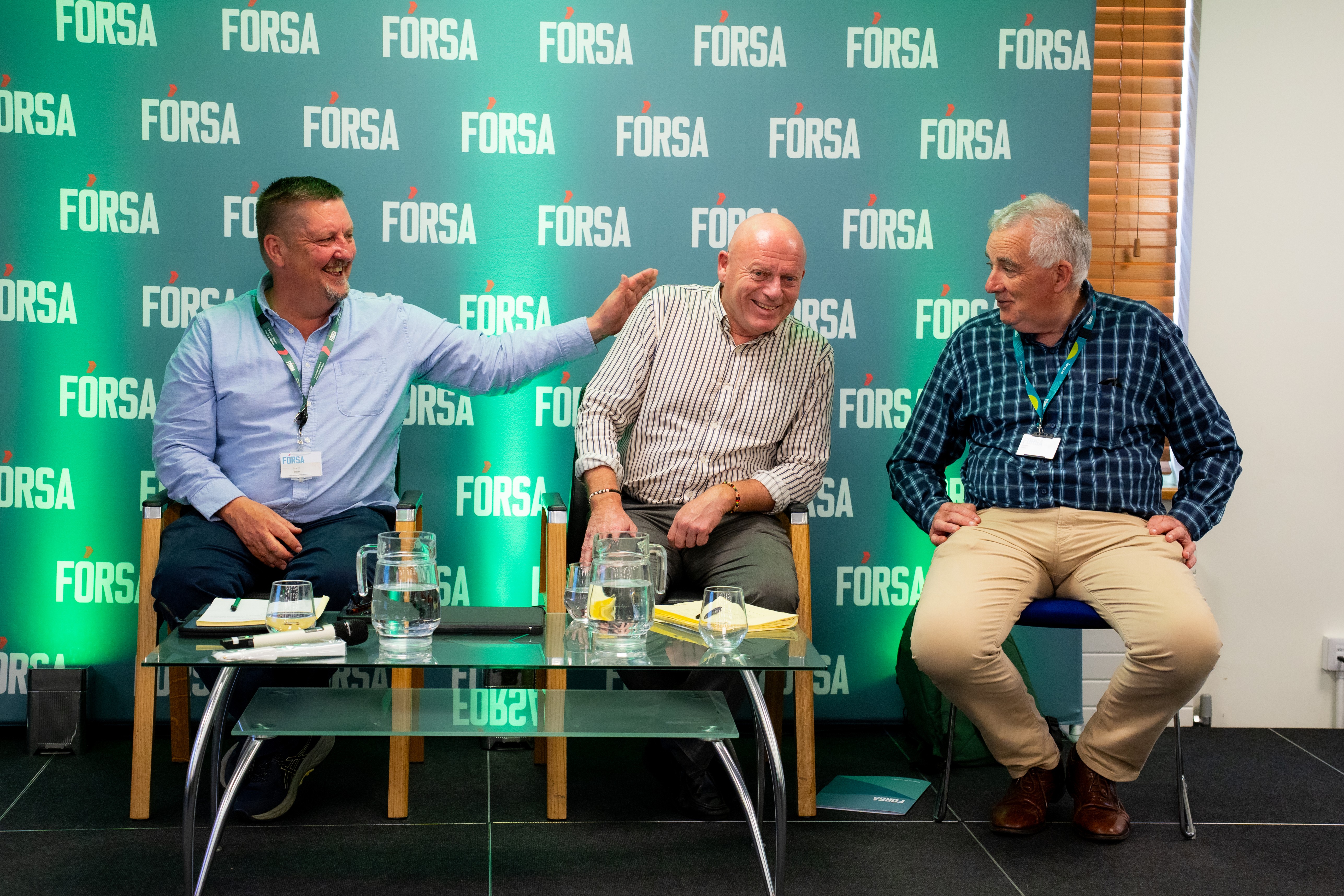 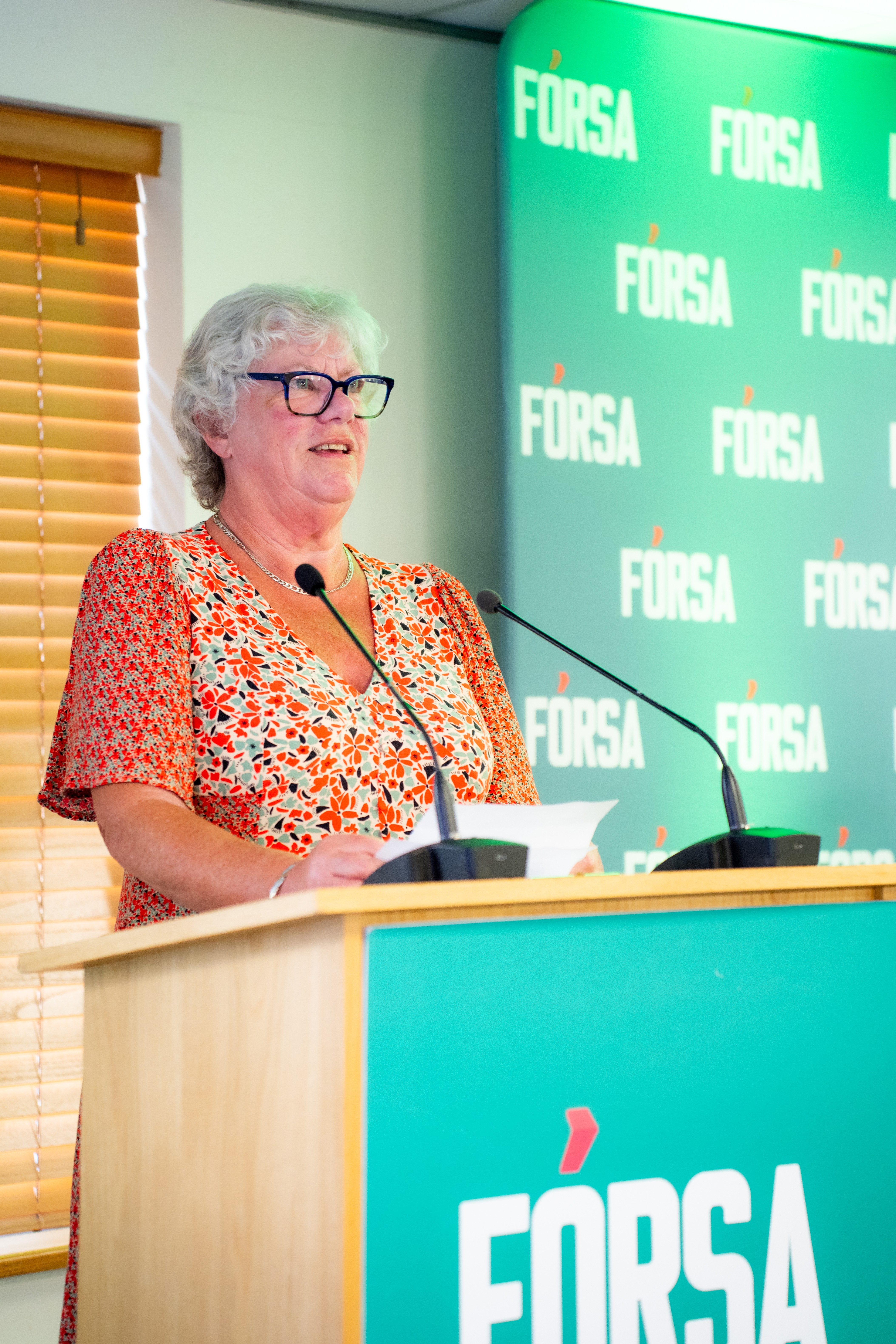
Fórsa deputy general secretary and head of the Civil Service division, Éamonn Donnelly, echoed Martin’s comments, emphasising the importance of bringing new members into leadership roles, saying: “It’s about encouraging new people. If we can enable more people to lift, the load will become lighter.”
One member from each course spoke on behalf of the participants, telling attendees about their experience.
Catherine Quirke, of the Munster SNAs branch and chair of the Education division, spoke for the graduating class of the leadership programme. She recalled her first class and how she went from early nerves to feeling safe, supported and encouraged.
She said: “Everyone left everything outside the door. We could be our true selves. This course has made a big difference for me, and I would recommend anyone to do it.”
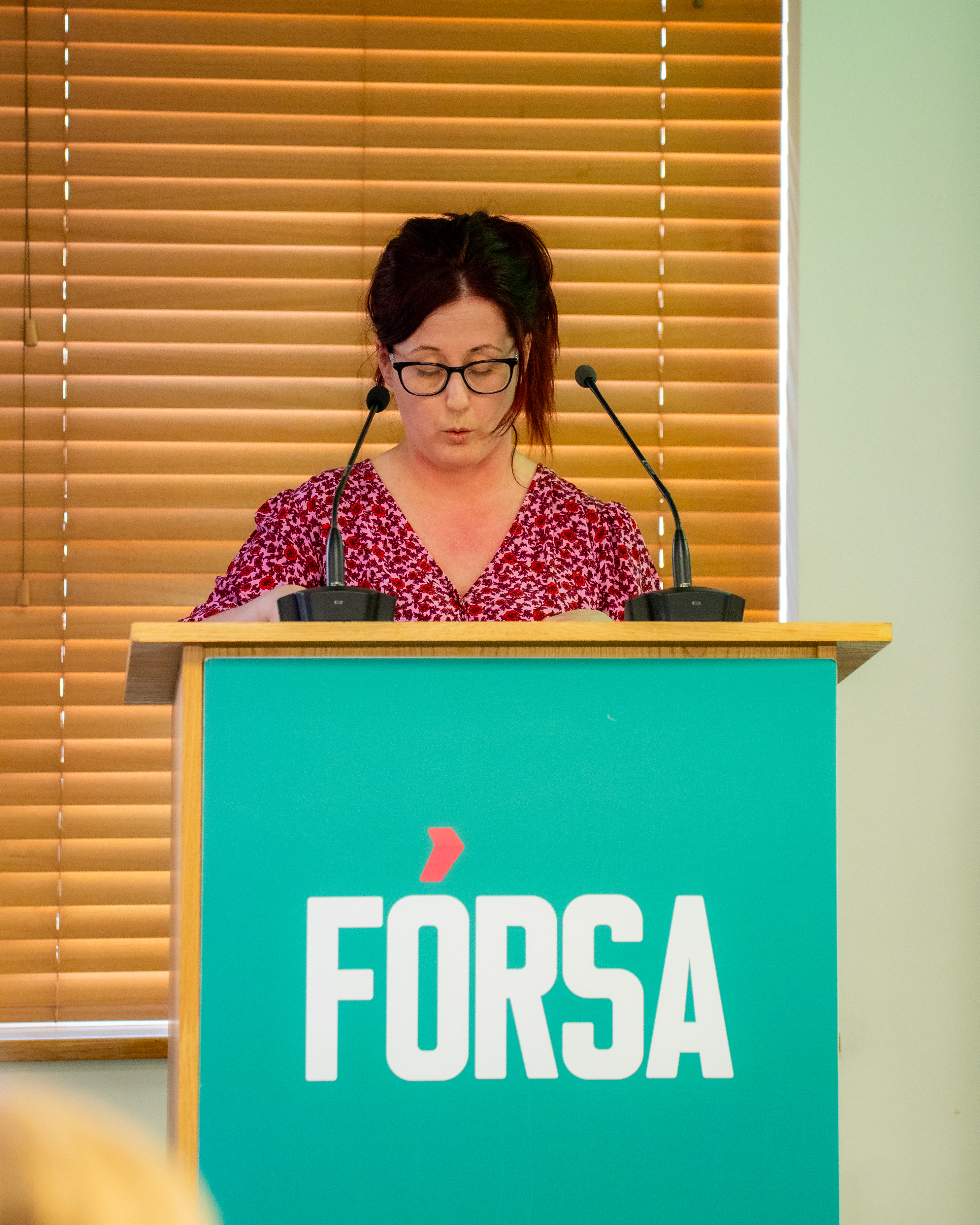 
Joanne Dowling of the Dublin Hospitals branch spoke for the class of Workplace Representatives Training Level 1. She described how she learned the importance of listening first and how the training is already helping her as a rep.
She said: “After completing my training, our official and I helped a member who was at her wit's end to find her voice, and it had a positive outcome.”
 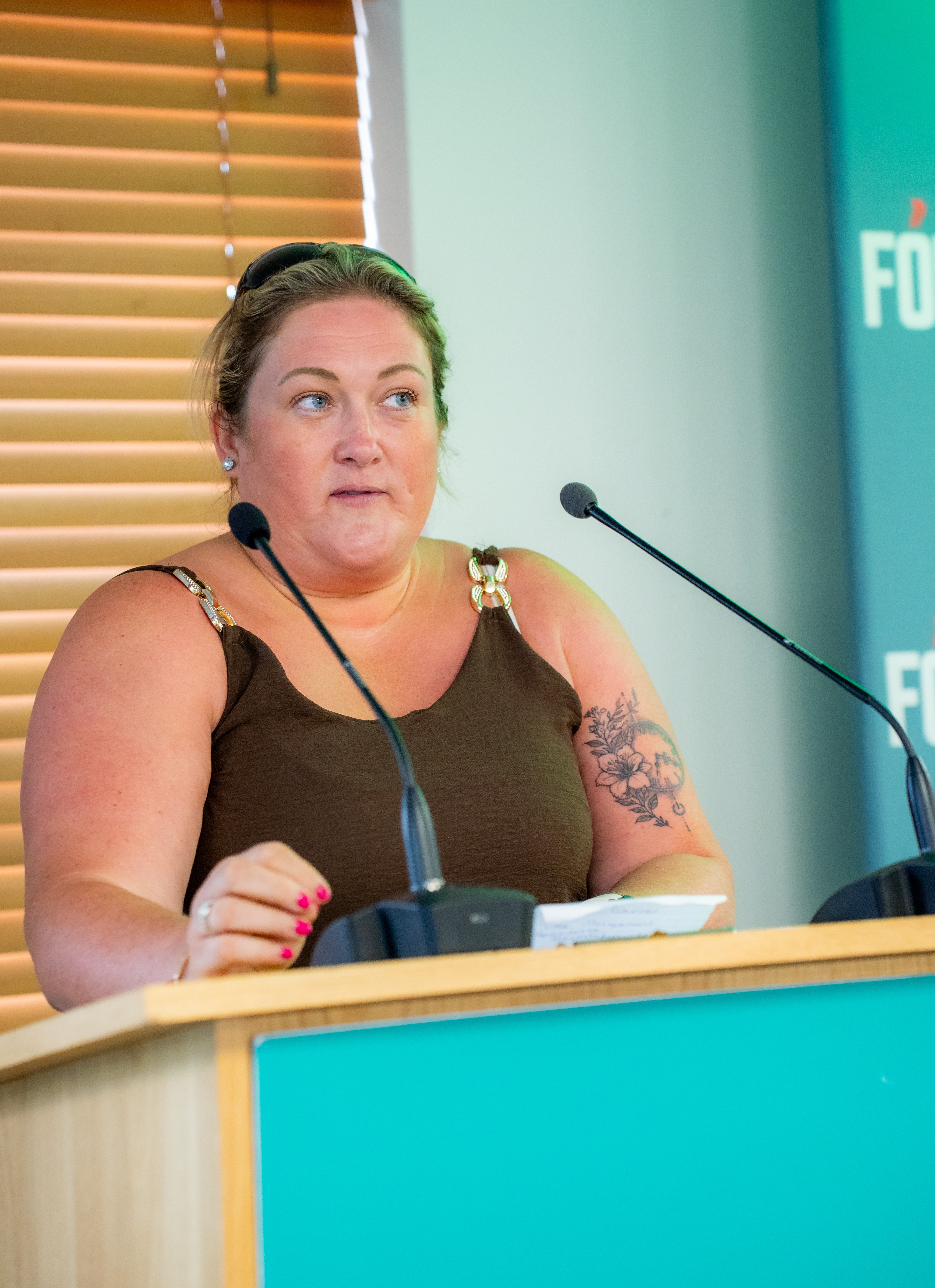
Elaine Quinn of the Garda Clerical branch spoke for the class of Workplace Representatives Training Level 2.
For Elaine, the presentation skills segment has been lifechanging. She shared how she had been so scared of public speaking she had refused to do a reading at her brother’s wedding.
Since completing the training Elaine has conquered her fear and spoken in front of groups of members and potential members in workplace after workplace. By her estimate she has now recruited between 60 to 100 new members.
She said: “I speak from the heart and tell them the importance of being in a trade union. I get a little better each time.”
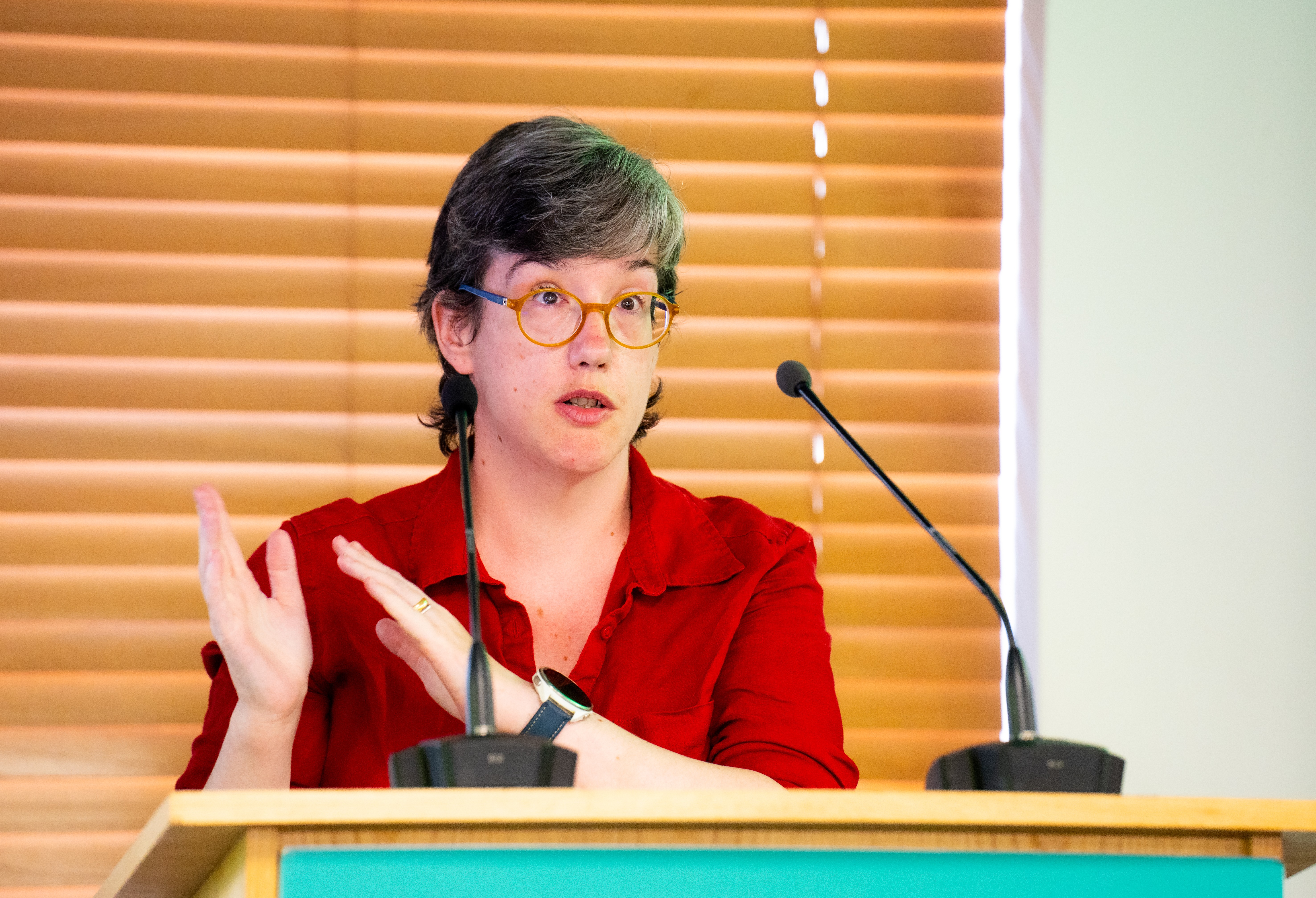 
Mary Daly of the Cork Health and Local Government branch spoke for the class of Branch Chairs and Secretaries training. Mary had reluctantly found herself in the spotlight with the introduction of the Tusla local committees. With little experience chairing meetings Mary found herself “like a rabbit caught in headlights.”
Since taking the training, meetings have become less of a trial for her. She said: “I learned about flow and how to move things along and keep things going.”
Director of membership training and development Fiona Dunne closed off proceedings by praising the graduates for their work and enthusiasm. She said: “The Skills Academy wouldn’t work without you guys.”
“Thank so much. Keep training, keep telling us what you do, and keep telling us what skills gaps you need to fill” she concluded.

Fórsa Induction - Wednesday 8th July - Online - Open to all new members
The first step on any member’s training journey, Fórsa Induction is our little way of welcoming new members and explaining exactly what you have become a part of.
Learn about how we work, how you fit into it all, what we do for you, and what you can do to become more engaged, have your voice heard locally, and raise issues at divisional and national levels.
Importantly, if you would like to see yourself on stage receiving a certificate next summer, Fórsa Induction is a prerequisite for Workplace Representatives Training Level 1.
There are morning and evening sessions available to fit your schedule.
You can register for Fórsa Induction here.
Workplace Representatives Training, Level 2 – September – Woodford Office, Santry, Dublin
Applications have opened for Workplace Representatives Training, Level 2. Where the Level 1 course is designed to give you competence in your role as workplace rep, the level 2 is designed to help you excel.
The training takes place in three parts over four days. All sessions must be completed.
Part one (2 days) – the first day focusses on recruitment and organising members in your workplace. You will learn to lead and inspire confidence in colleagues, along with how to be someone your coworkers can trust to rely upon.
On the second day you will have practical opportunities to develop your individual representative skills.
These sessions will take place on Wednesday 2nd and Thursday 3rd September.
Part two (1 day) - covers equality legislation and diversity in the workplace and takes place on Tuesday 3rd November.
Part three (1 day) - covers health and safety practices, risk assessment, and an overview of legislation and takes place on Wednesday 20th January 2027.
To register for a course:

Aside from Live: Lunch and Learn and Fórsa Inductions, participation on all courses requires sign-off from your branch and official. To apply, contact your branch training officer or secretary if your branch does not yet have a training officer.
Join a union that wins. Join Fórsa.
Power in Pride
by Hannah Deasy
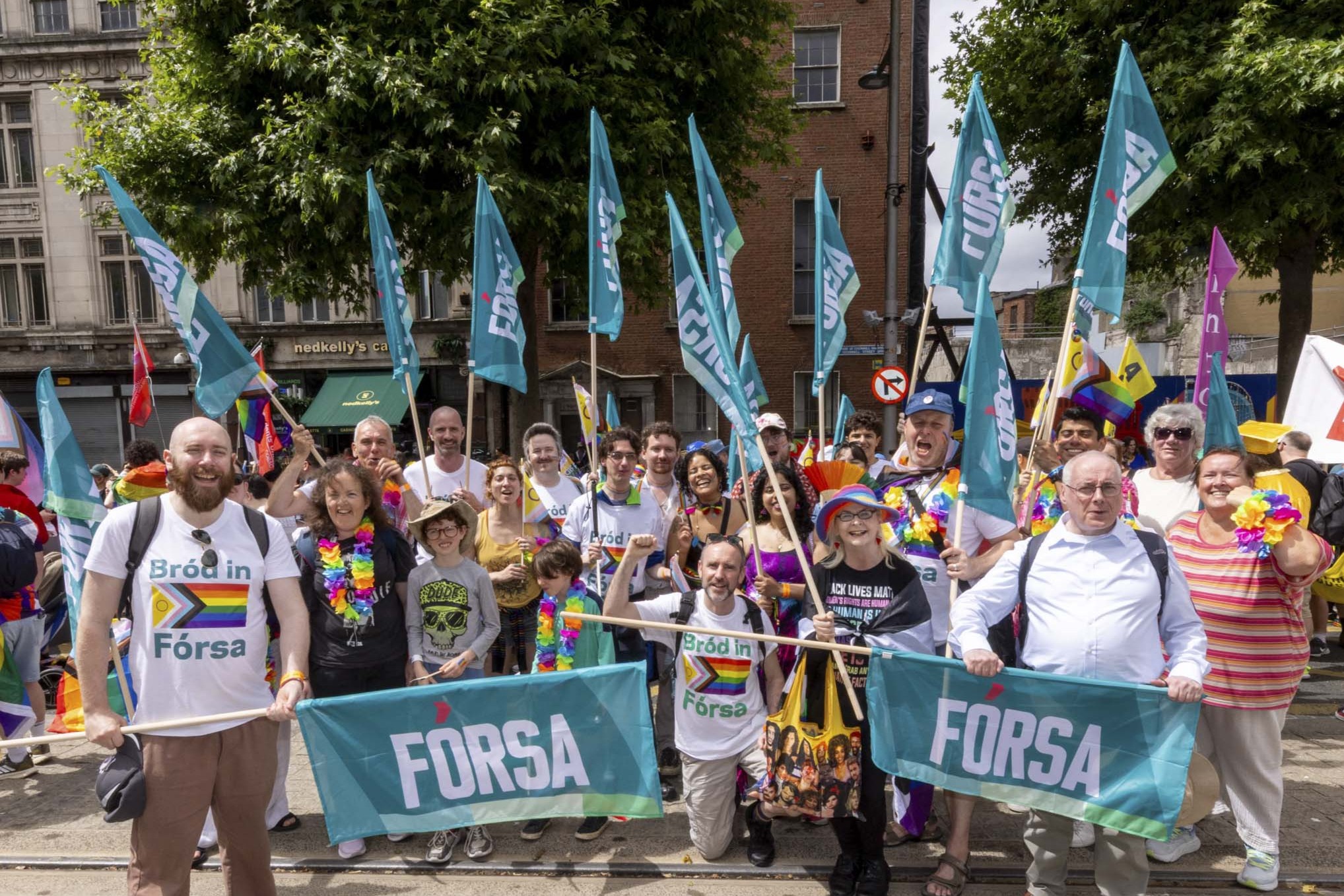
Fórsa members turned out in large numbers for Dublin Pride this year, proving again that solidarity is the guiding principle of our union.
Fórsa members turned out in large numbers for Dublin Pride this year, proving again that solidarity is the guiding principle of our union. This year Fórsa members were part of a trade union bloc, marching hand in hand with other unions, including the INMO, the INTO, the ASTI, SIPTU, the CWU and more.

Fórsa deputy general secretary, and vice president of ICTU, Katie Morgan said: “It was great that unions marched together in an ICTU bloc at Dubin Pride this year. There’s a union for every worker in Ireland and there’s a place for every worker in our unions. Pride is an important day of celebration and a reminder that solidarity changes lives.”
The Grand Marshall for Dublin Pride this year was Philippa Ryder, a retired member of Fórsa. Katie said: “Philippa is an inspiration to so many people, it was wonderful to see her take on the Grand Marshall role. On behalf of the union we send heartfelt congratulations to her for a job well done.”
Gary Rutledge, a Fórsa member in the Civil Service division said “Pride is about visibility, solidarity and showing that everyone deserves to be treated with dignity and respect at work.
“Trade unions have always played a part in standing up for those who face discrimination and it's important that we continue to show up for our LGBTQ+ colleagues and friends.
“When civil servants in Northern Ireland are told they can't march under their banner at Pride it shows why these issues still matter and why visibility remains important. It's a reminder that rights and acceptance should never be taken for granted.”

Speaking on Saturday, ICTU official David Carroll said: “It’s a huge celebration of diversity and it’s great to see so many trade unions here today. There’s a brilliant turn out, showing that pride is all about inclusion, diversity and highlighting the importance of supporting and protecting LGBT workers, protecting them and making sure they’re unionised.”

Join a union that wins. Join Fórsa.
Fórsa Youth to host housing conference in July
by Bridget Moylan
The conference aims to address the housing crisis and its gruelling impact on younger workers.
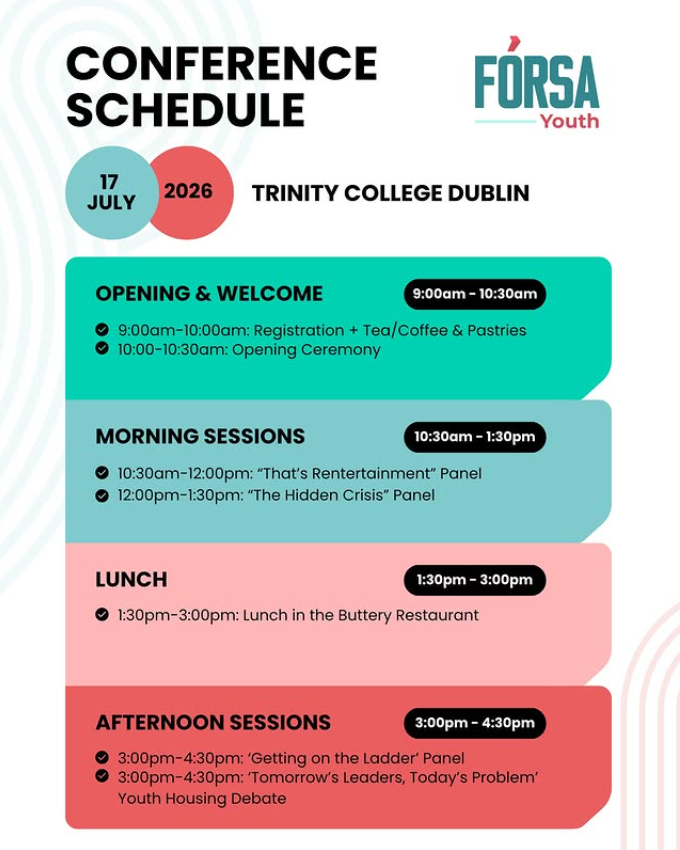
Following on from a highly successful inaugural conference last year, Fórsa Youth are hosting a housing conference on Friday 17th July in Trinity College Dublin.
A range of topics will be covered, such as the hidden effects of the housing crisis, the impacts of high rents, a first-time buyer discussion, and more. With panellists including politicians, academics and trade unionists, the day is set to be full of interesting insights and lively debates.
The housing crisis is among the country’s biggest challenges today. With soaring rents, limited housing supply and high property prices, the crisis is having a particular impact on young workers. This is why housing remains a key focus of Fórsa Youth.
Chair of Fórsa Youth, Hugh McInerney, said: “Far too many young people are spending the majority of their take-home pay on rent and living in sub-par accommodation. Others are forced to commute spirit-sapping distances while still living with their parents, delaying the beginning of their independent lives and denied the milestones those same parents took as a given.”
“For young workers, the crisis is not only an economic hardship but a source of sustained stress and insecurity,” he continued.
The conference will take place on Friday 17th July. Registration opens from 9am along with tea and coffee. Please register here.
For more details, follow Fórsa Youth on Instagram. We look forward to seeing everyone there.
Join a union that wins. Join Fórsa.
|
|
HSE concede on perfusionist pay
by Niall Shanahan
The HSE has confirmed that the pay link between perfusionists and medical scientists will now be restored. Talks will now take place to determine how and when pay restoration will happen.
In a letter to Fórsa the HSE has said that perfusionists will now be paid at the same rate as medical scientists, as directed by the Labour Court. Following receipt of written confirmation from the HSE, Fórsa paused planned industrial action. Talks will now take place to determine how and when pay restoration will happen.
The action had been scheduled to take place on Thursday 2nd, Friday 3rd and Monday 6th July. The pause follows an indication from the HSE that it is prepared to move to implement the Labour Court recommendation, which found that the long-standing pay link between perfusionists and medical scientists had been breached and should be restored with retrospective effect to 1st January 2024.
Fórsa has been clear that the recommendation must be implemented in full, and have rejected management’s stated intention use the local bargaining clause of the Public Service Agreement 2024 - 2026 to resolve this and reminded the HSE that this is a situation where the employer is required to correct an anomaly of its own making rather than respond to a claim.
The union's position is that the local bargaining provisions are too limited in scope to give full effect to the recommendation, and that using them in this way would risk diluting the Labour Court’s findings and creating further complications.
The decision to pause the action has been taken to allow focused engagement with the HSE on a credible pathway to implementation.
Fórsa official Ryan McKinney said: “The Labour Court recommendation is clear. This is a matter of implementation, not negotiation. We will now engage with the HSE to ensure that the recommendation is honoured in full and in a way that does not create further complications.”
The union will keep members informed as talks progress. If a satisfactory pathway to implementation is not agreed, industrial action will resume, with stoppages already notified for Tuesday 7th and Wednesday 8th July.
Join a union that wins. Join Fórsa.
Final phase of community and voluntary pay deal due in October
by Hannah Deasy
Outcome of the data gathering exercise which will inform next steps on pay in the sector is due in August, while unions continue to press for funding to reach employers in time for prompt payment.
The final outstanding pay increase under the 2025 agreement for community and voluntary workers will take effect from 1 October 2026, with unions continuing to press for funding to reach employers in time for prompt payment.
One remaining pay increase is due to members working in the community and voluntary sector under the agreement reached in 2025. This 2% pay increase will apply from 1 October 2026. Unions have continued to emphasise the importance of timely payment of raises, with funding delivered to relevant organisations one month in advance.
Unions are to be provided with the results from the data gathering exercise that was outlined in the agreement in August. There will be further WRC engagement in August on the results of the data gathering exercise and a Joint Implementation group meeting in September.
Fórsa official Louise O’Hara said: “The progress we have made in securing improved pay arrangements for workers in the community and voluntary sector has been achieved through collective action and the strength of union members standing together.”
Louise reminded members that the 2025 agreement gives clear indication as to how future pay agreements for the public service will impact workers in the community and voluntary sector.
The agreement states that funding to Section 39, 56, 10 and 40 organisations, will be adjusted “to allow for application of equivalent general round pay adjustments, as provided for in any successor agreements to the Public Service Agreement 2024-2026,” and that the adjustment will be “in line with the phasing of any future public sector pay agreements. In line with the approach to the PSA, funding would be made available through the annual Budget process."
Speaking to this point Louise said: “While our general secretary, Kevin Callinan, has warned that there is currently "no basis" for public sector pay talks, it’s clear that whatever agreement might be reached, the same terms will be applied to workers in the community and voluntary sector through automatic adjustments to funding for service providers."
Urging members to get more involved in the next phase of the campaign, Louise concluded by saying: “There are many ways to get involved, whether by attending union meetings, participating in workplace campaigns, becoming a workplace representative, or simply encouraging colleagues to join the union. Every member who takes part strengthens our ability to protect and improve pay, conditions and services.”
Join a union that wins. Join Fórsa.
New national secretary in Health and Welfare division
by Hannah Deasy
As Linda Kelly moves on to become the new ASTI general secretary, Ryan McKinney takes responsibility for HSCPs, pharmacy, and statutory regulation.
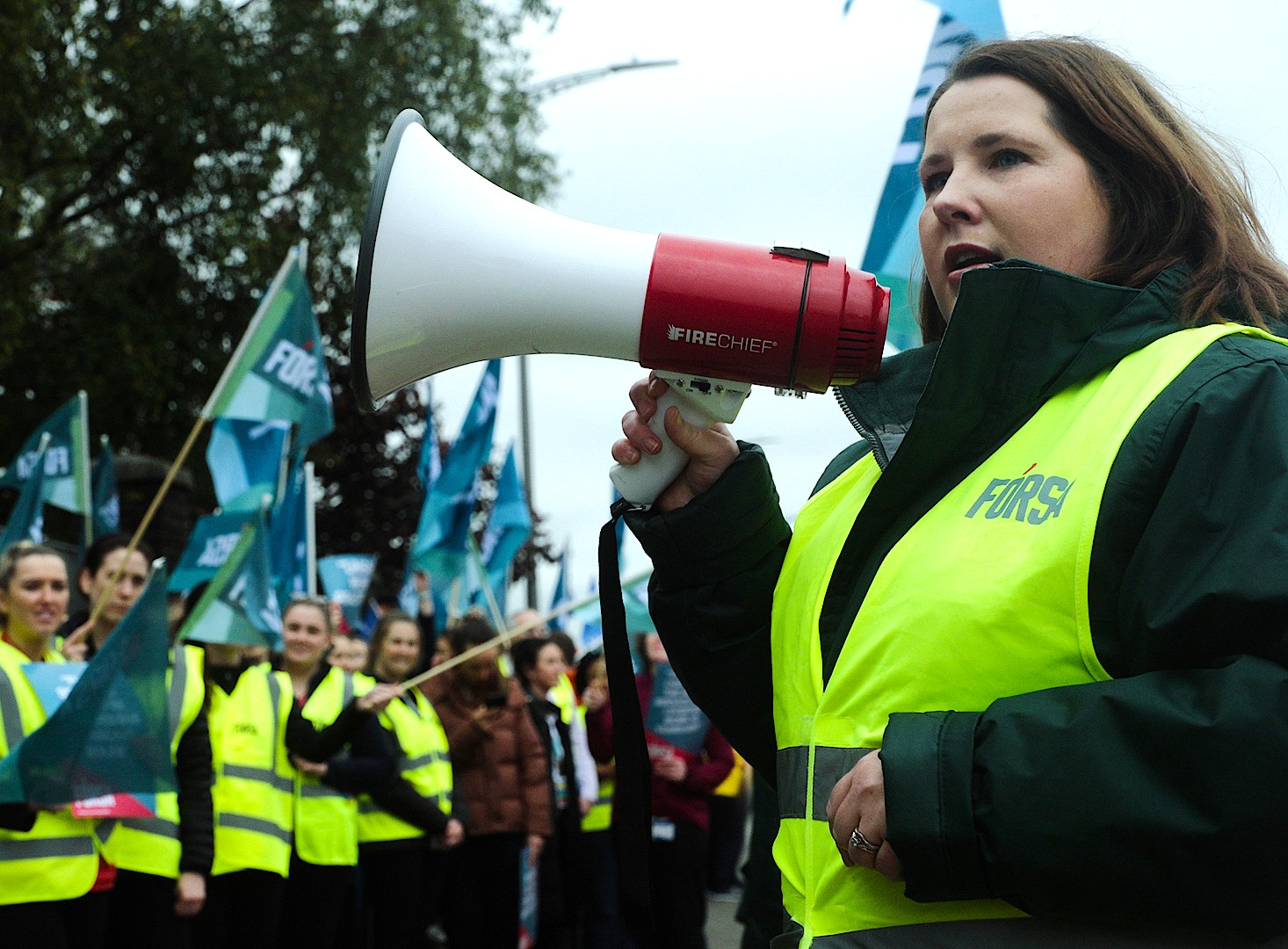
Ryan McKinney has been appointed to take over Linda Kelly’s brief in the health and welfare division, where he will be responsible for health and social care professionals, pharmacy and statutory regulation.
Previously Ryan led the union’s strategic change team, after working in the health and welfare division for several years. Before joining Fórsa, Ryan worked for NIPSA, the Northern Ireland Public Service Alliance, which represents over 40,000 workers.
Speaking about his new role, Ryan said: “I’m excited to get back to working with our members in the health and welfare division. During the pandemic I worked in our national health office, and I saw during that time just how committed our members are to doing their very best for the people they care for, and support, every day.”
“Our public health system is under severe strain due to a range of factors including workforce shortages, capacity deficits and demographic change. This rising demand, combined with the need for better care, is challenging. Workers in the public health system unfairly shoulder the impact of the failure to invest and plan for a fit-for-purpose system. I will be working to collectively assert the role and raise the voices of Fórsa members so the health system we need is delivered.”
Head of division Ashley Connolly welcomed Ryan to the team, saying: “Ryan brings a wealth of knowledge and experience in health, and his recent focus on strategic organising will be a significant asset to our division.
“Since 2022, our division has grown significantly. Ryan’s expertise will support our continued focus on strengthening branch structures, helping them defend members as they face increasing HSE budgetary pressures and recruitment restrictions.”
“Ryan brings a wealth of strategic knowledge and practical experience to the role and to our team.”
 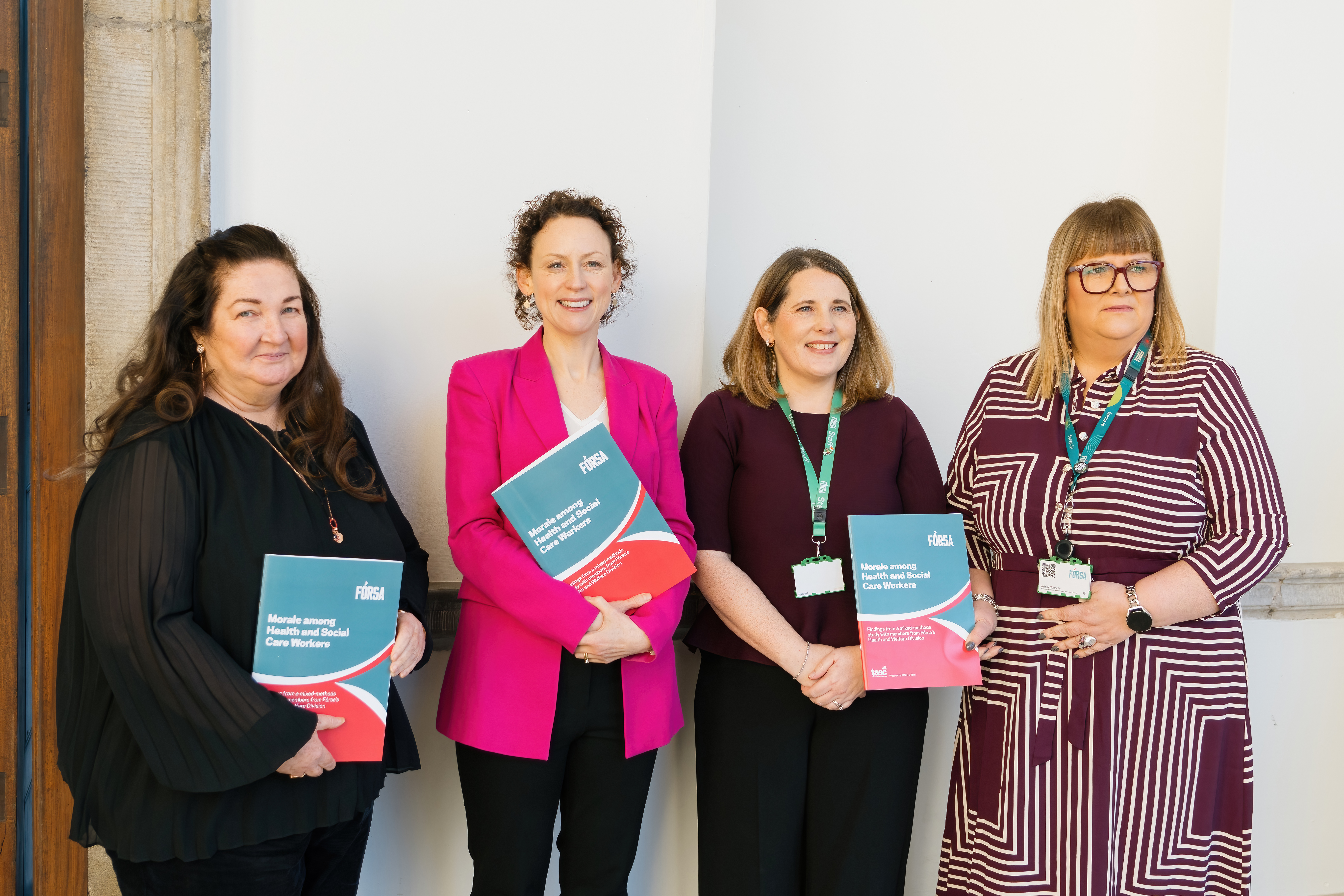
Linda Kelly leaves Fórsa to become the new general secretary of the Association of Secondary Teachers, Ireland (ASTI).
Paying tribute to Linda, Ashley said: “Linda and I have worked closely together over the past four years, contributing significantly to the growth of our division. Her work has always been firmly focused on members, and she brought many long-standing issues to a successful conclusion. Her dedication to members and to the health team has been unwavering.”
“Linda will be missed across the health and welfare division, and throughout Fórsa, but we know she will bring the same enthusiasm, energy, and commitment to her new role in the ASTI.”
Join a union that wins. Join Fórsa.
ICTU call for workers’ rights to be at centre of Irish EU Presidency
by Hannah Deasy
As the EU presidency lands in Dublin, trade unionists have reiterated their calls for the lived realities of workers to shape Ireland’s approach rather than pomp and pageantry.
Ireland’s Presidency of the European Council began this week, on Wednesday 1st July. The six-month rotating Presidency will see Ireland take on numerous sensitive legislative dossiers and host high-profile international events.
Last week, the Irish Congress of Trade Unions (ICTU) called again on the Government to put workers’ rights and the creation of good, secure jobs at the centre of Ireland’s EU Presidency.
ICTU said the Government has a rare opportunity to embed job quality, fair pay and strong collective bargaining into the EU’s agenda for years to come, with key legislative packages on the table during the Irish Presidency, notably the Quality Jobs Act and the next phase of the Multiannual Financial Framework.
ICTU general secretary Owen Reidy said: “Ireland has an enormous responsibility over the next six months, chairing negotiations that will shape the lives of workers across this continent. A Presidency that focuses solely on ceremony and Ireland’s diplomatic standing will be a missed opportunity.”
“The Irish Government must use this time to ensure the European Union is delivering for working people. We want to see real progress on the Quality Jobs agenda, the enforcement of pay transparency and collective bargaining commitments.”
Congress also raised concerns about the proposed ‘28th regime’ for company law, which would create an optional EU-wide alternative to national company law. ICTU said the regime must not become a back door for employers to sidestep national labour law, collective bargaining and worker participation rights, and that any Irish Presidency progress on the file must include the safeguards on employee representation.
Owen concluded by urging the Government to ensure workers’ voices are present in negotiations, saying: “Every directive negotiated and every compromise brokered under this Presidency will be felt in workplaces here and across Europe. We intend to make sure the voice of working people is not lost in that process."
Earlier this year Fórsa made the same call in its submission to the public consultation on Ireland’s EU Presidency and in stakeholder engagement meetings with Minister for EU Affairs Thomas Byrne TD.
Fórsa general secretary Kevin Callinan said: “The EU Presidency is an important moment for Ireland, and many Fórsa members will be working to ensure it is a success."
“It’s also a chance for Ireland to take an ambitious, proactive approach to tackling the interconnected crises impacting people all across Europe, from housing to the cost of living, the fuel crisis and climate change. No one country can solve these issues alone, and working together at the European level is critical.”
Join a union that wins. Join Fórsa.
European trade unions launch new peacebuilding initiative in Dublin
by James Redmond
As the world slides into a period of growing insecurity and conflict, European trade unions have launched a new initiative aimed at strengthening their hand in creating the climate for peace.
Senior trade union leaders from across Europe gathered in the Fórsa headquarters in Nerney’s Court in Dublin on Tuesday 16 June to launch a major new initiative aimed at strengthening the role of trade unions in peace making.
The Trade Unions for Peace project is being led by the European Trade Union Confederation (ETUC), which represents more than 45 million workers across Europe.
Over the next 18 months, the initiative will develop a practical toolkit to help trade unions contribute to peacebuilding at local, national and international level. The programme will also establish a network of senior trade unionists trained as 'Peace Ambassadors' to promote dialogue, social inclusion and conflict resolution in communities affected by crisis.
The project draws on trade union experience in peace processes including Northern Ireland and Colombia, where unions have played an often overlooked role in mediation, dialogue and rebuilding trust between divided communities.
Speaking at the launch, ETUC general secretary Esther Lynch said peacebuilding had always been central to the trade union movement.
"Now and throughout history, trade unions have played a vital, but often invisible, role in conflict resolution and peacebuilding. Our core business is to build the conditions for peace, social justice, and individual and collective rights – and to challenge poverty, inequality, injustice and exclusion, which fuel conflict internationally and in our communities."
The initiative adopts a broad definition of peace, extending beyond armed conflict to include economic justice, social inclusion, humanitarian action and the protection of democratic institutions and international law.
As part of the programme, unions will receive resources to strengthen crisis preparedness, support humanitarian responses and contribute to long-term reconstruction following conflict. A series of events across Europe will also showcase examples of successful trade union involvement in peacebuilding.
Esther said the growing number of international conflicts made the work increasingly urgent.
"In the workplace, in the community, in the regions and nations, and internationally, peace is a trade union issue, and conflict resolution is a trade union responsibility. We are committed and determined to play our active and constructive part in promoting peace, democracy, justice, rights, prosperity and inclusiveness during and beyond the present crises."
The Dublin meeting also heard contributions from UN Under-Secretary-General Guy Ryder, Palestinian Ambassador to the European Union Dr Amal Jadou Shakaa, senior adviser to the Centre for Humanitarian Dialogue Teresa Whitfield, and trade union representatives with direct experience of the Northern Ireland and Colombian peace processes.
The next European Trade Union Peace Summit is scheduled to take place in December 2026.
Join a union that wins. Join Fórsa.
Fórsa welcomes ICTU support for Moore Street master plan
by Brendan Kinsella
Congress calls for urban regeneration that respects culture and history.
Fórsa has welcomed the Irish Congress of Trade Unions’ (ICTU) decision to support the Moore Street Master Plan.
Put forth by the Moore Street Preservation Trust, the plan is a detailed proposal for renewing and revitalising Dublin’s Moore Street area while maintaining the area’s important history as a site of the 1916 Rising and the city’s oldest open-air market.
The decision was made following a meeting between ICTU and the Preservation Trust. Congress general secretary Owen Reidy described the proposal as “a credible, and exciting plan.” He said: “The master plan is an opportunity to correct decades of institutional neglect, to honour what happened there in 1916, and to build a better future for the surrounding community.”
Owen said: “The links between 1916 and the labour movement are deep and well-documented. We intend to be active stakeholders in this process, and we will be making that case clearly to Government and to Dublin City Council. Moore Street deserves a plan equal to its significance, and we believe that the Preservation Trust has provided one."
The Moore Street Preservation Trust’s master plan for the Moore Street area hopes to renew and revitalise the Moore Street Market and surrounding streets, turning one of Dublin’s more neglected areas into a vibrant and cultural significant quarter.
Fórsa deputy general secretary, Éamonn Donnelly welcomed ICTU’s commitment to the responsible regeneration of Moore Street.
He said: “The redevelopment of Moore Street has been a contentious issue in Dublin over the years. I think everyone recognises the area needs significant work, but we just want it to be done right.”
Previous proposals for developing the area have faced significant barriers and public backlash.
Éamonn said: “It’s an area of historic importance, and a lot of Dubs have fond memories of the market. At the end of the day the previous proposals didn’t really match the significance of the area and what it represents.”
“It’s great to see ICTU putting the support of the trade union movement behind the Preservation Trust’s proposal. It’s the best plan we have for preserving Moore Street’s history and culture, and for making the street a place people want to go to again.”
You can find the full master plan here.
Join a union that wins. Join Fórsa.
|
|
|
|