It was approaching four in the morning when Fórsa general secretary Kevin Callinan, and PSC officers Phil Ní Sheaghdha, John Boyle and Adrian Kane, emerged from the Workplace Relations Commission to speak to the waiting media.
Behind them were weeks of difficult negotiations, long days, late nights and meetings stretching through weekends and a bank holiday. At several points, an agreement had appeared remote.
From engagement earlier in the year, to the establishment of a government-appointed group following the strike in October, to interventions from the Taoiseach, and a final intensive round of negotiations stretching through the past weekend and into the early hours of Tuesday morning, the development of this deal was anything but straightforward.
For all the drama inside the WRC, the real muscle behind the negotiations had been built elsewhere, in workplaces across the country.
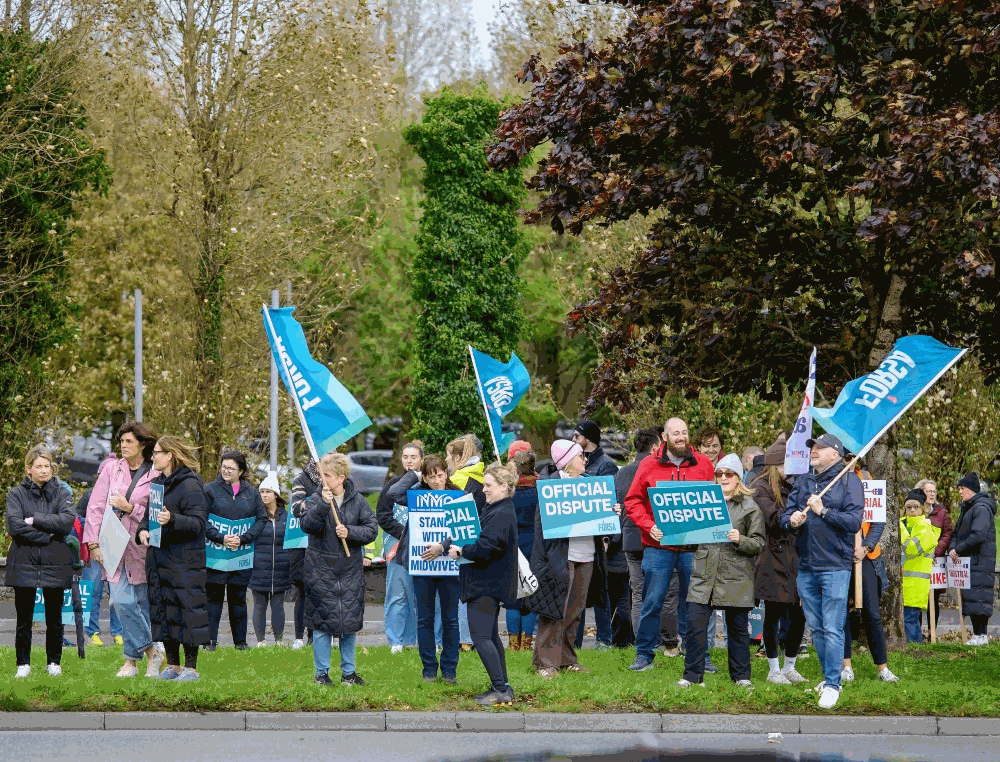
The work to rule industrial action which began on Wednesday 30th September and the national strike on Wednesday 14th October were the culmination of an organising effort that was gathering momentum for more than a year. For some members, it was their first experience of industrial action. Others stepped forward as workplace representatives, picket leaders or organisers.
Speaking about the impact this had on the negotiations Kevin said: "Leading from the front is one thing. Having the members organised and prepared to follow through is another."
"Throughout the long days and nights of negotiations we knew we had strong and united members behind us."
Preparing and maintaining the industrial action took an enormous amount of largely unseen work, and commitment from members. Organising pickets, rallies, transport and communications demanded sustained effort from activists, representatives, and staff.
Kevin continued: “On Wednesday 14th October there were over 10,000 picket lines across the country, and over 300,000 workers withdrew their labour, that fundamentally shifted the course, and outcome of, negotiations. It showed Government what was at stake, and how seriously they had to take us.”
Preparations were well advanced for further demonstrations on a second national strike day, when the proposed agreement was reached.
“Talk of eight regional rallies on the second national strike day wasn't a bluff or an exercise in brinkmanship. The plans were real, buses were booked and tens of thousands of members had filled out forms telling the union where they were going. Again and again, we were able to tell the other side that our members were committed and ready for the next stage of industrial action.”
“Simply put, without the industrial action this would be a very different document. If we look back at the first two offers from the Government side, they were way off and totally failed to acknowledge the pressures people are under. Now, the pay terms being proposed go a lot further, and the non-pay terms are also significant.”
“The Introduction of the agreement explicitly acknowledges the concerns members highlighted during the industrial action, when they spoke out movingly on picket lines. That’s very different from previous agreements and really underlines the impact workers being vocal about their experiences had on this agreement.”
Time for members to have their say
The immediate task now is the ballot, which will run for three weeks.
"Members will have their say in the ballot and we'll respect that. Our membership has grown substantially in recent months, and everyone in membership, who is covered by the draft agreement, is entitled to vote.
Members will make their own minds up about the deal. But whatever the outcome, the organising work of the past year has given us something incredible to build on."

 Like