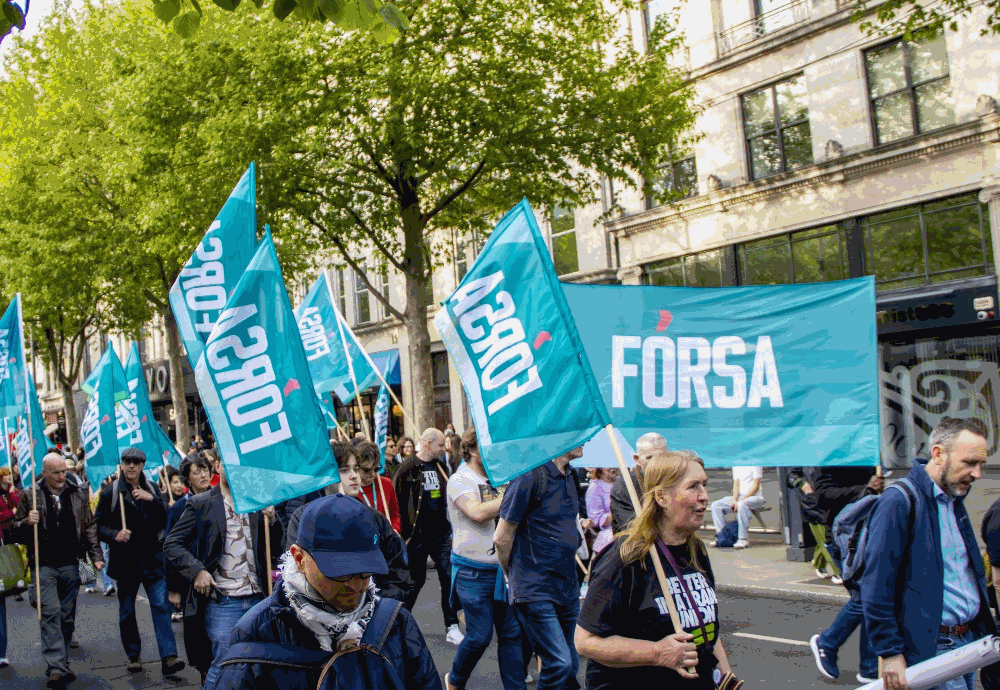
Over 62,000 members have overwhelmingly backed industrial action in pursuit of a better deal on pay, following a ballot during August. 96.6% of members who voted supported industrial action, on a turnout of 72.6%. Nationwide industrial action will begin from Wednesday 30th September.
Over 62,000 members of Fórsa have overwhelmingly backed industrial action in pursuit of a better deal on pay, following the expiry of the previous public service pay agreement on 30th June last.
Fórsa said 96.6% of members who voted supported industrial action, on a turnout of 72.6%. The union said the result reflects strong concern among public service workers about pay, living standards and the Government’s failure to put forward a credible basis for renewed engagement.
In a letter to members issued on Wednesday, Fórsa general secretary Kevin Callinan said the union’s National Executive Committee (NEC) had met to determine next steps, and that nationwide industrial action will begin from Wednesday 30th September.
Kevin added: “We will now notify employers of the ballot result and inform them that we are in an official dispute. Next week, the targeted forms of industrial action will be finalised and employers will be notified.”
Kevin said that industrial action “will aim to drive the message home to Government that it has failed to understand the problem with its own approach to negotiating a new pay deal for public service workers.”
He encouraged members to talk to colleagues, attend local information sessions and use Fórsa-provided materials to build visibility of the industrial action in their workplaces.
Industrial action by Fórsa public service members is expected to affect health, local government and education services, as well as Government departments and State agencies.
Kevin noted that: “The ballot result is an emphatic mandate from public service workers. The Government has left them with no credible option but to prepare for industrial action by failing to engage seriously on pay after the expiry of the last agreement.
“Fórsa members deliver essential services every day. They did not take this decision lightly, but they have overwhelmingly backed industrial action because the current position is not sustainable. Fórsa remains available for meaningful engagement, but Government must come forward with a credible approach to pay that properly addresses the cost pressures facing public service workers,” he said.
Members who wish to get involved in planning industrial action should contact their workplace rep or local branch committee without delay. Further information on distribution of materials will be circulated next week.
Fórsa members at Tailte Éireann, the State agency for property registration and valuation, national mapping and surveying infrastructure, engaged in work-to-rule industrial action last month, before the dispute was referred to the Civil Service Conciliation and Arbitration Scheme.
Fórsa members at Tailte Éireann, the State agency for property registration and valuation, national mapping and surveying infrastructure, engaged in work-to-rule industrial action last month, before the dispute was referred to the Civil Service Conciliation and Arbitration Scheme.
The industrial action was part of an ongoing dispute concerning the assimilation of staff and grading arrangements arising from the establishment of Tailte Éireann in 2023. Members backed a ballot for industrial action in early August, with 82.6% voting in favour of industrial action up to and including strike action in pursuit of a resolution.
The State agency was formed through the amalgamation of Property Registration, the Valuation Office and Ordnance Survey Ireland (OSI).
Fórsa assistant general secretary Jim Mitchell explained: “The assimilation of staff into a new State body is a detailed and challenging process. What we’re opposing are attempts to create a two-tier pay structure, with lesser terms for new staff, which actively undermines agreed processes to resolve pay issues at Tailte Éireann.”
Jim said the union had engaged extensively since 2023, including processes facilitated by independent third parties: “On two occasions, we received proposals from management we deemed sufficient to be put to members for consideration.
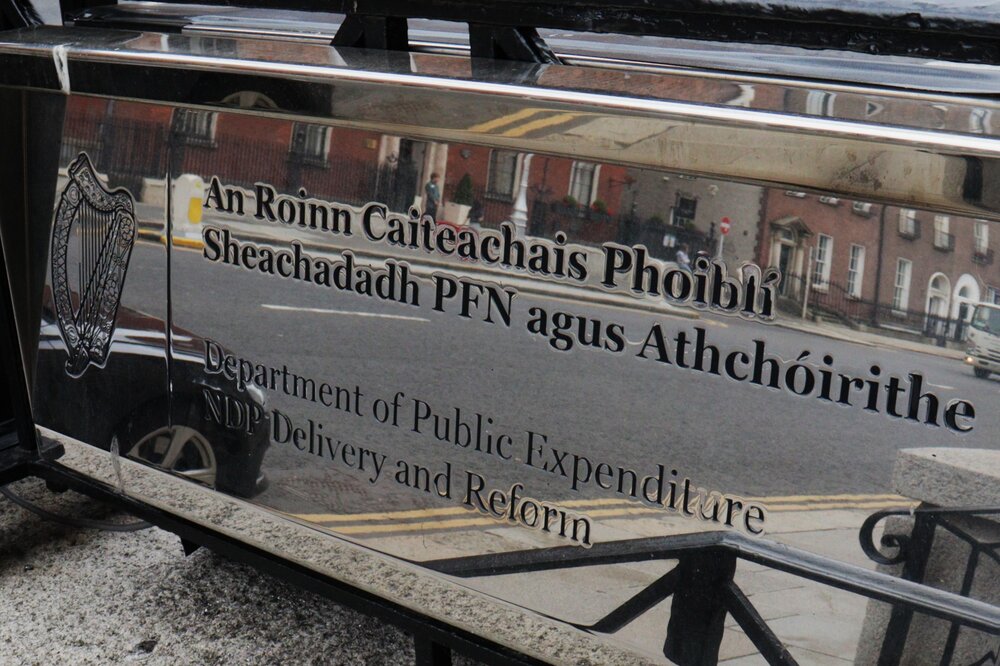
“However, in both instances, the Department of Public Expenditure, Infrastructure, Public Service Reform and Digitalisation subsequently intervened to block those proposals at an advanced stage.
“More recently, we have come up against moves to advertise new posts at significantly lower grades than those currently in place. Tailte Éireann did this at the direction of the department,” he said.
Jim confirmed that, following several days of work-to-rule, all of the parties concerned, including Fórsa, the Department of Housing, Local Government and Heritage, in addition to the Department of Public Expenditure, Infrastructure, Public Service Reform and Digitalisation, agreed to enter into facilitation under the Civil Service Conciliation and Arbitration Scheme.
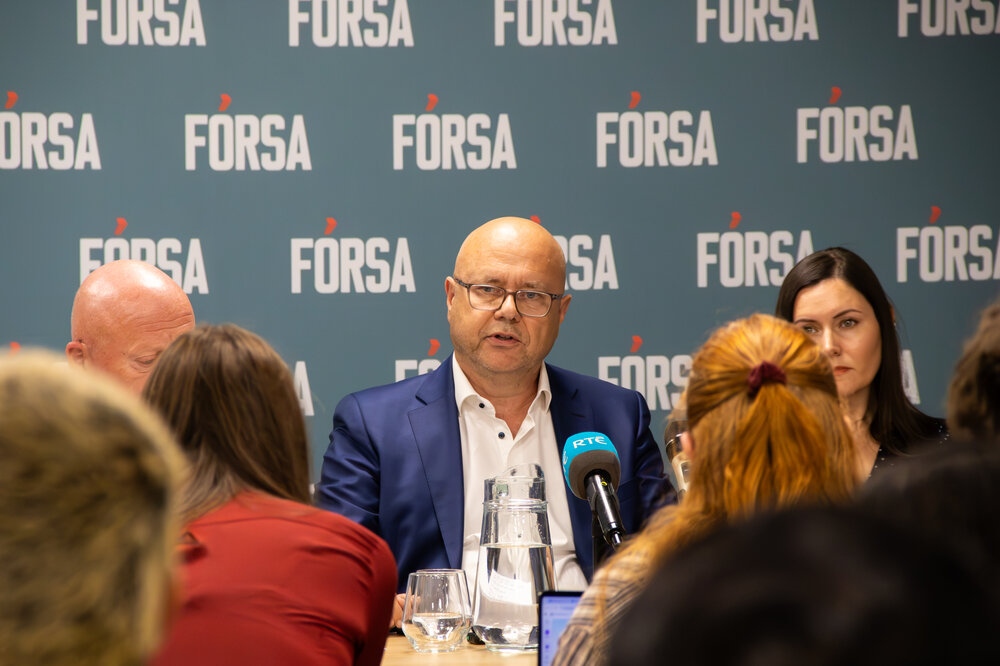
Following the announcement of the ballot result on Tuesday, Kevin Callinan responded to questions from journalists, giving his assessment of the state of play, and what lies ahead.
Watch: "The largest-ever strike ballot by a trade union in Ireland" | Kevin Callinan announces the results
Fórsa staff, members and an assembled press pack gathered in Nerney’s Court last Tuesday with bated breath for one of the biggest moments in Fórsa’s history. James Redmond has this account of what went down.
What might have looked like an ordinary press conference at first glance was far from it. Instead, it represented the culmination of nearly two years of work: thousands of peer-to-peer conversations, and a strategic effort to build the union’s strength.
Flanked by senior union officials, Fórsa general secretary Kevin Callinan quickly got down to business. For him it wasn’t just another run-of-the-mill ballot result.
A historic result
Opening the press conference Kevin emphasised the scale of the ballot, saying: “What I'm about to announce, I believe, is the largest-ever strike ballot by a trade union in Ireland.”
“The number of eligible members, or voting codes issued, was 88,811. The turnout was 64,481, equivalent to 72.6%. Those voting in favour of the proposal for action, up to and including full-scale strike action, numbered 62,276, or 96.6%. Against the proposal were 2,205, equivalent to 3.4%.”
There was an immediate burst of applause from the staff and members - herculean efforts across the summer months had produced something special. Industrial action needs a simple majority of those voting to proceed. The majority in favour of action was a resounding 60,071 of the 90k eligible voters.
“We’re not making this up. This is what people are feeling.”
The strength of the ballot result provides its own answer to claims that unions are exaggerating the pressure workers are experiencing. For Kevin, the message unions brought into exploratory discussions came directly from members themselves via extensive surveys and listening exercises.
“People have been suffering as a result of the cost-of-living crisis. We're getting that very loud and clear. You can see that in the ballot outcome, and not just for Fórsa. We're not making this up. This is what people are feeling.”
Deliberate confusion
Throughout the press conference, Kevin batted away clichéd framings of hard-headed union leaders engaged in a performative grandstanding. In fact, Fórsa and other public service unions met Government officials in June to explore the possibility of negotiating a successor to the current public service agreement.
For its part, Government appeared content to fall back on the tired routine of previous multi-annual agreements, seemingly oblivious to how dramatically the ground had shifted beneath them.
Kevin said: “There’s been a lot of confusion - I think a lot of deliberate confusion - in relation to that. For those kinds of agreements to work, they have to protect the living standards of the people they cover.”
Deaf ears
Kevin and other union leaders have been making the case that any new agreement would have to protect workers against rising prices and repair the loss in living standards experienced over recent years. The point, however, appeared to fall on deaf ears.
“We pointed out in the discussions that, over the last five or six years, the pay of the average public servant has fallen significantly behind prices. It was essential on this occasion, if there was to be an agreement, that we had an understanding that this would be addressed.”
That pressure on living standards continued into 2026 with public servants receiving pay increases of 1% in February and another 1% in June. Because of their timing, those increases amount to an average pay increase of around 1.5% across the year, while annual average inflation is running at 3.4%.
“We couldn't secure a commitment that that would be addressed. Nor could we secure a commitment that there would be a formula or an approach for any subsequent years that would protect living standards, let alone address the gap that has arisen over the last five years.
According to Kevin, the unions did not simply identify the problem, they also put proposals to Government.
“So, it's untrue to say that we're unwilling to negotiate. We're more than willing to negotiate, but we need to have a clear understanding of what the purpose of an agreement on this occasion would be.”
Unions have argued that, if Government want another multi-annual agreement, it should contain a structured mechanism to protect living standards into the future while progressively addressing the gap between public service pay and prices that has already emerged.
The unions estimate that the gap between inflation and the pay of the average public servant over the past five years is at least 5%.
But Government would not give the unions the commitment they were seeking.
“They need to hear clearly what we're saying. We're prepared to deal with the issue that we've identified over a period of time, but it does require a willingness on their part to recognise that there is a problem that needs to be addressed.
“Otherwise, we're simply entering into a process where they have basically decided what they're prepared to spend and we have to suck it up. We're not going to do that anymore.”
Three months of the same answer
Kevin was clearly aghast at Government’s lack of seriousness about an agreement it knew was running out. It had two and a half years’ notice, yet waited until mid-June to engage. By early July, substantive contact had stopped altogether.
“The Department line has been the same for the last three months, but it's failing to grasp the issues that we presented to them in June and to make any response to them.”
While the unions have been busy organising and preparing ballots across the summer months - it’s been tumbleweed and radio silence from the Government.
“Unless we get a shift in that, our belief is that we're probably in for a long haul - a very long dispute, one that will have very serious effects right across the public service.”
More than pay
For Kevin, resolving the cost-of-living question would allow negotiations to move on to the other major challenges facing public services and the people who deliver them. Those include artificial intelligence, remote working, outsourcing and the wider crisis in public service capacity.
But he added that it is difficult to ask workers to confront those challenges collectively while refusing to address the deterioration in their own living standards.
“If we can come at pay in a way where we have a structured approach to how it is going to be dealt with, then we can move on to the other important issues like AI, remote working and outsourcing of services, at a time when we have public services in crisis.”
“But the Government can't expect us to sit down to try and address those things together if we have a situation where we're not in a recession and they're effectively saying to us that we should wait for a recession.”
“If we can't solve the cost-of-living crisis now, when are we going to do it?”
Working across the public service
Kevin went onto explain how Fórsa will continue to work closely with the other public service unions who are now balloting.
“Our intention is to work closely with all of the other unions. As Chair of the Public Services Committee of Congress, I'm acutely aware of the issues and pressures affecting all public service workers, not just Fórsa members.”
And Fórsa is not alone. Unite, Connect and SIPTU have returned similarly emphatic results, with another 16 unions still in the process of balloting as a wave of mandates for action across the public sector builds.
Nearly a year to the day since the school secretaries and caretakers’ strike ended, we're releasing a new video featuring members at the heart of that battle, looking back at how they built a campaign that broke the mould.
It’s nearly a year to the day since the school secretaries and caretakers’ strike ended, after the Government committed to negotiations on comparable pension entitlements.
Watch our new documentary about the heady days of the strike and give it a share.
In recent months, the term ‘collective effervescence’ has jumped from the pages of first-year sociology textbooks into pop-psychology radio slots, invoked to explain everything from summer festivals to GAA matches.
It describes that spark that happens when people come together and discover a power beyond themselves. A year ago, school secretaries and caretakers did something that, only months earlier, many would have thought impossible.
And they did it with a bang.
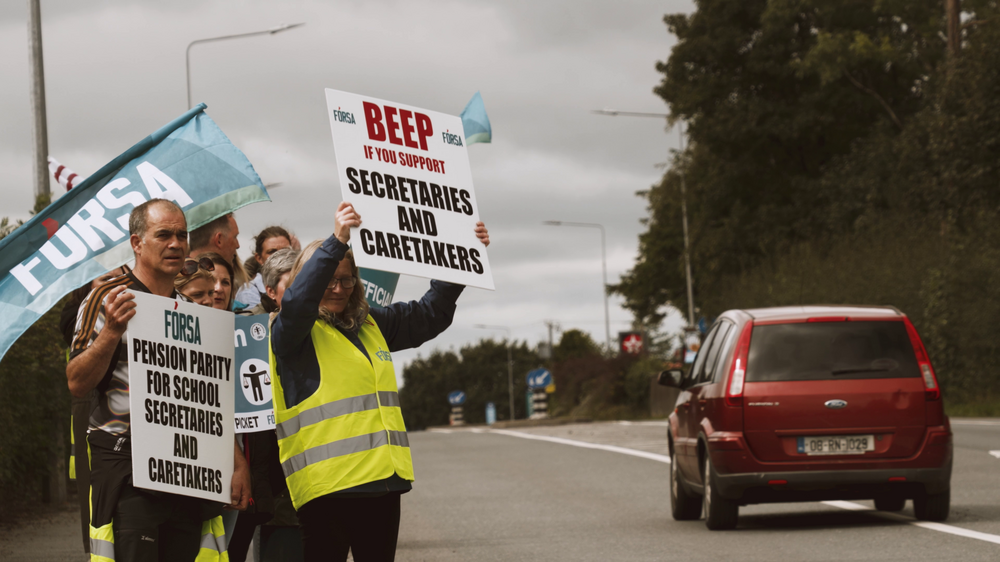
In late August 2025, around 2,800 workers in schools across the country walked off the job in an indefinite strike for pension parity, fair leave and a pay agreement for caretakers.
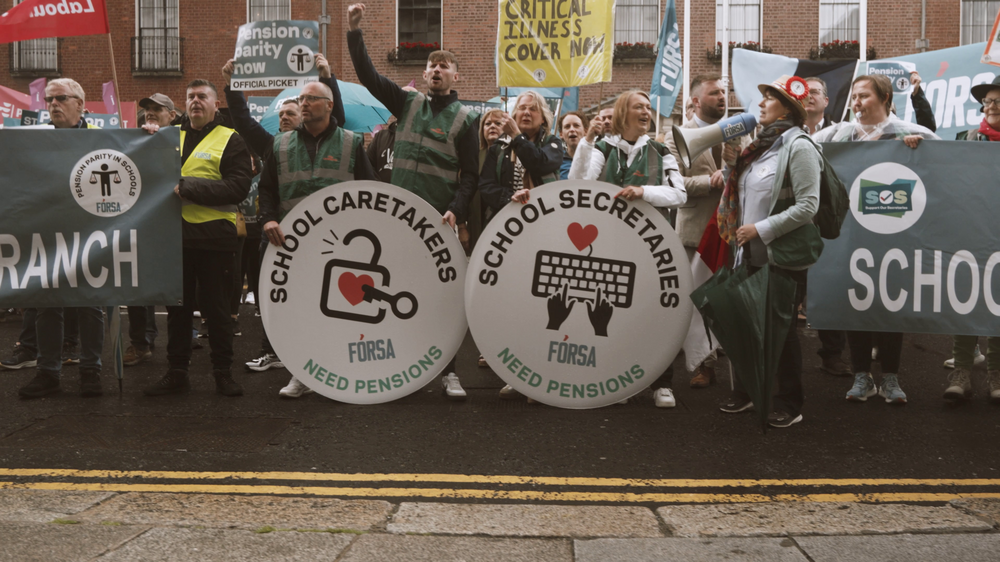
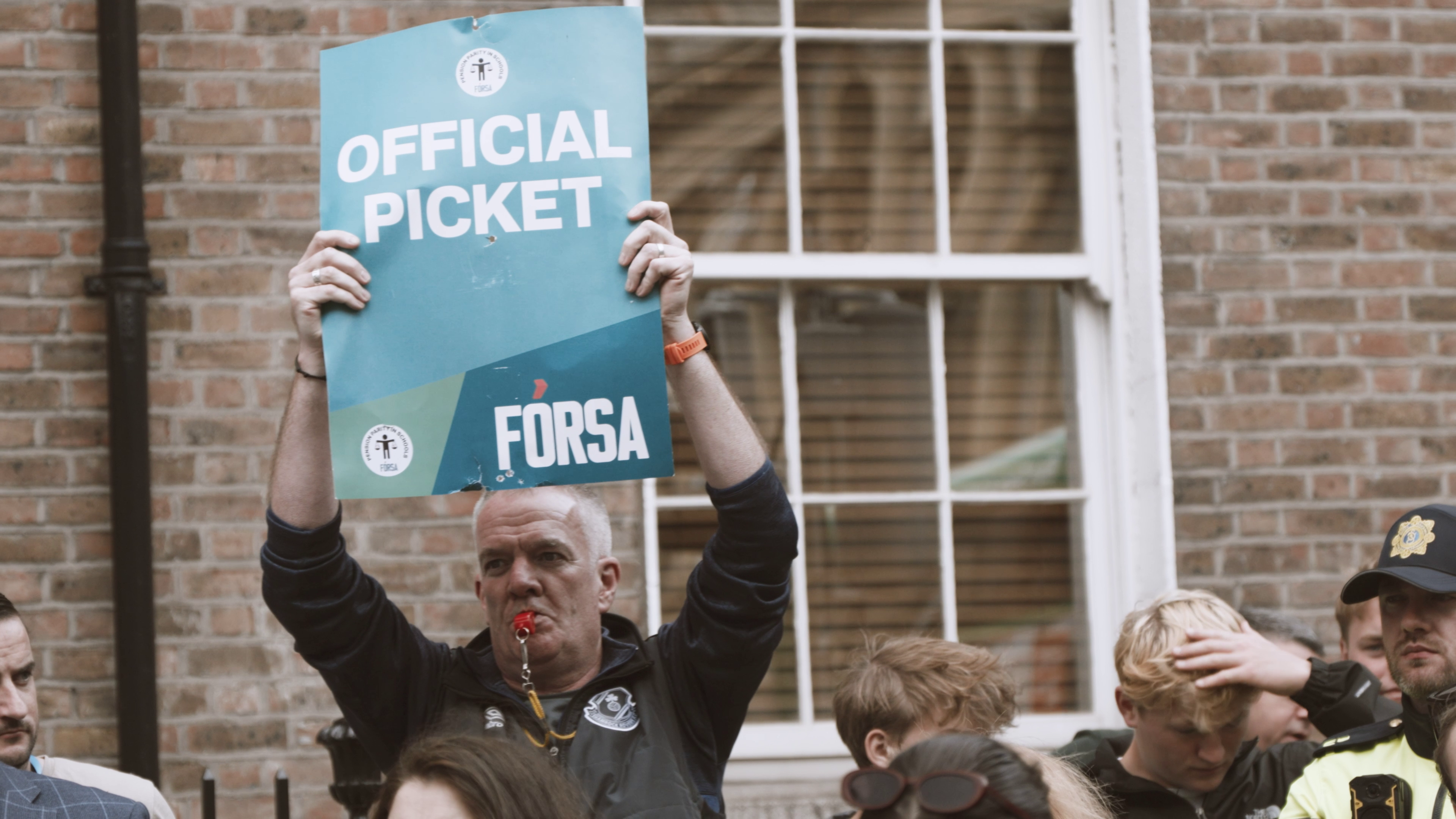
For seven days, Fórsa colours appeared outside schools in almost every part of Ireland. There were mass rallies in Dublin and Athlone, pickets at politicians’ constituency offices and, perhaps most importantly, thousands of workers standing outside the schools where many had been taken for granted for decades.
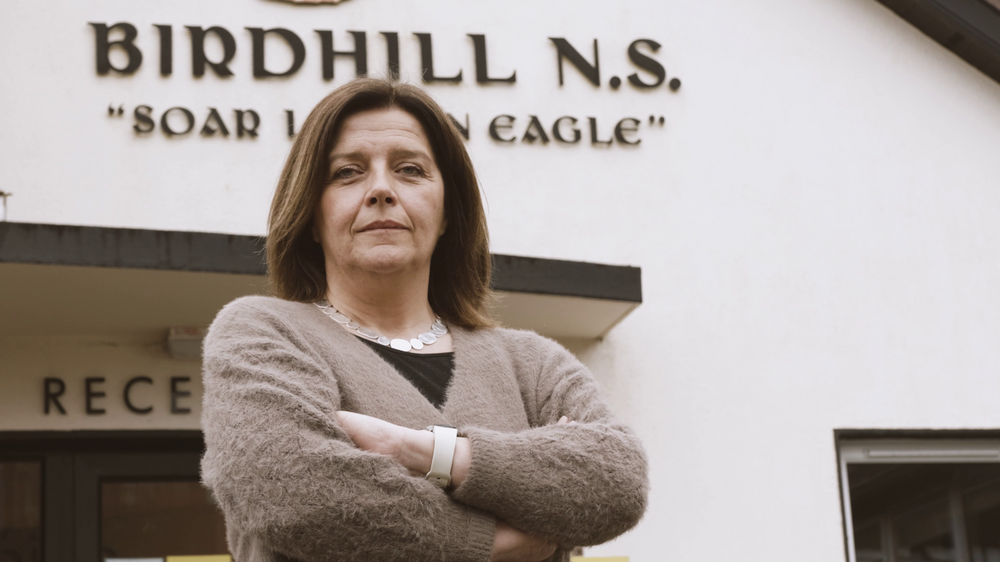
“There’s a school in every parish,” says Gina Byrne, from Birdhill National School in Tipperary. “It affected every town and village in the country.”
But the strike didn’t appear from nowhere.
A feeling in that room
“This didn't just happen overnight. This was a year in the planning,” says Noreen O’Callaghan of Watergrasshill in Cork. “There was no sleep. It was constant. Text messages starting from 6 o’clock in the morning. All night. You get an idea and you put it into the group and you'd run away with that.”
Gina remembers one of the first campaign meetings in Fórsa’s Dublin offices. The weather was terrible and the attendance wasn’t particularly large. But something was happening.
“There was just a feeling in that room,” she says.
Workers began building networks that stretched far beyond their own schools. Facebook groups, Telegram channels and WhatsApp chats connected people who previously might never have met. Regional meetings became a roadshow stretching from Donegal to West Cork.
“You could see the momentum building,” says Gina. “When we went on to sort of go to the next level, there was already that awareness out there.”
We have the public’s backing
The campaign deliberately created ways for every worker to participate.
In May 2025 Badge Week filled social media with photographs. An online pledge allowed workers to start conversations in their own schools and communities. Eventually, more than 70,000 people backed the campaign in a huge avalanche of solidarity not just amongst the school communities, but extending into every nook and cranny from the clergy to the local butcher shop.
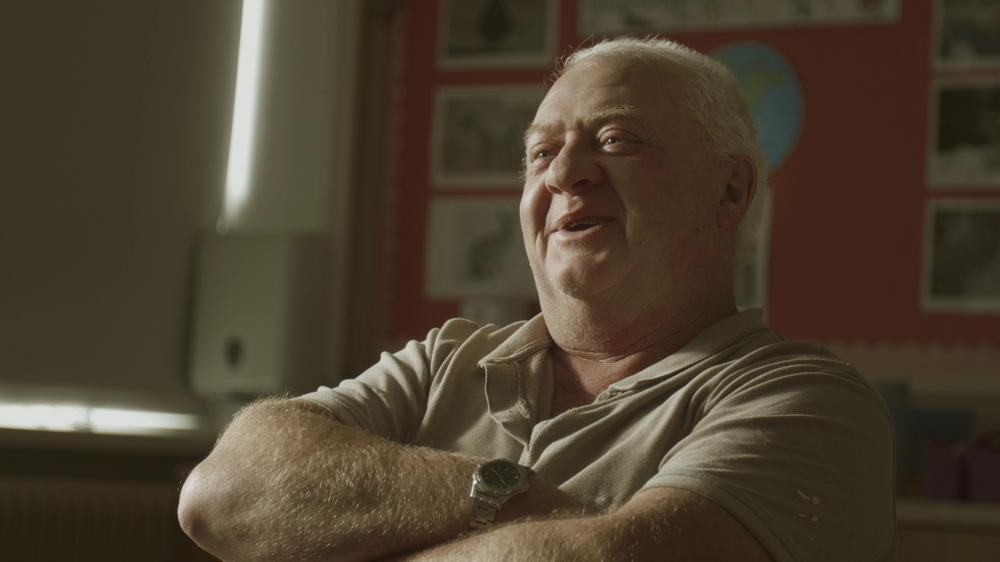
“The online pledge was fierce important - tens of thousands of people signed that pledge.” chimes in Billy Kerins, a caretaker at St. Anne’s Primary School in Rathkeale.
“People would stop me in the street - ‘what’s this pledge about Bill?’ And we could see week by week by week the numbers. We have the public's backing. What you're doing is wrong.”
The pledge was like a stick of dynamite in terms of lighting a fire under members and promoting a spirit of DIY self-activation.
“You could take ownership of it from just your own perspective in your own school and say, right, who can I contact to sign this pledge?” recalls Gina. By the time industrial action approached, public awareness had already been built.
Talks break down
Then came the phone call. It was 6pm on the eve of the strike and Noreen learns that talks had broken down.
“I broke down in tears, crying between a lack of sleep and just our emotions were so high. How did the Department of Education let it go to strike action? It was so sad.”
At 5am the next morning, she was up again to travel to Dublin. Bus details had only been confirmed the previous night because organisers could not be certain the strike was going ahead.
Then workers started arriving. Pickup points stretched from north Donegal to West Cork. More than a thousand secretaries and caretakers descended on Dublin on the first day of action.
It was like Braveheart
“It was like Braveheart,” Noreen remembers. “It was good for the soul to see everybody else out with you.”
For Billy, seeing workers together changed the scale of what they were doing.
“When you actually look at people and see it, like these are all people's lives, and this is what we're trying to change. How can this many people be messed around? Enough is enough.”
The action spread. Hundreds rallied at the Department of Education in Athlone and on Marlborough Street in Dublin. Members then targeted government TDs and ministers in their constituencies.
But some of the most difficult moments came away from the crowds when workers returned to picket their own schools.
“It was very hard to stand on your own,” says Noreen.
Some were joined by parents, teachers, SNAs and other school staff. Others stood alone.
“There were also secretaries and caretakers who didn't get support from their school,” says Gina. “I think that drove forward an even more powerful message.”
The power of the swarm
And with every day, the effect of their absence became more visible. Waste accumulated. Phones went unanswered. Invoices weren’t paid. The often invisible work of secretaries and caretakers suddenly became impossible to overlook. Pressure continued to grow.
If there’s one lesson to be drawn from the pension parity battle, it’s the importance of creating collective moments in a society where more and more people are being sucked into the negative and fractious world of screens.
The school secretaries and caretakers did it with spectacular gusto, turning picket lines into something closer to a carnival of protest - collective, joyful, noisy and impossible to ignore.
When needed, they switched to swarm tactics and lightning pickets, bringing the noise directly to the doors of politicians. Hundreds converged on Minister Jack Chambers’ constituency office in Dublin. Cars beeped in support. Images of packed picket lines flooded social media.
The breakthrough
Then, after seven days, came the breakthrough. Noreen had finished her picket and gone to her local pub in Watergrasshill, exhausted, when her phone rang. It was Fórsa’s Andy Pike.
An agreement had been reached, committing the Government to negotiations on comparable pension entitlements for school secretaries and caretakers. Messages soon started flooding back and forth through online networks workers themselves had built.
“Telegram groups started hopping,” Gina remembers. “Is this true? I've seen this on the news. I saw this on X. What's happening? So that kind of spread like wildfire. It was still just another, you know, step along the way. Get them to agree to go to those talks on the basis of providing pension parity. That was what we had campaigned for. So that was, you know, a big moment.”
The lessons
A year later, the lesson of that week isn’t simply that workers went on strike. It’s how they got there.
Months of meetings. Thousands of conversations. Regional networking. Pledges. Telegram communities. Badges. Buses. More buses. Messages at six in the morning. Workers persuading other workers that they could do something together that none of them could do alone.
For Billy, the lesson is patience. “It takes a long, long time… to get a good bunch of people around you, to have the same passion and the same drive. It won’t be done in a day.”
Gina puts it another way: “There isn't going to be one big magic wand. This was very much inch by inch, row by row.”
And for Noreen, after the sleepless nights, tears, pickets and eventual breakthrough, the lesson is simpler still: “There is no shortcut to winning,” she says with a glint in her eye.
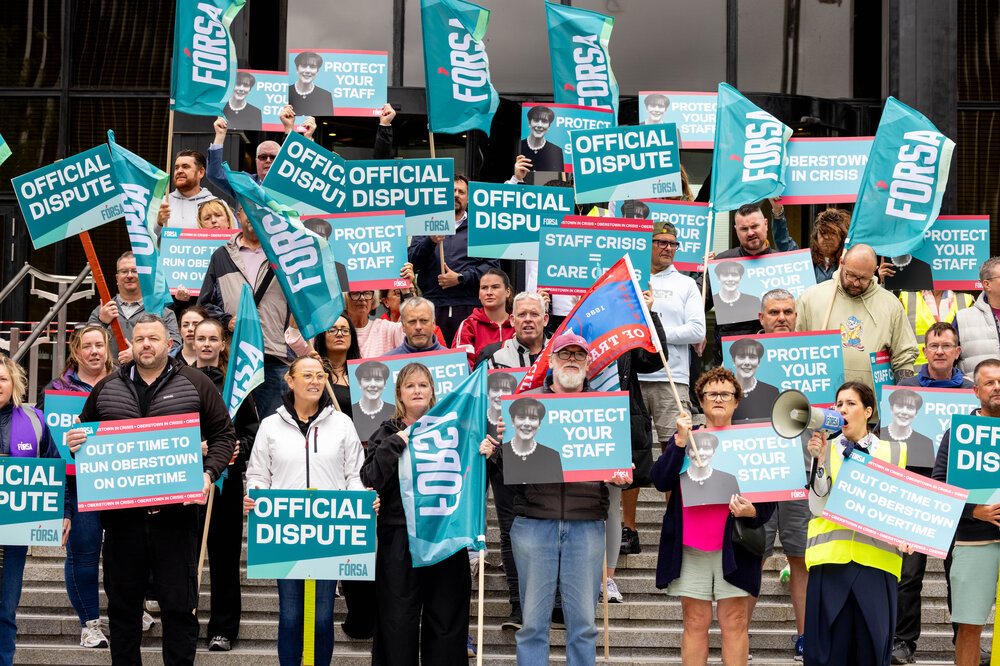
The dispute centred on Fórsa members’ concerns about safe staffing levels, recruitment difficulties, over-reliance on overtime, and the impact of capacity pressures on both staff and young people at the campus.
Industrial action by Fórsa members at the Oberstown children detention campus was suspended on Saturday 29th August, following members’ backing of Workplace Relations Commission (WRC) proposals aimed at resolving the dispute.
The proposals emerged from intensive talks at the WRC, which concluded just after midnight on Friday 28th August. Fórsa welcomed the outcome, confirming that a clear roadmap had been agreed to address the remaining issues in a structured and time-bound way.
The dispute centred on Fórsa members’ concerns about safe staffing levels, recruitment difficulties, over-reliance on overtime, and the impact of capacity pressures on both staff and young people at the campus.
Members had backed industrial action in a ballot concluded in May, up to and including a full withdrawal of labour. A work-to-rule began on 25th June, including the withdrawal of cooperation with overtime. This was followed by a series of weekly work stoppages during August, beginning with a six-hour stoppage on 4th August and escalating over subsequent weeks.
The union had also served notice of a 48-hour work stoppage, following concerns that earlier engagement with Oberstown management had failed to deliver a sustainable resolution.
Fórsa had repeatedly called for the Department of Children, Disability and Equality (DCDE) to engage directly in the process, arguing that the department had a central role in resolving the dispute. A rally at the department’s headquarters on Tuesday 18th August received significant print and broadcast media coverage, as did the weekly work stoppages that continued up to 25th August.
Watch: Workers at Oberstown Children Detention Campus took their campaign for safe staffing
directly to the Department of Children, Disability and Equality on Tuesday 18th August.
Following the WRC talks, Fórsa national secretary Hazel Nolan and assistant general secretary Deirdre O’Connell Hopkins said constructive engagement from all sides, supported by the political will required to move the dispute forward, had secured a pathway to resolution.
Deirdre said the proposals provided a basis for addressing the outstanding matters: “The aim here is to move Oberstown closer to the ultimate goal of making the campus safer for everyone.”
In a subsequent ballot of members at Oberstown on the proposals, Fórsa recommended a vote in favour. When members gave their overwhelming backing to the proposals, the union immediately paused all industrial action.
Hazel acknowledged the role of the WRC and the DCDE in facilitating the discussions, and paid tribute to members at Oberstown for their “determination, solidarity and focus on securing a lasting solution to safe staffing.”
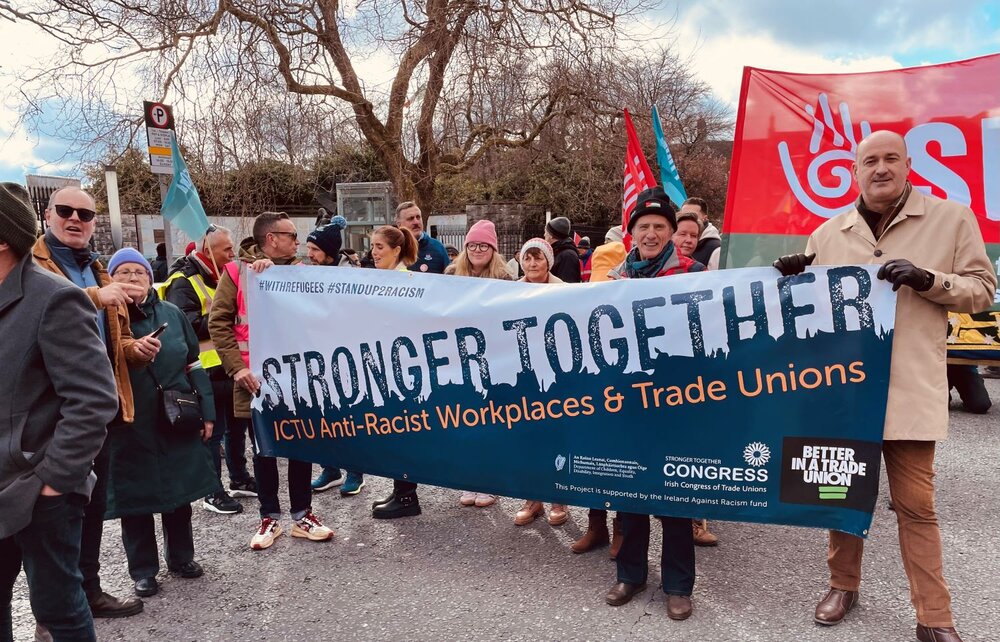
Take part in the upcoming Irish Congress of Trade Unions’ highly rated training for ethnic minority union members and migrant workers.
The Irish Congress of Trade Unions (ICTU) leadership training for ethnic minority / migrant worker trade union members returns this year with online sessions available in October and November.
Fórsa members represent one of the largest groups of past participants. We encourage any interested and eligible members to take advantage of this opportunity and take part this year.
This year, trainers Dr. Lucy Michael and Abdul Qayum Shafaq, will deliver an updated training. Because of this, the training is open to previous participants as well as anyone who hasn’t taken the training before.
Previous participant and Fórsa senior membership recruitment officer, Khalid El-Busaidy, is an enthusiastic supporter of the programme.
Encouraging members to take part, he said: “Definitely go for it, take the step. It is a great opportunity to grow personally and professionally.”
The new semester of Skills Academy courses begins, with courses on communications, digital skills, time management and more, on offer.
The new semester has now begun, and the Skills Academy has plenty on offer for members over the coming weeks.
As we head into a season of increasing industrial agitation, the Communications Training and Digital and Social Media courses will be essential for reps and branch officers looking to rally the troops.
Newcomers are as always welcome and encouraged to join the Skills Academy for Fórsa Induction, and training officers will be able to take their first Training Officer specific course and the Facilitation Skills Workshop, this October.
New Registration Process
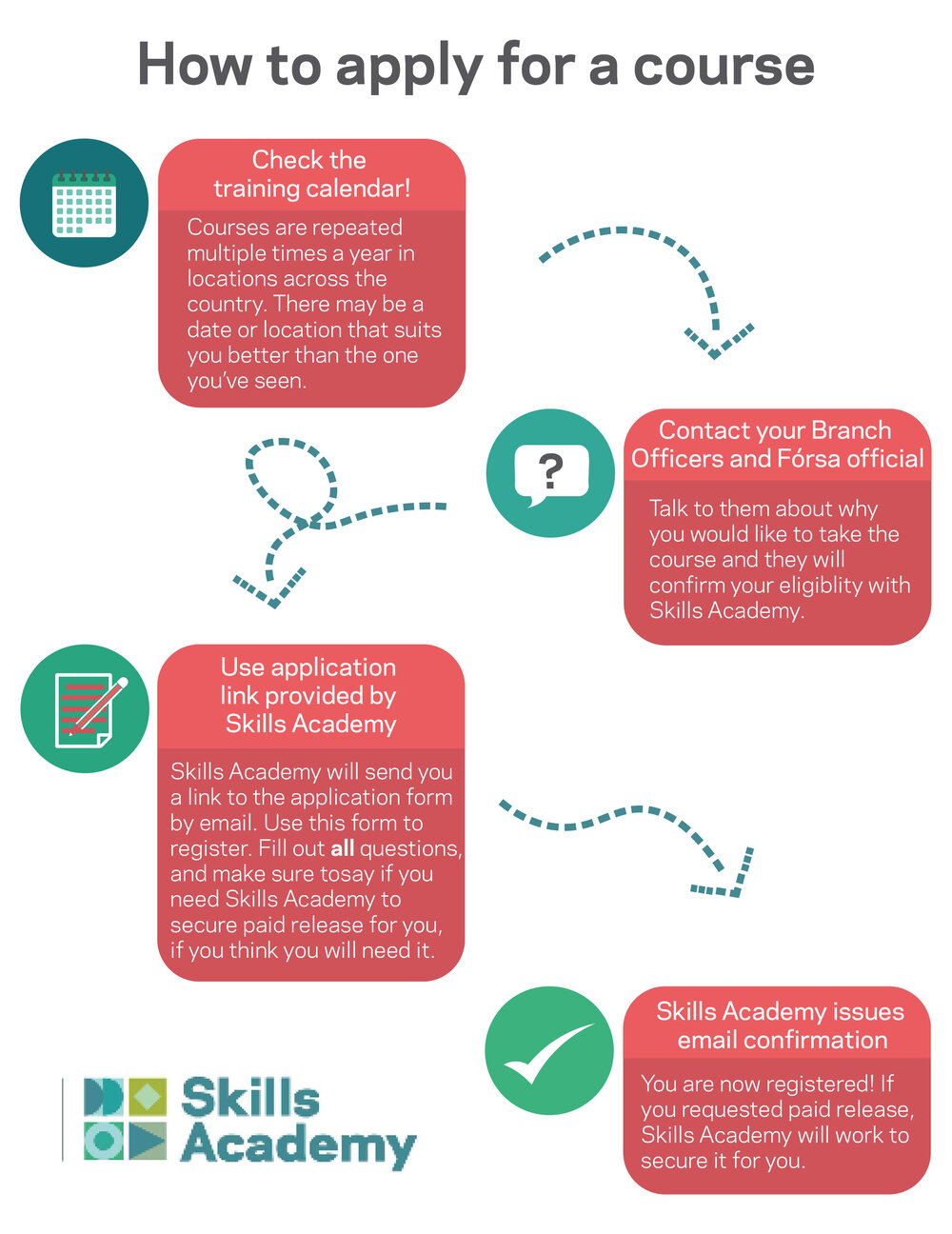
This year, the Skills Academy have streamlined the registration process for members. If you see a training you would like to take, simply contact your branch’s training officer or secretary and let them know you are interested.
They will confirm your eligibility and contact Skills Academy, who will then send the registration link via email. Fill out the registration form in full, and the Skills Academy will send you confirmation that you are registered. They will also secure paid release for you to take the course, so make sure you let them know you would like them to secure paid release for you when filling out the form.
Live: Lunch & Learn and Fórsa Inductions, will remain open to all members and registration links will appear in members’ news bulletins as before.
Fórsa Induction - Wednesday 9th September - Online - Open to all new members
Join our welcome session for new members and older members looking to get more active. Get yourself a firm foundation in the who, how, why, what, where, and when of Fórsa.
This course is essential for getting involved in your trade union, and a prerequisite for taking many other Skills Academy courses. Morning and evening sessions available.
Effective IR Practices (Level 1) - Thursday 17th September - Nerney’s Court, Dublin 1 - Civil Service members only
If you are a rep who participates in local industrial relations, along with your branch and union official, this is a session you do not want to miss. Learn how to stay calm under pressure, be prepared and get the best outcome for your members.
This session is for civil service reps only, as it covers certain Civil Service specific processes. A second session will be held in November for members from other divisions.
Communications Training – Tuesday 22nd September - Nerney’s Court, Dublin 1
Having solid lines of communication with members is crucial to the success of any branch, even more so during industrial action. Build trust and engagement by keeping your members informed. Learn the most effective tools for reaching your members and when to use them.
This session is available to members based in Dublin and surrounding counties. Cork and Galway sessions will take place later this year.
Digital and Social Media (Level 1) – Tuesday 22nd September - Nerney’s Court, Dublin 1
or Tuesday 29th September - Limerick regional office
Social media is a powerful tool for keeping members up-to-date and engaged. A firm knowledge of social media and how to use it, can help your branch keep up member morale, build unity, and strengthen solidarity.
This course will give you a firm foundation in how to use social media to reach your membership. Make sure you’re using the correct tool for the job and give yourself and your branch the best opportunity to make a splash online.
Ideal for novice and casual social media users. This course will then give you a firm grasp of the basics, then you can take on the Level 2 and learn how to use social media intentionally as an activist.
These will be the only dates available for the Level 1 training this year. Register early to secure your place!
Time Management – Thursday, 8th October – Woodford Office, Santry, Dublin - NEC, DEC and BEC only
The feeling that there just aren't enough hours in the day is a common one for executive committee members. In this one-day course you will learn skills and tools which will allow you to manage your time more effectively and get back on top of your workload.
You will be surprised how much time you can free up by learning simple tools like; effective planning, prioritising tasks, delegation, smart goals, and tackling procrastination.
This training is open to members of branch, division, and/or national executive committee members only.
Fórsa Induction - Wednesday 14th October - Online - Open to all new members
If you can’t make the September session, you can always take the October session. You will be able to find a registration link in the next member’s news bulletin.
Branch Training Officers ‘Facilitation Skills Workshop’ – Thursday 15th October – Nerney’s Court, Dublin
A fantastic opportunity for branch training officers. Learn the secrets to good facilitation; how to know when to let things go and when to move things on, how to manage tensions, how to keep participants engaged, and the importance of knowing when your input is needed and when to step back.
Coming up in October and November, the Skills Academy will host a series of lectures on the New Economic Model, aiming to peel back the jargon and explain economics in a way that makes sense.
Fórsa’s Skills Academy has announced that it will be hosting a lecture series on the New Economic Model (NEM) this October and November in Nerney’s Court.
Over six weeks and three lectures, Tom McDonnell, economist with the Nevin Economic Research Institute (NERI), and Michael Taft, senior researcher at SIPTU, will explain the NEM, a proposed worker-centred model for a more equitable economy.
Tom and Michael will take participants through the four pillars which underpin the NEM, including the productive economy, more and better jobs, economic security and economic resilience.
Fórsa’s director of membership training Fiona Dunne said, “Economics is not a niche topic, nor should it be reserved for specialists. Rather, it needs to be better understood by workers and their families who know that the current system in Ireland is not working for them.”
She continued: “Tom and Michael are two of the leading economists in the trade union movement. They will peel back the jargon and explain economics in a way that makes sense.”
Each lecture will have plenty of space for questions and will actively encourage attendees to take part in debate on how best to reframe the future economy, ensuring it delivers a better quality of life, both inside and outside the workplace.
Fiona said: “This series promotes participation in informed debate on a new economic direction based on well-paid jobs, taking our fair share of income for workers and establishing the right to collective bargaining. We hope everyone in attendance takes the opportunity to be part of that debate.”
Attendance is open to workplace and branch representatives and members of the Divisional and National Executive Committees, who are encouraged to attend.
The Skills Academy have also extended an invitation to our colleagues across the trade union movement.
The lectures begin on Wednesday 21st October at 3.30pm in Fórsa Head Office, Nerney’s Court, continue on Wednesday 4th November, with the series concluding on Wednesday 18th November. Each session will finish no later than 5pm each evening.
Members are encouraged to save the date and register for Fórsa’s International Solidarity Autumn School, which will take place on Friday 16th October from 10am in Nerney’s Court, Dublin 1.
Members are encouraged to save the date and register for Fórsa’s International Solidarity Autumn School, which will take place on Friday 16th October from 10am in Nerney’s Court, Dublin 1. Please mark the date in your diary and share this information with interested members in your branch or network.
This all-day event promises to be an inspiring forum for members to come together, exchange ideas, and engage in meaningful discussions on international affairs, trade unionism, and human rights. It offers a unique opportunity to explore shared challenges, celebrate global solidarity, and connect with issues that shape communities both at home and around the world.
Join us for a powerful and timely discussion with expert speakers on the crisis in Cuba, the oppression faced by the people of Afghanistan under Taliban rule, and the climate emergency — including the urgent need for a just transition. Delegates can also hear first-hand how Fórsa is standing in solidarity with communities in Palestine and Colombia and discover how this vital work is helping to build international solidarity in action.
Members can also take part in the International Solidarity fringe event on Thursday 15th October at 6.30pm in Nerney’s Court. This critical discussion will examine the rise of the far right and explore how we in the trade union movement can organise, respond, and build solidarity to challenge it.
To confirm your attendance, please complete the registration form by Friday 2nd October. Please note that registration for one or both events is essential, and places are limited and will be allocated on a first-come first-served basis. Register now and be part of the conversation on how we can challenge hate, strengthen solidarity and organise for change.
Applications for the Fórsa third-level grant support scheme for union representatives for the 2026/27 academic year will close next week on Thursday 10th September 2026 at 5.30pm.
Applications for the Fórsa third-level grant support scheme for union representatives for the 2026/27 academic year will close next week on Thursday 10th September 2026 at 5.30pm.
Reps who are considering applying for the scheme should ensure their application is made before the deadline and submitted via email to bursaries@forsa.ie, as late applications may not be considered.
Grants of up to €3,000 are available to help reps take part in a certified educational course. The course must provide qualifications and skills which will benefit a member in their union role. It must be a third-level course, at either post-leaving cert or undergraduate level. Postgraduate qualifications are not covered.
The scheme is open to all reps, which includes any member performing a role on behalf of their union colleagues at workplace, branch, vocational group, or other representative level.
To qualify for the scheme a member must:
Be a current paid-up member of Fórsa in good standing.
Be able to provide details of their role, current or past, as a union rep.
Have the support of their own union branch (an authorised branch officer will need to sign the form before submission.)
Explain how the course content will assist them to better carry out their role as a union representative.
Be able to provide details of the course and verification of course fees from the course provider.
Be able to provide evidence of having applied to their employer seeking funding for their course.
Submit their application via email to bursaries@forsa.ie before the deadline.
Grants are based on the gross cost of the course up to a maximum of €3,000 per year. The amount awarded to successful applicants will be decided by the Membership Services Committee.