Public service agreements typically contain provisions and commitments surrounding working conditions in the public service. The draft agreement reached this week is no different.
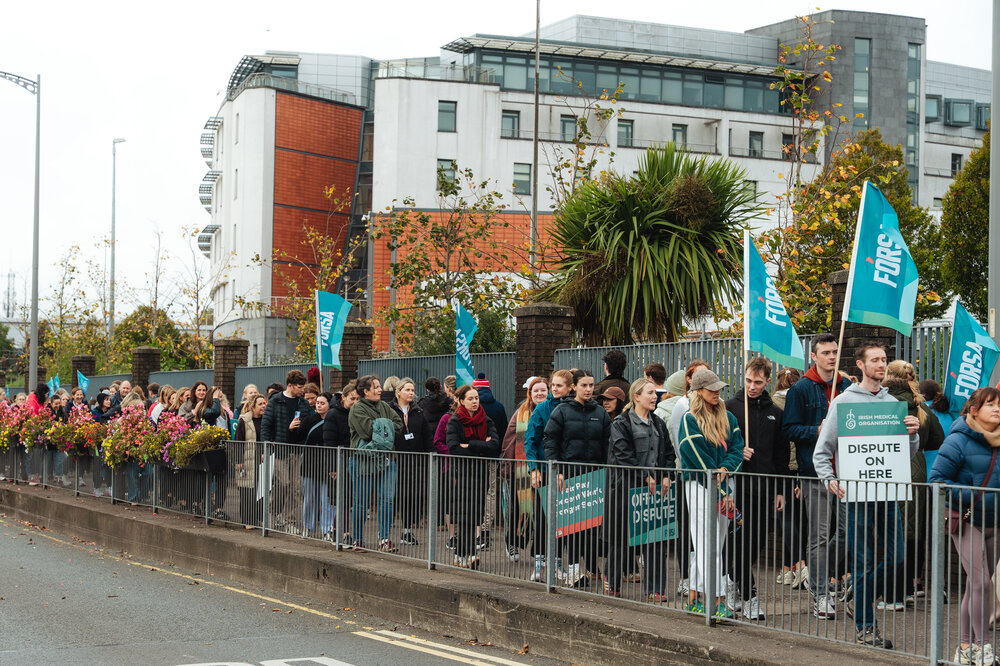
However, in advance of these negotiations, and indeed before the last deal expired in June, Fórsa made it clear that if there was to be a new agreement, its focus should be expanded beyond pay. Members emphasised that the need to maintain access to remote work, to protect jobs, and the need to safeguard public services all mattered. These issues continued to be raised throughout the six weeks of industrial action.
Speaking about the non-pay elements of the agreement, lead negotiator Kevin Callinan said: “There is a great deal in this agreement that paves the way forward on the key issues highlighted by members, but it won’t come as a surprise that the Government side fundamentally did not agree with us, and didn't want major issues relating to housing and investment in healthcare covered in an agreement.”
“Nonetheless we fought hard, and having the mandate from members who were on industrial action was hugely important. We were able to demonstrate just how important these issues are and how seriously impacted by the cost-of-living crisis people are. Now, this draft agreement changes the dial on the inclusion of non-pay matters in a very significant way.”
“Simply put, without the industrial action this would be a very different document. If we look back at the first two offers from the Government side, they were way off and totally failed to acknowledge the pressures people are under. Now, the pay terms being proposed go a lot further, and the non-pay terms are also significant.”
“The Introduction of the agreement explicitly acknowledges the concerns members highlighted during the industrial action, when they spoke out movingly on picket lines. That’s very different from previous agreements and really underlines the impact workers being vocal about their experiences had on this agreement.”
Remote work is here to stay
A key concern for workers was protection of flexible, hybrid and remote work.
The draft agreement explicitly recognises that the way in which we work has changed, and that remote and hybrid work is here to stay. It also acknowledges that remote work can support recruitment and retention, and that the State has a duty to lead the way on this issue. The agreement contains commitments to protect blended work and that established work practices cannot be changed without consultation.
Security in uncertain times
There is a review clause to protects workers from a spike in inflation, which is time limited, for the first time. The agreement also contains additional elements intended to improve industrial relations. There is a definition of ‘consultation’, and a chapter focused on ‘confidence building’ which outlines measures designed to restore trust in industrial relations.
No job losses due to AI
The introduction of AI across the workforce is already happening. This agreement contains, for the first time ever, a firm commitment that there will be no compulsory redundancies in the public service resulting from artificial intelligence.
A 150-million-euro training fund to upskill workers is referenced, which unions will be able to shape the use of, to make sure workers can adapt to the changing nature of work.
Trade union access and collective bargaining
This draft agreement also includes an explicit commitment to respect collective bargaining and facilitate workplace access for unions to organise workers. This opens to door for unions to further build density and organise across public sector workplaces.
Ethical and socially responsible procurement
The agreement includes a commitment to introduce ‘further safeguards’ to strengthen social and ethical considerations in procurement. It explicitly references human rights, the UN Guiding Principles on Business and Human Rights and OECD Guidelines for Multinational Enterprises. This provision will open a route for workers and unions to ensure that public contracts and funding are only awarded to businesses that respect workers and comply with human rights.
Given trade union activists’ deep involvement in BDS campaigning over the past number of years, this is a major milestone.
Sectoral agreements
There are number of sectoral specific provisions in the agreement. Those that relate directly to Fórsa members include commitments to begin talks to reduce the 72 hours rule for Special Needs Assistants, to implement the Labour Court recommendation on a job evaluation scheme in Tusla, agreement to continue to implement the McLoughlin Report relating to pharmacists in non-hospital settings, commitment to progress WRC agreements related to staff working in Oberstown Children’s Detention Campus, a prompt review of civil service mileage rates and agreement to engage with officials from DPER and the NSSO on technical pension matters.
Members can consult the full agreement here.
Kevin concluded saying: “I urge members to read the document in full before they decide on how they will vote in the ballot. While it may not be perfect, it progresses numerous key issues and shifts the scope of what can be included in a public service agreement. Without members’ organising and remaining committed to industrial action for six weeks, we would never have gotten to this point.”

 Like