Fórsa members working across local and municipal authorities, health and welfare services, education, Government departments and State agencies are working strictly to contract, withdrawing cooperation with new work practices and refusing to undertake duties outside their grade or agreed responsibilities.
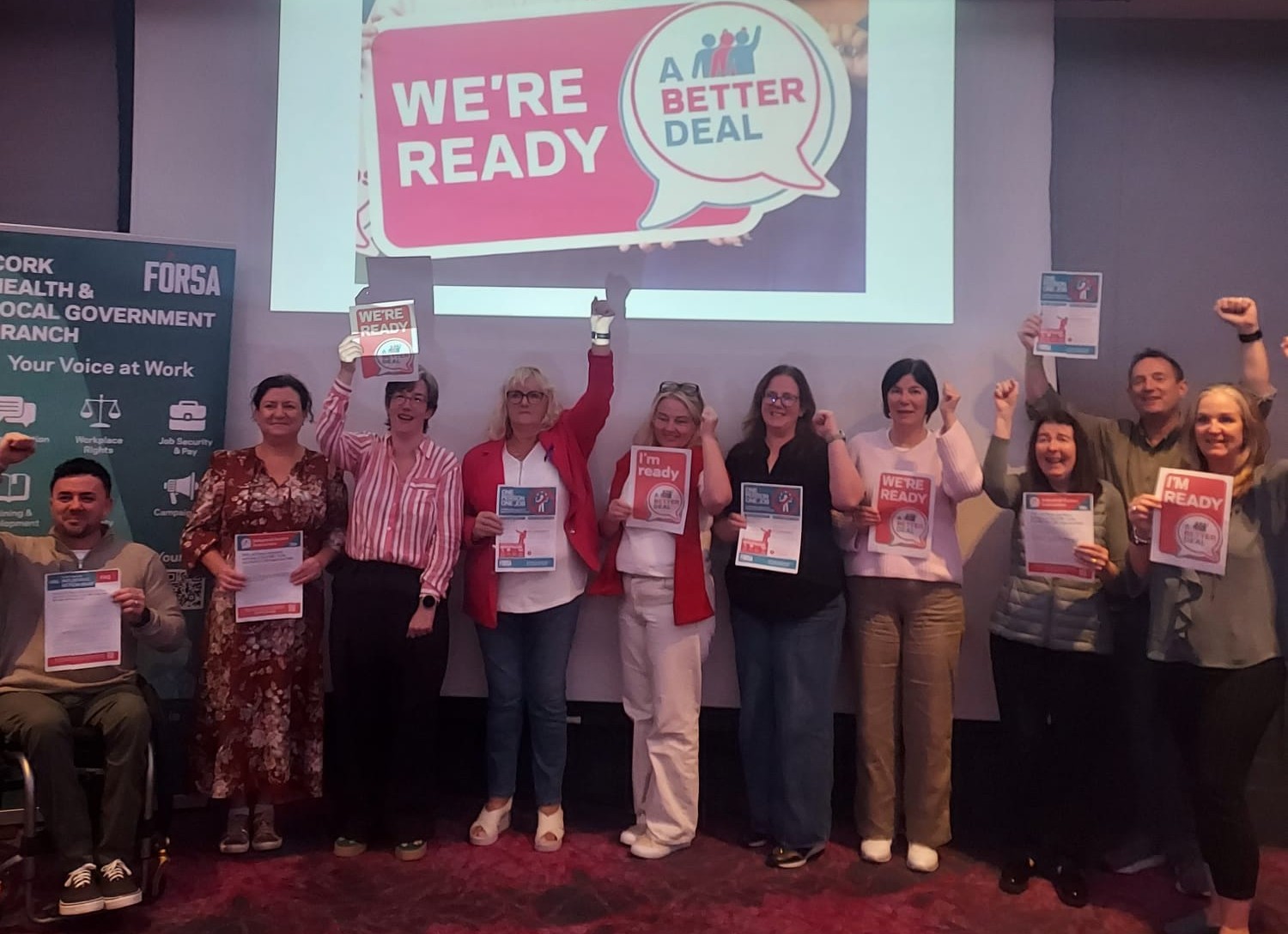
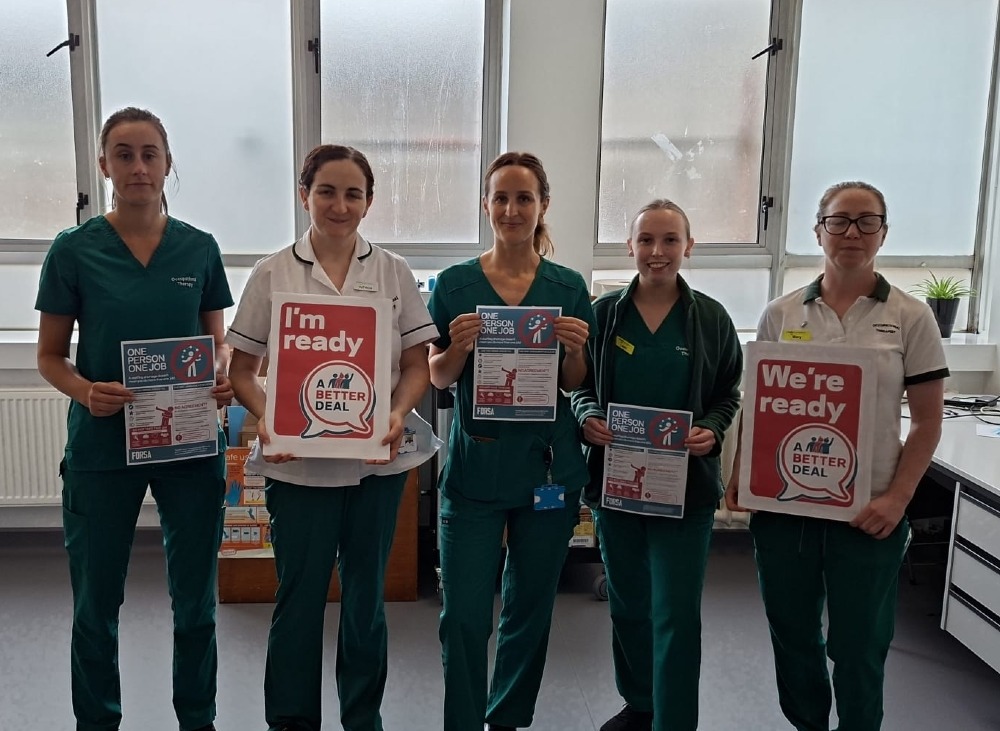
Members from all six divisions of Fórsa began work to rule industrial action on Wednesday, in the fight for a better deal on public service pay and the cost of living.
Fórsa members working across local and municipal authorities, health and welfare services, education, Government departments and State agencies are working strictly to contract, withdrawing cooperation with new work practices and refusing to undertake duties outside their grade or agreed responsibilities.
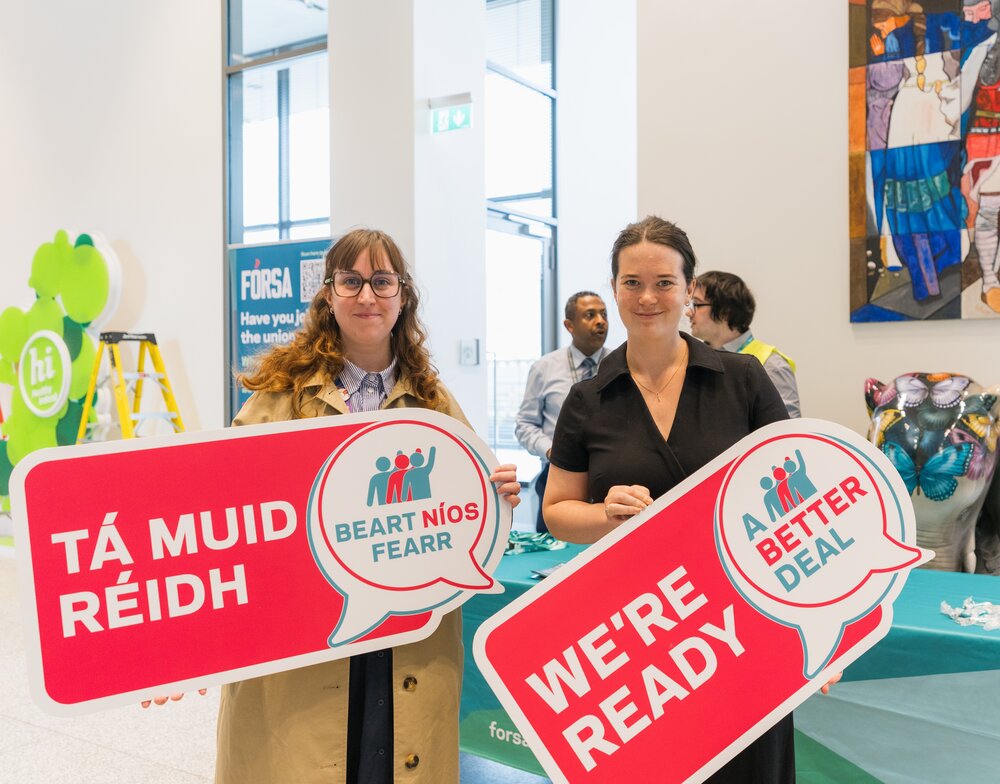
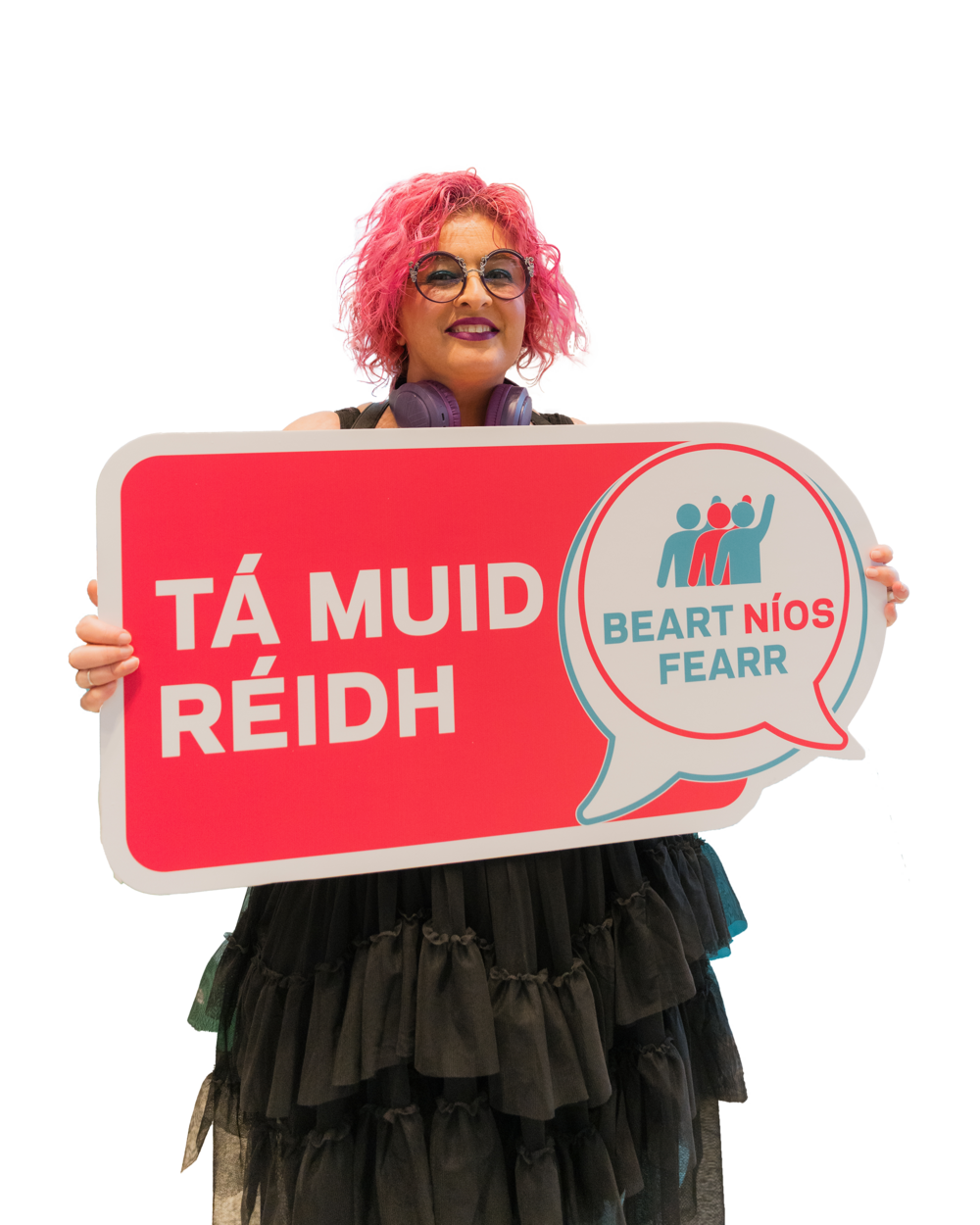
The Fórsa action is part of a wider coordinated response by the Irish Congress of Trade Unions (ICTU). SIPTU, and the INMO also began industrial action this week, while the INTO and the ASTI will start their action on Monday 5th October. Most public service unions are now moving towards industrial action in the coming days.
Fórsa general secretary, and chair of ICTU’s Public Services Committee, Kevin Callinan, commented: “The last public service pay agreement expired at the end of June. Attempts to engage on a successor agreement came to nothing because of the Government’s steadfast refusal to address cost-of-living pressures at the outset.
“That refusal made this industrial action inevitable. Our members have been clear that their living standards must be protected, and the absence of any credible engagement on this issue has led directly to this industrial action.
“The Minister for Public Expenditure has variously described union ballots as ‘unnecessary’ and any industrial action as ‘unfair’, but it is the Minister’s own refusal to discuss pay measures that has made industrial action unavoidable,” he said.
In a letter to Minister Jack Chambers issued on Thursday evening, the officers of the PSC made it clear that unions are determined to fulfil the mandate given to them by members.
They wrote: “Our sense of urgency reflects the daily experience of hundreds of thousands of public service workers who continue to face sustained pressure from rising prices.”
“Public service workers, like many others across the economy, have seen their incomes fall behind prices in recent years and have been facing renewed pressure in 2026. That is the practical reality underpinning this dispute.”
In a letter to members issued on Thursday, Kevin confirmed two national strike days are planned for Wednesday 14th October and Wednesday 21st October.
He said: “While the Government reached out to unions this week, it has only been with more of the same rhetoric. There is still no evidence of a credible approach to pay that would properly address the cost pressures facing public service workers. This means that members need to stay strong, continue to follow the union instructions applicable to their workplace to build pressure, and show government that we will not be taken for granted.
“Remember, targeted industrial action is needed to cause maximum disruption to the employer, and it is likely that further escalation will be necessary.”
Members can access the industrial action hub here. On it you’ll find FAQs for all divisions, designs for posters and placards, and email templates to support you in responding to queries at work and more.
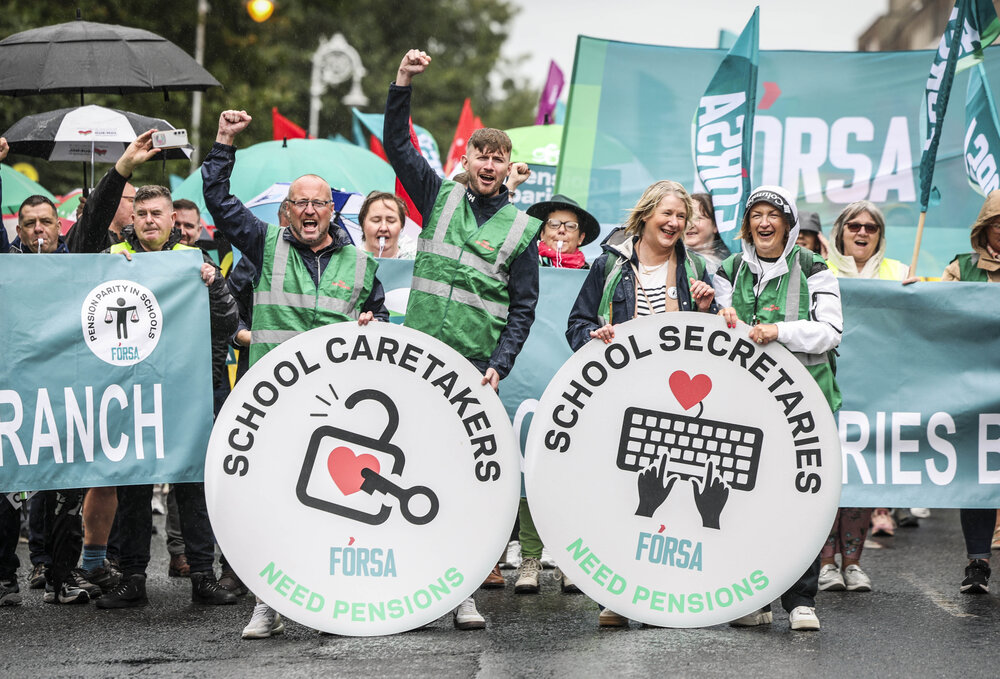
A ballot of members working as school secretaries and caretakers opened yesterday, on Thursday 1st October, and will close on Wednesday 7th October at midday.
A ballot of members working as school secretaries and caretakers opened yesterday, on Thursday 1st October, and will close on Wednesday 7th October at midday.
Members are being asked whether they accept or reject a package of proposals negotiated by Fórsa at the Workplace Relations Commission (WRC) on pay, sick leave, acute illness leave, and bereavement leave, as well as a recommendation from the Labour Court on pensions.
Encouraging members to vote, head of Fórsa’s education division Andy Pike said: “Members have one week to vote on the proposals. This has been a very long time coming, and we would not have gotten to this stage without the dedication of members and both branch committees. I want to pay tribute to all their efforts to get us to this point over many years.”
“Last year’s seven-day strike was an unprecedented effort by members, and these proposals would not be on the table without that. Ultimately, all negotiations involve compromise, and while this is not a perfect package, it is our strongly held view that it is the best deal that was available.”
In a message to members, chair of the school secretaries branch Luisa Carty paid tribute to “the incredible determination, grit, and unity” shown by members.
She said: “For so long, we fought a battle that a few years ago felt completely out of reach. There were moments when achieving a vote on real, tangible proposals for our futures felt like a distant dream. Yet here we are, holding the power to shape what happens next in our own hands.”
Emphasising the distance travelled since the campaign began, Luisa continued, saying: “While we did not achieve everything we originally set out to do, we must look at how far we have come. Where we stand today is a world away from where we started. We built nationwide strength and pushed through exhaustive negotiations to secure a level of progress that once seemed impossible. We have fought for our respect, our pay scales, our sick leave, and our right to a dignified retirement.”
Chair of the school caretakers branch, David Hearne said: “Members showed up for themselves, and for each other, on the picket last year, and have stayed committed to the campaign throughout its highs and lows. Thousands of members attended our information meetings over the past month and now it’s up to you to decide whether you accept or reject these proposals.”
Members who are eligible to vote will have received a unique voting code (UVC) from Mi-Voice, the online ballot platform. If you have not received your UVC please contact edhelp@forsa.ie.
Members share their views on why this industrial action matters and what's happening on the ground.
“Our sector runs on huge goodwill” | Ben Slimm on work-to-rule at MTU
For Ben Slimm, the first days of Fórsa’s work-to-rule at Munster Technological University (MTU) are revealing something that members have known for a long time: the sector depends on workers routinely sucking it up and going the extra mile.
Ben works in professional services at MTU and is chair of Fórsa’s Higher Education branch. Since the work-to-rule began, members have stopped working overtime, are sticking to their core hours and are withdrawing cooperation with a range of additional duties.
For Ben, the principle behind it is straightforward.
“Our sector runs on huge goodwill. Our members go above and beyond for students and staff to make sure that the student experience is flawless. Really, the start of that industrial action is a removal of all the goodwill that our sector has worked on.”
And rather than members stepping back from the union as industrial action gets underway, Ben says the opposite is happening.
Since notice of industrial action was served, the branch has gained approximately 160 new members - growth of around 10%.
“Rather than members being annoyed at this, they’re saying: actually, this is an action we have to take part in. We want to be part of Fórsa, and we see the good that the union is doing here.”
Behind that support is a combination of rising living costs and a deeper feeling among professional services staff that their contribution has been undervalued.
Ben points to the work members do every day with students dealing with admissions, access, finance and fees. Much of that work is largely invisible when everything is running smoothly.
But at the same time, members are increasingly struggling with the basics themselves.
“Can they afford to put kerosene in their tank or diesel in their car to get to work? I think we’re moving into a space where you’re living to work rather than working to live. We're developing a class of people in this country now where we have working poor people.”
For members who already feel their work is undervalued, Ben says the pressure on pay has brought things to a head.
“When you start to feel disrespected on pay, that’s when it really starts to bite. People say: I can barely afford to pay for my groceries. I’m not feeling like a member of staff that’s valued within my sector.”
The strength of feeling was reflected in the branch ballot, where Ben says 80% of eligible members voted, with 96% backing industrial action.
Now that the work-to-rule is underway, his message to Government is short:
“Get to the table. Negotiate in good faith.”
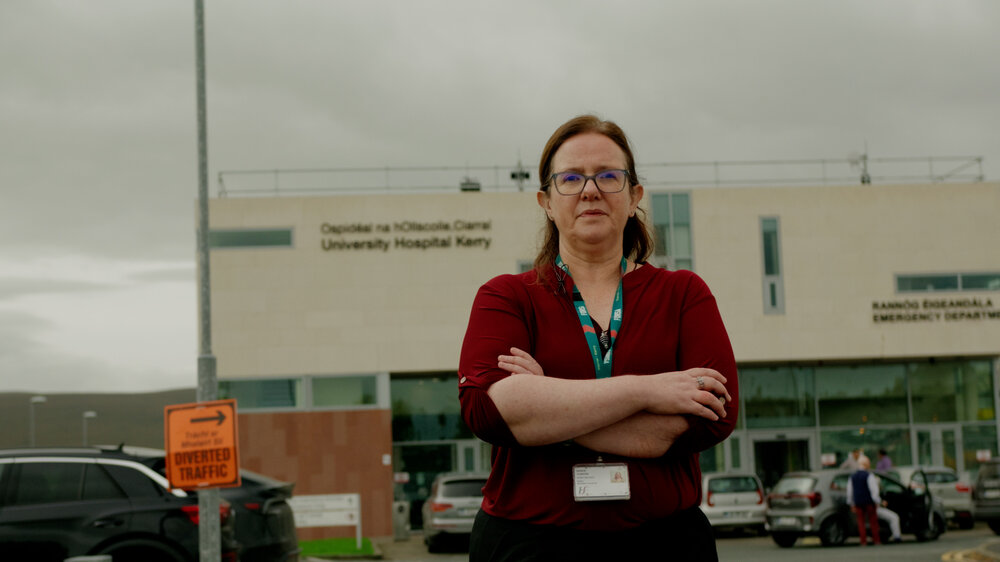
“People are eager to get going” | Karen Condon on work-to-rule at University Hospital Kerry
At University Hospital Kerry, Karen Condon says Fórsa members weren’t reluctant about beginning work-to-rule. Quite the opposite.
Karen is a staff officer in the hospital’s Quality, Risk and Patient Safety Department and a Fórsa branch secretary. After months of frustration, she says members were ready to act.
“Speaking to colleagues, they’re actually eager to get going. They’ve been waiting long enough. The ballot showed that people want this to happen. They’re willing to participate.”
And one of the things the work-to-rule is exposing is how much pressure staff have already been absorbing. In health, one element of the action means members no longer covering vacant posts. Karen says there are numerous positions waiting to be filled, with colleagues routinely picking up the work left behind. Union posters dot the corridors on the issue.
“There are a lot of posts waiting to be filled. The work has been done by the goodwill of all colleagues at the moment, and we need to highlight that these posts need to be filled. People are struggling. They’re under severe pressure at work.”
With that goodwill now being withdrawn, the gaps become much harder to hide.
“There are jobs that need to be done that cannot be done now because the work-to-rule is in place. It potentially could affect waiting lists. It will affect the running of the service essentially where the service was being run on goodwill.”
But pressure inside the workplace is only part of what members are talking about.
Karen says conversations about pay very quickly come back to ordinary household costs: groceries, fuel and supporting a family.
“It’s down to the basics. It’s groceries… People with families are struggling. Even fuel - even myself, I noticed lately to fill my car has gone up about €15 in a couple of months. People just can’t keep it going.”
That experience is feeding into strong support for the action on the ground. Karen says turnout in the ballot at University Hospital Kerry was over 73%.
And since the work-to-rule began, she says the sense of solidarity has been striking.
“The solidarity is unbelievable. People are constantly coming up looking to get involved. People really are behind us this time.”
For Karen, the message she wants Government to take from the opening days of the dispute is simple.
“Without the public sector workers, the place will stop. I want you to remember that.”
For everything you will need during the coming weeks visit our industrial action hub. FAQs for all divisions, designs for posters, leaflets, and placards, template emails to send to your manager, and more...
Resources to support members during industrial action are available on the Fórsa website.
On the hub you will find Frequently Asked Questions for all divisions, as well as one for all members that outlines the political state of play, and the basics of industrial action.
On Wednesday 30th September general secretary Kevin Callinan and senior leadership took part in a webinar, attended by thousands of members from across the six divisions, outlining the state of play and answering questions.
You can watch the webinar here.
Next week placards, flags and high visibility items for pickets will be distributed through branches and regional offices. A strike FAQ and picket guidance will also issue to ensure that members are well prepared for the strike day on Wednesday 14th October. A subsequent strike day is also planned for Wednesday 21st October.
Deputy general secretary Katie Morgan said: “Fórsa branches, reps and staff are working hard to ensure members are well supported throughout the industrial action and as they prepare for strike action on the 14th of October.
We regularly update the FAQs with questions submitted, both at meetings and by email so of you have a query that needs clarification please get in touch.”
As workplaces around the country begin industrial action, we’ve put together a humorous glossary of the sometimes-strange union terms that can confuse new activists and long term members alike.
Instruction
Sounds like:Something barked at you by an evil headmaster.
Actually means: A formal direction from your union telling members what they are being asked to do - or more importantly not to do - as part of industrial action.
Work to Rule
Sounds like: The sort of workplace warfare practised by your more demanding colleagues.
Actually means: Doing your job strictly according to your contract, procedures and agreed duties - no unpaid extras, overtime, favours or habitual bits of “sure I’ll just do it.”
Escalation
Sounds like: Things have gone badly wrong, diplomacy has failed, and somebody is hovering over the big red button.
Actually means: Stepping up the level or scope of industrial action when a dispute remains unresolved. Basically: you’ve ignored the polite version. Here comes the less polite one.
Derogation
Sounds like: Yes, you’d be forgiven for thinking this was a class of medieval torture or a reason to amputate a limb.
Actually means: An agreed exemption from industrial action for particular duties or activities considered essential to life, health or safety. In other words: we’re in dispute, but we’re not monsters.
With industrial action affecting much of our membership, the Skills Academy will be working around members’ availability and rescheduling where necessary.
It is a big week for many Fórsa members as an indefinite work-to-rule began on Wednesday by all members working in the civil and public service.
As many of our members already know, a lot of work goes into withdrawing labour, and our workplace representatives and branch officers are dedicating lots of time and effort to pulling things together on the ground. In light of this, the Skills Academy will be watching as the situation unfolds and making changes to their schedule going forward.
Director of membership training Fiona Dunne said: “The Skills Academy are aware of the demanding environment in which branch officers and workplace representatives are currently working. We will reschedule courses and programmes during this period where needed.”
While some courses will be rescheduled, the Skills Academy will continue to provide training and encourage all workplace representatives and branch officers to continue training with the Skills Academy where they can.
Fiona said: “Our training provides our workplace representatives and branch officers with the skills and knowledge that enable them to perform their roles to the best of their capability and build their confidence to do so.”
Coming up in November, Skills Academy will pilot a new, certified course in the Lámh, the Irish sign language for children with additional needs. A much requested training following this July’s highly successful Live: Lunch and Learn, which gave members a taster for the subject and a ten-sign vocabulary.
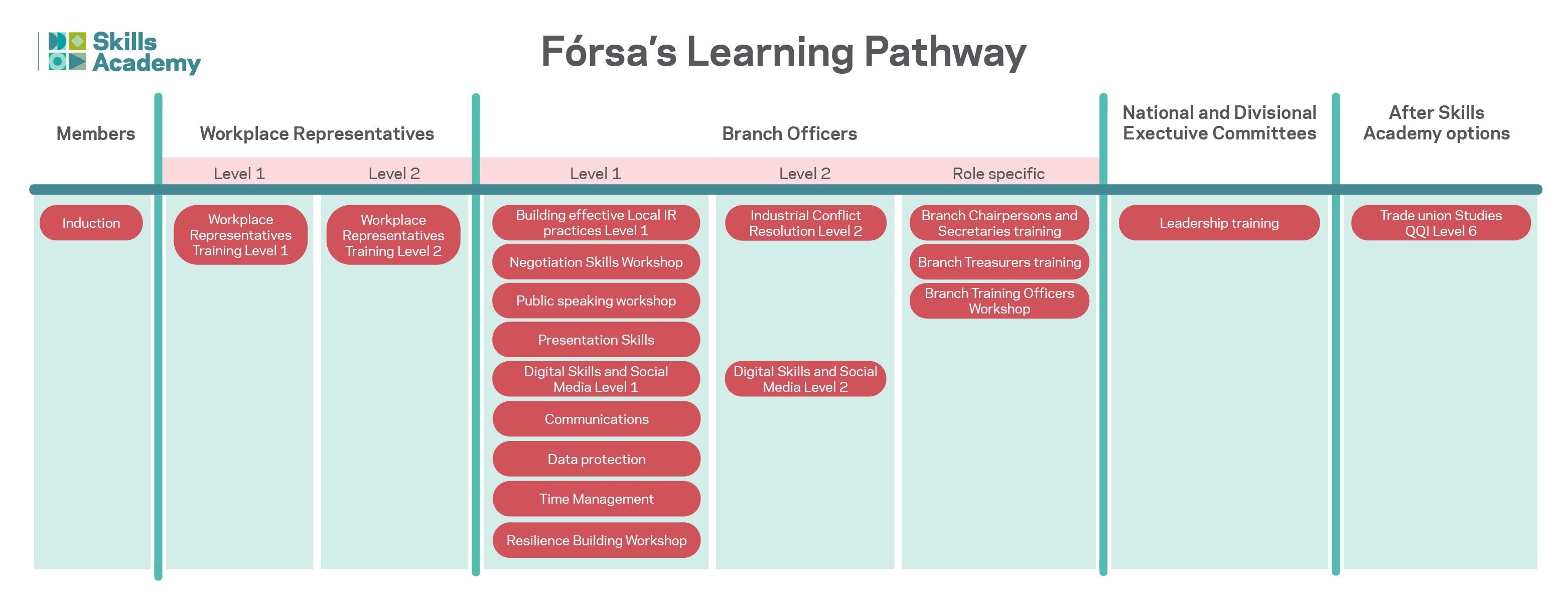
In another big change for the Skills Academy, courses have now been organised into a
formal learning pathway, to guide our reps on the journey from new member, to rep, to branch officer and beyond.
Learning Pathway
Describing the learning pathway, Fiona said: “The essence of training is empowerment and our focus in the Skills Academy is building the capacity and capability of our workplace representatives from the moment they take on a representative role.”
The learning pathway will provide a map for members as they progress through their union roles and ensure they have training opportunities available to fill any gaps in skills they find they have along their journey.
Members start with the Fórsa Induction welcome session before gaining a firm foundation with the Workplace Representatives training programme, building their confidence and then filling gaps in their toolkit of skills with Branch Skills training session, before moving on to leadership training as part of divisional or national executives. This step-by-step approach builds their capabilities and confidence.
Coming up:
Branch Skills: Branch Training Officers ‘Facilitation Skills Workshop’ – Thursday 15th October – Nerney’s Court, Dublin
Requirements: Currently serving as Branch Training Officer
A fantastic opportunity for branch training officers. Learn the secrets to good facilitation; how to know when to let things go and when to move things on, how to manage tensions, how to keep participants engaged, and the importance of knowing when your input is needed and when to step back.
Branch Skills: Dignity and Respect Workshop – Tuesday 20th October – Nerney’s Court, Dublin
Requirements: Currently serving as Workplace Rep, Branch Officer, or Executive Committee member
Pilot Course
Dignity and respect are the basis of any healthy workplace. Learn how your behaviour and the behaviour of your colleagues impact your working environment. Examine the policies and procedures of your organisation and identify how those policies are implemented and adhered to.
Learn how to create an environment that allows you and your colleagues to flourish. Identify challenges to dignity and respect in your workplace and learn how to overcome them.
This is a pilot session, so don’t miss what might be your only chance to take this training!
Branch Skills: Lámh sign language certified training – Monday 23rd November – Nerney’s Court, Dublin
Requirements: Currently serving as Workplace Rep, Branch Officer, or Executive Committee member
Pilot Course
A fantastic opportunity, especially if you work with adults and children with additional needs in education, healthcare, and social care settings.
Lámh is Ireland’s standardised manual or key-word sign system. It is a simplified sign system for communication with adults and children with additional needs. Some adults and children in Ireland choose to use Lámh as their main method of communication and as their way of understanding the world and expressing themselves.
This course will be certified and broken into two parts. The first part will be delivered online. It will take three hours to complete and can be completed at your own pace but must be completed before the second in-person part. The e-learning platform will be available from 9th November.
The second part will be in-person, held in Nerney’s Court, Dublin, on the 23rd November. This session will take 4.5 hours, from 11am until 3.30pm.
The training will be delivered by Lámh, the organisation for the promotion of the Lámh sign system. Participants should provide personal email addresses to register for the e-learning platform as workplace email systems may automatically block registration confirmation emails.
Further information on this, and other Lámh courses, can be found here
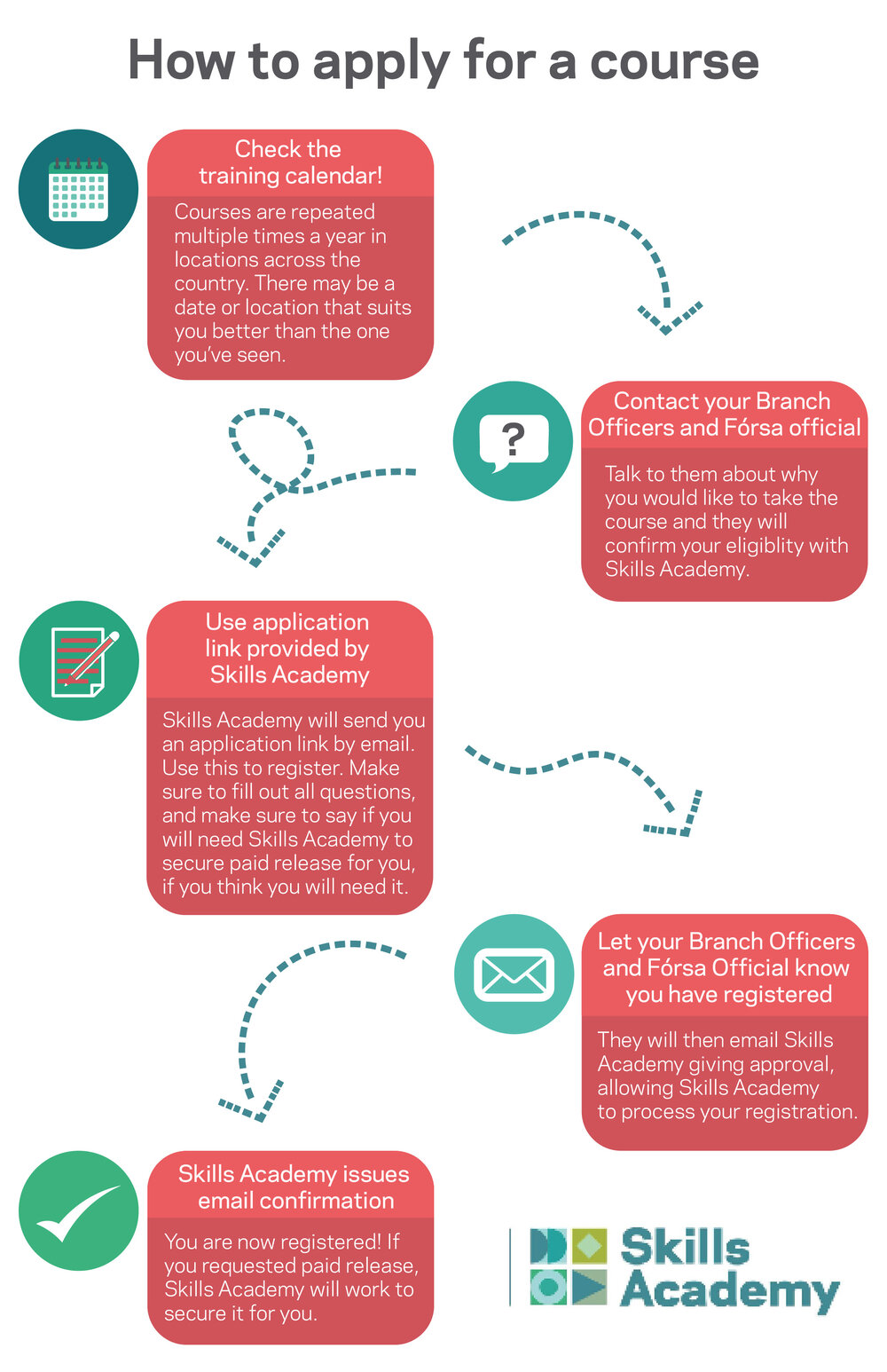
How to register
If you see a course you would like to take, simply contact your branch’s training officer or secretary and let them know you are interested. They will confirm your eligibility and contact Skills Academy.
You will receive a registration link via email. Fill out the form in full and make sure you let Skills Academy know if you would like them to secure paid release for you.
All Solar Energies Ireland (ASEI) is offering Fórsa members a significant discount on solar installations.
Lower your bills and your carbon footprint with our brand-new exclusive member offer.
All Solar Energies Ireland (ASEI) is now offering Fórsa members discounts of up to 12.5% on solar energy packages.
With ASEI’s new offer, members can save up to 12.5% on Solis battery packages and 10.5% on their Sigenergy packages.
On top of the ASEI discount, homeowner grants from the Sustainable Energy Authority of Ireland (SEAI) are also available. With these grants worth up to €2,400, installation is more affordable than ever.
All ASEI installers are fully certified, and installations come with a comprehensive warranty pack meeting all SEAI requirements.
Deputy general secretary Katie Morgan said: “ASEI approached Fórsa with a special offer for members, and we have agreed to run this for a six-month trial.”
“While the upfront cost of solar energy is significant, in a time of rising energy bills, being self-sufficient can save money in the long run. We hope this offer will help our members cut their bills and be more sustainable.”
Discount prices
All prices shown are inclusive of applicable SEAI grants and are exclusively available to Fórsa members.
Solis Packages
Package
System Size
Battery
RRP
Member Price
Member Discount
Essential
4.7kWp
10kWh Battery
€7,890
€6,900
12.5% off
Family
7.5kWp
10kWh Battery
€9,060
€7,930
12.5% off
Premium
10.3kWp
10kWh Battery
€10,230
€8,950
12.5% off
Solis Packages (no battery)
Package
System Size
Battery
Member Price
Member Discount
Essential
4.7kWp
10kWh Battery
€5,200
12.5% off
Family
7.5kWp
10kWh Battery
€6,230
12.5% off
Premium
10.3kWp
10kWh Battery
€7,250
12.5% off
Sigenergy Packages
Package
System Size
Battery
RRP
Member Price
Member Discount
Essential
4.7kWp
9kWh SigenStor
€9,240
€8,270
10.5% off
Family
7.5kWp
9kWh SigenStor
€10,410
€9,320
10.5% off
Premium
10.3kWp
9kWh SigenStor
€11,580
€10,370
10.5% off
Sigenergy Packages (no battery)
Package
System Size
Battery
Member Price
Member Discount
Essential
4.7kWp
9kWh SigenStor
€5,370
10.5% off
Family
7.5kWp
9kWh SigenStor
€6,420
10.5% off
Premium
10.3kWp
9kWh SigenStor
€7,470
10.5% off
For more information or to get a quote, you can contact ASEI by email at forsa@asei.ie, by phone on 042-6030770 or visit the ASEI website.
ASEI is an independent company that is not affiliated with Fórsa.
 The Fórsa action is part of a wider coordinated response by the Irish Congress of Trade Unions (ICTU). SIPTU, and the INMO also began industrial action this week, while the INTO and the ASTI will start their action on Monday 5th October. Most public service unions are now moving towards industrial action in the coming days.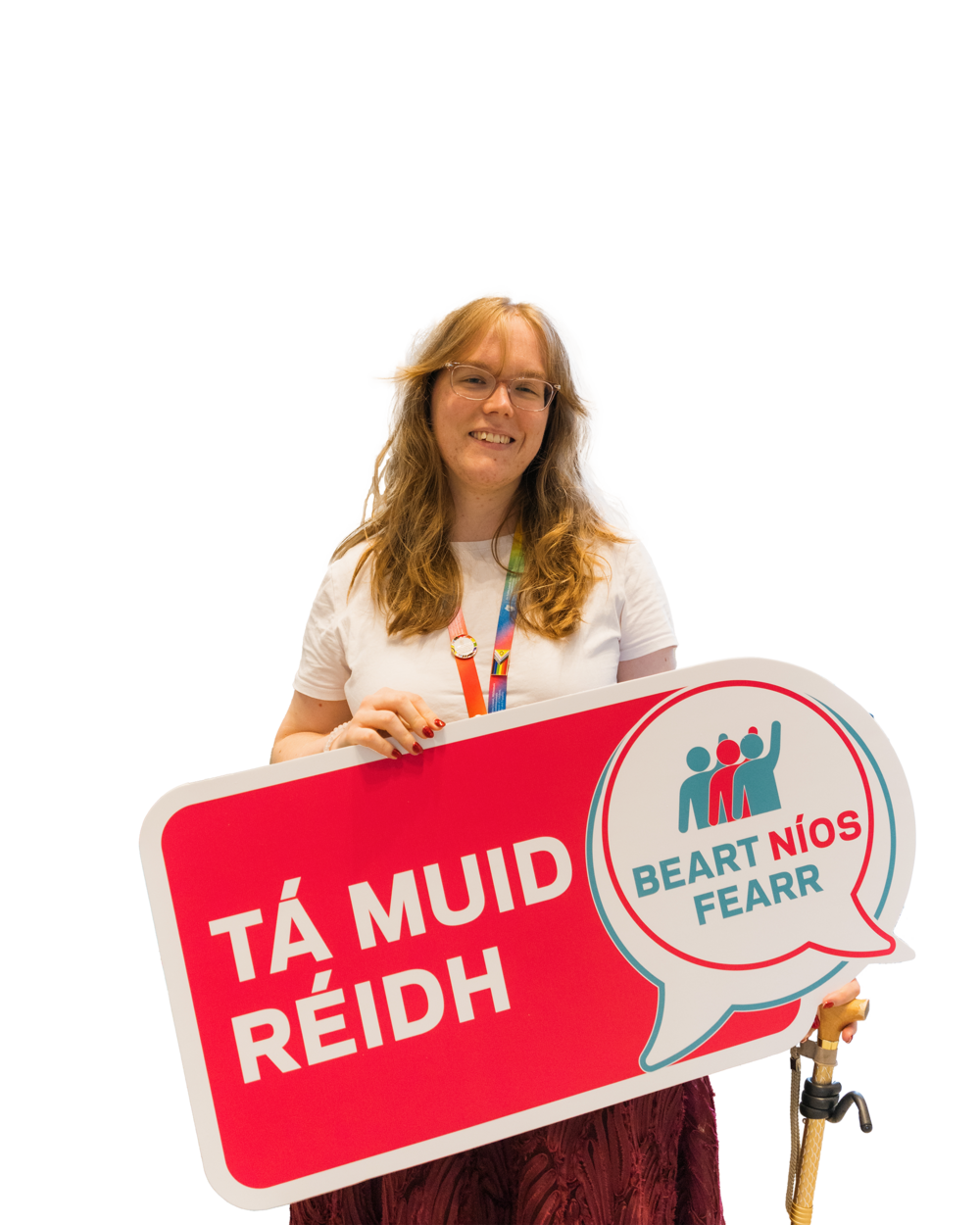
![Photo by David Hawgood, [CC BY-SA 2.0], via geograph.ie](/v3files/shard1/63805/35/fea7f74b08d4fe235272df.jpg "Photo by David Hawgood, [CC BY-SA 2.0], via geograph.ie")