A Better Deal, A Better Ireland
 

Good morning delegates, it's hard to believe we're already on the final day of Conference. 


Today we will have addresses from guest speakers Jan Willem Goudrian, EPSU general secretary and Lina Jamoul, head of union building at Public Services International.


There is also a panel discussion on the agenda, moderated by national secretary Linda Kelly,  exploring the value of pursuing common good issues as a union, with Tom McDonnell, NERI, and Lina Jamoul. 


In the morning session, we will have motions on digitalisation, automation and AI, public services and public policy, conditions of service, and equality and inclusion.


During the lunch break there are three fringe events running in the Brehon Hotel. More information below.


After lunch motions will be debated on internal affairs and solidarity, health and safety, miscellaneous motions, and, time allowing, a return to any previously guillotined motions. Conference is scheduled to end at 4.30pm.


All conference documents are available on the conference website hub, which you can access here. 


The quiet room will be open from 9am this morning, and remain open for the duration of Conference.


You can still make a donation for the Conference Charity Cycle, which raises money for worthy charities, including cancer research projects, mental health and suicide prevention projects. You can donate here


Delegates debate pay and conditions, with measures seeking better work life balance to the fore
 

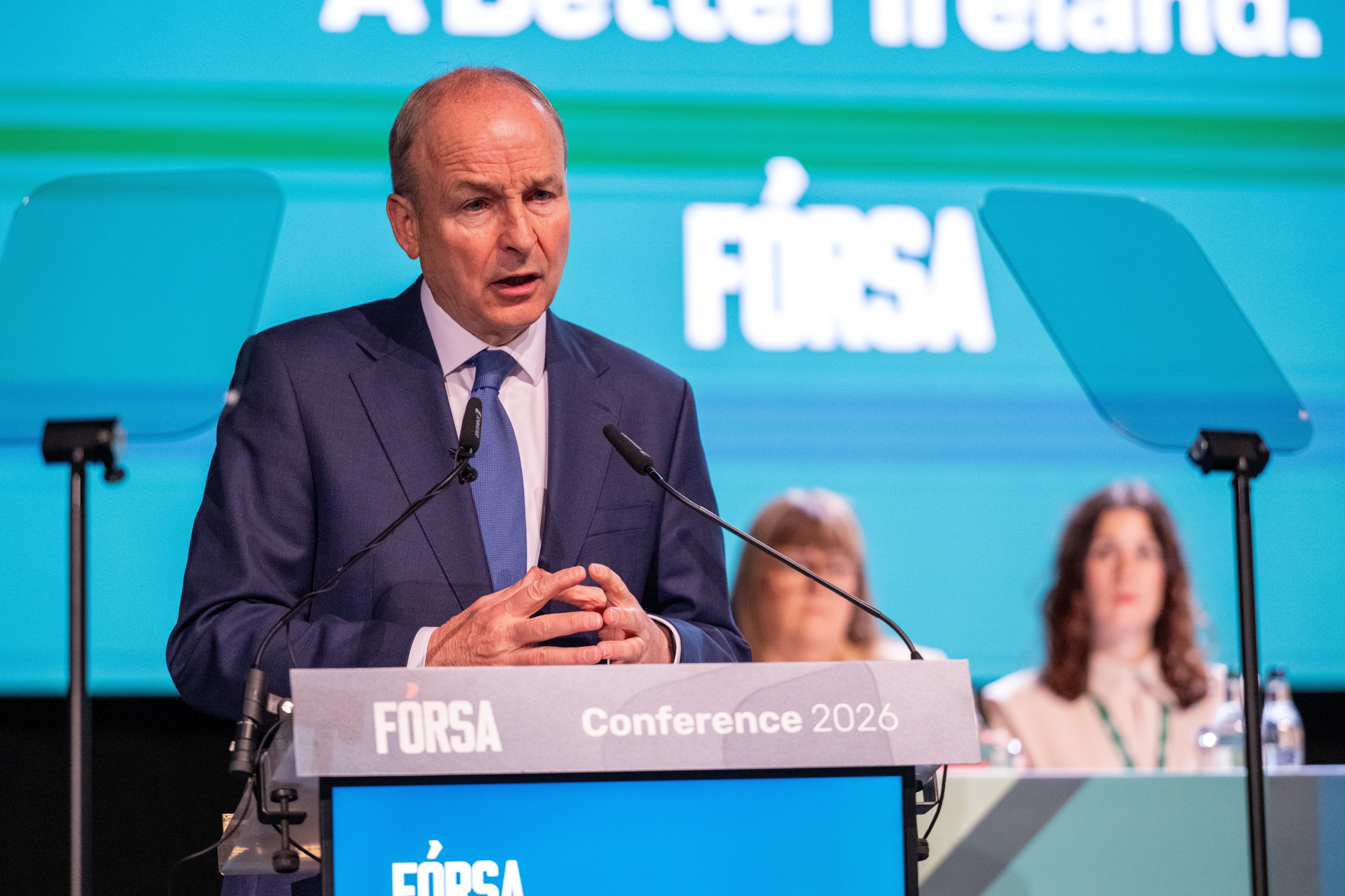
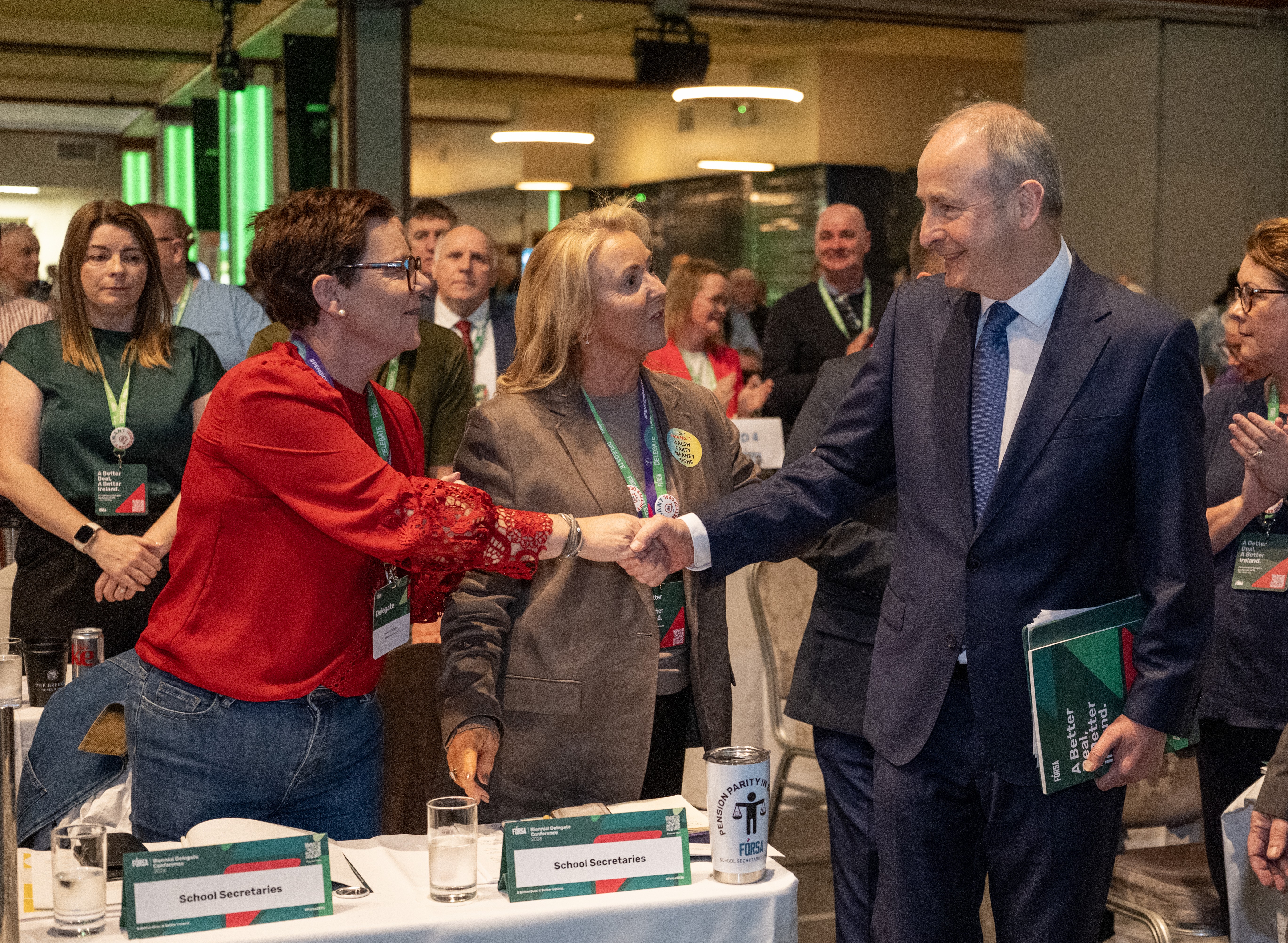
Thursday was a jam-packed day at Conference. Significant speeches by An Taoiseach Micheál Martin TD and general secretary Kevin Callinan gave strong indications that public sector pay talks will begin ahead of the summer.


In his speech the Taoiseach called for deeper social dialogue and was explicit that local bargaining claims should be resolved quickly so that public service pay talks can begin. He also acknowledged that the current remote working legislation is balanced in favour of the employer, indicating that it will be reviewed. 


Read coverage of Conference and the speeches in the Irish Independent here, The Irish Times here, The Irish Examiner here,  on RTE here, and the full speech by Taoiseach Micheál Martin here. Watch the RTE coverage of Conference here, beginning at 16.45.


In his response general secretary Kevin Callinan outlined the union’s priorities ahead of any negotiations, saying there was “an urgency” to address the significant challenges people are facing. On pushing for action on common good issues, he said: “We are no longer prepared to accept that some of these items are ‘off the table’.”


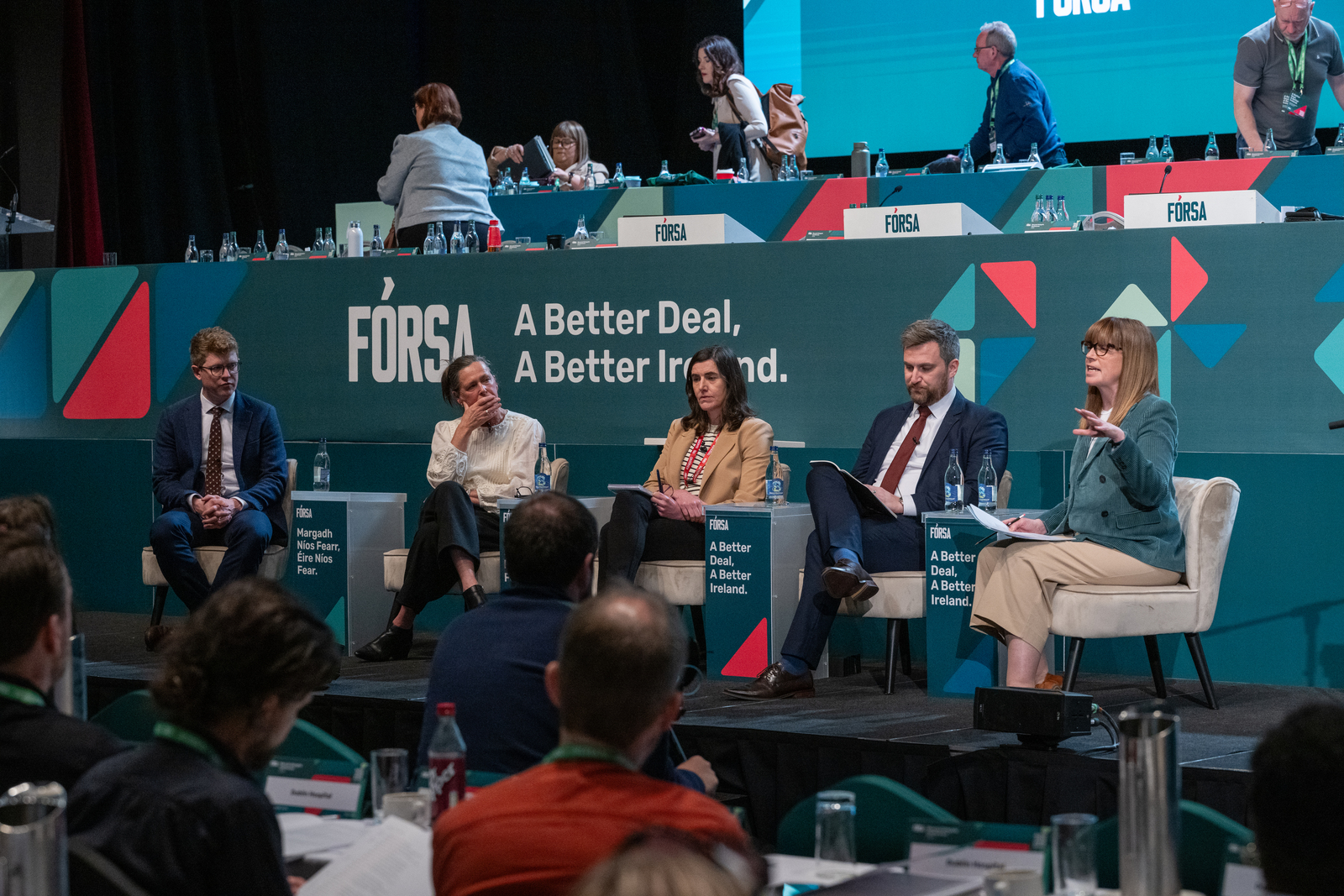
The speeches were followed by spirited debate on motions, and an expert panel discussion on the worker experience of remote work.


Martin Walsh (Louth Health and Local Government) was re-elected as President and Michael Smyth (School Completion branch) was re-elected Treasurer.


Conference business on Thursday began with delegates expressing unequivocal support for the NEC motion on pay, living standards and public service negotiations.


The motion, proposed by vice president Tara Horigan, set out the union’s position ahead of negotiations on a successor to the current public service agreement, which expires at the end of June.


Proposing the motion, Tara told delegates that the debate on pay comes against a backdrop of growing economic uncertainty internationally, which has increased the significant financial pressures faced by members arising from rising grocery and energy bills, fuel and commuting expenses, and wider cost-of-living challenges, as headline inflation has increased in recent months.


The motion outlined the union’s strategy for the pay talks noting hat if a negotiated multi-annual agreement cannot be achieved, the union should seek an immediate pay round, pursue local bargaining claims independently, and ballot members for industrial action where necessary.


Tara said Fórsa’s objective remained serious engagement aimed at delivering a deal that members can vote for: “That’s the single most important objective for the union, while maintaining stability during a period of significant economic uncertainty.”


She also said the next agreement would need to engage with wider “common-good issues” affecting workers and public services, including housing affordability, commuting costs, remote and flexible working arrangements, and the long-term sustainability of public services.


She added: “The housing crisis threatens to undermine decades of social and economic progress. It is now directly affecting recruitment and retention right across the public service. We need to confront that and negotiate solutions that will work.


“Rising living costs, childcare costs and the daily cost of getting to and from work are placing real pressure on working households. If we are serious about maintaining strong public services, then those realities must form part of the conversation,” she said.


The motion underscores Fórsa’s “A Better Deal” campaign, which has attracted more than 45,000 member pledges, calling for pay improvements alongside progress on housing, healthcare investment, local bargaining claims and flexible working arrangements.
In a range of motions proposed by delegates throughout the day it was abundantly clear that improvement in working conditions are to the fore of members concerns.


Jennifer Doyle from the Marine New branch spoke on Motion 17 which called for templates and a toolbox to develop more equality among how public sector employers implement flexible working policies. She said: “Organisations have vastly different policies for flexible working, why should access depend on what employer you work on? It’s unfair, destabilising and completely unnecessary."


Motion 73 was put forward by the Higher Education branch and called for the NEC to campaign for changes to be made to circulars on bereavement leave, which it contended, unfairly discriminate on grounds of marital status. 


Caitriona McElhinny from the Donegal Local Government branch proposed Motion 76 seeking enhanced employer- funded mental health supports, saying “Mental health isn’t a side issue, it affects attendance, morale and the quality of public services we all rely on. Staffing levels are tight and workloads keep growing. The expectation is always there to do more with less.”


A range of motions called for the union to intensify its work for a shorter working week, while the risks of excessive workplace surveillance were also highlighted.


Speaking on this issue Amy Hibbets, from the Probation Officers branch said: “Technology should support workers and not be used for micro-management. Quality of outcome cannot always be measured in output metrics. Workers perform best when they are respected and supported, excessive monitoring creates fear and anxiety.”

New Fórsa research shows remote work works
 

Seven in ten Fórsa members who currently work remotely or in hybrid arrangements said they would consider moving role to retain or improve their current level of flexibility, suggesting that flexibility is increasingly viewed by workers as a core condition of employment rather than an optional benefit. You can read the research here.


The survey results feature in media today, in The Irish Times and in the Irish Examiner.


The findings were presented to Conference by researchers Sinead O'Sullivan (Amárach), and Kevin Cunningham (Ireland Thinks). ICTU's Laura Bambrick then moderated a panel discussion, during which they were joined by Dr. Margaret Heffernan (DCU) and Fórsa's director of campaigns, Kevin Donoghue.


Yesterday at Conference Fórsa published major new research suggesting that the debate around remote and hybrid working now extends far beyond the workplace itself, with implications for productivity, transport, infrastructure, regional development, local economies, family life and staff retention. 


The union is pushing for remote and flexible working arrangements to feature in upcoming negotiations on a new public service pay deal.


You can read the research here.


The research shows that remote and hybrid working is now a mainstream labour-market experience, with 38.4% currently working remotely at least one day per week and a further 19.2% having done so previously, while 61% of respondents said they would prefer hybrid or fully remote work over the next two years.


Managers who took part in the survey also reported positively on productivity, while respondents consistently reported that remote or hybrid working performed as well as, or better than, fully on-site working arrangements. 


For example, just 6% of respondents said meeting deadlines was problematic when working remotely, compared with 23% who identified this as a difficulty when working on-site.


This is reflected in the finding that 86% of managers supervising remote-working staff said employees seldom or never missed work-related deadlines, compared with 73% among fully on-site teams. Similar patterns emerged in relation to communication and collaboration.
The research also indicates employers risk creating retention challenges through rigid return-to-office policies. Four in ten workers said they would look for another job if access to remote work was reduced, while just 28% said they would accept the change.


Seven in ten Fórsa members who currently work remotely or in hybrid arrangements said they would consider moving role to retain or improve their current level of flexibility, suggesting that flexibility is increasingly viewed by workers as a core condition of employment rather than an optional benefit.


‘New normal’


The research challenges assumptions that managers find it difficult to manage hybrid teams, and that return-to-office mandates are necessary to improve efficiency. Across multiple measures, managers reported fewer problems among staff working remotely or in hybrid arrangements than among fully on-site teams.


The findings also suggest that where difficulties might arise in remote or hybrid settings, workers and managers do not necessarily view remote work itself as the root cause. Managers overseeing remote-working staff were less likely to report problems relating to deadlines, communication with external clients, or collaboration with colleagues.


Speaking during a panel discussion on the research, Fórsa’s director of campaigns Kevin Donoghue said: “For many workers, hybrid working is no longer viewed as a perk or temporary pandemic arrangement. It has become part of the new normal of working life.
“But this research also shows that the future-of-work debate now extends far beyond office walls. Hybrid working affects commuting patterns, congestion, childcare, family life, local economies, climate policy, regional development and participation in communities.”


The research found that more than seven in ten respondents said congestion and crowding at peak times had worsened over the past twelve months, with the findings suggesting that remote and hybrid work could help ease pressure on roads and public transport networks at a time of considerable uncertainty around fuel supply and transport costs. Half (45%) of commuters who work remotely said they gained more than three hours each week by not travelling to or from the office.


“In that context, hybrid working arrangements clearly have a role in any serious policy discussion about infrastructure and climate measures,” Mr Donoghue said.


Local economies


The research also points to wider changes in how and where economic activity now takes place.


It found that 77% of remote and hybrid workers now spend more money in their local area because of remote work, with almost half saying it is money that was previously spent near workplaces.


Kevin added: “Working from home is changing where Ireland spends its money. There was a lot of handwringing by business and employer groups last year, particularly as the lobbying campaign to reduce VAT in hospitality was at its peak. Nobody seemed to consider that the market itself had decentralised.


“The daily coffee purchase, in some cases, had moved to Clonee, Longford, Ballinasloe or Ennistymon. This kind of economic redistribution could play an important role in supporting rural and suburban towns which, at one time, risked becoming dormitory communities for people working in larger towns and cities,” he said.


The report also found that the strongest support for remote and hybrid working related to stress reduction, time use and productivity. Among respondents with remote or hybrid experience, 74% said it reduced stress, while 68% said it improved productivity.


Challenges


The report also points to concerns about inequality in access to flexible work, with 64% agreeing that remote-work opportunities are unfairly concentrated among higher-paid or higher-skilled jobs.


Kevin concluded: “Remote work cannot become a class divide in the workplace. The challenge now is ensuring that flexibility, where possible, is implemented fairly, transparently and sustainably across the workforce.


 “This research emphasises the ordinary, practical value of remote work. The benefit is not only fewer hours in the office. It is a calmer morning, the ability to do a school run, time to exercise, the chance to start dinner earlier, or the ability to recover from work without a long commute,” he said.
 

Fringe events today
 

We have three fringe events for you to choose from during today's mid-day break. All are just a short walk across the car park to the Brehon Hotel.


In the Brehon Suite 1 from 13.15 – 14.00 you can find In conversation with Donna Schwarz: An activist’s experience on the Freedom Flotilla. Last year, Fórsa member and activist Donna Schwarz took part in a Freedom Flotilla attempt to break Israel’s illegal and inhumane siege of Gaza and deliver aid to its besieged population. 


In the Munster Suite - 13.00 – 14.00 you can find The How’s of Housing fringe event. Fórsa Youth presents a discussion on the housing crisis. Speakers will go into the nuts-and-bolts of the problem and discuss some of the solutions to a crisis that has pushed some many young people out of Ireland.


In the Park Suite from 13.10 – 14.00 you can find The Asian Hornet Queen. Fórsa activist and member of the Irish Beekeepers' Association Colette O’Connell will present a talk on the spread of the invasive species. Highly aggressive, the Asian Hornet, decimates honeybees and other important pollinating insects, destroys  crops and is a danger to human health.


Lunch will be provided at both events.


Go Purple and stand against domestic abuse
 

Today is Go Purple Day, which helps raise awareness of domestic abuse. In support of our colleagues, friends and family who have survived or live with domestic abuse we will be marking and taking part in the day this year at conference.


If you or someone you know would like support, please contact Women’s Aid on 1800 341 900.


Rolling out the teal carpet
 

We hope to see you all back in the Conference hall tonight, where we will be swapping motions and debates for music and dancing at the Conference Gala dinner.


Doors open at 8pm. Music will be provided by Spring Break. Branches can collect their ticket from the help desk outside the entrance to the Conference hall.


Photos from Conference
 

Take a look back at everything that has happened over the day on our Conference photo gallery on our website.